 Bellingham Roofing
 Roofing in Sunnyland: Built for Bellingham's Marine Climate
Sunnyland is one of Bellingham's established residential neighborhoods, home to a mix of older houses and newer infill, many on lots with mature tree cover. It sits inland from the immediate waterfront, but that doesn't put it outside the weather pattern that shapes roofing across this whole part of Whatcom County. Moist air off Bellingham Bay and the Salish Sea moves through the entire city, rain arrives sideways as often as it falls straight down, and mild, damp conditions give moss and algae a growing season that runs most of the year on any roof plane that stays shaded. A roof that isn't specifically built for that combination tends to show problems years before it should.
Bellingham Roofing Company works on roofs, siding, windows, and decks, and we treat the roof as the part of the house that absorbs the first and heaviest hit from this climate every year. Whether you need a routine inspection, a repair after a windstorm, or a full replacement on an aging roof, the approach in Sunnyland is the same one we use across Bellingham: build for sustained moisture and a long moss season, not just for a dry day in July.
What This Climate Does to a Sunnyland Roof
A Long Moss and Algae Season
Sunnyland's tree cover is part of what makes it an appealing place to live, but shade is also exactly what moss and algae need to establish themselves on a roof. North-facing slopes, roof planes under mature trees, and areas that stay damp longer than the rest of the roof are where growth typically starts. Left unchecked, moss holds water against the roofing material, works under shingle edges, and can lift or loosen roofing over several seasons.
Wind-Driven Rain
Rain in this part of Whatcom County doesn't just fall straight down — wind pushes it sideways into valleys, around chimneys and vent penetrations, and under flashing that isn't lapped and sealed correctly. That's a heavier, more directional load than an annual rainfall number suggests, and it's where roofs with weak flashing details or aging underlayment tend to leak first, sometimes years after the original installation.
Salt Air and Corrosion, Even Inland
Sunnyland sits back from the water compared to some Bellingham neighborhoods, but the moisture-laden, mildly salt-tinged air that moves through the whole bay area doesn't stop at a fixed distance from the shoreline. It's a slower, quieter effect than direct wind-driven rain, and it shows up over years in the form of accelerated wear on fasteners, flashing, and lower-grade metal components rather than in an obvious single event.
Temperature Swings and Material Fatigue
Whatcom County doesn't see extreme heat or deep cold most years, but the repeated cycle of damp, mild days punctuated by occasional cold snaps still stresses roofing materials over time. Shingles that stay saturated more often than they fully dry out age faster than the same product would in a drier climate, and that's a factor worth weighing honestly when comparing materials and warranties.
Roofing Materials: What Actually Holds Up Here
There's no single best roofing material for every Sunnyland home — it depends on the roof's pitch, how much shade it gets, your budget, and how long you plan to stay in the house. What matters is understanding the real trade-offs for this specific climate before deciding, rather than picking based on price alone.
| Material | Moss & Moisture Behavior | Typical Maintenance | Realistic Lifespan Here |
|---|---|---|---|
| Architectural asphalt shingle | Performs well with proper ventilation; algae-resistant granule options help in shaded areas | Periodic moss removal and gutter checks | 20-30 years |
| Standing seam metal | Sheds water and resists moss buildup due to its smooth, non-porous surface | Low; occasional fastener and sealant checks | 40-60 years |
| Cedar shake | Absorbs moisture readily; needs airflow underneath to dry fully between rains | Higher; regular treatment and moss control | 20-30 years with consistent upkeep |
| Composite/synthetic shingle | Resists moisture absorption; performance varies meaningfully by product quality | Low to moderate | 30-50 years depending on product |
We'll walk through which option fits your roof's specific pitch, shade exposure, and budget instead of defaulting to whatever's easiest to sell. A steep, sun-exposed roof in one part of Sunnyland and a low-slope roof shaded by mature trees a few streets over don't call for the same answer.
Roofing Fundamentals We Don't Treat as Optional
Most roof failures in this climate don't start with the shingles — they start with shortcuts underneath them that don't show up until years later. On every job, that means:
- Underlayment rated for sustained moisture exposure, not just a minimum-code product
- Properly lapped and sealed flashing at every valley, chimney, vent pipe, and roof-to-wall transition
- Attic and roof deck ventilation that lets trapped moisture escape instead of building up
- Ice-and-water shield at eaves and valleys where water and debris collect first
- Fasteners and metal components rated for corrosion resistance in a consistently damp, mildly salt-influenced climate
None of these add much to the total cost of a job relative to the shingles themselves, but skipping them is exactly what turns a twenty-five-year roof into a fifteen-year roof.
Signs a Sunnyland Roof Needs Attention
Most roof problems in this climate develop gradually. Catching them early is almost always the difference between a repair and a full replacement.
- Visible moss or algae streaking, especially on shaded or north-facing slopes
- Granules collecting in gutters or downspouts in noticeably larger amounts
- Curling, cracked, or missing shingles after a windy stretch of weather
- Water stains on interior ceilings or in the attic, particularly near chimneys or vents
- Sagging areas on the roof deck, which can indicate trapped moisture underneath
- Rusted or deteriorating flashing around penetrations and roof-to-wall transitions
Any one of these is worth a professional look. Caught early, most are a repair. Left alone through another wet season, several of them turn into a full tear-off.
Repair or Replace? How We Help You Decide
Not every roofing problem calls for full replacement, and we don't default to recommending one. We look at the age of the existing roof, how much of the surface is affected, whether the deck underneath has moisture damage, and how many prior repairs the roof has already had. A localized leak on a roof that's otherwise in good shape is usually a straightforward repair. A roof nearing the end of its rated life with moss-related damage spread across multiple slopes, or a deck showing soft spots from long-term moisture, is more honestly addressed with a replacement than another round of patchwork. We'll explain what we find and why, and lay out the real trade-offs instead of steering toward whichever option happens to be more profitable for us.
Why a Local Whatcom County Crew Matters
A crew that works roofs across Bellingham and the surrounding county through every season sees how moss, wind-driven rain, and moisture actually behave on real houses over years, not just how a product performs on a data sheet. That shows up in practical decisions: which roof orientations in a neighborhood like Sunnyland need extra attention because of tree shade, how much ice-and-water shield a given valley actually needs, and which flashing details are worth the extra time on install day so you're not dealing with a callback two winters later. It also means understanding the difference between a roof closer to the open water and one further inland, and not applying a one-size-fits-all approach to either.
Beyond the Roof: Siding, Windows, and Decks
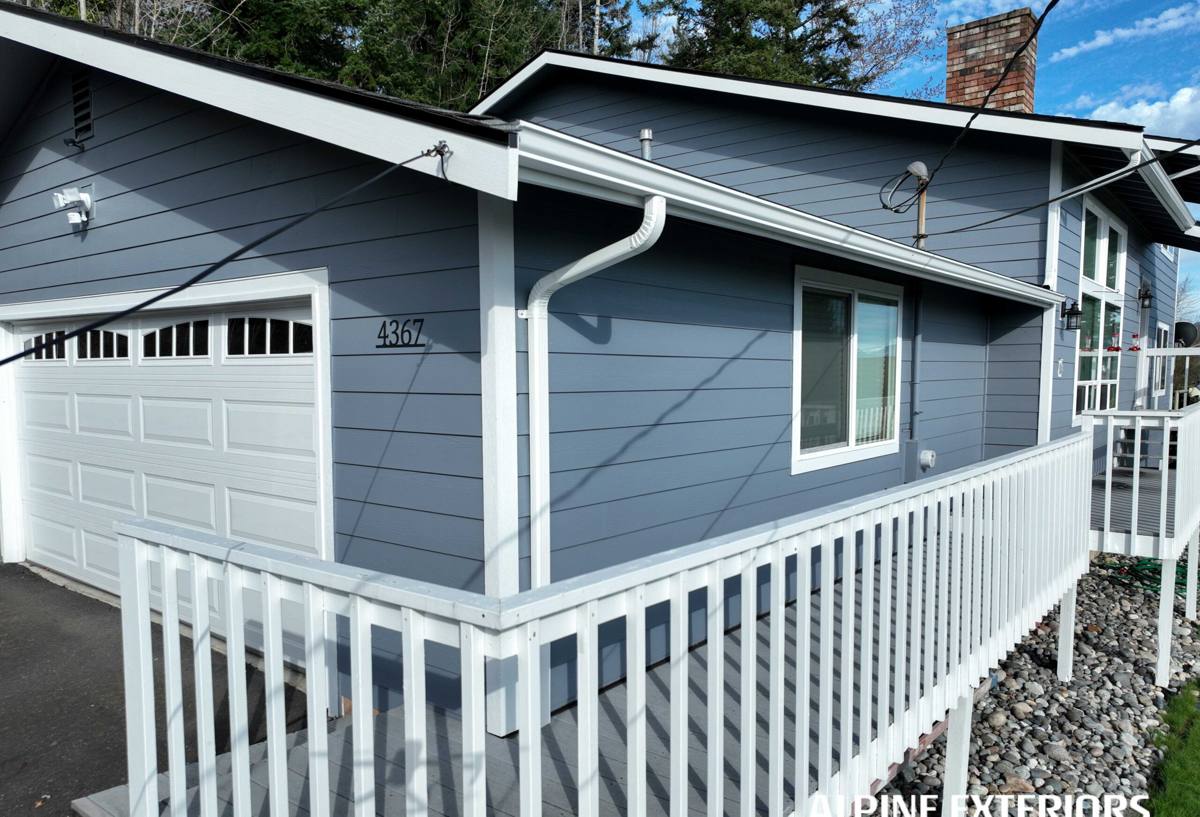
Roofing is a major part of what we do in Sunnyland, but the same climate that wears on a roof wears on the rest of a home's exterior too. We also handle siding, window replacement, and deck construction, and our standard for siding is James Hardie fiber cement, chosen specifically for how it holds up against sustained moisture and moss compared with lower-cost alternatives. If a roof project turns up moisture damage at a wall-to-roof transition, or aging trim and siding nearby, we can address it as part of the same conversation instead of sending you to find a second contractor for a problem we already saw.
Get a Free, No-Pressure Estimate
If a roof in Sunnyland needs an inspection, a repair, or you're weighing a full replacement, we're glad to take a look and give you a straightforward, honest read on what it actually needs. Reach out using the form below to schedule a free estimate — no pressure, no upsell script.