 Bellingham Roofing
 Windows Built for Sunnyland's Climate, Not Just the Catalog
Sunnyland sits close enough to Bellingham Bay that salt-laden air, wind-driven rain, and a long stretch of wet, mossy months all take a toll on a home's exterior — and windows are one of the first places that damage shows up. A window that would hold up fine in a dry inland climate can fail early here if it wasn't installed with this specific weather pattern in mind. Getting window installation right in this neighborhood means understanding three things: what the salt air does to hardware and finishes over time, how wind-driven rain finds its way past weak flashing, and how a long moss season keeps moisture sitting against wood and trim longer than it should.
Salt Air and Hardware Fatigue
Proximity to the bay means airborne salt settles on everything, including window frames, locks, and hinges. Over years, that salt exposure accelerates corrosion on lower-grade hardware and can dull or pit finishes that aren't rated for coastal-adjacent conditions. This is one reason we pay attention to hardware quality and finish specification, not just the glass package, when we're speaking with Sunnyland homeowners about replacement options.
Wind-Driven Rain and Water Intrusion
Bellingham storms don't just drop rain straight down — wind pushes it sideways and up under trim, sills, and poorly lapped flashing. A window can be perfectly good on its own and still leak if the flashing and weather barrier integration around it is done wrong. Most of the water damage we find around older windows in this area didn't come from the glass or the frame — it came from a flashing detail that was skipped or done out of sequence during a prior install.
Moss, Algae, and Trapped Moisture
Whatcom County's long wet season keeps humidity high for months at a stretch, and that's exactly the environment moss and algae need to take hold on sills, tracks, and any horizontal wood trim around a window. Once moss establishes itself, it holds moisture against the surface underneath, which speeds up wood rot and paint failure. Window design and trim detailing that shed water quickly, and materials that don't give moss a foothold, matter more here than in drier parts of the state.
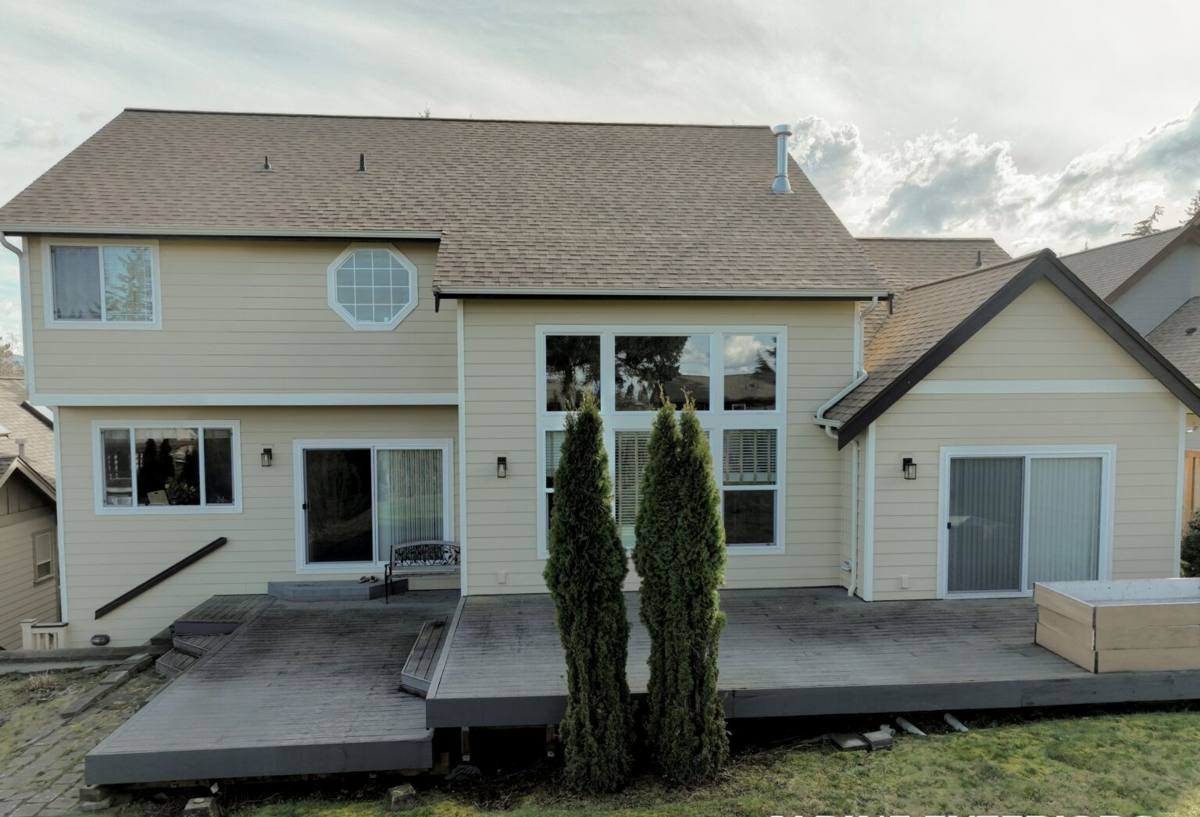
Signs Your Sunnyland Home's Windows Are Due for Replacement
Not every drafty or foggy window needs full replacement, but in this climate, certain warning signs shouldn't be ignored for long because moisture problems compound quickly once they start.
- Fogging or a hazy film between panes — the seal has failed and the insulating gas has escaped
- Soft, spongy, or visibly discolored wood on the sill, jamb, or trim
- Visible moss or algae growth on the sill or lower frame that keeps returning after cleaning
- Drafts you can feel near the frame even when the window is fully latched
- Difficulty opening, closing, or locking — often a sign the frame has shifted or swollen
- Paint that bubbles, peels, or won't hold near the window opening
- Noticeably higher heating bills in a room with older single-pane or early double-pane windows
- Condensation forming on the interior glass regularly during cold, wet weeks
If you're seeing two or more of these on the same window, it's worth having it looked at before the next wet season adds to the damage.
What a Correct Window Installation Actually Involves
Window installation looks simple from the outside — pull the old one, set the new one, caulk the edges. Done that way, it's also one of the most common sources of the leaks and rot we get called out to fix years later. A correct installation is a sequence, and skipping steps or doing them out of order is what causes problems.
Flashing and Weather Barrier Integration
The window needs to be integrated into the home's weather-resistive barrier in the right order — bottom flashing first, then side flashing lapped over it, then top flashing lapped over the sides, so water is always directed outward and downward, never trapped behind a lap that runs the wrong way. This detail is invisible once the trim goes back on, which is exactly why it's the step that gets rushed or skipped by crews trying to move fast.
Proper Sizing, Leveling, and Shimming
A window that's out of square or unevenly shimmed puts stress on the frame, which leads to operational problems and uneven gaps that are hard to seal well. We check the rough opening, shim to keep the unit plumb and square, and confirm the window operates smoothly before anything gets sealed up.
Sill Pans and Sealant Placement
A sill pan under the window creates a backup drainage path if any water does get past the primary seal — cheap insurance against the kind of wind-driven rain this area sees regularly. Sealant placement matters too: it needs to seal water out on the exterior while still allowing any incidental moisture inside the wall assembly to drain and dry, rather than sealing it in on all sides.
Interior and Exterior Trim Finish
The last step is finishing trim in a way that sheds water rather than holding it, with attention to any horizontal surfaces where moss tends to establish itself first.
Choosing Window Materials for a Salt Air, High-Moisture Climate
Material choice affects how a window holds up to years of Bellingham's wet season and coastal-adjacent air. There's no single right answer for every home — budget, the home's age and style, and how much upkeep you want to do all factor in — but here's how the common options compare for this specific climate.
| Material | Moisture & Salt Air Resistance | Maintenance | Typical Fit |
|---|---|---|---|
| Vinyl | Good — won't rot or corrode, holds up well to salt air | Low — occasional cleaning | Budget-conscious replacements, most home styles |
| Fiberglass | Excellent — very stable in wet, temperature-swinging conditions | Low | Homes wanting a higher-end, longer-lifespan option |
| Wood-clad | Good on the exterior clad face; interior wood needs care | Moderate — periodic finish upkeep | Older or character homes where interior wood trim matters |
| Aluminum | Fair — prone to corrosion and condensation in coastal-adjacent, high-moisture air unless thermally broken | Moderate | Specific architectural or commercial-style applications |
For most Sunnyland homes, we lean toward vinyl or fiberglass for straightforward replacements because both resist the moisture and salt exposure this area sees without demanding much upkeep. Where a home has real wood trim and character worth preserving, a wood-clad unit can be the right call as long as the homeowner understands the maintenance side of it.
Our Installation Process
- On-site assessment: We look at the existing windows, the condition of the framing and trim around them, and any signs of past water intrusion before recommending anything.
- Honest recommendation: We walk you through material and style options suited to your home and budget, without pushing an upsell you don't need.
- Careful removal: Old units come out cleanly, and we check the rough opening for hidden rot or damage before installing anything new — problems found here get flagged before we proceed, not covered up.
- Proper flashing and sealing: Weather barrier integration, sill pans, and sealant are installed in the correct sequence, every time, regardless of whether it's a one-window repair or a whole-house replacement.
- Trim and finish work: Interior and exterior trim is finished to shed water and match the home.
- Final walkthrough: We test operation, check seals, and walk the job with you before we consider it done.
Why Hiring a Crew That Already Works in Sunnyland Matters
A contractor who's worked on homes in this neighborhood already understands what the salt air, driving rain, and moss season do to a window installation over time — not just in theory, but from having seen it firsthand on homes nearby. That means fewer surprises during the job and a better chance the installation is specified correctly the first time, instead of learning the hard way what this climate does to the wrong material or a skipped flashing step. It also means someone local you can actually reach if a question comes up after the job is done, rather than a crew that's moved on to a different region entirely.
A Quality Checklist Before You Sign Off on Any Window Job
- Was the rough opening checked for hidden rot or moisture damage before the new window went in?
- Is there a written scope covering flashing, sill pans, and sealant — not just "install window"?
- Does the quote specify the exact window brand, series, and glass package, not just "vinyl double-pane"?
- Is the installer clear about warranty coverage on both the product and the labor?
- Will they walk the finished job with you and explain what was done?
If a contractor can't answer these plainly, that's worth noticing before you commit.
Energy Efficiency and Everyday Comfort
Beyond keeping water out, a properly installed, well-sealed window makes a real difference in comfort and heating costs through Bellingham's cool, damp winters. Drafts around an aging or poorly sealed window let conditioned air escape and cold, damp air in, which shows up as cold spots near windows and a furnace that runs more than it should. Replacing failed units with correctly sealed, appropriately rated windows is one of the more noticeable comfort upgrades a home in this climate can make.
If your Sunnyland home has windows showing any of the signs above, or you're simply ready to stop fighting drafts and moisture every wet season, we're happy to take a look and give you a straightforward, no-pressure estimate — no obligation, just an honest read on what your windows actually need.