 Bellingham Roofing
 Roofing in Blaine: A Different Set of Conditions
Blaine sits at the northern edge of Whatcom County, right on the water and close enough to the Canadian border that many homeowners commute across it daily. That location is part of what makes the town appealing, but it also means local roofs deal with a combination of stresses that inland Whatcom County homes don't face nearly as often. Proximity to Semiahmoo Bay and Drayton Harbor puts salt-laden air into constant contact with roofing materials, and the open exposure to weather rolling in off the Strait of Georgia adds wind-driven rain to the mix. Add in a long, wet moss season that stretches across most of the year, and you have a roofing environment that rewards experience and punishes shortcuts.
We've worked on homes throughout Whatcom County, and Blaine roofs consistently show wear patterns that differ from what we see in Bellingham proper or the more sheltered inland communities. Understanding those patterns is the difference between a repair that lasts and one that's back on our schedule in eighteen months.
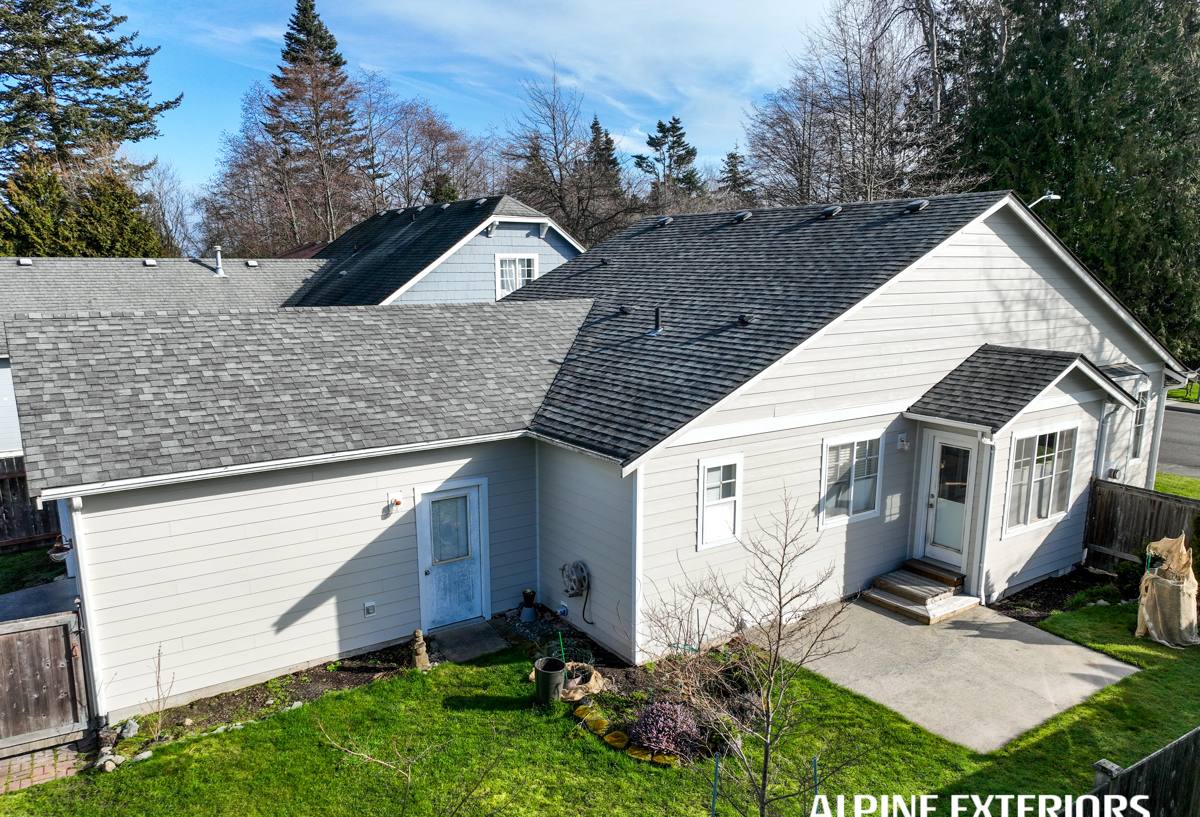
What Salt Air Does to a Roof
Coastal salt exposure is a slow, cumulative problem rather than a sudden one. It doesn't announce itself the way a storm-damaged shingle does, which is exactly why it causes trouble on homes where nobody's looked closely in a few years.
Metal Components Take the Brunt
Flashing, fasteners, gutters, and any exposed metal trim are the first casualties of salt air. Standard steel fasteners corrode faster near the water than they do even a few miles inland, and once a fastener starts to rust, it loses holding strength long before the failure becomes visible from the ground. We pay close attention to fastener and flashing material on Blaine homes specifically because of this, favoring corrosion-resistant hardware suited to a marine-influenced environment rather than treating it as an inland job.
Shingles and Underlying Materials
Asphalt shingles themselves hold up reasonably well against salt air, but the granule loss process that happens on every asphalt roof over time can accelerate slightly in a coastal setting, especially on faces of the roof that take the brunt of onshore wind. It's not a reason to avoid asphalt roofing in Blaine — it's a reason to inspect it a little more often than you would on a sheltered inland property.
Driving Rain and Wind-Driven Water Intrusion
A roof that sheds water fine in a straight-down rain can still leak in a wind-driven storm if the underlying details aren't right. Blaine's open exposure to weather coming off the water means driving rain — rain pushed sideways by wind rather than falling straight — is a regular occurrence, not an occasional event.
Driving rain finds weaknesses that vertical rain never would: under-lapped shingle courses, marginal flashing at roof-to-wall transitions, valleys that weren't detailed with enough width, and vent boots that have started to crack. On a still day none of these show a problem. In a sideways storm, water gets pushed uphill under the roofing material and finds its way into the attic or wall cavity.
- Roof valleys sized and flashed for wind-driven water, not just gravity drainage
- Step flashing and counter-flashing at every wall intersection, not caulk substituted for metal
- Properly lapped underlayment as a genuine second line of defense, not an afterthought
- Vent boots and pipe flashings checked for cracking, since these are common leak points in older roofs
- Gutter and downspout capacity sized for volume, not just installed to code minimums
Moss: The Slow, Steady Threat
Moss is a problem across most of western Washington, but the combination of moisture, shade from mature trees, and mild temperatures in Blaine keeps conditions favorable for moss growth for a longer stretch of the year than you'd see in a drier or sunnier climate. Left unaddressed, moss does more than look bad.
Moss holds moisture against the roof surface long after the rest of the roof has dried out. On asphalt shingles, that sustained moisture accelerates granule loss and can work its way under shingle edges, lifting them slightly and giving wind-driven rain an easier path underneath. On any roofing material, moss roots and rhizoids can work into seams and fastener penetrations over time.
What Actually Helps
Zinc or copper strips near the ridge allow rainwater to carry trace metal ions down the roof slope, which suppresses new moss growth over time — this is a preventive measure, not a cure for existing growth. For roofs that already have moss established, soft washing and manual removal by hand (never pressure washing, which strips granules and can force water under shingles) is the safer approach. Regular gutter cleaning also matters more in a moss-heavy environment, since moss and debris combine to clog gutters faster than either one alone.
Roofing Options for Blaine Homes
There's no single "best" roofing material for every home — the right choice depends on your roof's exposure, your home's architecture, and your budget. Here's how the common options compare for a coastal Whatcom County property.
| Material | Salt Air Performance | Moss Resistance | Typical Lifespan |
|---|---|---|---|
| Architectural Asphalt Shingle | Good with proper fasteners | Moderate — benefits from zinc strips | 25-30 years |
| Metal (standing seam) | Excellent with coastal-rated coatings | Very good — sheds moisture fast | 40-60 years |
| Composite/Synthetic Shake | Good | Good | 30-50 years |
| Cedar Shake | Requires more maintenance near salt air | Poor without regular treatment | 20-30 years with upkeep |
We don't push cedar shake on exposed coastal lots in Blaine as a general rule. It's a beautiful material, but between the moisture retention that invites moss and rot, and the added maintenance a salt-air environment demands, it's a harder product to keep looking and performing well without a real ongoing maintenance commitment. That's a trade-off we'll walk through honestly rather than sell around.
Roof Repair vs. Replacement: How We Help You Decide
Not every roofing problem in Blaine calls for a full replacement, and we'd rather tell you that up front than talk you into more work than you need.
Signs a Repair Is Reasonable
- Isolated leak tied to a single flashing point or vent boot
- Localized moss damage in one section, with the rest of the roof in solid shape
- Roof is under roughly 15 years old and the underlying decking is sound
- Missing or damaged shingles from a specific storm event, not widespread wear
Signs Replacement Makes More Sense
- Granule loss and shingle curling across large sections of the roof
- Multiple past repairs that haven't resolved recurring leaks
- Visible sagging, which can indicate decking or structural issues underneath
- Roof is approaching or past its material's expected lifespan
We'll get on the roof, take a real look, and tell you which category your home falls into. If a repair will genuinely hold, that's what we'll recommend.
Why a Local Crew Matters for Coastal Roofing
A roofing crew that mostly works inland or in drier climates doesn't necessarily think about fastener corrosion, wind-driven rain detailing, or moss cycles the same way a crew that works this stretch of coastline does. It's not a matter of skill — it's a matter of what problems you've actually seen come back to bite a roof two or three years after installation.
We service Blaine as part of our regular coverage across Whatcom County, which means we're not treating it as an unfamiliar edge case. We know what a Blaine roof is up against, and we build and repair accordingly — from fastener selection to flashing details to material recommendations.
Beyond the Roof: Siding, Windows, and Decks
The same coastal conditions that stress a roof — salt air, driving rain, and persistent moisture — put pressure on the rest of a home's exterior too. Siding near the water deals with the same corrosion and moisture-intrusion risks as roofing, windows need weatherstripping and flashing that actually holds up to sideways rain, and exterior decks face constant exposure with nowhere to hide from the elements. We handle all of it, which means when we're on your roof we're also positioned to flag issues developing elsewhere on the exterior — a cracked window seal, siding starting to hold moisture, deck boards showing early rot — before they become their own separate problem.
What to Expect When You Call Us
We start with an honest inspection, not a sales pitch. That means getting on the roof (not just looking from the ground), checking attic ventilation and any visible moisture staining, and looking closely at flashing, valleys, and vent penetrations — the spots most likely to fail first in a Blaine coastal environment. You'll get a straight explanation of what we found, what it means for your roof's condition, and what your realistic options are, from a targeted repair to a full replacement.
If you're a homeowner in Blaine dealing with a leak, noticing heavy moss buildup, or just want a professional set of eyes on a roof that's getting older, we'd rather look now than have you deal with a bigger problem after the next storm season. Reach out for a free, no-pressure estimate using the form below.