 Bellingham Roofing
 The Question Every Bellingham Homeowner Eventually Asks
At some point, almost every roof owner in Whatcom County stands in their driveway, looks up, and wonders whether that stain, that missing shingle, or that leak in the hallway ceiling means it's time for a new roof or whether a repair will get them through another few winters. It's a fair question, and it doesn't have a one-size answer. Roof lifespan depends on the material, the installation quality, the roof's exposure, and how the house has been maintained, and in Bellingham it also depends heavily on the climate the roof has been sitting under for the last however-many years. This page walks through the actual signs, the honest trade-offs between repair and replacement, and the local factors that make that decision different here than it would be somewhere drier and calmer.
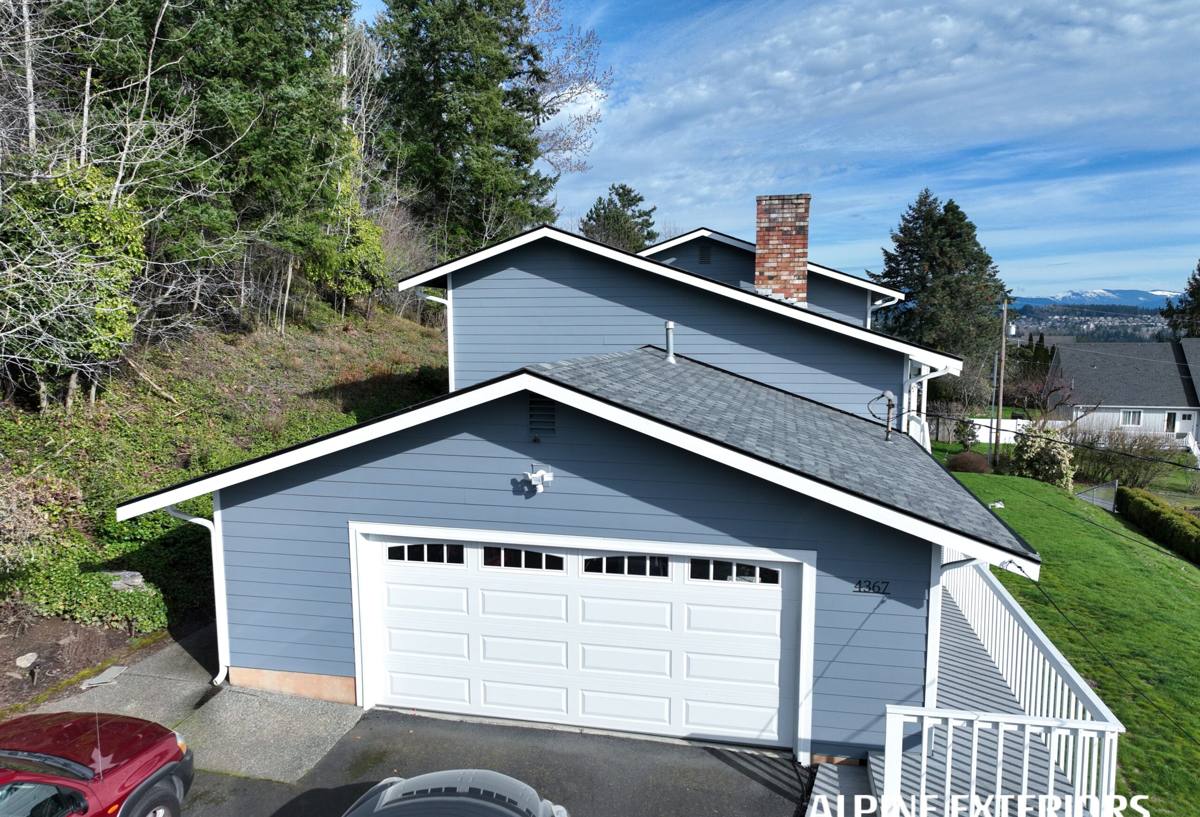
Why Bellingham's Climate Shortens the Conversation
Salt Air Off the Bay
Homes closer to Bellingham Bay and the Salish Sea sit in a steady flow of salt-tinged, moisture-laden air. That air is harder on metal flashing, fasteners, and exposed roofing components than an inland climate would be. Corrosion at flashing points and fastener heads is slow and easy to miss from the ground, but it's one of the more common reasons a roof that looks fine from the driveway is quietly failing at the details that actually keep water out.
Driving Rain
Whatcom County doesn't just get a lot of rain, it gets rain pushed sideways by wind coming off the water. That matters at every horizontal seam, valley, and penetration on a roof, because a roofing system that would shed straight-down rain just fine can still let water track in sideways at a poorly sealed valley or an underdriven nail. Over years, that kind of intrusion shows up as soft decking and interior staining long before it shows up as an obviously missing shingle.
A Long Moss Season
Mild temperatures, tree cover, and near-constant dampness give moss a long growing season in Bellingham, often close to year-round on north-facing or shaded roof planes. Moss isn't just cosmetic. Its root structure works into shingle granules and holds moisture against the roofing material long after the rest of the roof has dried out, and that sustained dampness accelerates granule loss and shingle breakdown in exactly the spots where moss tends to establish.
Put together, salt air, wind-driven rain, and a long moss season mean a roof in Bellingham is generally working harder, and aging faster in certain spots, than the same roof would in a drier, calmer climate. That's not a reason to panic about a roof's age on its own, but it's a reason to take local wear patterns seriously rather than going strictly by a manufacturer's rated lifespan.
Signs You're Looking at Replacement, Not Repair
- Granule loss heavy enough that you're finding sand-like grit collecting in gutters and downspouts
- Shingles that are curling, cupping, or losing their flat profile across large sections of the roof, not just one or two spots
- Daylight visible through the roof deck from inside the attic, or damp insulation after storms
- Soft or spongy roof decking underfoot, which usually means moisture has been getting into the plywood or OSB
- Repeated leaks in different locations after past patch jobs, rather than one isolated leak
- Moss or dark algae staining that returns quickly after cleaning, especially on shaded or north-facing slopes
- Flashing around chimneys, vents, and valleys that's visibly rusted, lifted, or separated from the roofing material
- A roof that's at or past its material's typical service life and has never been fully replaced, only patched
Any one of these on its own might still be a repair situation. Several of them together, especially widespread granule loss combined with soft decking or recurring leaks, usually point toward a roof that's past the point where patching makes financial sense.
Repair vs. Replace: How We Actually Think Through It
We don't default to recommending a full replacement just because a homeowner calls about a leak. A single damaged section, a flashing failure around one vent, or storm damage confined to a small area can often be repaired cleanly and will hold up fine if the rest of the roof is sound. The decision comes down to a few practical questions: how much of the roof's total service life is left, how widespread the damage actually is once we're up there looking at it directly, and whether the underlying decking is still solid or has started to soften from sustained moisture.
A roof that's five years into a thirty-year rated shingle with one isolated leak is almost always a repair. A roof that's twenty-two years into that same thirty-year shingle, with moss on multiple slopes and granule loss showing up in the gutters, is a different conversation, because at that point a repair is usually just buying a year or two before the same issues resurface somewhere else on the same aging roof.
Roofing Materials and How They Age Here
| Material | Typical Service Life | How Bellingham's Climate Affects It |
|---|---|---|
| Asphalt composition shingles | 20-30 years depending on grade | Granule loss accelerates under sustained moisture and moss growth on shaded slopes |
| Architectural/dimensional shingles | 25-30+ years depending on grade | Heavier profile sheds wind-driven rain somewhat better than 3-tab, but still needs moss management |
| Metal roofing | 40-50+ years | Handles driving rain well, but coastal salt air makes fastener and flashing material choice important |
| Cedar shake | 20-30 years with upkeep | Requires consistent maintenance to resist the moisture and moss pressure common in this climate |
| Flat/low-slope membrane roofing | 15-25 years depending on system | Ponding and seam integrity are the main concerns given how much rain this area sees |
These are general industry ranges, not promises about any specific roof. The actual remaining life of your roof depends on the original installation quality, ventilation, maintenance history, and exposure, which is why we look at the roof itself rather than just doing math off its age.
What a Roof Inspection Actually Involves
A proper inspection isn't a glance from the ground. It means getting on the roof to check shingle condition and granule wear directly, examining flashing at every chimney, vent, skylight, and valley, checking the attic from the inside for daylight, moisture staining, or damp insulation, and assessing whether the decking underneath still feels solid or has started to soften. Ground-level assessments can miss the details that actually determine whether a roof needs a patch or a full tear-off, particularly on valleys and shaded slopes where moss and moisture damage tend to concentrate first.
What Age Alone Doesn't Tell You
A roof's age is a useful data point, not the whole answer. Two roofs installed the same year on similar homes can be in very different condition if one has a shaded, moss-prone north slope and poor attic ventilation while the other gets more sun exposure and airflow. That's part of why we walk the actual roof before giving you a replace-or-repair recommendation instead of pricing off the permit date alone.
Cost Factors in a Bellingham Roof Replacement
| Factor | What It Affects | Why It Matters Here |
|---|---|---|
| Roof size and pitch | Total material and labor | Steeper pitches and multiple planes common on Whatcom County homes add complexity and labor time |
| Tear-off vs. overlay | Labor scope and deck access | Tear-off exposes hidden moisture damage that's common under aging roofs in this rain-heavy climate |
| Decking condition | Repair costs before new roofing goes on | Years of trapped moisture behind failing shingles can rot sheathing before it's visible from outside |
| Material selection | Material cost and expected service life | Higher-grade shingles or metal roofing resist granule loss and corrosion better in salt air and driving rain |
| Flashing and ventilation work | Labor and material add-ons | Proper attic ventilation and corrosion-resistant flashing matter more here than in a drier inland climate |
| Roof access and site conditions | Labor time and equipment needs | Steep lots, mature tree cover, and multi-story homes common in the area can add staging time |
Real pricing depends on the specific roof, which is why we walk the property before quoting rather than pricing off square footage alone.
What Happens If You Wait Too Long
Putting off a roof that genuinely needs replacing doesn't usually cause a dramatic failure overnight. What it usually causes is a slow accumulation of hidden damage: decking that softens under a leak nobody notices until the ceiling stains, insulation that stays damp and loses effectiveness, and interior finishes that get damaged by water that's been finding its way in gradually. By the time those problems are visible inside the house, the repair scope has often grown well past what the original roof issue would have cost to fix. In a climate that stays wet as much of the year as Bellingham's does, that timeline tends to move faster than homeowners expect.
A Practical Checklist Before You Decide
- Check your attic for daylight, staining, or damp insulation after the next heavy rain
- Look at your gutters for granule buildup after cleaning them out
- Note whether moss keeps returning to the same spots even after cleaning
- Ask any contractor you're considering to get on the roof and check the decking, not just look from the ground
- Get a clear answer on whether isolated repair or full replacement is being recommended, and why
- Ask what ventilation and flashing details will change if you do replace, not just what shingle color you're picking
Roofing as Part of the Whole Exterior
Roof problems don't always stay confined to the roof. A failing valley or worn flashing can send water tracking down into siding, fascia, or even foundation areas before it ever shows up as an obvious roof leak. Because we handle roofing alongside siding, windows, and decks, we can look at a Bellingham home as one connected exterior system and trace water damage back to where it's actually originating, rather than treating each surface as a separate problem.
If you're not sure whether your roof needs a repair, a full replacement, or just an honest inspection to find out, we're glad to take a look. Reach out using the form below to schedule a free, no-pressure estimate.