 Bellingham Roofing
 Sunnyland is one of Bellingham's older, tree-shaded neighborhoods, and that combination — mature canopy, close-set lots, and homes that span everything from mid-century ramblers to newer infill construction — creates a fairly specific set of roofing conditions. If you're starting to research roof replacement for a Sunnyland property, this page walks through what actually matters here: what the climate does to a roof over time, what a correct replacement involves, and how to think about the decision without getting lost in sales pitches.
Why Sunnyland Roofs Wear the Way They Do
Bellingham sits close enough to Bellingham Bay that salt-laden air is a real factor for roofs within a few miles of the water, and Sunnyland is well within that range. Add in Whatcom County's long, wet fall-through-spring stretch and the shade from mature trees common throughout the neighborhood, and you get a roof environment that's tougher on materials than drier inland climates give it credit for.
Three things drive most of the roof failures we see in this part of Bellingham:
- Moss and organic growth. Shaded, north-facing roof slopes stay damp for days after a storm. Moss roots into shingle mat and grows under wood shakes, lifting material and holding moisture against the deck.
- Driving rain. Storms off the Strait of Georgia don't just fall — they push sideways under wind gusts, which means flashing, underlayment laps, and valley details have to be genuinely correct, not just "close enough."
- Salt air corrosion. Fasteners, flashing, and any exposed metal components corrode faster near the water. This shows up first as rust streaking, then as failed nail heads and leaking penetrations.
None of this means a Sunnyland roof needs anything exotic — it means the ordinary steps (proper underlayment, correct flashing, right ventilation) have to be done without shortcuts, because this climate finds every one of them eventually.
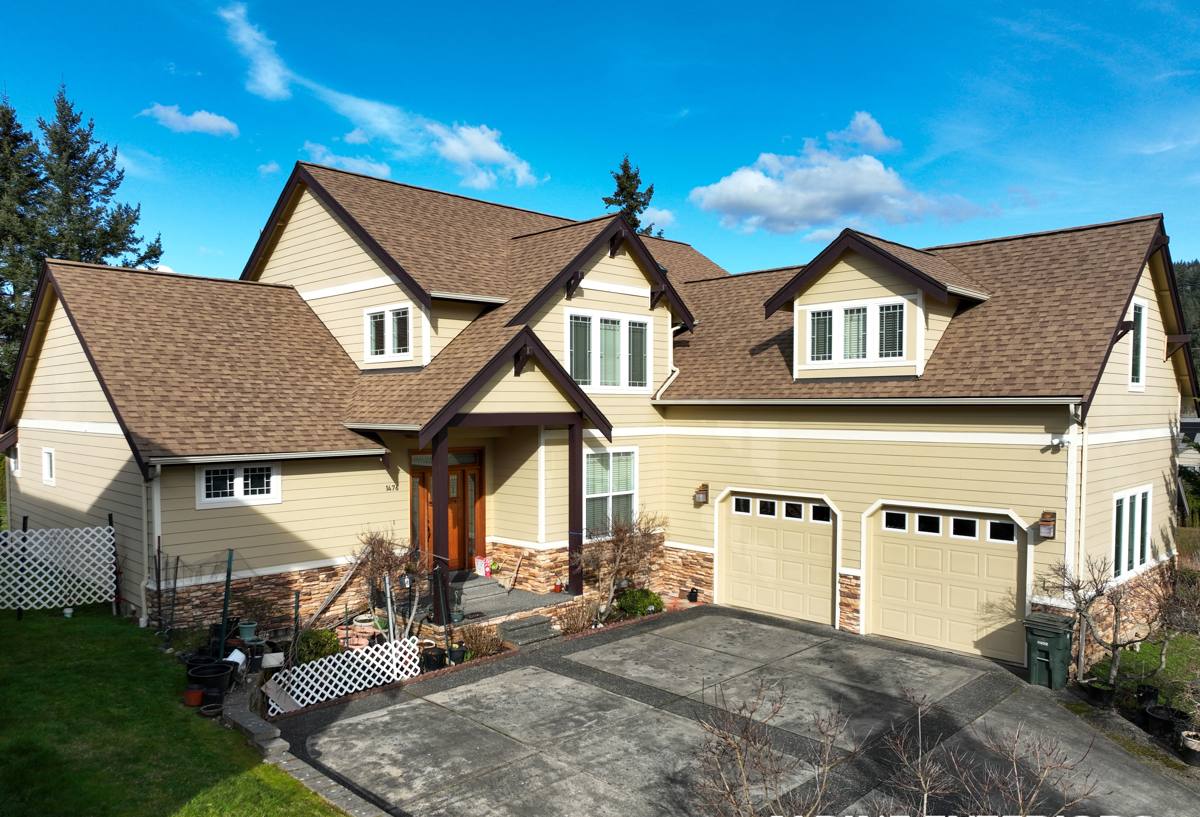
Signs a Sunnyland Roof Is Due for Replacement
Roof replacement is a big-ticket decision, so it's worth being honest about when repair still makes sense versus when you're better off starting over. Common signs we look for on Whatcom County homes include:
- Granule loss showing up in gutters or downspouts, especially after wind events
- Shingles that are cupping, curling, or cracking — often worse on the moss-prone, shaded slopes
- Soft or spongy spots when walked, which usually means deck damage underneath
- Daylight visible through the roof deck from inside the attic
- Repeated leaks around the same chimney, skylight, or valley despite prior patching
- A roof older than its material's realistic lifespan for this climate — asphalt roofs here typically run shorter than the manufacturer's stated life due to moss and moisture exposure
If a roof is showing one or two of these in isolation, targeted repair may still buy time. When several show up together, or the roof is past 18-20 years on standard asphalt shingle, replacement is usually the more economical path — repeated repairs on an aging roof add up fast without solving the underlying wear.
What a Correct Replacement Involves
Tear-Off and Deck Inspection
We remove the existing roofing down to the deck rather than layering over old material. This is the only way to actually see what's happening underneath — soft plywood, past water staining, or rot around penetrations doesn't show up until the old layer is off. Any damaged decking gets replaced before anything new goes down; skipping this step is one of the most common reasons a "new" roof leaks within a few years.
Underlayment and Water Protection
Given how much driving rain this area gets, we pay particular attention to underlayment coverage and ice-and-water shield placement at eaves, valleys, and around every penetration — chimneys, vents, skylights. This layer is what protects the home if wind-driven rain gets under the shingles, which happens more often here than in drier climates.
Flashing
Flashing failure is behind a large share of the leaks we get called out for on older Bellingham roofs. Step flashing at walls, counter-flashing at chimneys, and valley metal all need to be correctly lapped and, near the water, ideally a metal that resists salt corrosion better than bare galvanized. This is a detail-heavy part of the job that's easy to rush and hard to inspect once shingles cover it — it needs to be right the first time.
Ventilation
Proper intake and exhaust ventilation keeps the attic dry and temperature-balanced, which matters for shingle life and for controlling condensation in our humid climate. Poor ventilation shortens roof life regardless of how good the shingles are, and it's one of the most overlooked factors in a replacement.
Moss Prevention Measures
On shaded Sunnyland lots, we typically recommend zinc or copper strips near the ridge as part of the new roof system. Rain washing over these metals releases trace amounts that inhibit moss growth on the slopes below — a low-maintenance way to slow down the neighborhood's biggest recurring roof problem.
Material Options for This Climate
| Material | Typical Lifespan (PNW climate) | Moss Resistance | Considerations for Sunnyland |
|---|---|---|---|
| Architectural asphalt shingle | 20-30 years | Moderate — benefits from zinc strips | Most common choice; wide color range; good value |
| 3-tab asphalt shingle | 15-20 years | Lower | Budget option; shorter life under heavy moss exposure |
| Metal roofing | 40-50+ years | High — sheds moisture quickly | Higher upfront cost; performs very well in wet, shaded conditions |
| Wood shake | 25-30 years with upkeep | Low without regular maintenance | Requires ongoing moss and moisture management; higher maintenance burden in this climate |
We don't push any single product line as a default. The right call depends on the home's roof pitch, how much shade the lot gets, your maintenance appetite, and budget. We'll walk through the honest trade-offs for your specific roof rather than steering you toward whatever's easiest for us to install.
What a Replacement Actually Costs to Think Through
We won't post a fake price range here, because the honest answer is "it depends" — roof size, pitch, layers to remove, deck condition, material choice, and access all move the number. What we can tell you is what drives cost up or down on a typical Sunnyland job:
| Factor | Effect on Cost |
|---|---|
| Steep or complex roof pitch | Increases labor time and safety requirements |
| Multiple existing layers to remove | Adds tear-off time and disposal cost |
| Deck damage found during tear-off | Adds material and labor for plywood replacement |
| Number of penetrations (skylights, chimneys, vents) | More flashing detail work |
| Material choice | Asphalt is generally more affordable than metal upfront |
| Tree cover requiring limb clearance or extra cleanup | Adds prep and cleanup time — relevant for many Sunnyland lots |
The only way to get a real number is a roof-specific estimate. Rough per-square averages you'll find online rarely account for the pitch, access, and deck condition variables that actually determine your final cost.
How We Approach a Sunnyland Job
- On-site inspection. We look at the roof from the ground and, when needed, up close — checking pitch, existing material, flashing condition, and signs of deck damage.
- Written estimate. You get a clear scope: tear-off, deck repair allowance, underlayment, flashing, material, and ventilation — no vague line items.
- Scheduling around weather. We plan tear-off days with Bellingham's rain patterns in mind so your home isn't left exposed longer than necessary.
- Tear-off and deck repair. Old material comes off, deck gets inspected and repaired as needed.
- Installation. Underlayment, flashing, ventilation, and roofing material go in, with attention to the details that matter most in wind-driven rain.
- Final walkthrough and cleanup. We check the finished roof with you and make sure the property — driveway, landscaping, gutters — is cleaned up before we leave.
Why Local Experience Matters Here
A roofing crew that works Whatcom County neighborhoods regularly already knows which details cause problems in this specific climate — how much moss protection a shaded Sunnyland lot actually needs, which flashing approach holds up against wind off the bay, and how local permitting and disposal work in Bellingham. That's different knowledge than a crew mainly used to drier, sunnier markets. It shows up in fewer callbacks and a roof that performs the way it's supposed to for its full expected life, not just on a sunny inspection day.
A Quick Pre-Replacement Checklist
- Get at least one on-site inspection, not just a drive-by estimate
- Ask what the tear-off scope includes — full removal vs. overlay
- Confirm how deck damage, if found, will be priced and handled
- Ask specifically about moss prevention for shaded slopes
- Check what underlayment and ice-and-water shield will be used at valleys and eaves
- Get the warranty terms in writing — both material and workmanship
- Confirm licensing and insurance before signing anything
If your Sunnyland roof is showing wear, or you just want a straight assessment of how much life it has left, we're happy to take a look. Fill out the form below for a free, no-pressure estimate — we'll tell you what we actually see, not what's easiest to sell.