 Bellingham Roofing
 Working on Homes in the Silver Beach Neighborhood
Silver Beach sits along the southwest shore of Lake Whatcom, and that setting shapes almost everything about how a home ages here. Mature tree cover, a lot of shaded roof and siding area, and proximity to the water all add up to a slower-drying, higher-moisture environment than you'll find on more open, sun-exposed lots elsewhere in Bellingham. We've worked on enough homes in this part of Whatcom County to know that the issues we see in Silver Beach aren't the same mix we see in a newer, treeless subdivision across town.
This page walks through what we actually look for on Silver Beach homes, how our roofing, siding, window, and deck work accounts for the local conditions, and why having a crew that already understands this neighborhood matters when you're deciding who to hire.
What the Local Climate Does to a Silver Beach Home
Whatcom County gets a long wet season, and Silver Beach's tree canopy and lakeside humidity stretch that out further than average. A few patterns show up again and again on inspections in this area:
Moss and Organic Growth
Shaded, north-facing roof slopes under fir and cedar cover rarely get enough direct sun to dry out between rain events. That keeps moss, algae, and moss spores active for most of the year instead of just the wettest months. Left alone, moss lifts shingle edges, holds water against the roof deck, and works its way into gutters and valleys.
Driving Rain and Wind-Driven Moisture
Storms coming off the water can push rain sideways into siding, window trim, and eave areas that a straight-down rain would never reach. That's where flashing, house wrap, and caulking details matter more than the visible surface material itself — a roof or wall can look fine while water is already getting behind it.
Debris Load
Needles, cones, and leaf litter from surrounding trees accumulate in gutters, valleys, and on lower roof slopes faster here than in more open parts of town. A clogged valley during a heavy rain event is one of the more common causes of an interior leak we get called out for in this neighborhood.
Slower Drying Times
Between the shade and the lake-adjacent humidity, wood trim, fascia, and any exposed fastener heads stay damp longer after a storm. That extends the window for rot and corrosion compared to a home with more sun exposure and airflow.
Roofing for Silver Beach Properties
Most of the roofs we service in this neighborhood are asphalt composition shingle, with some cedar shake on older homes and a growing number of metal roofs on newer builds and re-roofs. Each has different maintenance needs given the moss and moisture pattern here.
Inspection and Moss Management
We check for lifted or cupped shingles, granule loss in valleys, soft spots around vent boots, and moss buildup at shaded transitions. Moss treatment and gentle removal (never high-pressure washing, which strips granules and shortens shingle life) is a routine part of roof care for shaded lake-area homes, not a one-time fix.
Ventilation Matters More Under Tree Cover
A roof that can't breathe traps moisture in the attic space, which accelerates deck rot from the underside — a problem that's easy to miss until it's advanced. On shaded homes we pay close attention to intake and exhaust venting as part of any roofing project, not just the shingle layer itself.
Metal Roofing as an Option
Standing-seam metal sheds moss and debris more easily than shingles because of its smooth, low-friction surface, and it holds up well to the area's driving rain. It costs more up front, and it's not the right fit for every home's style or budget, but for a heavily shaded Silver Beach lot it's worth discussing as a longer-term option.
Siding, Windows, and Decks: The Full Exterior Picture
Roofing gets most of the attention, but the same moisture pattern that stresses a roof in this neighborhood stresses the rest of the exterior too.
Siding
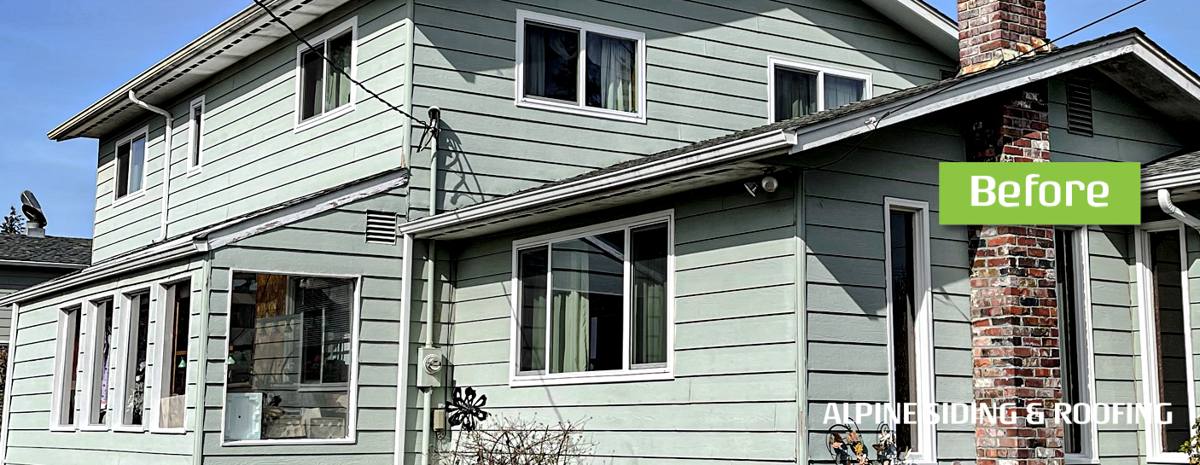
Wood and older composite siding on shaded lots are prone to holding moisture at seams, lap joints, and anywhere caulking has failed. We look closely at bottom-edge rot, paint failure, and soft trim boards — early signs that water is getting behind the siding rather than running off it. Fiber cement siding has become a common upgrade for homes in wetter, shaded settings because it resists moisture absorption and doesn't feed rot the way untreated wood can, though it's a heavier, more installation-sensitive product that needs to be hung and flashed correctly to perform.
Windows
Older single-pane or early dual-pane windows on lake-facing walls often show fogging between panes or soft sills long before the glass itself fails — that's a seal and flashing issue, not just an age issue. Replacement windows on a shaded, damp lot need correct flashing integration with the siding above and below, not just a good window unit, or you've just relocated the leak.
Decks
Decks near the lake see near-constant shade and moisture cycling, which is hard on both wood and the fasteners holding it together. Composite decking resists rot and doesn't need refinishing, but ledger board attachment, joist protection, and drainage underneath the deck matter just as much as the decking material on top — a composite deck built on a poorly flashed ledger will still develop a hidden rot problem at the house connection.
Material Comparison for Wet, Shaded Lots
| Material | Best For | Trade-Off in This Setting |
|---|---|---|
| Asphalt composition shingle | Standard re-roofs, budget-conscious projects | Needs regular moss upkeep on shaded slopes |
| Standing-seam metal roofing | Heavily shaded roofs, long-term low maintenance | Higher upfront cost, requires experienced installers |
| Cedar shake | Homes matching an existing traditional look | Highest moisture sensitivity, most maintenance |
| Fiber cement siding | Damp, shaded exterior walls | Heavier material, installation must be precise |
| Composite decking | Shaded decks near water | Higher material cost than wood, but far less upkeep |
How We Approach a Silver Beach Project
The process is the same whether it's a roof repair or a full exterior refresh — we just weight the inspection toward the issues this neighborhood actually produces.
- Walk the exterior and roof to document moss, moisture staining, soft trim, and any active leak points
- Check attic or crawlspace ventilation and look for moisture signs from the inside where accessible
- Identify which areas are shaded long-term versus which get periodic sun, since that changes maintenance intervals
- Give you a written scope with honest options — repair versus replace, and what each material choice means for upkeep on your specific lot
- Do the work with flashing and moisture management as a first-order priority, not an afterthought behind the visible material
Maintenance Checklist for Silver Beach Homeowners
Between full inspections, a few habits go a long way toward avoiding the moisture problems that are most common in this neighborhood:
- Clear gutters and roof valleys of needle and leaf debris at least twice a year, more often under heavy conifer cover
- Have moss treated before it visibly thickens on shaded roof slopes, not after
- Watch for soft or discolored trim around windows, doors, and deck ledger boards
- Trim back branches that keep roof or siding sections in constant shade or that drop debris directly onto the roof
- After major storms, do a quick visual check for lifted shingles or new staining on ceilings and walls
- Reseal deck and window caulking joints when they start to crack or pull away, before the gap widens
Why a Local Crew Makes a Difference Here
Silver Beach isn't a subdivision built to one spec — it's a mix of older lake cottages, remodeled homes, and newer construction, each aging differently under the same tree cover and lake humidity. A crew that works across Bellingham and Whatcom County regularly sees that range and knows which symptoms point to a roofing issue versus a siding issue versus simple ventilation trouble, rather than treating every job the same way. We're not guessing at how a shaded, lake-adjacent lot behaves over a Pacific Northwest winter — it's the environment we work in every week.
Local also means being reachable after the job is done. If a moss patch comes back or a seal starts to fail two winters later, you're calling a crew that already knows your roof and your property, not starting over with someone new.
Get a Straightforward Estimate
If you're noticing moss buildup, a slow leak, soft trim, or you're just due for an exterior check after a long wet season, we're happy to take a look. We'll give you an honest read on what's actually going on and what your options are — no pressure, no inflated scope. Use the form below to request a free estimate for your Silver Beach home.