 Bellingham Roofing
 Roofing in Edgemoor: What the Location Actually Means for Your Home
Edgemoor sits close to the water, and that proximity shapes almost everything about how a roof, siding system, or set of exterior windows ages here. Homes near Bellingham Bay deal with a different combination of stresses than houses further inland in Whatcom County: salt-laden air moving off the water, wind-driven rain that gets pushed sideways into places a straight-down rain never would, and a shaded, moisture-heavy tree canopy in many of the older residential streets that keeps roof surfaces damp long after a storm has passed. None of these factors is dramatic on its own. Together, over years, they add up to the kind of wear that homeowners in drier parts of the country simply don't have to plan for.
We've worked on enough homes in and around Edgemoor to know that "standard" maintenance schedules and generic installation specs don't always hold up here. A roof detail that's fine in a subdivision on the east side of Whatcom County can underperform a few miles away on a shaded, water-facing lot. Good exterior work in this neighborhood starts with respecting that difference, not applying a one-size-fits-all approach.
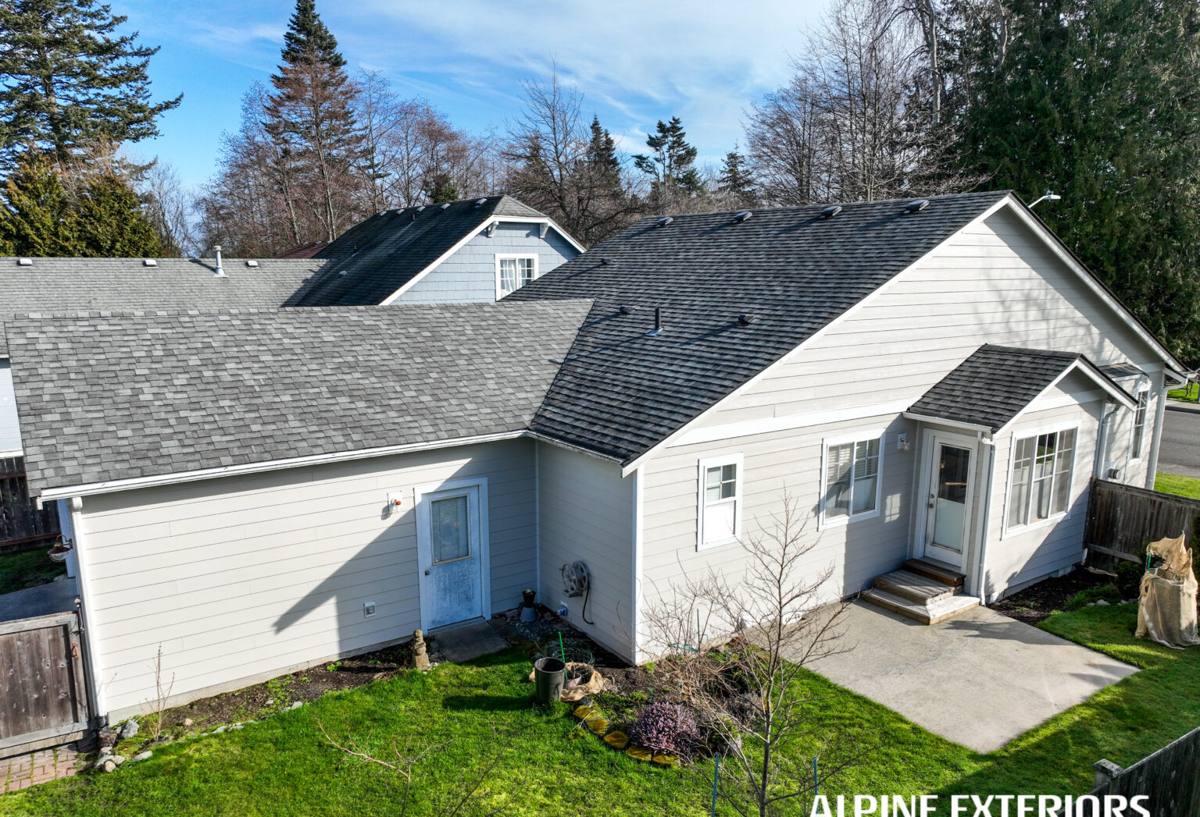
Salt Air and Coastal Exposure
Salt air is corrosive to a lot of the metal components involved in roofing and exterior work — fasteners, flashing, gutter hardware, and any exposed metal trim. Over time, standard-grade metal fasteners and flashing can corrode faster near the water than they would a few miles inland, and that corrosion is often invisible until it's already caused a leak path. This is why material selection matters more here than it might in a landlocked neighborhood.
What We Do Differently
- Specify corrosion-resistant fasteners and flashing metals appropriate for coastal exposure rather than the cheapest compliant option
- Pay close attention to any dissimilar-metal contact points, since certain metal combinations corrode faster when they're in direct contact near salt air
- Inspect existing flashing and hardware closely on repair and re-roof jobs, since corrosion damage is frequently hidden under trim or shingles until it's advanced
Driving Rain and Wind-Driven Water Intrusion
Bellingham gets a lot of rain, but the rain that causes problems in Edgemoor is often the kind that comes in sideways off the bay during a windstorm. Wind-driven rain finds its way into gaps that a vertical rain never would — under siding laps, around window flanges, at roof-to-wall transitions, and through any flashing detail that was installed to a minimum-code standard instead of a coastal-appropriate one.
This is where the difference between a roofing crew that does volume production elsewhere in the region and one that specifically understands water-facing lots really shows. Roof valleys, chimney flashing, skylight curbs, and the transitions where a roof meets a wall or dormer are the most common failure points we find on older Edgemoor homes. Windows are just as exposed — flashing and sealant details around window openings on the weather-facing sides of a house need to be installed with wind-driven rain in mind, not just gravity.
Moss, Shade, and Roof Longevity
Whatcom County's long wet season, combined with mature tree cover in many Edgemoor yards, creates ideal conditions for moss and algae growth on roofing. Moss isn't just a cosmetic issue. As it establishes itself, it holds moisture against the roofing material, lifts shingle edges as it grows, and can work its way under flashing over time. A roof that stays shaded and damp for months at a stretch simply ages faster than the same roof in full sun.
Practical Moss Management
- Physical removal by hand or soft-wash methods rather than aggressive pressure washing, which can strip granules and shorten shingle life
- Zinc or copper control strips installed near the ridge on new roofs, which allow rainwater to carry trace metal ions down the roof surface and discourage regrowth
- Keeping gutters and valleys clear, since trapped debris holds moisture and gives moss a foothold even on an otherwise well-maintained roof
- Trimming back overhanging limbs where practical to increase sun exposure and airflow across the roof surface
None of this eliminates moss entirely in a climate like ours, but a sensible maintenance rhythm keeps it from shortening the life of the roof.
Roofing, Siding, Windows, and Decks: How They Work Together
We handle all four of these trades, and on a coastal, tree-shaded lot like a lot of Edgemoor properties, they're more connected than homeowners often expect. Water that gets past a roof edge can end up staining or rotting siding below it. Poorly flashed windows can feed moisture into wall cavities that eventually shows up as siding damage. A deck built against the house without proper ledger flashing can channel water directly into the structure. Treating these as one connected exterior system, rather than four separate projects, is how problems get caught before they become expensive.
Roofing
Asphalt composition shingles remain the most common and cost-effective option for most homes in the area, and quality architectural shingles hold up well when installed with attention to the coastal details above. Standing-seam metal roofing is a strong option for homeowners who want a longer service life and are less concerned with moss, since metal sheds debris more readily than shingles.
Siding
Fiber cement siding is generally our recommendation for water-facing or shaded lots because it resists moisture-related swelling and rot better than solid wood siding, holds paint longer, and doesn't require the same maintenance vigilance. Wood siding can still be the right call for homeowners prioritizing a specific traditional look, but it comes with a real maintenance commitment in this climate — more frequent inspection, refinishing, and prompt attention to any moisture intrusion.
Windows
On a coastal lot, window flashing detail matters as much as the window unit itself. We pay particular attention to head flashing and the integration between window flange and weather-resistive barrier, since this is a common failure point in wind-driven rain conditions.
Decks
Decks near the water face their own accelerated wear from moisture and salt exposure. Proper ledger flashing where the deck meets the house, corrosion-resistant fasteners, and material choices suited to a damp climate all factor into how long a deck lasts before it needs major repair.
Cost Factors for Edgemoor Homeowners
Every home is different, and we don't quote sight unseen, but the table below outlines the general factors that tend to move price up or down on exterior projects in this area.
| Factor | Tends to Lower Cost | Tends to Raise Cost |
|---|---|---|
| Roof access | Single-story, open access, low pitch | Steep pitch, multiple stories, limited equipment access |
| Existing condition | Sound decking, no hidden rot | Water damage or rot discovered under existing material |
| Material choice | Standard asphalt shingle, vinyl or basic fiber cement | Standing-seam metal, premium fiber cement profiles, natural wood |
| Coastal exposure | Sheltered, inland-facing lot | Direct water-facing exposure requiring upgraded flashing and fasteners |
| Tree cover | Full sun, minimal moss history | Heavy shade requiring moss remediation and control strips |
Roofing and siding projects on the same home often make sense to bundle, since scaffolding, access equipment, and disposal can sometimes be shared, which trims overall cost compared to doing the same work as two separate projects months apart.
Why a Local Crew Matters in Edgemoor
A crew that works across Bellingham and Whatcom County regularly develops an instinct for which lots need extra attention to flashing, which neighborhoods see the worst moss buildup, and which product choices actually hold up rather than just meeting minimum code. That's different from experience gained mostly on drier, more sheltered inland projects. It also means we're a reasonable drive away if a warranty question or a storm-related concern comes up later — not a crew that did one job in the area and then moved on to the next region.
A Simple Maintenance Checklist for Water-Facing and Shaded Homes
- Have gutters and downspouts cleared at least twice a year, more often if the lot has heavy tree cover
- Walk the roofline visually after major windstorms to check for lifted shingles or debris buildup, without climbing onto the roof yourself
- Watch for moss establishing at the ridge or in shaded valleys and address it before it spreads
- Check exterior caulking around windows and trim annually, since it degrades faster in coastal UV and salt exposure than in drier inland conditions
- Look inside the attic periodically for signs of moisture staining, which often shows up before a leak is visible from outside
- Keep an eye on deck ledger boards and fastener heads for early signs of corrosion or wood softening
Getting Started
If you're dealing with an aging roof, moss that keeps coming back, siding that's showing water staining, or you're just planning ahead for a home on a shaded or water-facing Edgemoor lot, we're happy to take a look and give you a straight assessment. There's no pressure and no obligation — use the form below to request a free estimate, and we'll walk the property with the specific conditions of your lot in mind.