 Bellingham Roofing
 Siding That Has to Work for Sunnyland's Conditions
Sunnyland is a residential neighborhood inside Bellingham, and like most of Whatcom County it sits close enough to the water that salt-laden air is a daily fact of life, not an occasional storm event. Add in the driving rain that comes off Bellingham Bay through the fall and winter, plus a moss season that can stretch for months under the region's cloud cover and tree canopy, and you have a climate that is genuinely hard on exterior building materials. Siding here doesn't just need to look good on installation day — it needs to hold up through decades of wet, salty, shaded weather without rotting, delaminating, or feeding a steady crop of moss and algae.
We install James Hardie fiber cement siding exclusively. Not vinyl, not LP SmartSide, not cedar or primed spruce. This page explains what Sunnyland homes specifically need from their siding, what a correctly done Hardie installation actually involves, and why our process is built around this neighborhood's conditions rather than a generic install.
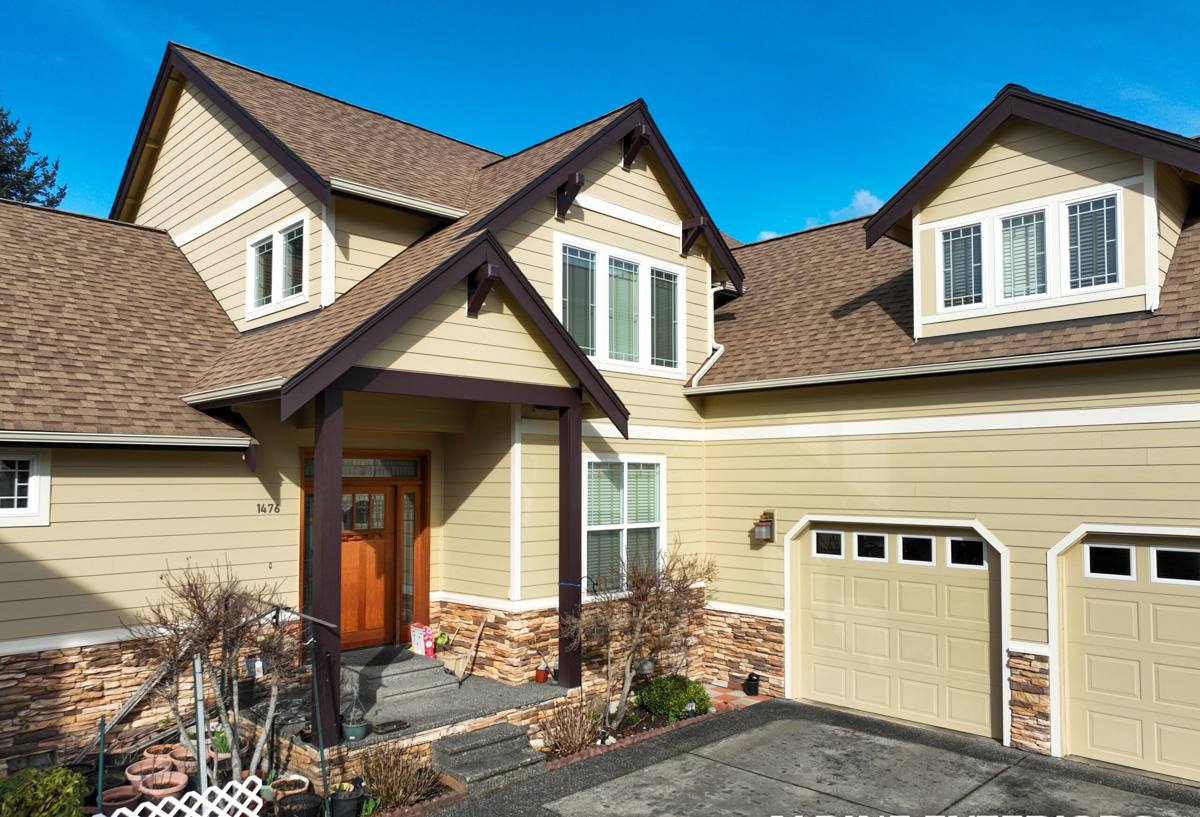
What Bellingham's Climate Does to Exterior Siding
Salt Air and Corrosion
Homes near Puget Sound and Bellingham Bay are exposed to airborne salt that settles on exterior surfaces and accelerates the breakdown of fasteners, trim, and paint films. Over years, that exposure shows up as rusting nail heads bleeding through paint, corroded flashing, and premature failure of finishes that weren't engineered for a marine-influenced climate.
Driving Rain and Wind-Driven Moisture
Whatcom County storms frequently come with enough wind to push rain sideways into wall assemblies, not just straight down onto roofs. Siding systems that rely on face-sealing (caulk and paint alone to keep water out) tend to fail here faster than in drier climates, because wind-driven rain finds every gap, lap, and fastener penetration.
Moss, Algae, and Shade
Bellingham's tree cover and long stretches of overcast, damp weather create ideal conditions for moss and algae growth on north-facing and shaded wall sections. Wood-based and wood-composite sidings are especially vulnerable because moss holds moisture against the surface, which speeds up rot in exactly the areas already fighting for sun exposure.
Freeze-Thaw and Moisture Cycling
Whatcom County doesn't see the extreme cold of inland climates, but it does see enough freeze-thaw cycling that any siding material already holding moisture is at risk of cracking, swelling, or delaminating as that trapped water expands and contracts.
Why We Standardized on James Hardie
James Hardie fiber cement is cement, cellulose fiber, and sand — engineered to resist exactly the conditions described above. It doesn't rot, it isn't a food source for moss or fungus the way wood-based products are, and it holds up to sustained moisture exposure far better than wood, wood-composite, or vinyl siding over a multi-decade service life.
Hardie also builds region-specific product lines through its HZ5 engineering, which is formulated for wetter, harsher climates like the Pacific Northwest — as opposed to a one-size-fits-all product sold nationally regardless of local weather. Combined with the factory-applied ColorPlus finish, which is baked on under controlled conditions rather than field-painted, Sunnyland homeowners get a finish that resists fading and moisture intrusion better than site-applied paint on wood or composite siding.
We won't pretend other products don't have their place nationally. But for a neighborhood dealing with salt air, driving rain, and a genuine moss season every single year, we've made fiber cement engineered for this climate our standard — not a substitute product with a lower price tag and a shorter service life.
What a Correct James Hardie Installation Actually Involves
The material is only half the equation. A huge share of siding failures we see on older Bellingham homes trace back to installation shortcuts, not the product itself. A correct Hardie install in this climate includes:
- A continuous water-resistive barrier behind the siding, installed and lapped correctly so any moisture that does get past the cladding drains out instead of into the wall
- Proper flashing at every window, door, and roof-to-wall transition — the majority of hidden rot we find starts at these penetrations, not on flat wall sections
- Correct fastener spacing and type, matched to Hardie's engineering specs rather than whatever nails a crew has on the truck
- Manufacturer-specified clearances at the foundation, roofline, and any horizontal trim, so siding never sits in standing water or constant splash-back
- Caulking only where Hardie's install guide calls for it — over-caulking traps moisture just as badly as under-caulking lets it in
- Field-cut edges primed or sealed before installation, since raw cut edges are the most common point of moisture intrusion on any fiber cement job
None of this is exotic. It's disciplined, by-the-book installation that respects both the manufacturer's engineering and this region's weather. It's also the difference between siding that looks right for two years and siding that performs for decades.
How Our Process Works
1. On-Site Assessment
We walk the home with you, looking specifically at the conditions Sunnyland properties tend to face — shaded north walls with moss buildup, salt exposure on the sides facing open air, and any existing rot or moisture damage around windows, trim, and the foundation line.
2. Tear-Off and Sheathing Inspection
We remove the old siding and inspect the sheathing underneath before anything new goes up. Hidden rot behind old siding is common on homes that have been through multiple wet seasons without issue underneath being caught early — we address it before closing the wall back up, not after.
3. Water Management Layer
We install a continuous, correctly lapped water-resistive barrier and flash every penetration before a single piece of Hardie siding goes on. This layer is what actually keeps a wall dry over time — the siding is the visible defense, the barrier behind it is the real one.
4. Installation to Manufacturer Spec
Siding, trim, and fasteners go on per James Hardie's published installation guidelines — correct nailing patterns, correct clearances, correct joint treatment. This is also where ColorPlus panels get handled carefully to protect the factory finish during installation.
5. Final Inspection and Walkthrough
We inspect clearances, caulking, and flashing details before calling the job done, then walk the exterior with you so you know exactly what was done and what warranty coverage applies.
Comparing Siding Approaches for a Climate Like This
| Factor | James Hardie Fiber Cement | Wood / Composite / Vinyl Alternatives |
|---|---|---|
| Moisture resistance | Engineered to resist rot; HZ5 formulated for wet Pacific Northwest climates | Wood and composite are organic materials vulnerable to sustained moisture; vinyl can trap moisture behind panels |
| Moss and algae resistance | Non-organic material, not a food source for moss or fungus | Wood-based products are more susceptible to moss and rot in shaded, damp areas |
| Salt air / corrosion exposure | Cement-based composition holds up well; correct fasteners matter most | Painted wood finishes degrade faster under salt exposure; requires more frequent repainting |
| Finish durability | Factory-baked ColorPlus finish resists fading and chalking | Field-applied paint or stain typically needs recoating every few years |
| Fire resistance | Non-combustible | Wood and most composites are combustible |
| Long-term cost | Higher upfront material and labor cost, longer service life | Lower upfront cost in some cases, more frequent maintenance and earlier replacement |
Signs Sunnyland Homeowners Should Watch For
Whether your current siding is wood, composite, vinyl, or aging fiber cement, these are the warning signs we see most often on homes in this climate:
- Persistent moss or algae staining on north-facing or shaded walls that returns shortly after cleaning
- Soft spots, bubbling, or visible swelling near the base of walls or below windows
- Paint that's peeling, cracking, or chalking faster than it used to
- Rust streaks running down from nail heads or trim fasteners
- Gaps opening up at seams, corners, or trim boards
- A musty smell or visible staining on interior walls that share an exterior wall with problem siding
Any of these on their own might be minor. Several together usually mean moisture has been getting behind the siding for a while, which is worth having assessed before it reaches the sheathing or framing.
Why a Crew That Already Works in Sunnyland Matters
Installation quality is what determines whether siding performs for thirty years or needs rework in five. A crew that regularly works in Bellingham neighborhoods like Sunnyland already understands the practical realities of this climate — how much moisture exposure a given wall orientation actually sees, how aggressive moss growth gets on shaded elevations, and how salt air affects fastener choice over time. That local familiarity shows up in the details: where extra flashing attention gets paid, which wall sections get the most scrutiny during tear-off, and how installation timing is planned around Whatcom County's wet season.
It also matters for permitting and code familiarity specific to Bellingham and Whatcom County, and for simply being reachable if a warranty or maintenance question comes up down the road, rather than working with a crew that did one job in the area and moved on.
Maintenance and Warranty Expectations
James Hardie siding installed correctly is genuinely low-maintenance compared to wood or composite alternatives, but "low-maintenance" doesn't mean "no maintenance." We recommend periodic rinsing to keep moss and organic buildup from accumulating, especially on shaded elevations, and a visual check of caulking and trim joints every year or two. James Hardie backs its products with a transferable limited warranty, and correct installation is part of what keeps that warranty intact — which is another reason installation discipline matters as much as the product choice itself.
Get an Honest Look at Your Siding
If your Sunnyland home's siding is showing moss, moisture damage, or just aging out after years of Bellingham weather, we're happy to take a look and give you a straight assessment — no pressure, no upsell to a product we don't stand behind. Fill out the form below for a free estimate.