 Bellingham Roofing
 Building a Deck That Actually Holds Up in Sunnyland
Sunnyland is one of Bellingham's older, well-established neighborhoods, and that means a lot of the outdoor living spaces here were built decades ago under very different codes and with very different materials than what's available today. When homeowners call us about a new or replacement deck, the conversation almost always starts the same way: something is rotting, sagging, or growing a layer of green that won't scrub off no matter how hard they try. That's not bad luck. It's what happens to a deck that wasn't built with this specific climate in mind.
A custom deck for a Sunnyland home isn't just about picking a nice railing style and laying down boards. It's about understanding how salt-laden air off the Bellingham waterfront, long stretches of driving rain, and a moss season that can run most of the year interact with wood, fasteners, and structure over time. Get that part right and a deck can serve a family well for decades. Get it wrong and you're looking at repairs within five to seven years.
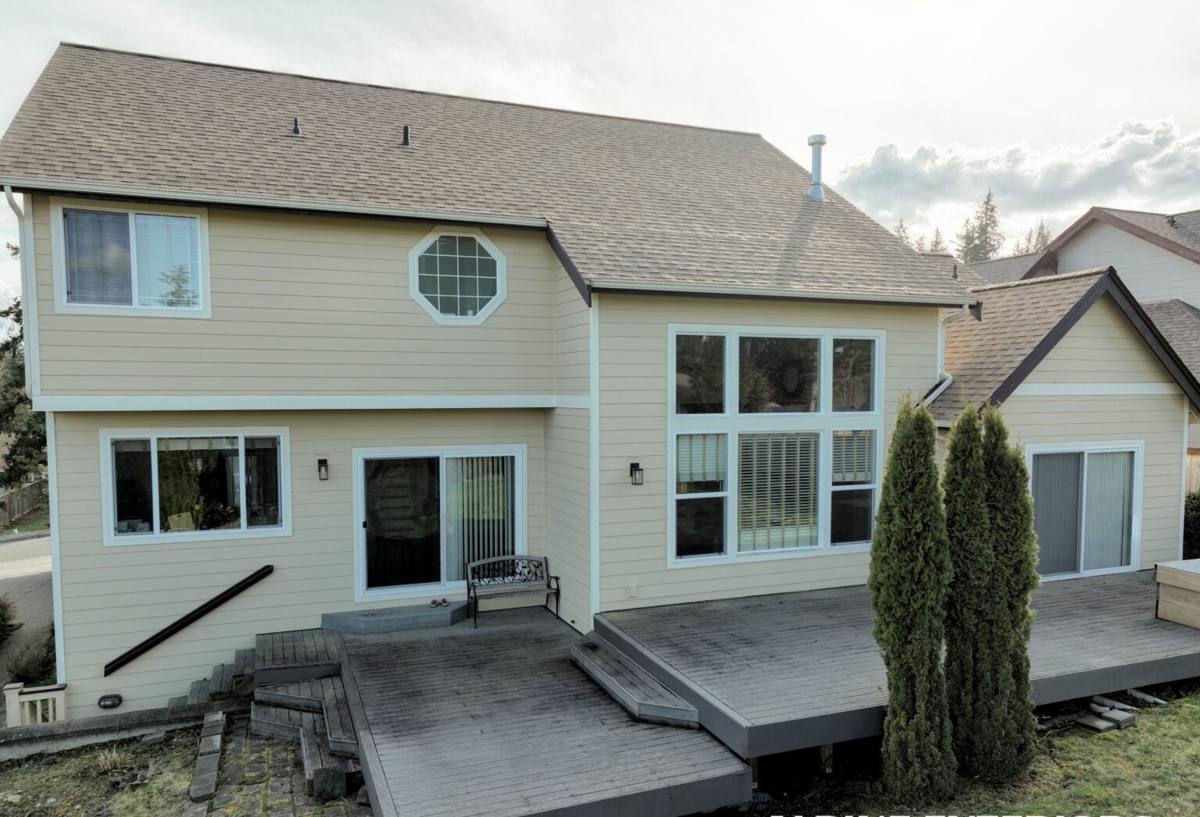
What Bellingham's Climate Does to an Outdoor Deck
Whatcom County sits in a marine climate that's gentler on paper than a lot of the country, but it's relentless in its own way. Decks here don't fail from one big storm — they fail from years of slow, steady exposure that most homeowners underestimate until it shows up as a soft board or a wobbly post.
Salt Air and Metal Corrosion
Proximity to Bellingham Bay means the air carries a fine mist of salt that settles on everything outdoors, including deck hardware. Standard zinc-coated screws, bolts, and joist hangers corrode faster near the water than they would inland. Once a fastener starts rusting, it weakens at exactly the point where it's supposed to be holding structural loads together, and by the time you can see rust bleeding through the wood, the fastener underneath has usually already lost a meaningful amount of strength.
Driving Rain and Trapped Moisture
Bellingham doesn't just get rain — it gets rain that comes in sideways on windy days, which pushes water into joints, seams, and ledger connections that a vertical rain would never reach. Decks that look fine on the surface can be hiding moisture trapped between boards, under railings, or where the deck meets the house. That trapped moisture is where rot actually starts, almost always out of sight until it's advanced.
The Long Moss Season
Shade, moisture, and mild temperatures are exactly what moss wants, and Sunnyland's tree cover gives it plenty of both. Moss on a deck isn't just an appearance problem — it holds moisture against the wood surface, which accelerates decay, and it makes boards genuinely slick and dangerous underfoot for a large part of the year.
Choosing the Right Decking Material
There's no single "best" decking material for every Sunnyland home — it depends on your budget, how much upkeep you're willing to do, and how much shade and moisture your specific lot sees. Here's how the common options actually perform in this climate, based on what we see holding up on real Bellingham properties over time.
| Material | Moisture & Moss Resistance | Maintenance | Typical Lifespan Here |
|---|---|---|---|
| Pressure-treated fir/hem-fir | Fair — needs sealing to perform well | Annual cleaning and re-sealing | 10-15 years with upkeep |
| Cedar | Good natural rot resistance, still needs care in shade | Periodic cleaning, oil or stain every 2-3 years | 15-20 years with upkeep |
| Composite decking | Very good — doesn't absorb water like wood | Periodic washing to keep moss from gripping the surface | 25-30+ years |
| PVC/capped polymer | Excellent — fully moisture sealed | Occasional washing | 25-30+ years |
Composite and PVC decking cost more up front, but for a shaded, moisture-heavy lot they remove most of the maintenance burden that wood carries in this climate. Wood is still a legitimate choice, especially cedar, but it only performs as well as the maintenance schedule behind it — and in Sunnyland's shade, that schedule needs to be taken seriously, not treated as optional.
Framing and Structural Details That Matter Here
The part of a deck nobody sees is the part that determines whether it lasts. This is where a lot of older Sunnyland decks were shortchanged, and it's where we spend the most attention on a rebuild.
Ledger Flashing
The ledger board — where the deck attaches to the house — is the single most common source of hidden rot we find. Proper flashing that directs water away from this connection, rather than letting it wick into the house rim joist, is non-negotiable in a climate with this much sustained rainfall.
Footings and Post Bases
Footings need to be set below frost depth and, just as important on Sunnyland's often-clay-heavy soil, positioned so water doesn't pool around the post base. Standing water at a post base is one of the fastest ways to rot a structural member from the bottom up, invisibly, for years.
Joist Protection
Joist tape or a similar moisture barrier on top of framing lumber keeps rain from soaking directly into end grain through deck screw holes — a small detail that adds meaningful years to the structure's life in a wet climate.
Fasteners and Hardware for a Salt-Air Environment
Given Sunnyland's proximity to the water, we treat fastener selection as a structural decision, not a cosmetic one. Stainless steel or heavy-duty coated fasteners rated for coastal exposure cost more than standard hardware, but they're the difference between hardware that outlasts the decking and hardware that's the first thing to fail. The same goes for joist hangers, post brackets, and any structural connectors — corrosion resistance matters more here than it would on a deck built twenty miles inland.
Design Choices That Work With Your Lot, Not Against It
Drainage and Grading
Where and how a deck sheds water affects everything below and around it. Gaps between boards, proper slope away from the house, and clear paths for water to reach the ground without pooling under the structure all reduce the moisture load a deck has to deal with over its lifetime.
Sun Exposure and Tree Cover
Sunnyland's mature trees are part of what makes the neighborhood attractive, but heavy shade is also what feeds moss and slows drying after rain. When it makes sense, we'll talk through deck placement, height, and even modest trimming with you — not to fight the trees, but to give the deck surface enough light and airflow to dry out between storms.
Railings and Guards
Current code requirements for guard height and baluster spacing apply to any new or substantially rebuilt deck, and older Sunnyland homes often have railings that predate those standards. A custom build is the right time to bring that up to code cleanly, with a railing style that fits the house rather than looking bolted on.
How We Approach a Sunnyland Deck Project
- On-site assessment of the existing structure (if replacing) or the lot conditions (if building new), including drainage, shade, and soil
- Material recommendation based on your budget and how much maintenance you actually want to do long-term
- Design and layout that accounts for sun, prevailing wind and rain direction, and how the space will actually be used
- Permitting through the City of Bellingham where required, handled as part of the project rather than left to you
- Construction with corrosion-resistant hardware, properly flashed ledger connections, and protected framing as standard practice, not an upgrade
- A final walkthrough covering how to care for the specific materials we installed
We schedule around the weather here rather than fighting it — there are dry-enough windows through most of the year in Whatcom County, and part of doing this work locally is knowing how to read them.
Keeping a New Deck in Good Shape Year-Round
Even the best-built deck needs some seasonal attention in this climate. None of this is complicated, but skipping it is how a well-built deck ends up with the same problems as a poorly-built one.
- Sweep debris and standing leaves off the deck surface regularly through fall, when they trap moisture against the boards
- Rinse off moss and algae buildup before it has a chance to establish, especially on shaded sections
- Check railings and stair connections annually for looseness — often the first sign of a fastener issue
- Reapply sealant or stain on wood decking on the schedule appropriate to that species, not just when it looks faded
- Keep gutters and downspouts near the deck clear so runoff isn't dumping extra water onto or under the structure
- Confirm gaps between boards stay clear so water keeps draining through rather than pooling
Why Local Experience Matters for This Kind of Project
A deck built from a generic national plan doesn't account for the fact that a Sunnyland lot under mature tree cover behaves differently than a sunny, open lot across town, and both behave differently than something built inland away from Bellingham Bay's salt air. Crews who work this neighborhood regularly know which details actually matter here — where moss takes hold first, which fastener grades hold up, how the ledger connection needs to be handled given the rainfall this area sees. That knowledge doesn't show up in a brochure; it shows up in how long the deck lasts after we've moved on to the next job.
If you're planning a new deck or need to replace one that's showing its age, we're happy to take a look and talk through what makes sense for your specific property. Fill out the form below for a free, no-pressure estimate — there's no obligation, just an honest read on what your Sunnyland home actually needs.