 Bellingham Roofing
 Roof Repair Built for Sunnyland's Conditions
Sunnyland sits close enough to Bellingham Bay that salt-laden air is part of daily life for every roof in the neighborhood, whether that roof is on a 1940s bungalow near the flats or a newer build up the hill. Add in Whatcom County's long stretch of driving rain from fall through spring, plus a moss season that barely takes a break, and you have a climate that finds every weak point in a roof faster than almost anywhere else in Washington. We repair roofs in Sunnyland regularly, and the patterns of damage we see here are consistent enough that we can usually tell what's wrong with a roof before we're even off the ladder.
This page is about roof repair specifically — not full replacement, not general roofing services. If your roof has a leak, a damaged section, or visible wear that isn't yet full end-of-life, this is the service that applies to you, and it's worth understanding what a correct repair actually involves before you hire anyone.
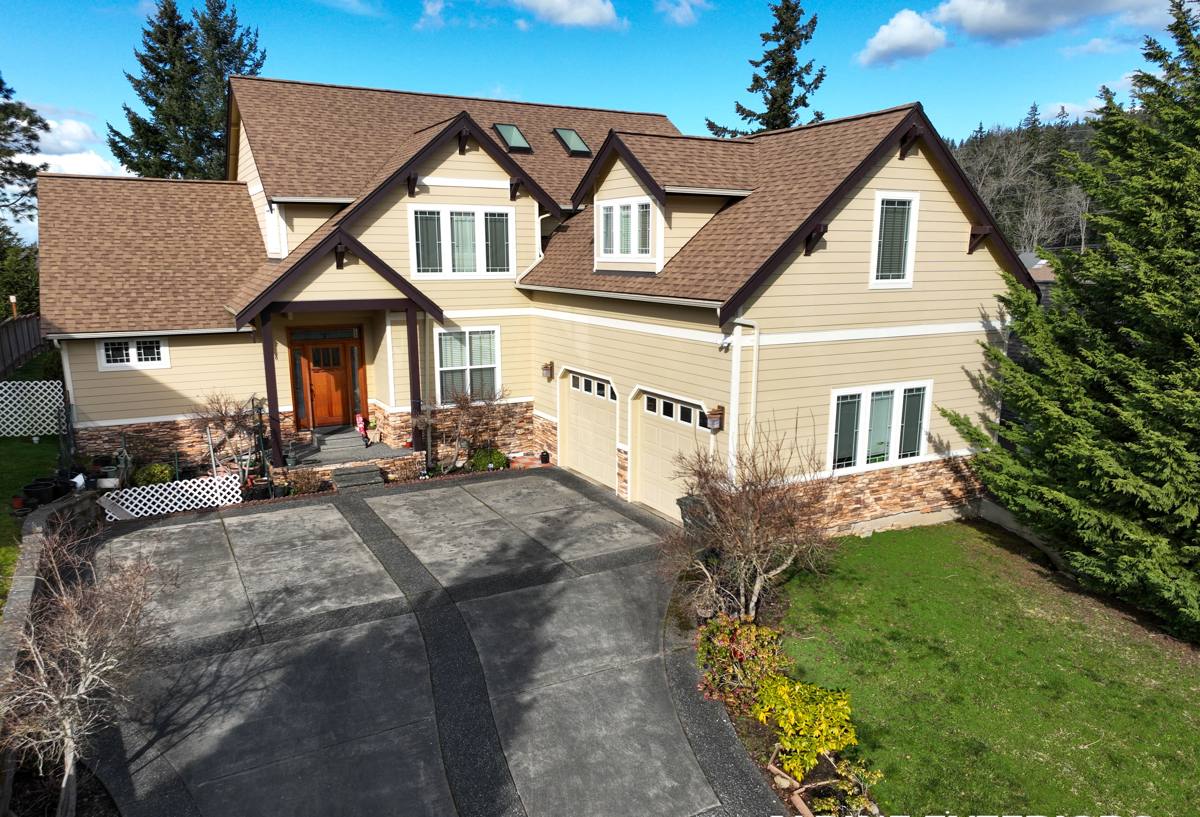
What Sunnyland's Climate Does to a Roof
Three forces work against roofs in this neighborhood, often at the same time.
Salt Air
Proximity to the bay means airborne salt settles on roofing material year-round. Over time it accelerates corrosion on exposed metal — flashing, fasteners, vent caps, gutter hardware — well before the shingles or panels themselves show their age. A roof that looks fine from the ground can have flashing that's already thinning underneath.
Driving Rain
Bellingham doesn't just get a lot of rain, it gets a lot of wind-driven rain, which behaves differently than a straight vertical downpour. Wind-driven rain gets pushed sideways and upward under shingle edges, around chimney flashing, and into any gap that a calm-weather roof would shed without issue. Most of the leaks we trace in this neighborhood start at a transition point — a flashing seam, a valley, a pipe boot — rather than in the open field of the roof.
Moss and Organic Growth
Whatcom County's mild, damp climate is close to ideal for moss, and Sunnyland's tree cover in many pockets makes it worse. Moss doesn't just look bad — it holds moisture against the roofing surface, lifts shingle edges as it grows, and works its way into fastener holes. A roof with heavy moss coverage is aging faster than the calendar suggests, even if there's no active leak yet.
Signs a Sunnyland Roof Needs Repair
Most homeowners call us after they've already seen a stain on a ceiling, but there are earlier signs worth knowing:
- Water stains or discoloration on interior ceilings or upper walls, especially after a windy rainstorm
- Granules collecting in gutters or at downspout outlets
- Shingles that look cupped, curled, or are visibly missing
- Moss buildup thick enough to lift shingle tabs or hold visible moisture
- Rust streaking below metal flashing or vent caps
- Soft or spongy spots when walking the roof (we check this, not something to test yourself)
- Daylight visible through the roof deck from inside an attic
- Flashing that's pulled away from a chimney, skylight, or wall intersection
Any one of these is worth a look. None of them mean the whole roof needs to be replaced — most are legitimate repair situations if they're caught before the leak has had time to spread damage into the decking or framing.
What a Correct Repair Actually Involves
A roof repair that's done right starts with finding the actual source of the problem, not just patching where the water showed up inside the house. Water travels — a stain on a bedroom ceiling can trace back to a flashing failure several feet away, following a rafter or the underside of the decking before it drips down. This is the step that gets skipped by rushed work, and it's the reason a "repaired" roof sometimes leaks again in the next storm.
Our Diagnosis Process
- Interior inspection first, when there's an active leak — we look at the stain pattern, attic framing, and insulation to narrow down the likely entry point
- Exterior roof inspection, walked in person, checking flashing, penetrations, valleys, and the general condition of the roofing material around the suspected area
- Identification of contributing factors — moss buildup, clogged gutters, damaged flashing, aged sealant, wind-lifted shingles — since leaks are often caused by more than one issue working together
- A clear explanation of what we found and what repair options address it, in plain terms, before any work starts
The Repair Itself
Depending on what we find, a repair might involve replacing a section of damaged shingles or panels, re-flashing a chimney or wall intersection, resealing and re-securing a pipe boot, rebuilding a valley, or replacing corroded fasteners and metal components. We match materials to what's already on the roof where possible, and we always check the surrounding area, not just the failure point, since one damaged section is often a sign that nearby material is close behind it in age and condition.
Common Sunnyland Repair Types
| Problem | Typical Cause Here | What the Repair Involves |
|---|---|---|
| Chimney or wall flashing leak | Wind-driven rain forcing water past aged or poorly sealed flashing | Remove and replace flashing, re-seal transition, check step flashing underneath |
| Valley leak | Debris and moss slowing drainage, allowing water to back up under shingles | Clear debris, inspect valley material, replace if corroded or cracked, restore proper water flow |
| Pipe boot failure | Rubber gaskets degrading faster in salt air and UV exposure | Replace boot assembly, reseal, check surrounding shingles for granule loss |
| Lifted or missing shingles | Wind events combined with moss undermining the shingle bond | Replace affected shingles, re-secure adjacent tabs, treat surrounding moss |
| Fastener or metal corrosion | Salt air accelerating rust on exposed hardware | Replace corroded fasteners and metal trim with corrosion-resistant material |
Moss: Prevention Matters as Much as Removal
Removing moss without addressing why it grew back rarely solves anything long-term. Part of a thorough repair visit in Sunnyland includes looking at what's feeding the moss growth — overhanging branches, shaded north-facing slopes, or gutters that hold standing water. We remove moss carefully by hand or low-pressure methods rather than aggressive pressure washing, which can strip granules and shorten the life of the roofing material faster than the moss itself would. Zinc or copper strips near the ridge are a reasonable long-term deterrent on roofs prone to heavy regrowth, and we'll tell you honestly whether that's worth doing on your specific roof.
Repair or Replace? Honest Cost Factors
Not every roof problem in Sunnyland needs a full replacement, but not every roof is a good repair candidate either. Here's how we think about it, and how you should too:
| Factor | Leans Toward Repair | Leans Toward Replacement |
|---|---|---|
| Roof age | Under roughly 15–20 years, condition otherwise sound | Nearing or past manufacturer's expected lifespan |
| Extent of damage | Localized — one section, one flashing point, one valley | Widespread — multiple areas failing or showing wear |
| Decking condition | Solid, dry decking under the damaged area | Soft, rotted, or water-stained decking found during inspection |
| Moss/algae coverage | Light to moderate, treatable | Heavy, long-term coverage with granule loss underneath |
| Repair history | First or second repair on this roof | Repeated repairs to the same or nearby areas over recent years |
We'll never push a replacement when a repair is the honest answer, and we'll tell you directly if a repair is only buying a year or two so you can plan the budget accordingly rather than being surprised later.
Why a Crew That Already Works Sunnyland Matters
Roofing crews who work Bellingham and Whatcom County regularly develop a working knowledge of how homes here were built across different eras — older Sunnyland homes often have roof decking, ventilation, and flashing details that differ from newer construction, and that affects what a correct repair looks like. A crew unfamiliar with the area may default to a generic approach that doesn't account for the salt exposure or the moss cycle specific to this stretch of coastline. Being local also means we can respond quickly when a leak shows up mid-storm, and we're not guessing at what "normal" wear looks like on a Bellingham roof versus a roof from a drier climate.
What to Expect From Our Repair Visits
- A scheduled inspection where we walk the roof and check the interior if there's an active leak
- A written explanation of what we found and what it will take to fix it — no vague diagnosis
- Straightforward pricing before work begins, with any changes discussed first
- Repairs matched to the existing roofing material and built to shed water the way the rest of the roof does
- A final check of the surrounding area, not just the repaired spot, so we're not back for the same issue next season
Get a Free, No-Pressure Estimate
If you've noticed a leak, moss buildup, or damaged shingles on a Sunnyland roof, it's worth getting a straight answer before the next round of driving rain finds the weak point for you. Fill out the form below for a free estimate — we'll take a look, tell you honestly what we see, and lay out the repair options without any pressure to do more than the roof actually needs.