 Bellingham Roofing
 Sunnyland's Climate Is Hard on Siding
Sunnyland sits close enough to Bellingham Bay that homes here take a different kind of weathering than houses further inland in Whatcom County. The combination is specific: salt-laden air drifting off the water, long stretches of wind-driven rain rolling in off the Salish Sea, and a moss season that, in the Pacific Northwest, can run nine or ten months out of the year on shaded north- and west-facing walls. None of these factors are dramatic on their own, but stacked together over a few decades they wear siding down faster than most homeowners expect.
Siding replacement in a neighborhood like Sunnyland isn't just about picking a new color or matching curb appeal to the block. It's about choosing a material and an installation method that actually holds up to this specific mix of moisture, salt, and shade. That's the lens we bring to every estimate here.
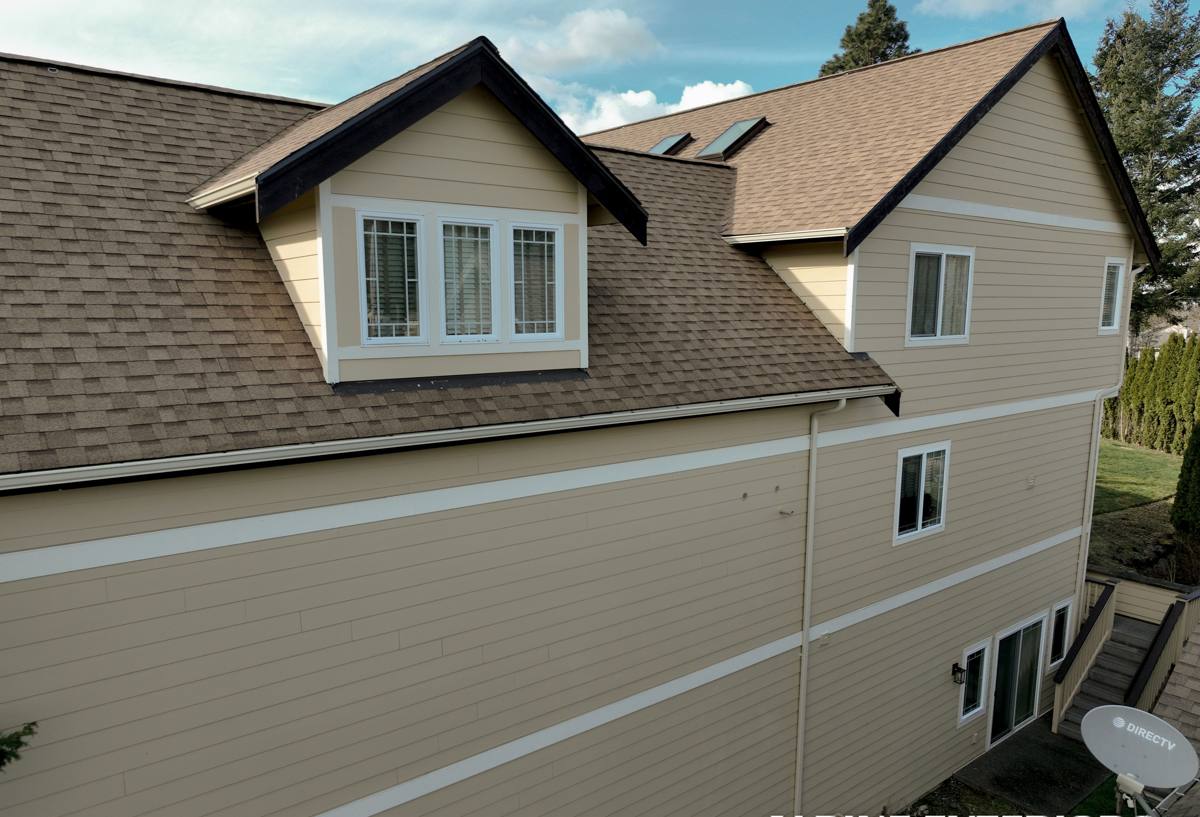
What Driving Rain, Salt Air, and Moss Do to Your Walls
Wind-Driven Rain and Moisture Intrusion
Bellingham doesn't get the heaviest rainfall totals in the state, but it gets a lot of sideways rain — storms that push moisture horizontally into wall assemblies rather than letting it run straight down and off. Siding that isn't lapped, flashed, and fastened correctly lets that water find its way behind the surface layer. Once moisture gets behind siding, it can sit against sheathing and framing for weeks at a time in our wet season, and that's where rot and mold problems start — usually long before anything looks wrong from the curb.
Salt Air and Fastener Corrosion
Homes within a few miles of the bay deal with a slow, steady exposure to salt in the air. Over time, salt accelerates corrosion on anything metal — nails, screws, flashing, trim fasteners — especially where the original installation used standard fasteners instead of corrosion-resistant hardware. Corroded fasteners loosen their grip on siding panels, which opens gaps for water and lets panels shift or rattle in wind.
Moss, Algae, and Shaded Exposures
Sunnyland's tree cover and proximity to the water keep humidity higher and drying times slower than in more open, sun-exposed parts of the county. That's ideal growing conditions for moss and algae on north-facing and shaded walls. Beyond the cosmetic green-black staining, moss holds moisture directly against the siding surface, which is especially damaging to wood-based products that swell, cup, or delaminate when they stay wet.
Signs Your Sunnyland Home Needs New Siding
Some warning signs are obvious; others take a trained eye. Here's what we check for on every siding inspection in this neighborhood:
- Soft or spongy spots when you press on the siding, especially near the bottom courses and around windows
- Visible cupping, warping, or buckling panels, particularly on shaded north and west walls
- Paint that's peeling, bubbling, or needs repainting far more often than it used to
- Persistent moss or algae growth that returns within months of cleaning
- Rust streaks running down from nail heads or trim fasteners
- Gaps opening up at seams, corners, or where siding meets trim and flashing
- A musty smell in rooms along exterior walls, which can point to moisture already inside the wall assembly
If you're seeing two or more of these, it's worth having someone look at what's happening behind the surface, not just patch what's visible.
Why We Install Only James Hardie Fiber Cement
We don't install vinyl, LP SmartSide, or wood siding, and in a neighborhood like Sunnyland that's a deliberate call, not a limitation. Vinyl can warp and become brittle with UV and temperature swings, and its seams give wind-driven rain more chances to find a way behind the surface. Wood-based and engineered wood products depend heavily on paint maintenance and can absorb moisture at cut edges and panel joints — a real liability where moss and shade keep walls damp for long stretches.
James Hardie fiber cement is non-combustible, doesn't rot, and doesn't provide moss and algae the organic material they need to take hold the way wood-based siding can. Hardie's HZ5 product line is engineered specifically for climates like ours — cold, wet, and humid — and the factory-applied ColorPlus finish is baked on and warranted against fading, chipping, and cracking, which matters on homes that see this much rain and gray-sky UV exposure over a year. It's a straightforward standard: we install what we believe holds up here, and that's Hardie.
What a Correct Siding Replacement Involves
Tear-Off and Sheathing Inspection
Once old siding comes off, that's the only real chance to see the sheathing and framing underneath. We check for soft wood, hidden rot, and any moisture staining before anything new goes up. Covering over a problem with new siding doesn't fix it — it just hides it for a few more years.
Weather-Resistive Barrier and Flashing
A correctly installed weather-resistive barrier, properly lapped and taped, is what actually keeps wind-driven rain out of the wall assembly — the siding itself is the second line of defense, not the first. Flashing at windows, doors, and any horizontal trim needs to be installed so water sheds outward and down, never backward into the wall.
Fastening and Clearances
Hardie siding has specific fastening patterns and clearance requirements — gaps at the bottom of walls, around foundations, and near roof lines — that are there to keep siding from sitting in standing water or wicking moisture from the ground. Skipping these clearances is one of the most common ways otherwise-good siding jobs fail early, especially in a wet climate like Whatcom County's.
Finish and Color
Because ColorPlus finish is factory-applied under controlled conditions, it holds color and resists cracking better than siding painted on site after installation. Field-cut edges get properly sealed to keep raw material from absorbing moisture at trim lines and corners.
Our Sunnyland Siding Replacement Process
- On-site inspection — we look at existing siding, trim, flashing, and visible sheathing condition, and talk through what we're seeing before recommending a scope of work.
- Written estimate — a clear breakdown of material, labor, and any repair work uncovered during tear-off, with no surprise change orders for issues we should have caught upfront.
- Tear-off and sheathing check — old siding comes off, sheathing and framing get inspected, and any rot or damage gets addressed before new material goes on.
- Weather barrier and flashing installation — the moisture-management layer goes in first, correctly lapped and sealed at every penetration.
- Hardie panel or plank installation — installed to manufacturer fastening specs and proper clearances, not shortcuts that save an afternoon but cost years of siding life.
- Trim, caulking, and final finish — corners, trim boards, and joints sealed correctly so water has nowhere to collect.
- Final walkthrough — we go over the finished job with you before calling it done.
What Affects the Cost of a Siding Replacement
Every home is different, but the same handful of factors drive most of the cost variation we see on Sunnyland projects:
| Cost Factor | Why It Matters |
|---|---|
| Extent of hidden damage | Rot or soft sheathing found during tear-off adds repair work that can't be scoped until the old siding is off |
| Home size and wall complexity | More corners, dormers, and trim detail mean more labor and material cuts |
| Siding profile chosen | Lap plank, shingle-style panel, and vertical panel Hardie products differ in material and install labor |
| Trim and accessory work | Fascia, soffits, and window trim replacement often go hand in hand with siding and add to scope |
| Access and site conditions | Multi-story walls, tight lot lines, or landscaping close to the house can slow work down |
We break all of this out in writing so you know what you're paying for and why, rather than a single lump number with no explanation behind it.
Why Local Experience in Sunnyland Matters
A crew that already works this neighborhood knows things a generalist doesn't have to think about: which walls take the worst of the wind-driven rain based on lot orientation to the water, where salt exposure tends to be worse, and how much shade and moss pressure a given block typically deals with. That local knowledge shapes real decisions — where to pay extra attention to flashing, which walls are worth a closer sheathing inspection, and how to set homeowner expectations about moss and moisture realistically instead of generically.
It also means we're not learning Bellingham's permitting and inspection process on your project. Local experience shows up in the details that don't make it into a sales pitch but do show up in how the siding performs five and ten years out.
Caring for Your New Siding After Installation
Fiber cement siding is low-maintenance, not no-maintenance. A gentle rinse once or twice a year clears pollen, dust, and early moss growth before it takes hold, especially on shaded walls. Keep an eye on caulking at trim joints and around windows, since caulk is the one component that wears faster than the siding itself and is easy to touch up before it becomes a moisture entry point. Trim back vegetation that keeps foliage pressed against walls, since that traps moisture and speeds up algae and moss growth in exactly the conditions Sunnyland already provides.
If your Sunnyland home is showing any of the wear signs above, or you'd simply like an honest read on what your siding has left in it, we're happy to take a look. Reach out for a free, no-pressure estimate using the form below.