 Bellingham Roofing
 Why Two Roofs the Same Size Can Cost Very Differently
Ask three roofing contractors in Bellingham to price the same house and you'll likely get three different numbers. That's not because someone is padding a bid or someone else is cutting corners — it's because "roof replacement" isn't one product. It's a bundle of decisions: material, roof complexity, what's underneath the old shingles, how the house is accessed, and what the local climate demands for the job to actually last. Two homes with the same square footage of roof can land tens of thousands of dollars apart once those factors are accounted for.
This page walks through the real variables that move the number, so that when you do get a quote — from us or anyone else — you understand what you're looking at instead of just comparing a bottom-line figure.
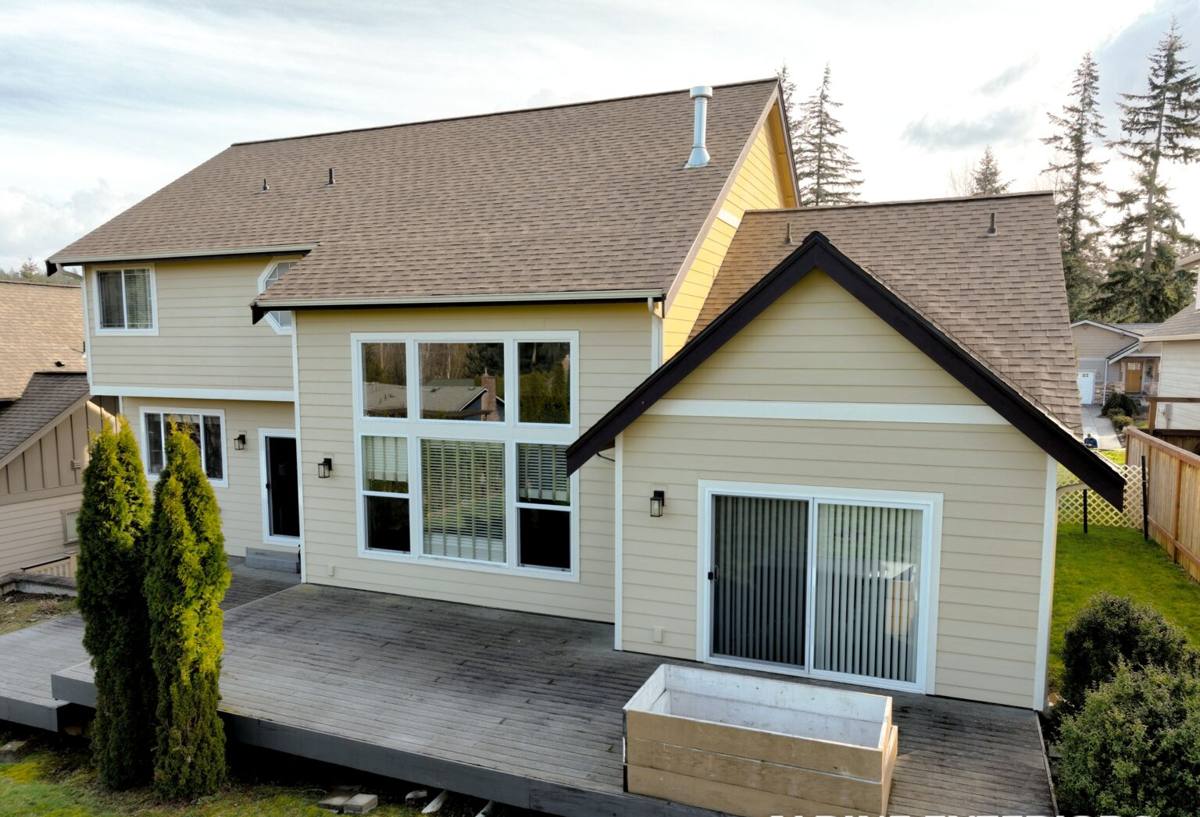
The Core Cost Drivers
Before materials even enter the conversation, these factors set the baseline for almost any roof replacement:
| Factor | Why It Matters |
|---|---|
| Roof size (squares) | Priced per "square" (100 sq ft) — the single biggest driver of total cost |
| Pitch and complexity | Steep, cut-up roofs with lots of valleys, dormers, and hips take longer and need more safety gear |
| Number of existing layers | Tear-off of two or three old layers costs more in labor and disposal than a single-layer tear-off |
| Access | Tight lots, mature trees, or steep driveways can slow material staging and add labor hours |
| Decking condition | Soft or water-damaged sheathing found under old shingles has to be replaced before new roofing goes on |
| Material selection | Composition shingles, metal, and cedar carry very different material and labor costs |
| Ventilation and flashing scope | Bringing an older roof's ventilation and flashing up to current standards adds material and time |
Any honest estimate walks through each of these line by line rather than handing you a single flat number pulled from a square-footage calculator.
Material Choice: Upfront Cost vs. Long-Term Value
Material is usually the first question homeowners ask about, and it's a meaningful piece of the budget — but it's worth weighing against how the material performs here specifically, not just what it costs to install.
| Material | Relative Cost | How It Handles Our Climate |
|---|---|---|
| Architectural (dimensional) asphalt shingle | Moderate | Good all-around performer against wind-driven rain; wide color range; the most common choice regionally |
| 3-tab asphalt shingle | Lower | Lighter-duty and shorter-lived; less wind resistance than architectural shingles |
| Standing seam metal | Higher | Excellent water-shedding on low-slope sections and in heavy, sustained rain; long service life |
| Cedar shake | Higher | Traditional Pacific Northwest look, but needs disciplined maintenance to resist moss and moisture in a wet marine climate |
| Synthetic/composite shingle | Moderate to higher | Designed to resist moisture absorption and moss colonization better than natural wood products |
We'll talk through trade-offs honestly, including where a product like cedar shake requires more upkeep than many homeowners expect in a wet coastal climate — that's a maintenance conversation, not a knock on the material itself.
Warranty Structure Matters Too
A cheaper shingle with a shorter or thinner warranty isn't automatically a bad deal, but it changes the math. Compare not just the sticker price but what's actually covered — materials only, or materials plus labor — and for how many years, before deciding a lower bid is really the better value.
What Our Coastal Climate Adds to the Bill
Bellingham and the rest of Whatcom County sit close enough to Puget Sound and the Strait of Georgia that salt-laden air is a real factor for roofing components, especially metal flashing, fasteners, and vents. Non-corrosive or coated hardware costs a bit more than standard-grade fasteners, but skipping that upgrade near the water is a false economy — corroded flashing fails quietly, and the leak shows up long after the crew has left.
Driving rain off the Sound is the other constant. Roofs here take on wind-driven rain from multiple directions over the course of a wet season, which puts real pressure on underlayment quality, valley detailing, and how flashing is integrated around chimneys, skylights, and wall intersections. Cutting corners on underlayment or ice-and-water shield in vulnerable areas is one of the more common ways a "cheap" roof turns expensive within a few years.
Then there's moss. Our long, mild, wet moss season is hard on any roof that isn't detailed and maintained with that reality in mind — moss holds moisture against the roofing surface, can lift shingle edges over time, and works into any gap it can find. Roofs here benefit from design choices (zinc or copper strips, adequate slope, decent airflow) and maintenance habits that most drier-climate roofing guides never mention.
Tear-Off, Layers, and Deck Repair — Costs You Can't See From the Ground
A significant share of the final number is determined by what's actually happening under the existing roofing, which nobody can fully see until it's opened up.
Tear-Off vs. Layover
Some contractors offer to install new shingles directly over an existing layer instead of tearing the old roof off. It's cheaper up front, but it also means nobody gets to inspect the decking underneath, trapped moisture has nowhere to go, and the roof carries more total weight. As a matter of standard practice, we don't recommend layovers — the labor savings rarely justify not knowing what condition the deck and old flashing are actually in, particularly in a climate where hidden moisture is a routine problem rather than a rare one.
Decking Repair
Once the old material comes off, soft, delaminated, or water-stained plywood or board sheathing has to be replaced before new roofing goes down — installing over bad decking voids most warranties and won't hold fasteners properly. This is the single most common source of a quote changing after the roof is opened up, and it's why a pre-tear-off estimate is always a range rather than a guarantee.
Ventilation, Flashing, and the Details That Prevent Callbacks
Attic ventilation and flashing rarely get the attention they deserve in cost conversations, but they're where a lot of long-term roof failures actually start.
- Balanced intake and exhaust ventilation reduces trapped moisture in the attic, which matters in a climate where humidity sits high for months at a time
- Step flashing and counter-flashing around chimneys, walls, and skylights need to be replaced, not reused, during a full tear-off
- Valley metal and underlayment in valleys take the heaviest water volume on the roof and deserve upgraded materials, not the minimum
- Pipe boots and vent flashing are common failure points and are inexpensive to replace proactively during a re-roof
None of these line items are optional add-ons in our book — they're part of doing the job so it doesn't need to be redone in five years.
Permits and Local Requirements
Roof replacements in the City of Bellingham and unincorporated Whatcom County generally require a building permit, and inspections may apply depending on the scope of work. Permit fees, while a smaller line item than materials or labor, are a real part of the total cost and should be included in any written estimate rather than added as a surprise later. A contractor who's used to pulling permits locally can also flag anything specific to your jurisdiction — setback rules, HOA requirements, or shoreline considerations if the property is near the water — before work starts rather than after.
Getting an Accurate Number for Your Roof
The only way to move from a broad range to a real number is a proper on-roof inspection. Here's what a thorough estimate should include:
- Actual roof measurement (squares, pitch, and complexity), not a satellite-image estimate alone
- A visual check of decking condition from the attic side where accessible
- A clear tear-off scope, including how many existing layers are being removed
- Material options with real trade-offs explained, not just a single default recommendation
- Flashing, ventilation, and valley detailing called out as line items, not lumped into "labor"
- Warranty terms in writing — materials, labor, and how long each applies
- Permit responsibility clearly stated — who pulls it and who pays for it
If a quote skips most of these and just gives you a single number, it's worth asking what's actually included before you compare it to anyone else's bid.
What a Realistic Range Looks Like
Because of everything above, roof replacement costs in this area span a wide range — a straightforward single-layer tear-off on a simple gable roof with standard architectural shingles sits well below a steep, complex roof needing full deck replacement, upgraded flashing, and a premium material. Anyone quoting a firm number without seeing the roof in person is guessing, and anyone quoting a number far below everyone else is usually leaving something out — often the tear-off scope, the decking allowance, or the flashing detail work that keeps a roof watertight through our wet season.
If you'd like an honest, no-pressure look at what your specific roof needs, we're happy to walk it with you and put together a written estimate that spells out exactly where the cost is coming from. There's no obligation — just a straight answer.