 Bellingham Roofing
 Roofing for Sunnyland's Specific Climate Challenges
Sunnyland sits close enough to Bellingham Bay that salt-laden air is a constant factor in how a roof ages, and like the rest of Whatcom County, the neighborhood sees long stretches of driving rain off the water combined with heavy tree cover that keeps roofs shaded and damp for much of the year. That combination — salt exposure, wind-driven rain, and a moss season that can run from fall through spring — is harder on a roof than dry heat or occasional storms ever would be. An asphalt shingle roof that's installed correctly for this environment can last decades. One installed with shortcuts, or with materials better suited to a drier climate, will show granule loss, algae staining, and soft decking well before its time.
This page is specifically about asphalt shingle roofing for homes in Sunnyland. We're not going to give you a generic rundown of shingles in general — we want to walk through what actually matters for a roof in this part of Bellingham, what a correct installation involves, and how we approach the work.
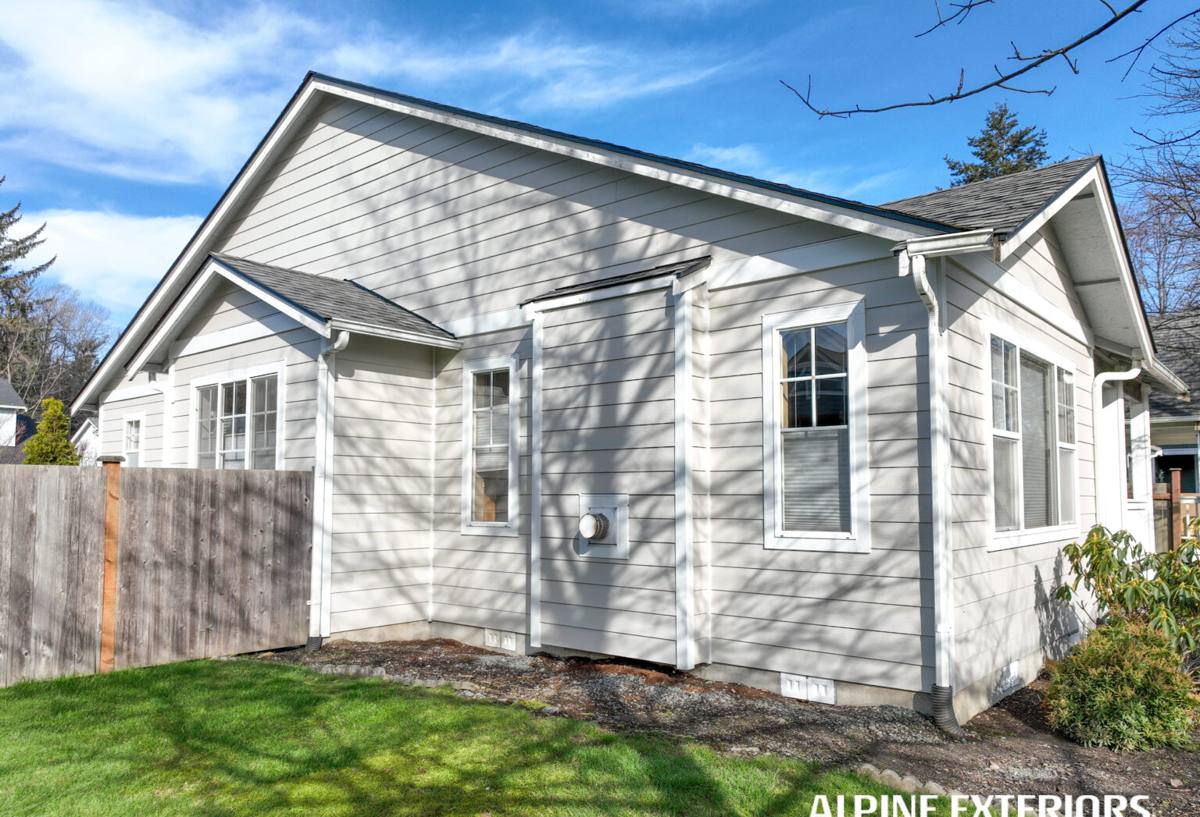
What Salt Air, Rain, and Moss Actually Do to a Roof
Salt Air
Homes closer to the water pick up fine salt particles carried on the wind. Over years, that salt accelerates corrosion on exposed metal — nails, flashing, vent caps — and can contribute to premature granule loss on lower-grade shingles. It's rarely dramatic; it's a slow wearing-down that shows up as rust streaks and thinning shingle mats sooner than you'd expect for the roof's age.
Driving Rain
Rain that comes in sideways off the bay doesn't just run down a roof slope — it gets pushed up under shingle edges, into gaps around vents and chimneys, and along valleys. A roof built for this needs proper underlayment, correctly lapped flashing, and shingles rated for wind resistance, not just a standard nailing pattern.
Moss Season
Shade from mature trees, plus consistent moisture, gives moss and algae everything they need to take hold. Moss doesn't just look bad — it holds water against the shingle surface, works its way under tabs as it grows, and can lift shingles enough to let water in. A roof in Sunnyland needs to be built and maintained with moss growth as an expected condition, not an occasional nuisance.
What a Correct Asphalt Shingle Installation Involves
A lot of roofing problems we get called out to fix aren't shingle failures — they're installation shortcuts that only become visible years later. For a roof that's going to hold up in Sunnyland's conditions, the fundamentals matter more than the shingle brand printed on the wrapper.
- Full tear-off to bare decking when the existing roof has more than one layer or shows soft spots, so we're not covering up rot
- Deck inspection and replacement of any water-damaged sheathing before new material goes down
- Ice-and-water shield or high-quality synthetic underlayment at eaves, valleys, and around every penetration
- Metal drip edge at eaves and rakes to keep wind-driven rain from wicking back under the shingles
- Properly lapped step and counter-flashing at chimneys, walls, and skylights — not just caulk over old flashing
- Manufacturer-specified nailing pattern and nail placement, not a faster staple-gun shortcut
- Balanced intake and exhaust ventilation so moisture doesn't collect in the attic
Skipping any one of these doesn't usually cause an immediate leak. It causes a slow failure — three, five, ten years down the road — that's much more expensive to fix than it would have been to do right the first time.
Choosing Shingles for a Coastal, Shaded Neighborhood
Not every asphalt shingle is a good match for a neighborhood with heavy tree cover and salt exposure. For Sunnyland homes, we generally steer toward:
- Algae-resistant (AR) shingles with copper or zinc granules built into the mat, which slow down the dark streaking that heavy shade and moisture cause on standard shingles
- High wind-rated shingles with a sealant strip built for the gusts that come off the water, rather than a basic economy line
- Heavier-mat architectural shingles over thin three-tab shingles, since the added mass holds up better to repeated wetting and drying cycles
We're not tied to one manufacturer, and we won't tell you a particular brand is bad — every major shingle line has products built for coastal, high-moisture climates. Our job is matching the product line and warranty structure to your specific roof, budget, and how much shade and wind exposure your particular lot has. That's a conversation we have on-site, not something we decide from a brochure.
Ventilation and Moisture: The Part Homeowners Don't See
A shingle roof is only as good as what's happening underneath it. In a climate as damp as Bellingham's, an attic without balanced ventilation traps moisture, which shortens the life of the decking and can void a shingle warranty regardless of how good the shingles themselves are. Before we quote a re-roof, we look at:
- Existing intake ventilation at the soffits
- Exhaust ventilation at the ridge or through roof vents
- Signs of past moisture in the attic — dark staining, soft sheathing, rusted fasteners
- Whether insulation is blocking soffit vents from the inside
If ventilation is inadequate, we'll say so and explain what it would take to fix it as part of the re-roof, rather than installing new shingles over an attic environment that will shorten their life.
Our Process for Sunnyland Roofing Projects
- On-site inspection. We walk the roof and the attic, check flashing, decking condition, and ventilation, and take note of tree cover and exposure specific to your property.
- Written estimate. You get a clear scope of work and pricing before anything is scheduled — no vague allowances.
- Tear-off and deck prep. Old roofing comes off, decking is inspected, and any damaged sheathing is replaced.
- Underlayment and flashing. Water protection goes down first, especially at valleys, eaves, and penetrations, before a single shingle is laid.
- Shingle installation. Installed to manufacturer spec for nailing, exposure, and fastening in wind-prone conditions.
- Final walkthrough. We review the finished roof with you, including care and maintenance specific to a shaded, coastal-adjacent lot.
Cost Factors for Asphalt Shingle Roofing in Sunnyland
Every roof is different, but the same handful of factors drive most of the price difference between jobs in this neighborhood:
| Factor | Why It Matters Here |
|---|---|
| Roof size and pitch | Steeper roofs and larger surface areas require more material and labor time |
| Number of layers to remove | Many older Sunnyland homes have a layer or two of existing shingles that need full tear-off |
| Deck condition | Moisture-related rot from years of shade and rain sometimes requires sheathing replacement |
| Shingle grade chosen | Algae-resistant and heavier architectural shingles cost more upfront but hold up better long-term |
| Ventilation upgrades | Adding or correcting intake/exhaust venting adds labor but protects the new roof's warranty |
| Flashing and penetrations | Chimneys, skylights, and multiple roof valleys all add complexity and material |
We'll walk through each of these with you during the estimate so you know exactly where the cost is going and where there's room to adjust scope if needed.
Signs Your Sunnyland Roof May Need Attention
- Dark streaking or green-tinged moss patches, especially on shaded slopes
- Granules collecting in gutters or at the base of downspouts
- Shingle tabs that look lifted, curled, or cupped
- Rust staining around vent pipes or metal flashing
- Daylight visible through the attic roof deck
- Water stains on interior ceilings, especially after a windy rainstorm
- A roof approaching or past 20 years old with no major work done
None of these guarantee a full replacement is needed — sometimes it's a repair, sometimes it's better ventilation, sometimes it's just time for a moss treatment. An honest inspection tells you which one applies before you spend money on the wrong fix.
Why a Crew That Knows Sunnyland Matters
A roofer who works across a wide range of climates will default to general-purpose materials and methods. A crew that regularly works in Bellingham neighborhoods like Sunnyland knows which slopes hold moss longest, how much wind exposure a given lot typically sees off the bay, and which flashing details tend to fail first in this specific combination of salt air and shade. That local pattern recognition is the difference between a roof that's adequate and one that's genuinely built for where it sits, in Whatcom County's wet, coastal-influenced climate.
If you're weighing a repair against a full replacement, or just want an honest read on where your current roof stands, we're happy to come out, take a look, and give you a straightforward answer. Fill out the form below for a free, no-pressure estimate.