 Bellingham Roofing
 Exterior Work in Fairhaven: A Different Set of Conditions
Fairhaven sits close to the water, and that proximity shapes what happens to a home's exterior over time. Salt-laden air moves in off Bellingham Bay, driving rain comes in sideways during winter storms, and the tree cover that gives the neighborhood its character also means shade, damp ground, and organic debris on roofs and siding for much of the year. None of this is unusual for Whatcom County, but it does mean that exterior materials and installation choices that work fine somewhere drier or more inland don't always hold up the same way here.
We've worked on homes throughout Bellingham and the surrounding areas, and Fairhaven properties tend to show a consistent pattern of wear: roof moss and algae staining, corrosion on unprotected metal fasteners and flashing, siding that traps moisture behind it, and window seals that fail earlier than their rated lifespan because they're dealing with constant humidity swings. Understanding that pattern is the starting point for recommending the right materials and the right maintenance schedule for a specific house.
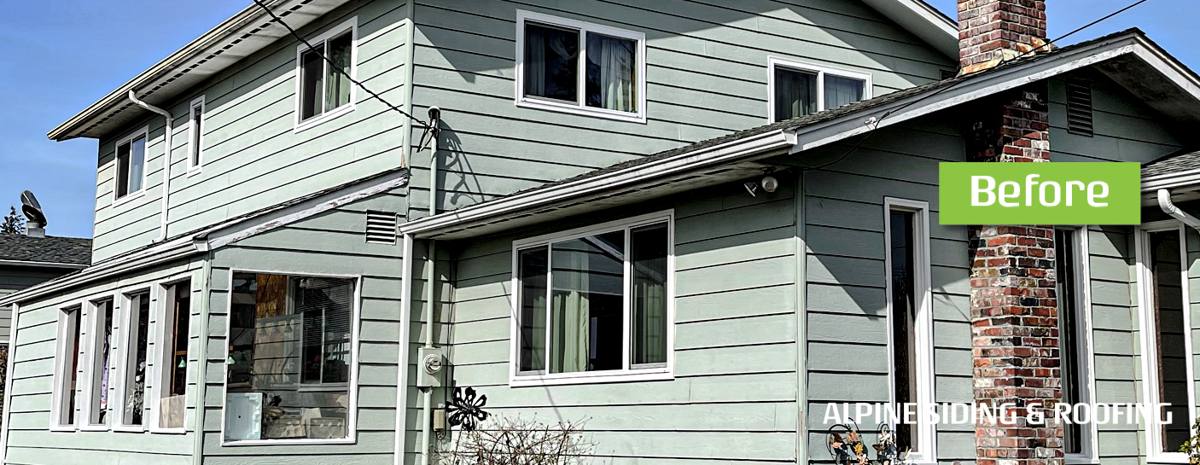
Roofing That Holds Up Near the Water
A roof in Fairhaven is doing more work than a roof in a drier climate. It's shedding near-constant winter rain, resisting wind off the bay, and fighting moss growth almost year-round in shaded or north-facing sections. The materials and details that matter most here aren't exotic — they're the basics done correctly, with attention to the parts of a roof system that fail first in a coastal, wet climate.
Asphalt Shingle Roofs
Asphalt shingles remain the most common roofing material in this area for good reason: they're cost-effective, well understood, and perform reliably when installed with proper underlayment and ventilation. In a salt-air, high-moisture environment, the details that matter most are corrosion-resistant fasteners and flashing, sufficient attic ventilation to prevent trapped moisture from breaking down the roof deck from underneath, and algae-resistant shingle products in areas with heavy shade or north exposure. Skipping any of these to save on upfront cost tends to show up as a shortened roof life.
Metal Roofing
Metal roofing holds up well against wind-driven rain and sheds moss more readily than shingles because of its smooth surface, but not all metal roofing is equal in a coastal environment. Fastener and flashing material matters — mismatched metals can corrode where they meet, and standard steel components without the right coating will rust faster this close to salt air. We use fastener and flashing systems rated for coastal exposure rather than defaulting to whatever is cheapest, because the failure point on a metal roof here is almost always at the connections, not the panels themselves.
Moss, Algae, and Roof Cleaning
Moss is a maintenance issue, not just a cosmetic one. Left alone, it holds moisture against the roofing material, lifts shingle edges, and works its way into seams. Regular moss removal and gutter clearing — done carefully, without pressure-washing that strips the granule coating off shingles — extends roof life significantly in shaded, damp lots, which describes a large share of Fairhaven properties.
Siding for a Salt Air, High-Moisture Environment
Siding in this neighborhood has to manage two things at once: keep bulk water out during driving rain events, and allow any moisture that does get behind it to dry out rather than sit and rot the sheathing. That second part is where a lot of exterior problems actually start — not from the siding material failing, but from a wall assembly that traps moisture with no way for it to escape.
Fiber cement siding has become a common choice in this climate because it doesn't absorb water the way wood does and holds paint well over time, which matters when a home is exposed to salt air and UV. Engineered wood products can also perform well but are more sensitive to installation detail — cut edges and joints need to be properly sealed and maintained, or moisture intrusion becomes a real risk. Vinyl siding is a lower-maintenance, lower-cost option that performs adequately in this climate as long as it's installed with the drainage plane and flashing details done correctly; its main trade-off is less design flexibility and a more plastic appearance up close.
Whatever the material, we pay close attention to the house wrap, flashing at windows and doors, and rainscreen or drainage gap behind the siding. In a wetter coastal climate, that drainage detail is often the difference between siding that lasts decades and siding that traps moisture and rots the wall behind it within a few years.
Windows: Sealing Out Wind-Driven Rain
Fairhaven's exposure to storms coming off the water means window installation quality matters as much as the window unit itself. A well-rated window installed with poor flashing will leak; a mid-grade window installed correctly with proper flashing and sealant will often outperform it. We flash window openings to shed water down and out, never relying on caulk alone as a primary water barrier, and we pay attention to sill pans and head flashing — the details that keep wind-driven rain from working its way into the wall cavity during a hard winter storm.
Double-pane, low-E glass is standard for this climate and helps with both energy performance and condensation control, which is worth paying attention to given how much humidity swings between a damp Bellingham winter and a dry, sunny summer week. Homeowners replacing older windows in Fairhaven often notice reduced drafts and less condensation on interior glass as the immediate, visible benefit.
Decks: Built for Standing Water and Shade
Decks in Fairhaven deal with a specific combination of problems: shade from mature trees that slows drying time, frequent rain that keeps surfaces wet longer than in sunnier parts of the county, and, depending on the lot, salt air that accelerates corrosion on fasteners and hardware. Wood decking requires more consistent maintenance in this environment — regular sealing or staining, and attention to any spots where debris collects and holds moisture against the boards. Composite decking costs more upfront but resists moisture and doesn't need refinishing, which is a real advantage on a shaded, damp lot where a wood deck might need attention every year or two.
Ledger board attachment and flashing where the deck meets the house deserve particular attention here — it's one of the most common sources of hidden rot on older decks in wet climates, because it's an area that traps water against the structure and isn't visible during a casual inspection.
Why a Local Crew Matters for This Neighborhood
Exterior work done by a crew that doesn't regularly work in coastal Whatcom County conditions tends to underestimate two things: how much moisture management matters relative to drier regions, and how much shade and tree cover affect drying time and moss growth. A crew that works in Bellingham and the surrounding communities on a regular basis has already seen how a given roofing or siding detail performs after a few Fairhaven winters, not just how it looks on installation day. That experience shows up in the small decisions — flashing details, fastener choice, ventilation sizing — that don't matter much in a dry climate but matter a great deal here.
Cost Factors to Consider
Exterior project costs vary by scope, materials, and the condition of what's being replaced, but the factors below tend to move the price the most for Fairhaven homeowners specifically.
| Factor | Why It Affects Cost in This Area |
|---|---|
| Roof accessibility and pitch | Steeper or heavily shaded roofs take longer to work safely and often need more moss/debris cleanup before installation |
| Coastal-rated fasteners and flashing | Corrosion-resistant hardware costs more than standard fasteners but avoids early failure near salt air |
| Existing moisture damage | Rotted sheathing, sill plates, or framing found during tear-off adds repair cost beyond the original scope |
| Ventilation upgrades | Older homes often need added attic or wall ventilation to handle this climate's humidity, which is easier to price in upfront than after the fact |
| Material choice | Composite decking and fiber cement siding cost more initially than wood or vinyl but reduce maintenance costs over time |
Seasonal Maintenance Checklist for Fairhaven Homes
A short list of maintenance habits goes a long way toward preventing the moisture-related damage that's most common in this area:
- Clear moss from roof surfaces and gutters at least once a year, more often on shaded, north-facing roof sections
- Check gutters and downspouts for clogs before the heavy fall and winter rains arrive
- Inspect caulking and flashing around windows and doors annually for cracking or gaps
- Look for soft or discolored siding, which can indicate trapped moisture behind the surface
- Reseal or stain wood decking on a regular schedule, and check ledger board flashing where the deck meets the house
- Rinse salt residue and debris off exterior metal hardware and fixtures periodically if the property is close to the water
Getting Started
Every home in Fairhaven carries its own combination of shade, exposure, and existing wear, so a walk-through beats a generic estimate. If you're dealing with roof moss buildup, siding that's showing signs of moisture, aging windows, or a deck that needs attention, we're happy to take a look and talk through what actually needs to be done — no pressure, no upsell. Use the form below to request a free estimate.