 Bellingham Roofing
 Metal Roofing Built for Sunnyland's Weather, Not Just the Average Bellingham Roof
Sunnyland sits close enough to the water and to the tree canopy that it gets a specific combination of punishment most inland neighborhoods don't deal with: salt-laden air moving in off Bellingham Bay, long stretches of driving rain, and a moss season that can run eight or nine months out of the year under the right shade conditions. A roof that performs fine in a drier part of Whatcom County can still struggle here if it wasn't specified and installed with this exact mix of exposures in mind. Metal roofing, done correctly, handles all three of those stresses better than almost any other material available to homeowners in this area — but "done correctly" is doing a lot of work in that sentence, and it's worth understanding what that actually means before you sign a contract.
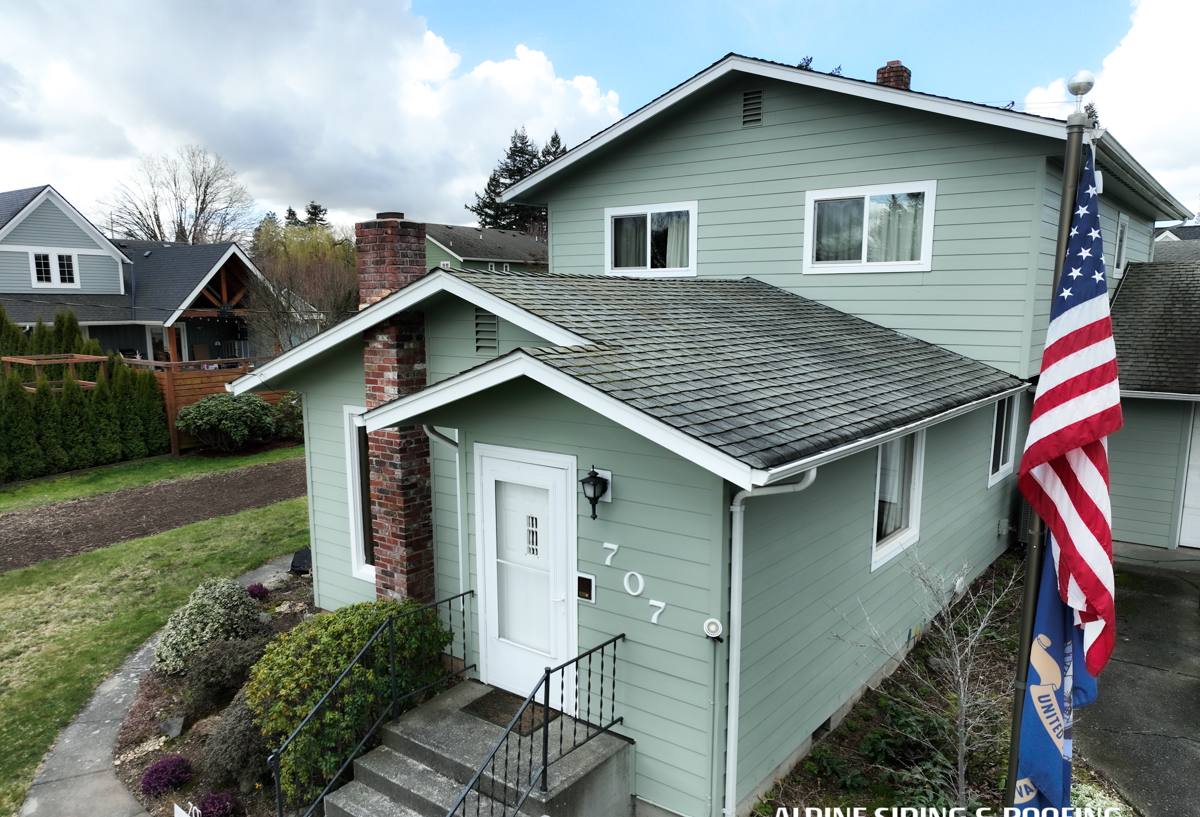
What Salt Air, Rain, and Moss Actually Do to a Roof Here
Each of these three stresses attacks a roof differently, and a metal system has to be built to resist all of them at once, not just one.
Salt Air
Airborne salt accelerates corrosion on any metal that isn't properly coated or isn't the right alloy for a coastal-influenced environment. This shows up first at cut edges, fastener heads, and any spot where the protective coating has been scratched or compromised during installation. It's not usually the field of the panel that fails first — it's the details.
Driving Rain
Wind-driven rain doesn't just fall straight down; it gets pushed sideways and upward under laps, around penetrations, and into any seam that wasn't detailed with that scenario in mind. A metal roof's water resistance depends almost entirely on how the seams, flashings, and underlayment were executed — the panel material itself is nearly irrelevant if those details are wrong.
Moss and Organic Growth
Shaded, moisture-holding surfaces in this part of Whatcom County grow moss quickly, and moss holds water against a roofing surface far longer than the surface would otherwise stay wet. On some materials that leads to granule loss or rot. On a properly installed metal roof, moss has almost nothing to hold onto — the smooth, hard surface and steep-shed profile make it inhospitable to growth in a way that shingles simply aren't.
Why Metal Is a Strong Fit for This Neighborhood Specifically
We don't push metal roofing on every home — it's not always the right call for every budget or roofline. But for Sunnyland specifically, the case is straightforward:
- Sheds wind-driven rain faster than a roof with more seams and edges for water to find
- Resists moss and algae growth far better than porous roofing materials, reducing the cleaning burden
- Handles the freeze-thaw swings we get in a marine climate without the granule loss shingles experience over time
- Lasts significantly longer than a standard asphalt roof when installed and maintained correctly, which matters on a coastal-influenced structure that takes more abuse per year
- Performs well under moderate snow loads and sheds it cleanly rather than holding it against the deck
Metal Roofing Systems We Install
Not all metal roofing is the same product wearing different clothes. The system matters as much as the metal.
| System | Best For | Trade-Offs |
|---|---|---|
| Standing Seam | Homes wanting the cleanest look and best long-term seam performance against wind-driven rain | Higher upfront cost; requires a crew experienced with hidden-fastener detailing |
| Exposed-Fastener Panel | Budget-conscious projects, outbuildings, or additions matching an existing metal roof | Fasteners need periodic inspection and eventual re-torquing or replacement over the roof's life |
| Stone-Coated Steel | Homeowners who want the look of shingles or tile with metal's underlying durability | More installation steps and detailing than a plain panel system; cost sits between standard panel and premium standing seam |
For most Sunnyland homes exposed to open weather or tree cover, we lean toward standing seam because the concealed fastener system removes the most common long-term failure point — exposed screws that loosen, corrode, or lose their seal over the years. Where budget or roof style points elsewhere, we'll say so honestly rather than upselling a system a home doesn't need.
What a Correct Metal Roof Installation Actually Involves
The panels get most of the attention, but the quality of a metal roof comes down to the parts underneath and around them.
Deck Inspection and Repair
Any soft, rotted, or moisture-damaged decking gets replaced before a single panel goes down. Installing new metal over a compromised deck just hides a problem that will resurface later, usually as a leak that's harder to trace.
Underlayment Selection
Given how much sustained rain this area gets, we use underlayment rated for the extended wet exposure a metal roof can see during installation and over its service life — not a generic felt product that wasn't built for our rain volume.
Fastener and Flashing Material
Fasteners, flashing, and trim need to be metallurgically compatible with the panel material to avoid galvanic corrosion, and rated for the coastal-air exposure Sunnyland sees. Mismatched metals touching each other is a slow, quiet way for a roof to fail years ahead of schedule.
Seam and Penetration Detailing
Every pipe boot, chimney flashing, valley, and panel seam is a place wind-driven rain will test first. These get sealed and lapped with that specific weather pattern in mind, not just to a generic code minimum.
Ventilation
Proper attic and roof ventilation keeps moisture from condensing under the deck, which matters as much for a metal roof's long-term performance as anything happening on the outside surface.
What Drives the Cost of a Metal Roof in This Area
| Factor | Why It Matters Here |
|---|---|
| Panel system chosen | Standing seam costs more upfront than exposed-fastener panel but reduces long-term maintenance |
| Roof complexity | More valleys, dormers, and penetrations mean more flashing detail work, which is where labor time concentrates |
| Deck condition | Homes with existing moisture damage from moss or old leaks may need deck repair before installation |
| Coating and gauge | Heavier gauge and marine-grade coatings cost more but hold up better against salt air exposure |
| Tear-off vs. overlay | Removing an old roof adds cost but lets us inspect and fix the deck, which we generally recommend given local moisture history |
We won't quote a number without seeing the roof, but we'll walk you through exactly which of these factors are driving your price and which ones you have real choice over.
Our Process, Start to Finish
- On-site inspection. We walk the roof, check the deck where accessible, and look at how the home is exposed to weather from prevailing wind and moisture directions.
- Honest system recommendation. We'll tell you which metal system fits your roofline, budget, and exposure — and if metal isn't the right call for your situation, we'll say that too.
- Clear, written estimate. Materials, labor, and scope spelled out, no vague allowances.
- Deck repair as needed. Any compromised decking gets addressed before installation, documented and discussed with you.
- Installation with weather-specific detailing. Seams, flashings, and penetrations installed for the wind-driven rain and salt exposure this neighborhood actually sees.
- Final walkthrough. We go over the finished roof with you before calling the job done.
Maintaining a Metal Roof in Sunnyland
Metal roofing needs far less maintenance than shingles, but "far less" isn't "none." A short annual routine keeps a properly installed system performing for decades.
- Clear debris and needles from valleys and gutters, especially under tree cover where moss and organic buildup collect fastest
- Check pipe boots and flashing seals during an annual walk-around, since these age faster than the panel material itself
- Look for any scratches or exposed metal at panel edges and touch them up promptly to prevent salt-air corrosion from starting
- Confirm fasteners are still seated tight on exposed-fastener systems
- Keep overhanging branches trimmed back to reduce shade, moisture retention, and debris load on the roof surface
Why Local Experience in This Neighborhood Matters
A crew that only occasionally works near the water tends to under-detail for salt exposure and driving rain because it isn't the problem they see most often. A crew that works Sunnyland and the surrounding Bellingham neighborhoods regularly has already seen which flashing details hold up here and which ones fail early, which fastener and coating combinations last, and where moss actually causes damage versus where it's just cosmetic. That experience shows up in the parts of the roof you don't see once the panels are down — the flashing, the fastener choice, the underlayment — which is exactly where a metal roof's long-term performance is decided.
If you're weighing metal roofing for a home in Sunnyland, we're happy to come take a look and give you a straightforward, no-pressure estimate. There's a form below to get that scheduled.