 Bellingham Roofing
 Exterior Contracting for Sehome Homes
Sehome sits close to the heart of Bellingham, a neighborhood of older bungalows, mid-century homes, and newer infill mixed in among the hill above Western Washington University. It's a walkable, tree-covered part of town, and that's exactly why the exterior of a Sehome home ages differently than a house out on open ground. Mature trees mean more shade, more debris, and more moisture sitting on a roof or against siding longer than it should. Add in Whatcom County's marine climate — salt-tinged air drifting in from Bellingham Bay, long stretches of driving rain, and a moss season that can run most of the year — and you've got a recipe for exteriors that need steady, informed maintenance rather than a one-time fix.
We work on homes throughout Bellingham, and Sehome's mix of tree cover, older housing stock, and hillside lots is a pattern we know well. This page covers what we see most often in the neighborhood and how our roofing, siding, window, and deck work is built around it.
What the Climate Does to Sehome Exteriors
Moss and Organic Growth
Shaded lots under fir and maple canopy hold moisture longer after a storm, which is exactly what moss, lichen, and algae need to take hold. On a roof, moss lifts shingles at the edges and holds water against the surface long after the rest of the neighborhood has dried out. On siding, especially in shaded north-facing walls, algae staining and soft growth can work into seams and fastener points over time. None of this is dramatic on its own, but left unaddressed for a few seasons it shortens the life of materials that would otherwise last decades.
Driving Rain and Wind-Driven Moisture
Bellingham doesn't get the heaviest rainfall totals in the state, but it gets a lot of sustained, wind-driven rain — the kind that pushes water sideways into laps, seams, and flashing rather than just falling straight down. That matters more for how a roof and siding system is detailed than for how thick the materials are. Flashing at valleys, chimneys, and wall-roof intersections, along with proper siding overlap and window flashing, is what actually keeps water out during a real Pacific Northwest storm.
Salt Air and Corrosion
Sehome isn't waterfront, but Bellingham Bay's salt air still reaches homes across the city, and it accelerates corrosion on exposed metal — fasteners, flashing, gutter hardware, and lower-grade trim. We favor corrosion-resistant fastener and flashing choices for this reason, not because a manufacturer told us to, but because we've seen what happens to the cheaper alternative after a decade near this coastline.
Roofing in Sehome
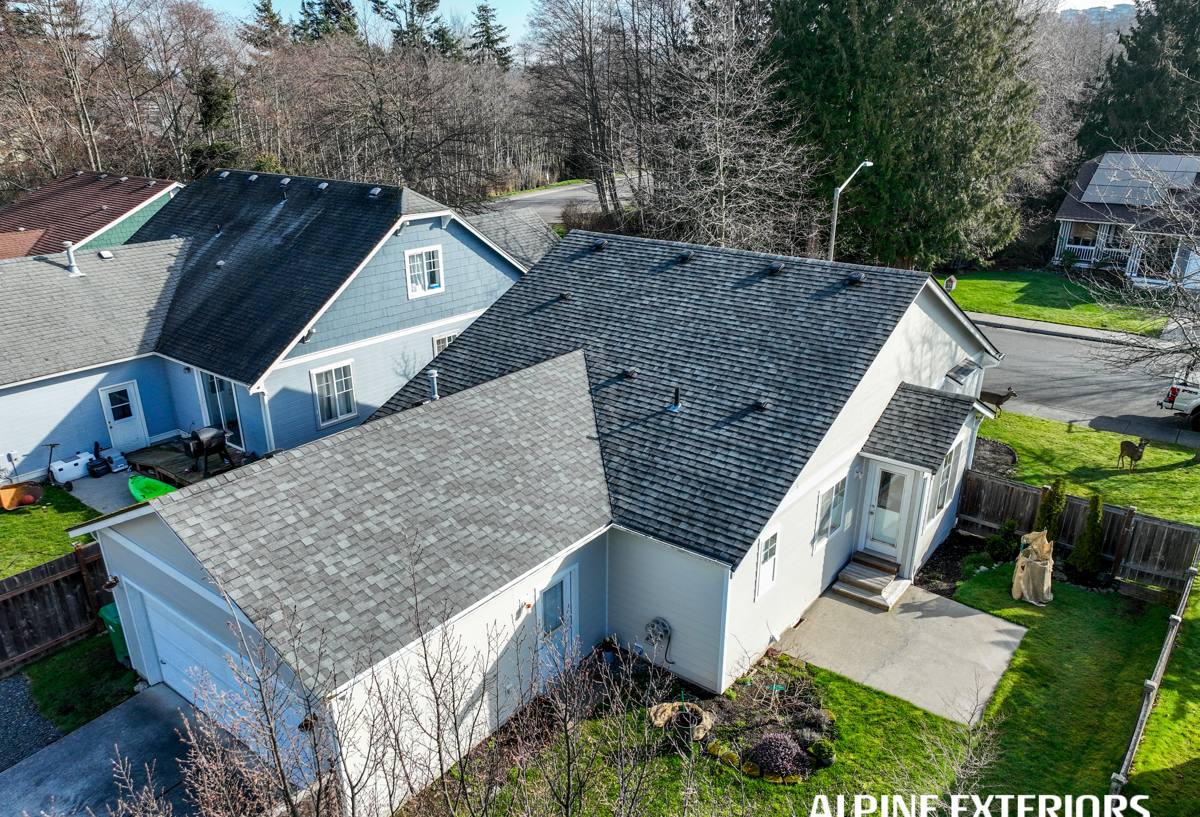
Roof work in this neighborhood usually falls into one of three categories: moss and debris maintenance, targeted repair around flashing and penetrations, and full replacement on homes that are past the point where repair makes sense. Composition shingle is the most common roofing material we see on Sehome homes, and it performs well here when it's installed and maintained with this climate in mind — proper underlayment, ventilation to control condensation in the attic, and flashing details that account for wind-driven rain rather than just straight-down moisture.
Signs a Sehome Roof Needs Attention
- Visible moss or dark streaking on shaded slopes, especially north- or east-facing sections
- Granule buildup in gutters, a sign shingles are wearing faster than they should
- Soft spots, sagging, or discoloration on interior ceilings after a heavy rain
- Lifted or curling shingle edges near valleys and chimneys
- Daylight visible through the attic roof deck, or damp insulation
- Gutters overflowing or pulling away from the fascia during storms
Roof age matters too. A composition roof installed in the last 10-15 years with reasonable maintenance is usually a repair candidate. Beyond that, especially on a shaded lot with a history of moss, replacement often makes more sense than continuing to patch.
Siding for Bellingham's Marine Climate
Siding takes a different kind of abuse than roofing — it's the first line of defense against wind-driven rain hitting a wall at an angle, and it's also the surface most affected by algae and moisture staining in shaded yards common to Sehome. We install and repair fiber cement, engineered wood, and traditional wood siding, and for most Sehome homes we lean toward fiber cement or well-detailed engineered products because of how they handle sustained moisture exposure with lower long-term maintenance than untreated wood siding, particularly on shaded elevations where wood siding can hold moisture and invite rot years sooner.
What We Check on a Siding Inspection
- Caulking and sealant condition around windows, doors, and trim joints
- Signs of moisture intrusion at the bottom courses and near ground contact
- Paint or finish failure, which is often the first visible sign of underlying moisture
- Proper flashing above windows and at wall-roof intersections
- Soft or spongy sections, especially on shaded walls
Windows: Comfort and Moisture Control
Older Sehome homes often still have original single-pane or early double-pane windows, and in a climate with this much sustained damp and temperature swing, that shows up as condensation, drafts, and higher heating bills. Window replacement isn't just about appearance — proper flashing and integration with the surrounding siding is what keeps water from working its way into the wall assembly, which is a bigger long-term concern in a rainy climate than the glass itself. When we replace windows, we treat the flashing and sealing details as equally important as the window unit.
Decks Built for Wet Winters
A deck in Sehome spends a good part of the year wet, shaded, and slow to dry — conditions that are hard on fasteners, ledger connections, and any wood surface that doesn't drain well. We build and repair decks with attention to proper drainage, ledger flashing to keep water out of the house band joist, and material choices — whether wood or composite — that match how much upkeep an owner actually wants to do. A composite deck trades a higher upfront cost for less seasonal maintenance; a wood deck costs less initially but needs more regular attention to staining and sealing to hold up through repeated wet seasons.
Comparing Common Exterior Materials for This Climate
| Material | Best For | Maintenance in Sehome's Climate |
|---|---|---|
| Composition shingle roofing | Most homes, cost-effective, wide style range | Periodic moss treatment, gutter clearing, flashing checks |
| Fiber cement siding | Long-term durability on shaded or exposed walls | Low — occasional caulk and paint upkeep |
| Traditional wood siding | Historic character, specific architectural styles | Higher — regular sealing and moisture monitoring |
| Vinyl siding | Budget-conscious projects | Low, but limited repairability if damaged |
| Wood decking | Traditional look, lower upfront cost | Annual staining/sealing recommended in wet climates |
| Composite decking | Low-maintenance, long-term deck use | Minimal — periodic cleaning |
Why a Local Crew Matters Here
Whatcom County's exterior codes, wind and rain exposure requirements, and typical construction details differ from what a contractor coming up from a drier part of the state might default to. A crew that works Bellingham roofs and walls regularly knows which flashing details actually matter here, which materials hold up against this specific combination of salt air, shade, and sustained rain, and which shortcuts show up as problems in five years instead of twenty. That local knowledge is the difference between a repair that lasts and one that becomes a recurring call.
We also know that Sehome's older housing stock sometimes comes with surprises once a wall or roof is opened up — outdated flashing, undersized ventilation, or moisture damage that wasn't visible from the outside. A local crew that's seen this pattern before can flag it honestly and address it as part of the job rather than treating it as a separate, unexpected cost.
What to Expect From an Estimate
A straightforward exterior estimate for a Sehome home typically includes a visual inspection of the roof, siding, and any trouble spots the homeowner has already noticed, along with an honest read on whether repair or replacement makes more sense given the age and condition of the materials. We'll walk through the reasoning, not just hand over a number.
Questions Worth Asking Any Contractor
- What specific flashing and moisture details will be used, not just what material is being installed
- How they handle unexpected damage found once work begins
- What the warranty actually covers, and for how long
- Whether they're familiar with Bellingham/Whatcom County permitting and code requirements
- References or examples of similar work in the local area
If you're seeing moss buildup, staining, drafts, or a deck that's starting to feel soft underfoot, it's worth having someone take a look before the next wet season sets in. We're happy to come out, walk the property, and give you a straightforward, no-pressure estimate using the form below.