 Bellingham Roofing
 Siding Repair in Sunnyland: Matching the Fix to What This Neighborhood Actually Deals With
Sunnyland is one of Bellingham's established, centrally located neighborhoods, with a housing stock that spans early-1900s bungalows, mid-century additions, and newer infill built in among them. That mix matters for siding repair, because a house built decades ago was almost certainly re-sided or patched at some point with whatever material and technique was standard at the time, and those old repairs are often exactly where new problems show up first. We do siding repair work throughout Sunnyland and the rest of Bellingham, and the pattern we see most often isn't dramatic storm damage — it's slow, water-driven deterioration that started small and got ignored because it wasn't obvious from the street.
Whatcom County's climate doesn't do a house any favors on this front. Salt air off Bellingham Bay, driving rain that comes in sideways during fall and winter storms, and a moss season that runs long into the year all work on siding continuously, not just during the occasional bad storm. A repair that only addresses what's visible on the surface, without accounting for what that combination has done underneath, tends to fail again within a year or two.
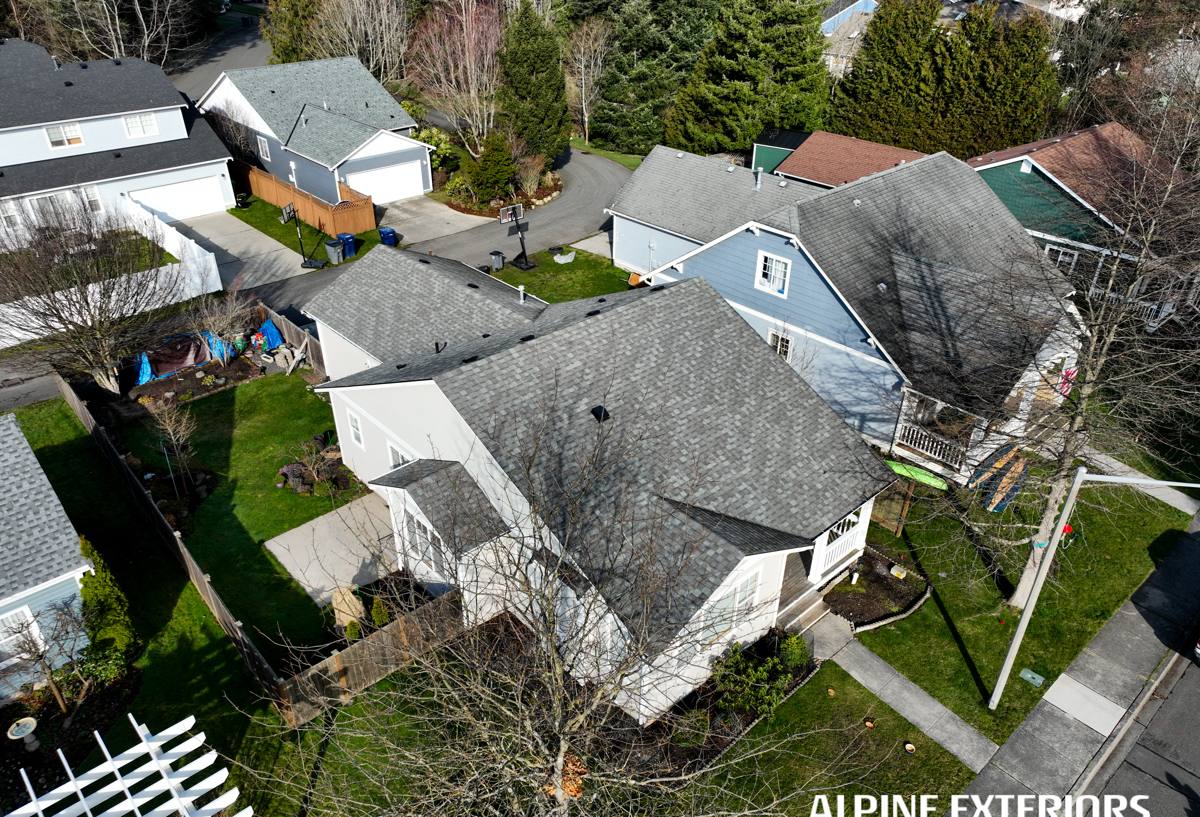
What Salt Air, Driving Rain, and a Long Moss Season Do to Siding
Salt Air and Metal Fasteners
Proximity to Bellingham Bay means a fine load of salt-laden air moves through Sunnyland regularly, especially on windier days. Salt accelerates corrosion in exposed or under-coated fasteners, trim flashing, and any hardware that isn't rated for a marine-influenced environment. On siding repairs, this shows up as rust streaking below nail heads or corroded flashing that's stopped shedding water the way it should, even when the siding panel itself still looks intact.
Driving Rain and Wind-Driven Water
Bellingham gets a lot of rain, but it's the wind-driven variety — rain hitting walls at an angle instead of falling straight down — that actually damages siding. Wind-driven rain finds its way behind poorly lapped panels, undersized flashing, and old caulk joints that have shrunk and cracked. Once water gets behind a wall assembly, it can travel and show up as damage well away from where it actually entered, which is why a proper repair diagnosis has to trace water back to its real source rather than just patching the spot where staining is visible.
A Long Moss Season
Cool, damp conditions for much of the year give moss and mildew a long window to establish themselves on north-facing walls, shaded siding, and any surface that doesn't get much direct sun or drying wind. Moss holds moisture directly against the siding surface, which is a problem for porous or moisture-absorbent materials in particular. On a repair, that means dealing with what's growing on the surface and making sure the material and finish underneath won't just invite it back within a season.
Signs a Section of Siding Needs Repair, Not Just a Cleaning
A lot of Sunnyland homeowners reach out after a pressure wash or repaint didn't solve what they were seeing. These are the signs that point to an actual repair, not a cosmetic fix:
- Soft, spongy, or crumbling siding when pressed, especially near the bottom courses or below windows
- Paint that keeps failing in the same spot no matter how recently it was repainted
- Visible gaps, warping, or buckling in individual panels or boards
- Rust staining running down from nail heads or trim fasteners
- Moss or dark staining that returns quickly after cleaning
- Interior signs — a musty smell, soft drywall, or a stain on an interior wall that lines up with an exterior trouble spot
- Visible daylight or gaps at butt joints, corners, or around window and door trim
What a Correct Repair Requires
Patching over damaged siding without finding out why it failed just delays the same problem. A correct repair starts with removing enough surrounding material to see the actual extent of the damage and what let water in — a failed flashing detail, a gap at a trim joint, an old fastener that's corroded through. Only after that diagnosis makes sense should new material go back in, tied into proper flashing and water management details so the same failure doesn't just repeat in a year.
Repair or Replace? How We Make That Call
Not every damaged section calls for a full re-side, and not every stained panel is a quick patch. We look at the extent of the damage, how much of the wall is affected, the age and condition of the surrounding siding, and whether the underlying water management is sound. The table below outlines how that reasoning generally plays out.
| Situation | Typical Approach | Why |
|---|---|---|
| One or two damaged panels, sound siding elsewhere, correctable water source | Targeted repair | Isolated damage with a fixable cause doesn't justify replacing sound material |
| Repeated failures in the same area over several years | Repair plus a hard look at the wall assembly | Recurring failure usually points to a structural water-management issue, not bad luck |
| Widespread soft spots, warping, or moisture damage across multiple elevations | Full or partial re-side | Patchwork repairs on siding that's failing broadly rarely hold up or look right |
| Siding is decades old and near the end of its service life | Replacement, even if current damage is limited | Repairing aging material with a limited remaining lifespan is a short-term fix at real cost |
Why We Repair and Replace Only in James Hardie Fiber Cement
When a repair calls for new material, we install James Hardie fiber cement — and that's the only siding product we install, whether it's a small repair or a full re-side. We used to work with a broader range of products. We stopped because of what we kept seeing on repair calls: engineered wood siding with soft, swollen edges at cut lines and joints; vinyl that had trapped moisture behind it in exactly the wind-driven rain conditions Sunnyland gets; primed wood and cedar that needed refinishing far more often than most homeowners want to keep up with. Each of those products has a legitimate place in the market. We simply made a professional call to stand behind one system rather than mix repair materials that don't age or perform the same way.
James Hardie's fiber cement is non-combustible, dimensionally stable so it doesn't swell or warp the way wood-based products can, and finished with a factory-applied ColorPlus coating that resists fading and moisture intrusion far longer than field-applied paint. Hardie's HZ5 product line is engineered specifically for regions with heavy moisture exposure, which fits Whatcom County's rain and humidity well. It's also backed by a strong transferable warranty, provided the installation follows Hardie's published specifications — which matters as much on a repair as it does on a full install.
Matching Existing Hardie Siding
If a Sunnyland home already has James Hardie siding and needs a repair, matching the existing profile, color, and finish is usually straightforward, since Hardie's ColorPlus lineup and standard profiles are consistent and well documented. If the home has a different siding material and only a portion needs repair, we'll walk through the honest options — a like-for-like patch versus converting the repaired section to Hardie — rather than assuming one answer fits every situation.
Our Siding Repair Process
- On-site inspection: We look at the damaged area and the surrounding siding, and trace visible symptoms back to their actual water source rather than just noting where staining shows up.
- Honest scope and estimate: We tell you plainly whether this is a targeted repair, a larger repair, or something that's reached the point where replacement makes more sense — and why.
- Removal and inspection behind the siding: Once panels come off, we check the flashing, house wrap, and sheathing underneath for hidden damage before anything new goes back in.
- Correct water management details: Flashing, joint sealing, and drainage get addressed as part of the repair, not skipped to save time.
- New material installed to spec: Whether it's a matched patch or new Hardie board, fasteners, spacing, and clearances follow manufacturer specifications.
- Final walkthrough: We show you what we found, what we fixed, and what to watch for going forward.
Why Hiring a Crew That Already Works in Sunnyland Matters
A contractor who regularly repairs siding in Sunnyland and similar Bellingham neighborhoods has already seen how salt air, wind-driven rain, and long moss seasons play out on the specific mix of older and newer construction found here. That shows up in practical ways — recognizing which older repair techniques tend to fail first, knowing which elevations typically take the worst of the wind-driven rain, and not being surprised by what's behind the siding on a house that's been patched more than once over the years. It also means showing up, giving a straight answer about what's actually needed, and not treating every repair call as an opportunity to sell a full replacement that isn't warranted yet.
A Few Questions Worth Asking Any Siding Repair Contractor
- Will you explain what caused the damage, not just patch over it?
- What material will you use for the repair, and does it match or replace the existing siding?
- Will the repair include a look at the flashing and water management behind the siding?
- Do you offer a written warranty on the repair work and the material used?
- Have you done repair work in this neighborhood or similar Bellingham homes before?
If you've got a section of siding in Sunnyland that's staining, softening, or just doesn't look right no matter how many times it's been cleaned or painted, we're glad to take a look. The estimate is free, there's no pressure to do more work than the house actually needs, and you'll get a straight answer about what's causing the problem and what it takes to fix it correctly — just fill out the form below.