 Bellingham Roofing
 Exterior Work Built for Happy Valley's Conditions
Happy Valley sits close enough to the water and the hills around Bellingham that homes here deal with a specific mix of weather stress most exterior contractors never have to think hard about. Salt-laden air drifts in off Bellingham Bay, driving rain comes in sideways during fall and winter storms, and the tree cover that makes the neighborhood attractive also means shade, damp ground, and a moss season that can run most of the year. None of that is unusual for Whatcom County, but it does mean an exterior built for a dry-climate spec sheet will underperform here. We build and repair roofs, siding, windows, and decks with that reality in mind, not as an afterthought.
A house in Happy Valley doesn't fail the same way a house in a drier, sunnier region does. The failure points are almost always moisture-related: trapped water under siding laps, moss roots working into shingle mat, window flashing that was never detailed for wind-driven rain, and deck boards that stay wet for days after a storm because they're shaded most of the afternoon. Understanding that pattern is most of what separates a good exterior job here from one that looks fine for a year and then starts showing problems.
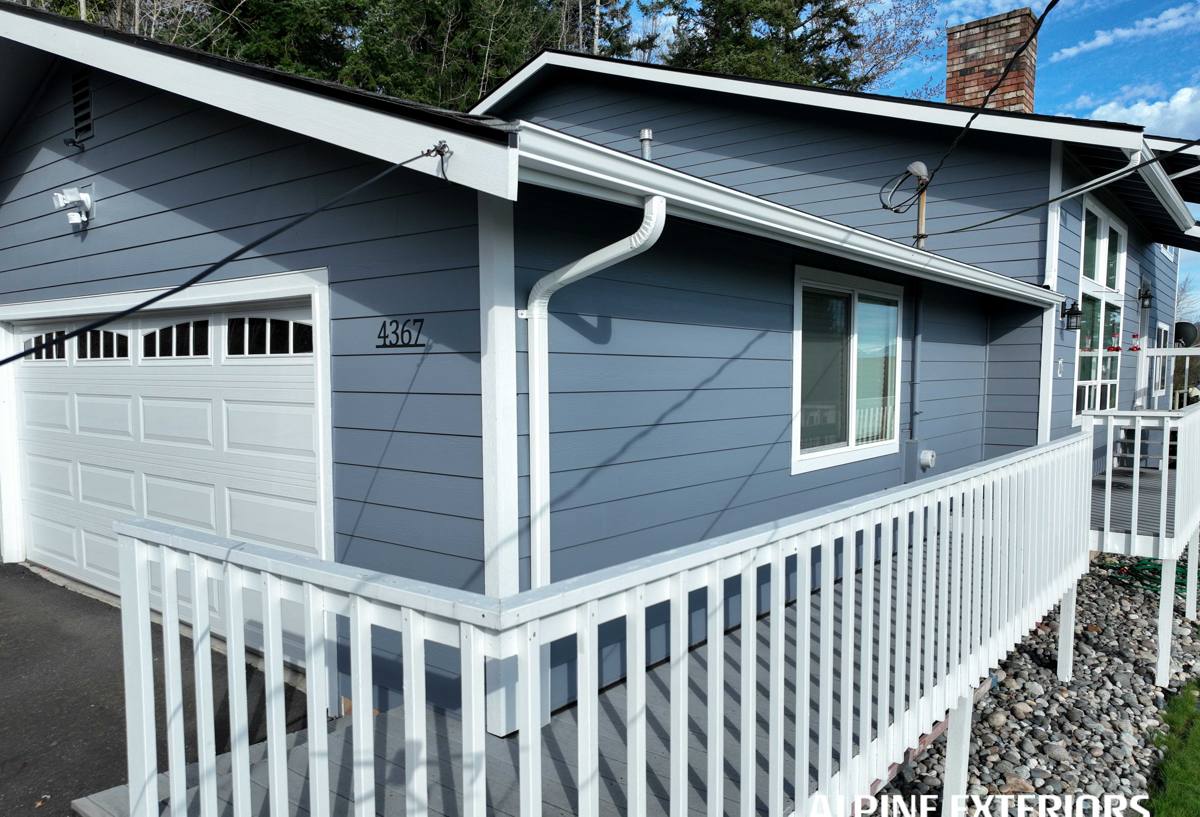
Roofing: The First Line of Defense
Moss and Organic Growth
Moss is the single biggest maintenance issue for roofs in this part of Bellingham. It's not just cosmetic — moss holds moisture against the roofing material, and over time that moisture works its way under shingle edges, lifts tabs, and accelerates granule loss. On north-facing slopes and anywhere shaded by mature trees, moss can establish within a couple of seasons of a roof being cleaned. We look at moss control as an ongoing maintenance item, not a one-time treatment: physical removal, zinc or copper strip installation along ridge lines, and realistic guidance on trimming back overhanging branches where that's practical.
Wind-Driven and Wind-Blown Rain
Storms coming off the water can push rain sideways, which stresses roof penetrations, ridge caps, and valley flashing far more than straight-down rain does. A roof that's watertight in a light drizzle can still leak during a wind event if flashing details were done to minimum code rather than to the conditions this area actually sees. When we install or repair a roof here, flashing and underlayment choices are made with wind-driven rain as the baseline assumption, not the exception.
Material Options
Most homes in the area use asphalt composition shingles, and for good reason — they perform well, they're serviceable, and repairs are straightforward. Metal roofing is a solid option for homeowners who want a longer service interval and better shedding of moss and debris, though it comes with a higher upfront cost. We'll talk through both honestly, including maintenance expectations, rather than pushing whichever product has the better margin.
Siding: Managing Salt Air and Moisture
Siding failures in Happy Valley are rarely about the material itself — they're about what's happening behind it. Salt air accelerates corrosion on fasteners and metal trim, and persistent dampness behind poorly ventilated siding creates conditions for rot and mold that homeowners often don't notice until the siding is pulled back for a repair. We pay close attention to water-resistive barriers, proper lap orientation, and rainscreen or drainage gaps behind siding where the assembly calls for it, because those details do more for long-term performance than the siding material itself.
Why We're Selective About Certain Products
Some siding products marketed as low-maintenance still require very specific installation conditions to perform well in a wet, humid, salt-exposed climate — things like caulking schedules, ventilation gaps, and moisture barrier compatibility. When a product's real-world maintenance burden or moisture tolerance doesn't hold up well to this region's conditions, we'll say so and recommend an alternative that does, even if it's not the flashiest option on the shelf. Fiber cement and properly detailed engineered wood siding tend to hold up well here when installed correctly; vinyl can work too, but expansion and contraction in temperature swings needs to be accounted for during installation.
Windows: Sealing Out Driving Rain
Window leaks in this neighborhood are almost always a flashing or sealant issue, not a glass or frame defect. Wind-driven rain finds any gap in the flashing detail around a window opening, and once water gets behind the trim it can travel and show up as a stain or soft spot well away from the actual entry point. When we replace windows, flashing tape and pan flashing at the sill are treated as non-negotiable steps, not optional extras. We also look at overall window condition during any roofing or siding job, since window flashing failures are frequently discovered that way rather than through a dedicated inspection.
- Failed seals or fogging between panes (a sign the insulated glass unit has lost its seal)
- Soft or discolored trim and sill areas, often the first visible sign of a flashing leak
- Drafts or condensation on the interior during cold, wet weather
- Difficulty opening or closing, which can indicate frame movement or rot
- Visible gaps or deteriorated caulking around the exterior frame
Decks: Built for Shade and Standing Moisture
Decks in shaded, tree-covered parts of Happy Valley face a tougher environment than decks out in open sun. Wood stays wet longer, which means faster decay in untreated or poorly maintained lumber and a head start for moss and algae growth on the deck surface itself — a real slip hazard during wet months. Proper spacing between boards, ledger board flashing to keep water from wicking into the house structure, and drainage underneath the deck all matter more here than they would in a drier microclimate. Composite decking is worth considering for homeowners who want to reduce the recurring maintenance that shaded wood decks require, though it comes at a higher material cost and still needs a properly built substructure underneath.
Deck Material Comparison
| Material | Upfront Cost | Maintenance in Shade/Damp Areas | Typical Lifespan |
|---|---|---|---|
| Pressure-treated wood | Lower | Regular cleaning, staining/sealing needed | 15-20 years with upkeep |
| Cedar | Moderate | Needs sealing to resist moisture and moss | 15-20 years with upkeep |
| Composite | Higher | Low; occasional cleaning to prevent surface algae | 25-30+ years |
Why a Local Crew Matters
A crew that works this part of Whatcom County regularly builds a working knowledge of how houses here actually age — which slopes hold moss the longest, which siding assemblies keep failing behind the same wall orientations, which older neighborhoods tend to have flashing details from a code era that wouldn't pass today. That's not something you get from a national franchise rotating through crews from other regions, and it's not something a homeowner should have to pay to have relearned on their own roof. We also know that permitting, disposal, and inspection processes in Bellingham and Whatcom County have their own local requirements, and we handle that as part of the job rather than treating it as the homeowner's problem to sort out.
What a Straightforward Estimate Should Cover
Whether the job is a full roof replacement, a siding repair, window replacement, or a new deck, a proper estimate should walk through the actual condition of what's there now, not just quote a number off a general price list. That means checking for hidden moisture damage, assessing ventilation, and being upfront about what's a cosmetic issue versus a structural one.
- A physical inspection of the affected area, not just a drive-by estimate
- Clear identification of moisture, rot, or moss damage found during inspection
- A written scope of work describing materials and methods, not just a total price
- An honest timeline that accounts for Bellingham's wet-season scheduling realities
- A straightforward explanation of warranty coverage on both materials and labor
Seasonal Maintenance Worth Doing
A lot of the exterior problems homeowners deal with here are preventable with basic seasonal attention. Clearing gutters before the fall rains start, checking for moss buildup on north-facing roof slopes each spring, and keeping an eye on deck boards and siding laps after a hard winter can catch small issues before they become expensive ones. We're happy to point out what to watch for even outside of a paid job, because a roof or siding system that's maintained properly simply lasts longer — and that's better for everyone, including us, since it means fewer emergency calls during the next storm.
If you're noticing moss buildup, a soft spot on your roof, water stains near a window, or a deck that never seems to fully dry out, we're glad to take a look. Reach out for a free, no-pressure estimate — we'll walk the property, tell you honestly what we see, and lay out your options without a hard sell.