 Bellingham Roofing
 Board & Batten Siding in Sunnyland: Built for This Neighborhood's Climate
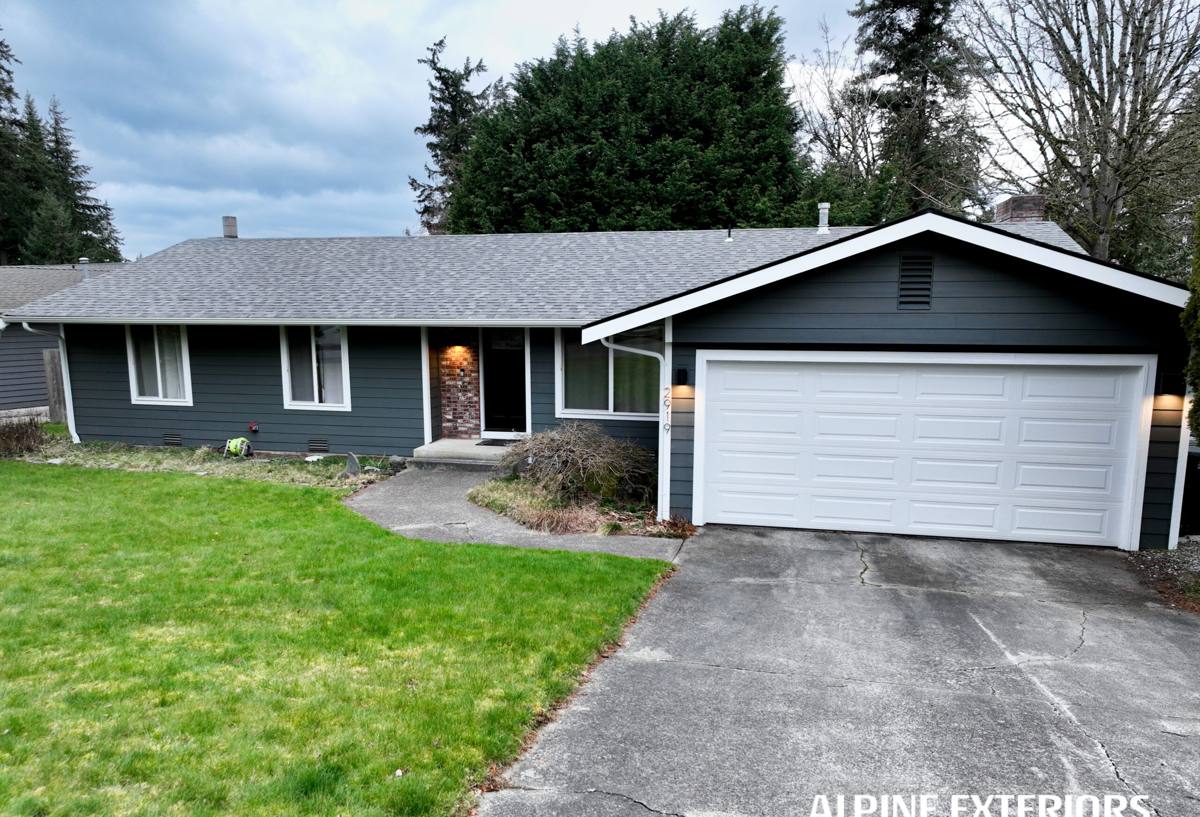
Sunnyland sits close enough to Bellingham Bay that homes here deal with a specific combination of weather stresses: salt-laden air drifting in off the water, long stretches of driving rain through fall and winter, and a moss season that can run most of the year on shaded rooflines and north-facing walls. Board and batten siding is a popular choice in this neighborhood because of its clean, vertical-line look on the craftsman and cottage-style homes common here — but the material behind that look matters more than the look itself. A board and batten profile cut from the wrong substrate will telegraph every one of those climate stresses back at the homeowner within a few years: swelling seams, moss-stained battens, and paint that won't hold.
We install board and batten exclusively in James Hardie fiber cement. This page covers what that means specifically for Sunnyland homes — not board and batten in general, but what a correct installation looks like on this street, in this climate, done by a crew that already knows the neighborhood.
Why Sunnyland's Microclimate Is Harder on Siding Than It Looks
Salt Air and Coastal Proximity
Sunnyland's location near Bellingham Bay means airborne salt is a real, ongoing exposure — not a one-time coastal storm event, but a slow, constant one. Salt air accelerates the breakdown of many exterior materials, corrodes fasteners that aren't rated for it, and speeds up finish failure on anything not engineered to resist it. It's a quieter threat than wind or rain because the damage is cumulative and easy to miss until paint starts chalking or lifting at the seams.
Driving Rain
Whatcom County's rain doesn't just fall — a good share of it comes in sideways during winter storms, driven by wind off the Sound. That matters enormously for a siding style built from individual vertical boards and battens: every seam, joint, and butt end is a potential entry point if the water-resistive barrier, flashing, and gaps behind the siding aren't detailed correctly. Board and batten has more linear seams per square foot than lap siding, which means more opportunities for water intrusion if the installation is sloppy.
Moss Season
Shaded walls, close tree cover, and Bellingham's long wet season combine to give moss and algae a real foothold on north- and west-facing elevations in Sunnyland. Moss doesn't just look bad — it holds moisture against the siding surface for extended periods, which is exactly the condition that causes swelling, rot, and paint failure in materials that aren't moisture-stable.
What Board & Batten Actually Needs to Survive Here
A board and batten installation that's going to hold up in Sunnyland needs to get three things right, regardless of what material is used:
- A properly detailed water-resistive barrier and rainscreen gap behind the boards, so any water that gets past the seams has somewhere to drain and dry out
- Fasteners and flashing rated for coastal/salt exposure, not standard interior-grade hardware that will corrode and streak the siding
- A substrate that doesn't move, swell, or rot when it gets wet — because in this climate, it will get wet, repeatedly, for months at a time
That third point is where the choice of material becomes the whole conversation.
Why We Only Install James Hardie for Board & Batten
Board and batten is traditionally associated with wood — primed spruce or cedar boards nailed up with vertical battens covering the seams. It's a legitimate look with real history, and we understand why homeowners are drawn to it. But wood-based board and batten has a structural weakness that Sunnyland's climate exposes fast: end grain and seam edges absorb water, and once a board starts to swell or cup, the battens meant to protect the seams can no longer close them properly. In a driving-rain, high-moss environment, that cycle repeats every wet season, and repainting can only slow it down, not stop it.
James Hardie fiber cement solves the core problem rather than managing it. It's a cement-based composite that doesn't swell, rot, or provide a food source for moss and mildew the way wood does. Hardie's HZ5 product line is engineered specifically for climates like ours — freeze-thaw cycling, sustained moisture, and coastal exposure — and the factory-applied ColorPlus finish is baked on under controlled conditions, which gives it far better adhesion and UV/salt resistance than field-applied paint on primed wood ever achieves. For a profile built almost entirely of seams and butt joints, starting with a board that won't move when wet is the single biggest factor in whether the installation lasts.
We also don't install vinyl or LP SmartSide board and batten. Vinyl can't achieve the crisp, deep-shadow-line look that makes board and batten attractive in the first place, and it becomes brittle in cold snaps. LP SmartSide is a wood-strand product — better engineered than raw lumber, but still an engineered-wood core that depends on an intact factory seal at every cut edge to resist moisture; in a seam-heavy profile with constant driving rain, that's a dependency we're not willing to build a job around. Fiber cement doesn't carry that risk.
Our Board & Batten Process for Sunnyland Homes
1. On-Site Assessment
We look at the home's specific exposure — which walls face the prevailing rain and wind, where moss has been an issue historically, proximity to mature trees or shade, and the condition of the existing wall assembly underneath the current siding.
2. Water Management Plan
Before any board goes up, we plan the water-resistive barrier, rainscreen gap, and flashing details — window heads, sills, corners, and the base of the wall — so water that reaches the seams has a clear path out instead of a place to sit.
3. Material and Layout
We spec Hardie panel and batten profile sized and spaced to the home's proportions, using factory-primed and ColorPlus-finished boards so the coastal exposure is handled at the finish level, not left to field paint.
4. Installation to Hardie's Fastening Spec
Fastener type, spacing, and penetration depth follow James Hardie's published installation requirements — this is what keeps the manufacturer's warranty intact and what actually resists corrosion and wind-driven rain over time.
5. Final Detailing and Walkthrough
Caulking at appropriate joints, trim tie-ins, and a walkthrough so the homeowner understands what was done and why — no surprises about maintenance later.
Comparing Board & Batten Materials for This Climate
| Material | Moisture Behavior | Moss/Mildew Resistance | Finish Durability in Salt Air | Typical Maintenance |
|---|---|---|---|---|
| James Hardie Fiber Cement | Dimensionally stable, does not swell or rot | Not an organic food source; resists growth | Factory ColorPlus finish holds up well | Periodic wash; repaint on a much longer cycle |
| Primed Wood/Cedar | Absorbs water at seams and end grain; swells and cups | Organic material; susceptible to moss and rot | Field paint fails faster under salt exposure | Frequent repainting, seam monitoring |
| LP SmartSide | Engineered wood core; depends on intact seal at cuts | Resistant if seal holds; vulnerable if breached | Factory finish reasonable, cut-edge risk remains | Moderate; watch cut edges and seams |
| Vinyl | Doesn't rot, but can't hold crisp board and batten profile well | Resistant, but growth sits on surface | Fades and becomes brittle over time | Low, but limited lifespan and appearance loss |
What a Correct Board & Batten Job Prevents
- Swollen or cupped boards at seams after repeated wet-dry cycles
- Moss and algae staining that keeps returning on shaded elevations
- Paint or finish failure driven by salt exposure near the bay
- Water intrusion behind the siding from wind-driven rain finding gaps at joints
- Premature repainting cycles that add up to more cost than the material itself
Why Hiring a Crew That Already Works Sunnyland Matters
Board and batten installation quality comes down to details that don't show up in a sales conversation: how the rainscreen gap is built, how flashing is integrated at windows and corners, how fastener spacing is handled at butt joints. A crew that's already worked homes in Sunnyland has seen how this specific neighborhood's exposure — the bay-driven salt air, the rain angle in winter storms, which elevations hold moss longest — actually plays out over a few seasons, not just on installation day. That's the difference between a board and batten job that looks right at handoff and one that's still performing correctly five winters later.
We stand behind our work with James Hardie's product warranty backing the material, and we're straightforward about what board and batten does and doesn't need in this climate — no upsells on maintenance products, no vague promises. If you're weighing board and batten for a Sunnyland home, we're happy to walk the property, look at your specific exposure, and give you a straight answer about what the job actually involves.
If you're considering board and batten siding for your Sunnyland home, we offer free, no-pressure estimates — walk us through your home and we'll walk you through exactly what a correct installation looks like for your property.