 Bellingham Roofing
 Sunnyland Decks Face a Specific Set of Problems
Sunnyland is one of Bellingham's older, well-established residential neighborhoods, with mature tree canopy, a mix of home ages, and a location close enough to Bellingham Bay that salt-tinged marine air is a constant factor in how exterior materials age. Decks here don't fail because of one dramatic event. They fail slowly, from the same combination of conditions that affects most of Whatcom County: long stretches of driving rain, short dry windows to let wood actually cure between storms, and a moss season that can run from fall through spring in shaded yards.
Add in salt air working on fasteners and metal hardware, and you get a specific failure pattern we see over and over on Sunnyland decks: surface wear that looks cosmetic but is hiding fastener corrosion, ledger board moisture intrusion that isn't visible from the top of the deck, and moss buildup on north-facing or tree-shaded sections that traps moisture against the boards year-round. A deck repair here isn't just "replace what looks bad." It's addressing what the climate has been doing underneath the surface.
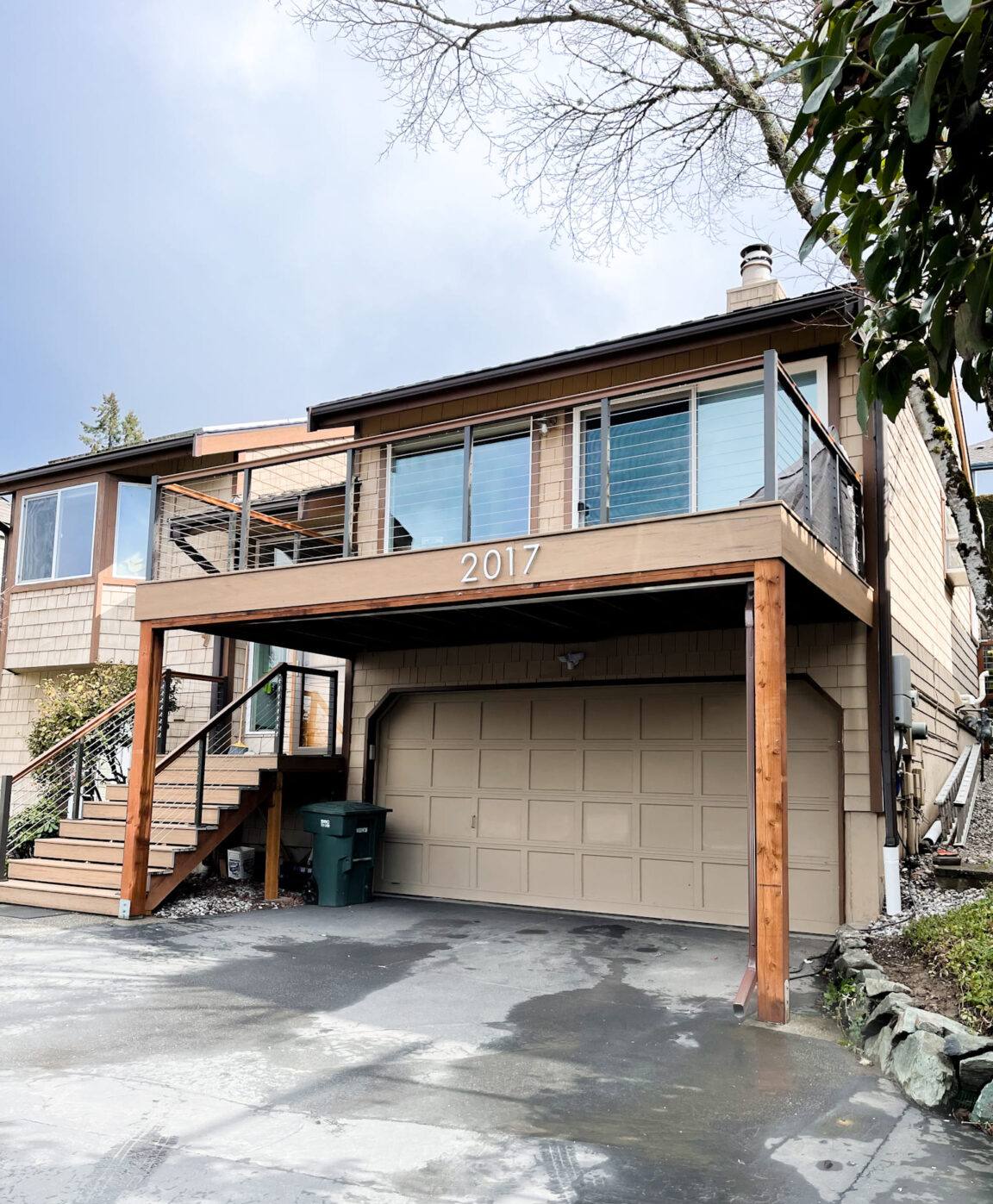
Signs Your Deck Needs Repair Attention
Most homeowners call us after noticing one obvious problem — a soft board, a wobbly rail — without realizing it's often a symptom of something broader. Here's what we tell Sunnyland homeowners to watch for between routine inspections:
- Boards that feel spongy, springy, or noticeably softer underfoot than the rest of the deck
- Any gap, staining, or dark streaking where the deck framing meets the house (the ledger board connection)
- Rust streaks running down from screws, nails, or joist hardware
- Railings or posts that flex or wiggle when you lean on them
- Green or black film building up on boards that stays damp for days after rain
- Stairs that feel less solid than they used to, especially at the stringer connections
- Visible daylight or gaps between deck boards that have widened over time
- A musty smell coming from underneath the deck, which often points to trapped moisture
None of these individually mean the whole deck is unsafe. But each one is worth a real inspection rather than a guess, because the difference between a $400 repair and a full rebuild usually comes down to how early the problem gets caught.
The Ledger Board Is the Most Important Check
The ledger board — the piece that bolts the deck frame to the house — is the single most safety-critical connection on any deck, and it's also the one homeowners are least likely to inspect themselves because it's mostly hidden behind the rim joist and flashing. In a climate like ours, where rain drives sideways for days at a time, a poorly flashed or aging ledger connection is where water gets in and rot starts. We check this connection on every repair call in Sunnyland, even when the homeowner called about something else entirely.
What a Correct Deck Repair Job Actually Involves
A repair done right isn't just swapping boards that look bad. It starts underneath, at the framing, and works outward.
Structural First
Before anything cosmetic gets touched, we check the ledger board attachment, joist condition, post bases, and any beam connections. If there's rot or corrosion in the structure, replacing the decking on top of it just hides the problem for another season. This is the step that gets skipped by rushed repairs, and it's the one that matters most for safety.
Fasteners and Hardware
Salt air and constant moisture cycles are hard on standard fasteners. Where we find corroded screws, nails, or joist hangers, we replace them with corrosion-resistant hardware rated for exterior and coastal-adjacent use, not whatever matches the existing (often undersized or mismatched) fasteners.
Flashing and Water Management
A huge percentage of deck rot traces back to missing or failed flashing at the ledger board, or boards installed tight against each other with no drainage gap. Part of a proper repair is correcting the water path, not just replacing the wood that got wet.
Decking and Railings
Only after the structure and water management are sound do we address the visible surface: board replacement, railing tightening or rebuilding, and stair repairs. This is also where we talk with homeowners about whether to match existing material or use the repair as a chance to upgrade a section to something lower-maintenance.
Repair or Replace? How We Help You Decide
Not every deck problem calls for a full rebuild, and not every deck is worth patching indefinitely. We walk every Sunnyland homeowner through the same honest framework:
| Factor | Leans Toward Repair | Leans Toward Replacement |
|---|---|---|
| Framing condition | Solid, dry, no rot at ledger or joists | Soft or rotted framing members, especially at the ledger |
| Extent of damage | Isolated boards or a single section | Damage spread across most of the deck surface |
| Age of structure | Framing is well within its service life | Original frame is decades old and was never upgraded |
| Code compliance | Railings, guards, and stairs already meet current standards | Railings or stair geometry are outdated or unsafe by current code |
| Cost trend | Repair cost is a small fraction of rebuild cost | Repairs would need to be repeated season after season |
In broad terms, straightforward board and railing repairs on an otherwise sound deck often run in the low hundreds to low thousands of dollars depending on scope. Structural work involving the ledger board, framing, or a full stair rebuild costs more because it touches the parts of the deck that carry weight and keep the structure attached to the house. We give straight numbers after we've actually looked at the deck — not before.
How Decking Materials Hold Up in Our Climate
Sunnyland has a mix of deck ages and materials, from older pressure-treated wood decks to newer composite installs. Each has a different relationship with our wet, mossy climate.
| Material | How It Ages Here | Maintenance Reality |
|---|---|---|
| Pressure-treated wood | Durable if sealed and maintained; prone to splintering and rot if coatings are neglected | Needs re-staining or sealing every couple of years, more often in shaded, damp spots |
| Cedar | Naturally rot-resistant but softer; can gray and weather quickly without upkeep | Regular cleaning and periodic sealing to keep it from graying and absorbing moisture |
| Composite | Resists rot well, but boards can still trap moss and mildew on the surface | Lower structural maintenance, but still needs regular cleaning to prevent surface buildup |
| Fasteners/hardware | Standard steel corrodes noticeably faster near the bay and under moss cover | Corrosion-resistant or stainless hardware pays for itself over time |
Whatever material a deck is built from, the framing underneath is almost always standard lumber, which means the ledger board, joists, and posts need the same moisture protection regardless of what the surface boards are made of. This is a point we see missed often: a homeowner upgrades to composite decking on top of a frame that never got the flashing or ventilation it needed, and the framing keeps rotting anyway.
Our Deck Repair Process in Sunnyland
We keep the process straightforward, because homeowners deserve to know what's happening to their deck and why.
- Inspection. We check the framing, ledger connection, fasteners, and surface condition, not just the parts that are visibly damaged.
- Honest assessment. We tell you what's actually wrong, what's cosmetic versus structural, and what your real options are — repair, partial rebuild, or full replacement.
- Written scope and estimate. No guessing after the fact. You know what's being done and roughly what it costs before work starts.
- Repair work. Structural fixes first, then hardware and flashing corrections, then surface and railing work.
- Final check. We walk the deck with you when it's done so you can see and feel the difference, especially in areas that were soft or unstable before.
Moss, Mildew, and the Long Wet Season
Whatcom County's moss season is long, and Sunnyland's tree cover makes shaded decks especially prone to it. Moss and algae aren't just cosmetic — they hold moisture against the wood or composite surface far longer than open air and sun would, which accelerates rot in wood and can make composite boards slippery and prone to surface staining. Between repairs, a few habits go a long way: keep gutters and downspouts clear so water isn't dumping onto or near the deck, sweep off leaves and debris regularly rather than letting them compost in place, and clean visible moss growth before it spreads rather than after. None of this replaces a proper repair when the structure needs it, but it buys time and protects the work once it's done.
Permits, Railings, and Code Basics
Deck repairs that touch structural elements — framing, ledger attachment, stairs, or railings — can fall under local permit and code requirements, and railing height and spacing rules exist for real safety reasons, not as a formality. We handle the permit conversation as part of the job when the scope calls for it, so you're not left figuring out Whatcom County or City of Bellingham requirements on your own. If a repair uncovers an older railing or stair configuration that no longer meets current guard or baluster spacing standards, we'll flag it and explain the options rather than just patching around it.
Why a Crew That Already Works in Sunnyland Matters
Deck problems in this neighborhood tend to rhyme with each other — the same tree-shaded moss buildup, the same ledger board vulnerability to driving rain, the same corrosion pattern on older hardware. A crew that already works decks throughout Sunnyland and the rest of Bellingham isn't guessing at what's likely wrong; we've seen the pattern before and know where to look first. That saves time during the inspection and keeps the estimate honest, because we're not padding the scope to cover uncertainty. It also means we're a known, reachable local contractor if a repair needs a follow-up visit or a warranty check down the road, not a crew that did one job and moved on to the next county.
Get a Straight Answer About Your Deck
If your deck has a soft spot, a wobbly rail, or just feels less solid than it used to, it's worth a real look before another wet season adds to the damage. We offer free, no-pressure estimates for Sunnyland homeowners — we'll tell you plainly what's going on, what it'll take to fix it, and what it will cost, whether that's a small repair or something bigger. Use the form below to get started.