 Bellingham Roofing
 Roofing Built for York's Corner of Whatcom County
York is one of Bellingham's older, tree-lined neighborhoods, and that character comes with a trade-off: mature tree canopy means constant shade, damp roof decks, and gutters that clog faster than they would on a bare, sun-exposed lot. Add in the marine air drifting up from Bellingham Bay and the long, wet stretch that runs from October through May, and you've got a set of conditions that are hard on roofs, siding, windows, and decks alike. We've worked on homes throughout this part of Bellingham long enough to know what holds up here and what doesn't.
This page is about what we actually see on York homes and how we approach the work — not a sales pitch, just a straightforward look at roofing, siding, windows, and decks in a neighborhood where moisture management matters more than curb appeal alone.
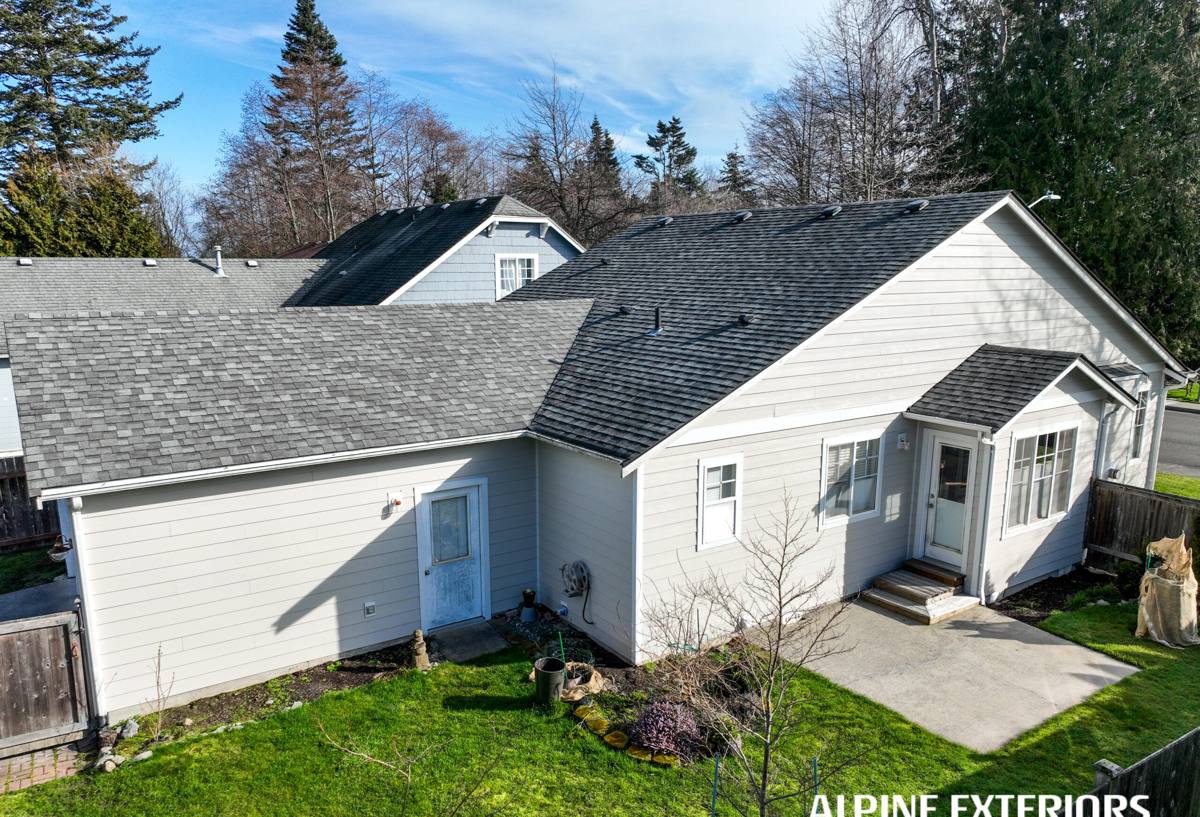
What Whatcom County's Climate Does to a Roof
Bellingham doesn't get the torrential downpours some regions do, but it makes up for that with sheer duration. Roofs here spend more days wet than dry for a good chunk of the year, and that changes what actually causes damage.
Moss and Organic Growth
Shaded roof sections — common under York's tree cover — stay damp long after the rest of the roof has dried out. That's exactly what moss needs to get established. Left alone, moss holds moisture against the roofing material, lifts shingle edges, and can work its way under laps and flashing over a few seasons. It's rarely dramatic, but it's steady, cumulative damage.
Salt Air and Fastener Corrosion
Being close to the bay means a low but constant dose of salt-laden air. Over years, that air can accelerate corrosion on exposed metal — fasteners, flashing edges, gutter hangers — faster than it would inland. It's not something a homeowner notices day to day, but it's a factor we account for when choosing materials and hardware.
Driving Rain and Wind-Driven Moisture
Storms off the water tend to push rain sideways rather than straight down, which means water finds its way into gaps that a vertical rain would never reach — around chimneys, skylights, dormers, and wall-roof transitions. Flashing detail work matters more here than in drier climates, because the roofing field itself is rarely the failure point; the transitions are.
Common Warning Signs Worth a Look
- Dark streaking or green-black growth on shaded slopes, especially north-facing sections
- Granules collecting in gutters or downspout splash areas
- Soft or spongy spots when walking the roof deck (attic access can reveal this too)
- Daylight visible around chimney or vent flashing from inside the attic
- Interior ceiling stains near exterior walls or valleys
- Gutters overflowing during moderate rain rather than only heavy storms
Roof Replacement and Repair
Not every roofing issue means a full replacement, and we don't push for one when a repair will genuinely hold. Our approach starts with an honest look at the roof's age, decking condition, and how much of the damage is isolated versus system-wide.
When Repair Makes Sense
Isolated flashing failures, a handful of damaged shingles, or a single problem valley are usually repair situations. The key is making sure the repair ties in cleanly with the surrounding roofing so it doesn't become the next leak point.
When Replacement Is the Right Call
Once a roof is past its expected service life, or moss and moisture damage have spread across multiple slopes, patch repairs stop being cost-effective. At that point we're also looking at ventilation and underlayment, since a roof that's failed once under Bellingham's wet cycle is worth setting up to handle the next twenty-plus years of it properly.
| Factor | Repair | Full Replacement |
|---|---|---|
| Typical scope | Isolated leaks, flashing, a few shingles | Full tear-off, new underlayment, ventilation review |
| Best fit for | Roofs under ~10-15 years with localized damage | Roofs near end of service life or with widespread moss/moisture damage |
| Relative cost | Lower upfront cost | Higher upfront, resets the service-life clock |
| Long-term value | Good if damage stays isolated | Better if underlying decking or ventilation is already compromised |
Siding for a Damp, Tree-Shaded Neighborhood
Siding in York faces a similar set of pressures to the roof — sustained moisture, shade that slows drying, and salt-tinged air. Wood-look siding products vary a lot in how they handle this, and we're honest with homeowners about the trade-offs rather than steering everyone toward whatever's easiest to install.
Fiber cement holds up well against moisture cycling and doesn't feed mold or moss the way some wood-based products can, though it's heavier and less forgiving to install, so proper fastening and clearances matter. Engineered wood products have improved but still depend heavily on consistent maintenance of paint or sealant to keep moisture out at the edges. Vinyl handles moisture fine but can look and perform inconsistently in colder snaps, and it has its own installation sensitivities around expansion gaps. Our standard is to match the product to the specific exposure of each elevation — a shaded, moisture-prone north wall doesn't need the same approach as a sun-exposed south wall.
What We Look for on a Siding Inspection
- Soft or delaminating panels near ground level or under downspouts
- Paint failure or bubbling concentrated on shaded elevations
- Gaps at trim and window returns where wind-driven rain can enter
- Moss or algae staining that suggests a wall section stays wet longer than it should
Windows: Sealing Out a Wet Climate
Older homes in neighborhoods like York often still have original or early-replacement windows, and in a climate this consistently damp, window seals and flashing take real punishment. Failed seals show up as fogging between panes, drafts, or soft trim at the sill. Beyond comfort and energy loss, a poorly sealed window is a direct path for wind-driven rain to reach the wall framing behind it — which is often a bigger problem than the window itself.
When we replace windows, the flashing and integration with the surrounding siding or wall assembly gets as much attention as the window unit. A great window installed with poor flashing detail will leak eventually; a modest window installed correctly usually won't.
Decks in a Marine, Shaded Climate
Decks take a different kind of abuse — horizontal surfaces that hold standing water, fastener corrosion from salt air, and constant wet-dry cycling that stresses wood fibers and finishes. Under tree cover, decks also deal with organic debris that holds moisture against boards long after a rain has passed.
Decking Material Considerations
Pressure-treated and cedar decking are budget-friendly but need real maintenance discipline — cleaning, sealing, and prompt attention to any board that starts to cup or check. Composite decking costs more upfront but handles Bellingham's damp cycle with far less ongoing maintenance, since it doesn't absorb moisture the way solid wood does. The substructure matters just as much as the decking surface: joists, ledger connections, and fasteners need to be rated for the moisture exposure here, not just the visible boards.
Gutters and Drainage: The Overlooked System
A roof, siding, or deck system can be installed perfectly and still fail early if water isn't being carried away from the structure. In a neighborhood with mature trees, gutters fill with debris faster, and clogged gutters during a driving rain send water exactly where you don't want it — behind siding, under fascia, and pooling at deck ledgers. Keeping gutters clear and properly pitched is one of the least glamorous parts of exterior maintenance and one of the most important in this climate.
Why a Local Crew Matters for York Homes
Climate patterns here aren't uniform across Bellingham — a home tucked under tree cover in York deals with different moisture and shade conditions than an open lot elsewhere in Whatcom County. Knowing which slopes stay wet longest, which materials tolerate salt air over the long haul, and how wind-driven rain typically enters a home in this specific setting comes from working on homes in this area repeatedly, not from a generic checklist. We also know that a permit or code question in Bellingham gets answered locally, not by guessing at requirements from another jurisdiction.
Maintenance Checklist for York Homeowners
- Clear gutters and downspouts at least twice a year, more often under heavy tree cover
- Check shaded roof slopes for moss or algae growth each fall before the wet season sets in
- Inspect flashing around chimneys, skylights, and roof-wall transitions annually
- Look for soft spots or paint failure on siding, especially on north-facing or shaded walls
- Test window seals for drafts or condensation between panes
- Clean and inspect deck boards and fasteners each spring for corrosion or cupping
If you're noticing any of these signs on a home in York, or just want an honest read on where your roof, siding, windows, or deck stand, we're happy to take a look. Reach out for a free, no-pressure estimate using the form below.