 Bellingham Roofing
 Roofing in Columbia: Built for This Specific Corner of Bellingham
Columbia sits close enough to the water and to Bellingham's older tree canopy that its homes take on a particular mix of weather stress: salt-laden air off the bay, wind-driven rain that doesn't just fall straight down but gets pushed sideways into eaves and wall assemblies, and a moss season that runs longer here than it does further inland. None of that is exotic or rare for Whatcom County, but it adds up differently on a case-by-case basis depending on how a home is oriented, how much shade it gets, and how old its roofing and siding are. We've worked on enough houses in this part of Bellingham to know that a roof or siding job here needs to account for all three of those factors at once, not just one of them.
This page is about how those conditions actually show up on Columbia homes, and what our crew does differently because of it. We handle roofing, siding, windows, and decks, and on most jobs in this neighborhood more than one of those systems ends up connected to the same underlying moisture problem.
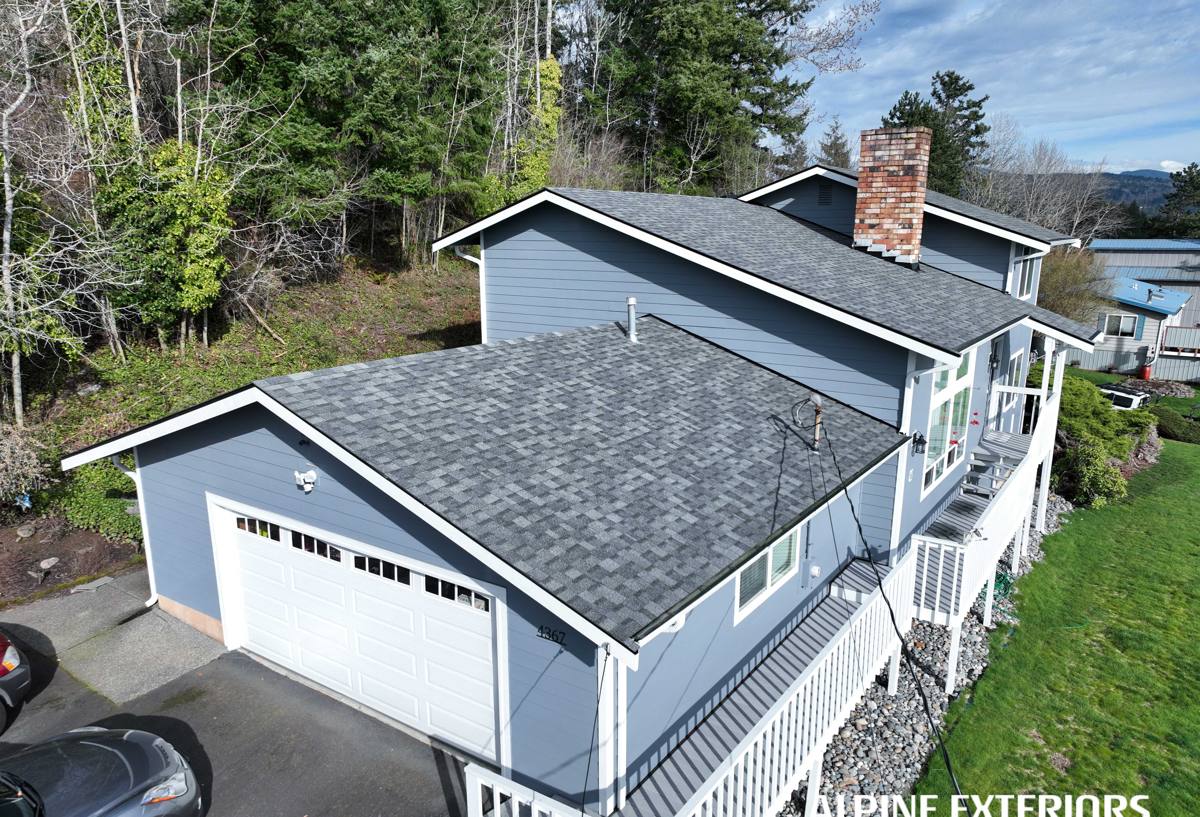
What Salt Air Actually Does to a Roof and Its Fasteners
Proximity to saltwater doesn't rot a roof directly, but it accelerates corrosion on anything metal. Nails, flashing, gutter fasteners, and exposed metal roof edges all corrode faster in a marine air environment than they would twenty or thirty miles inland. On an asphalt shingle roof, the flashing around chimneys, skylights, and valleys is usually the first place we see it, since that's where builders often used lighter-gauge metal or, on older homes, galvanized steel that wasn't rated for long-term coastal exposure.
For roofing work in Columbia, that means we pay closer attention to fastener and flashing material than we might on a job in a drier, further-inland part of Whatcom County. It's not about upselling a fancier product — it's about not putting a fastener back into a salt-air environment that's going to fail again in a fraction of the time a better-suited one would last.
Signs Salt Air Is Already Affecting Your Roof
- Rust streaking below flashing, vent boots, or gutter hangers
- Pitting or discoloration on exposed metal roof edges
- Fasteners that back out or show rust rings around the shingle nail heads
- Gutters that have thinned, dented, or developed pinhole leaks earlier than expected for their age
Driving Rain and the Parts of a House People Don't Think About
Bellingham rain is rarely a gentle straight-down soak. Storms coming off the water push rain sideways, which means water gets tested against parts of a building envelope that a purely vertical rain would never reach — the undersides of eaves, the top edges of window and door trim, siding laps facing the prevailing weather side, and any gap where two materials meet without proper flashing. On a well-built, well-maintained home this isn't a problem. On a home where flashing was skipped, caulk was used in place of flashing, or trim has started to separate, driving rain finds those gaps quickly.
This is one of the main reasons we treat roofing and siding as connected systems rather than separate line items. A roof can be in reasonably good shape and a house can still take on water if the wall flashing, window flashing, or siding laps aren't doing their job during a wind-driven storm. We look at all of it together, especially on the sides of a house that face the prevailing weather.
Where We Check First on a Wind-Driven Rain Inspection
- Window and door head flashing, especially on the weather-facing elevation
- Siding laps and any spots where siding meets trim, corners, or a roofline
- Eave and soffit venting for signs of wind-driven moisture intrusion
- Deck ledger board connections where a deck attaches to the house
Moss: A Longer Season Here Than Most Homeowners Expect
Moss growth depends on shade, moisture, and time, and Columbia's tree cover combined with Bellingham's extended damp season gives moss a long window to establish itself on north-facing and shaded roof slopes. Left alone, moss does two things that matter structurally: it holds moisture against the roofing material far longer than open air would, and as it grows it can lift shingle edges, which lets wind-driven rain get underneath the shingle rather than shedding over it.
We don't recommend aggressive pressure washing to remove moss — it's a fast way to strip granules off asphalt shingles and shorten the roof's remaining life instead of extending it. A gentler removal approach paired with a plan to reduce how fast moss comes back (zinc or copper strips near the ridge, trimming back overhanging branches where practical) is a more durable fix than a one-time scrub.
Comparing Moss Management Approaches
| Approach | What It Does | Trade-Off |
|---|---|---|
| Pressure washing | Removes moss fast, visually clean immediately | Can strip granules and shorten shingle life; not something we recommend for asphalt roofs |
| Soft wash / manual removal | Clears existing moss without abrading the shingle surface | Takes more labor time than pressure washing; moss can return without follow-up prevention |
| Zinc or copper strips | Slows future moss and algae growth as rain carries metal ions down the roof | Doesn't remove existing moss; works best combined with a cleaning |
| Tree trimming for sun exposure | Reduces the shade and standing moisture moss depends on | Not always possible depending on property lines or tree ownership |
Roofing Materials: What We Recommend and Why
For most Columbia homes, a well-installed asphalt composition shingle roof with proper underlayment and correctly matched metal flashing does the job reliably, and it remains the most cost-predictable option for full roof replacements. Where a roof gets consistent, engineering shows steel or standing-seam metal roofing hold up differently — shedding moss and moisture faster due to the smooth surface and steeper effective drainage, and standing up better to salt air when properly coated and fastened with compatible hardware. Metal costs more up front, and it's not the right call for every home, but it's worth discussing honestly rather than defaulting to one material for every job.
We don't push a client toward a system we install versus one we don't for reasons of brand loyalty. If a certain flashing detail, underlayment, or fastener type is a better match for a shaded, weather-exposed lot in Columbia, that's what we bring up, even if it's not the cheapest option on the estimate.
Siding: The Other Half of the Moisture Picture
Fiber cement and quality vinyl siding both perform well in this climate when installed with correct flashing, drainage gaps, and butt-joint sealing. Where we see problems on older Columbia homes is almost always at the details — inside corners, window trim returns, and the bottom courses closest to grade or a deck ledger, where splash-back moisture and driving rain concentrate. A siding system that looks fine from the street can still have a compromised weather barrier at these transition points.
When we're on-site for a roofing estimate and notice siding issues that are contributing to (or caused by) roof or flashing problems, we'll flag it. It's common enough in this neighborhood that we'd rather tell a homeowner up front than let them find out later from a wall that isn't drying out.
Windows and Decks: Where They Intersect With Roofing and Siding
Older single-pane or early double-pane windows in Columbia's older housing stock often have degraded exterior trim and flashing even when the glass itself still functions fine. Since window flashing ties directly into the siding drainage plane, a leaking window can mimic a roof leak or a siding leak, and diagnosing which system actually failed matters before anyone starts tearing into a wall.
Decks face their own version of the same climate stress: ledger board attachment to the house is a common trouble spot, since it's a place where a deck penetrates the home's weather barrier and depends on correct flashing to keep water from tracking back into the wall or rim joist. Composite decking sheds moss better than wood decking in shaded yards, but either material still depends on proper ledger flashing and joist spacing to hold up through a wet Whatcom County winter.
Rough Cost Factors Homeowners Ask About
| Factor | Why It Moves the Price |
|---|---|
| Roof pitch and access | Steeper or harder-to-access roofs take longer and require more safety setup |
| Existing layer removal | Tear-off of old roofing or siding adds labor versus installing over sound existing material |
| Flashing and detail work | Homes with more valleys, dormers, or wall-roof intersections need more custom flashing |
| Material choice | Asphalt shingle, metal, fiber cement, and vinyl all carry different material and labor costs |
| Extent of hidden damage | Rot found once old material comes off can change scope; we always discuss this before proceeding |
Why a Local Crew Matters for This Kind of Work
A roofing or siding crew that only works occasionally in coastal Whatcom County can miss the salt-air, driving-rain, and moss combination that makes Columbia's homes behave differently than a roof forty miles inland. We're not saying every outside contractor does bad work — but a crew that's regularly on roofs and walls in this specific climate gets faster at recognizing which failures are cosmetic and which ones are early signs of a bigger moisture problem. That matters most at the estimate stage, before any material has been ordered or any old roofing has come off.
We also think it matters that a local company is still around a year or five years after the job is done, if a warranty question or a follow-up question comes up. That's part of why we're straightforward about what we install, what we don't, and why.
What a Straightforward Inspection Looks Like
When we come out to a Columbia property, we're not there to find problems that aren't there. We're looking at the roof, the flashing, the siding, and anywhere those systems meet, and we tell homeowners plainly what we see: what's fine as-is, what's worth watching, and what actually needs attention now versus what can wait a season or two. Bellingham's climate doesn't reward guessing on exterior maintenance, but it also doesn't require replacing things that still have useful life left.
If you're noticing moss buildup, rust staining, a soft spot on a deck ledger, or drafts around an older window, we're happy to take a look and give you a clear, no-pressure read on what's going on. There's a free estimate request form below — reach out and we'll get a local crew out to your Columbia property to see what's actually happening.