 Bellingham Roofing
 Roofing Built for Life Around Sudden Valley
Sudden Valley sits in a unique pocket of Whatcom County — tucked against Lake Whatcom, surrounded by mature trees, and just far enough from downtown Bellingham to have its own microclimate. Homes here deal with a specific combination of conditions: heavy tree cover that keeps roofs shaded and damp, lake humidity that lingers longer than it does closer to town, and the same driving rain and salt-tinged air that moves through the rest of the county off the Sound. That combination is hard on roofing, siding, windows, and decks alike, and it rewards work done by a crew that actually understands the area rather than a general contractor passing through.
We've worked on homes throughout Bellingham and greater Whatcom County long enough to see how differently a roof ages in a shaded, moisture-heavy setting like Sudden Valley compared to an open, wind-exposed lot closer to the water. That local knowledge shapes every recommendation we make, from material choice to how we sequence a job around our wet-season weather windows.
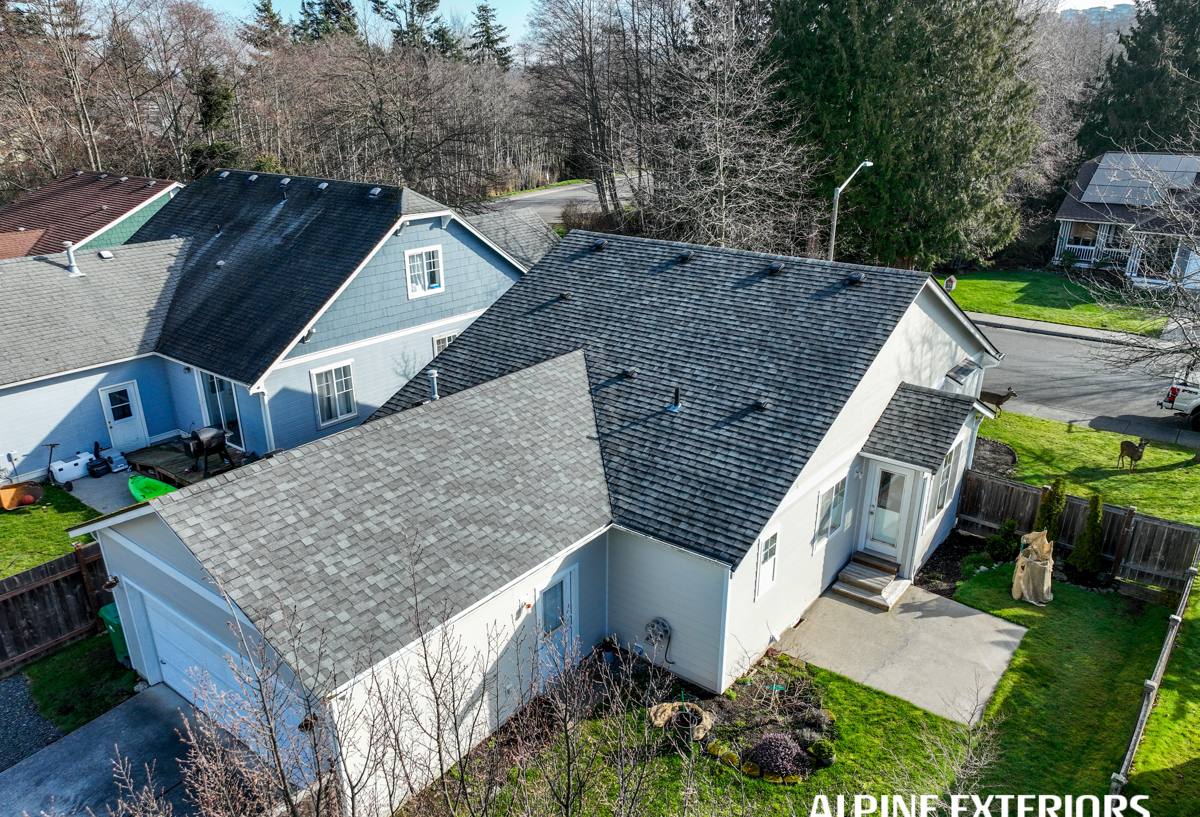
What the Climate Does to Sudden Valley Homes
Moss and Organic Growth
Tree cover is part of what makes Sudden Valley attractive, but it's also the reason moss and algae take hold on roofs here faster than in more open parts of Bellingham. Shaded, north-facing slopes stay damp for days after a storm, and moss doesn't just look bad — it lifts shingle edges, holds moisture against the roof deck, and shortens the life of the roofing system if it's left unmanaged season after season.
Prolonged Dampness Near the Lake
Proximity to Lake Whatcom means humidity lingers in the air longer than it does a few miles away. That moisture works its way into wood siding, window frames, and deck structures over time, especially on the shaded side of a home or under heavy overhangs where things don't get a chance to dry out between rain events.
Salt Air and Driving Rain
Even set back from open water, this part of Whatcom County gets salt-laden air carried in off the Sound, along with wind-driven rain that finds its way behind poorly flashed trim, worn siding laps, and older window seals. Over years, that combination corrodes exposed metal fasteners and fittings faster than most homeowners expect.
Roofing: Materials and Maintenance for This Environment
For Sudden Valley's shaded, moisture-prone lots, we lean on roofing systems and details that are proven to handle sustained dampness rather than just short bursts of rain:
- Algae-resistant asphalt shingle lines on homes where a traditional look is the priority
- Metal roofing where shedding moisture quickly and resisting moss buildup matters more than upfront cost
- Upgraded underlayment and ice-and-water protection at valleys and eaves, where shaded snowmelt and standing moisture cause the most long-term damage
- Proper attic and roof ventilation, which does more to control moss and rot than any single shingle choice
We're deliberate about materials that require constant upkeep to perform. Untreated wood shake, for example, looks natural but demands regular maintenance to resist the rot and moss growth that shaded Sudden Valley lots accelerate — we'll walk you through that maintenance burden honestly rather than just sell the aesthetic.
Roof Repair vs. Replacement
| Situation | Repair Often Makes Sense | Replacement Is Usually Smarter |
|---|---|---|
| Moss and staining | Isolated patches, roof structure sound | Moss has been present for years, granule loss is widespread |
| Leaks | Single, localized leak point | Multiple leak points or leaks tracking to different areas |
| Roof age | Under 12-15 years, otherwise well maintained | Approaching or past manufacturer's expected service life |
| Flashing | Flashing failure isolated to one valley or penetration | Flashing failing at multiple points across the roof |
Siding That Holds Up to Lake Moisture
Siding on shaded Sudden Valley lots takes a slower but steadier beating than siding in open sun — it dries out less between rain events, which gives moisture more time to work into seams, laps, and fastener points. We favor fiber cement and quality engineered wood siding products for this environment because they hold paint and resist moisture intrusion far better than older wood siding systems, without the ongoing upkeep that wood demands to stay ahead of rot.
Whatever siding is already on your home, the details matter as much as the material: proper flashing above windows and doors, correct overlap at laps, and a drainage plane behind the siding that lets any moisture that does get in find its way back out instead of sitting against the sheathing.
Signs Your Siding Needs Attention
- Soft spots or visible give when you press on siding, especially near the ground or below windows
- Persistent dark streaking or moss growth that comes back shortly after cleaning
- Paint that's bubbling, peeling, or failing to hold in the same spots repeatedly
- Gaps or separation at seams and corners where wind-driven rain can get behind the material
Windows: Cutting Down Drafts and Moisture
Older windows in Sudden Valley homes are one of the more common culprits behind hidden moisture problems — failed seals let humid lake air and driving rain work into the frame and the wall cavity around it, often long before anyone notices a leak on the inside. Replacement windows with modern weatherstripping and properly flashed installation address both the comfort problem (drafts, condensation) and the structural one (rot at the sill and framing).
We pay close attention to flashing integration with the surrounding siding on every window job, since a window can be perfectly sealed on its own and still leak if it isn't properly tied into the wall's water management system.
Decks: Standing Up to Shade and Standing Water
Decks in a wooded, lake-adjacent setting like Sudden Valley face two problems at once: less direct sun to dry them out, and more organic debris — leaves, needles, seed pods — collecting in seams and against ledger boards. That combination accelerates rot at connection points and makes slippery, moss-covered decking a real safety issue, not just a cosmetic one.
Composite decking has become a common choice for exactly this environment, since it doesn't absorb moisture the way wood does and won't feed rot at fastener points. For homeowners who prefer real wood, we build in the drainage gaps, proper ledger flashing, and joist protection tape that make the biggest difference in how long a wood deck lasts under these conditions.
Deck Maintenance Checklist for Shaded, Wooded Lots
- Clear leaves and debris from between boards and around posts each fall
- Check and clean gutters and downspouts that drain near or onto the deck structure
- Inspect ledger board attachment to the house annually — this is the most common failure point
- Look for soft or spongy spots in wood decking, especially near ground contact posts
- Reseal or refinish wood decking on the schedule the manufacturer recommends, not just when it looks worn
Why a Local Whatcom County Crew Matters
A contractor who only works in drier, more exposed parts of Washington won't necessarily think to spec upgraded underlayment for a shaded valley or flag moss as an early warning sign rather than a cosmetic nuisance. Working throughout Bellingham and the surrounding Whatcom County communities gives us a feel for how Sudden Valley's particular mix of shade, lake humidity, and salt air plays out differently than it does even a few miles away — and that shapes real decisions on your project, not just talking points.
It also means we're a known, reachable crew if something needs a follow-up look after the next storm season, not a name from an out-of-town lead-generation site.
What to Expect When You Work With Us
We start with an honest look at what's actually going on — not an upsell script. For roofing, siding, window, and deck projects alike, that means:
- An on-site inspection so we can see the specific moisture and wear patterns on your home, not just guess from a general checklist
- A clear explanation of what's actually needed now versus what can reasonably wait
- Material recommendations suited to your home's exposure — shaded lots and open, wind-exposed ones don't need the same specs
- A written estimate that lays out scope, materials, and timeline before any work begins
If you're noticing moss buildup, a soft spot on the deck, a draft around an old window, or you just want an honest read on how your home's exterior is holding up to Sudden Valley's climate, we're happy to take a look. Reach out for a free, no-pressure estimate using the form below.