 Bellingham Roofing
 Roofing Built for Puget's Corner of Bellingham
Puget sits close enough to the water that homes here live with a different set of conditions than houses further inland in Whatcom County. Salt-laden air off the Sound, wind-driven rain that doesn't just fall but blows sideways into fascia and siding, and a moss season that can stretch for the better part of the year all add up to faster wear on a roof than most homeowners expect. We've worked on enough roofs in this part of Bellingham to know that a roofing system that holds up in a drier climate often struggles here, and that the difference between a roof that lasts and one that fails early usually comes down to details most people never see: underlayment choice, flashing work, and ventilation.
This page covers what we look for on Puget homes, how our roofing, siding, window, and deck work fits together as a whole-exterior approach, and what local homeowners should know before hiring anyone to work on their house.
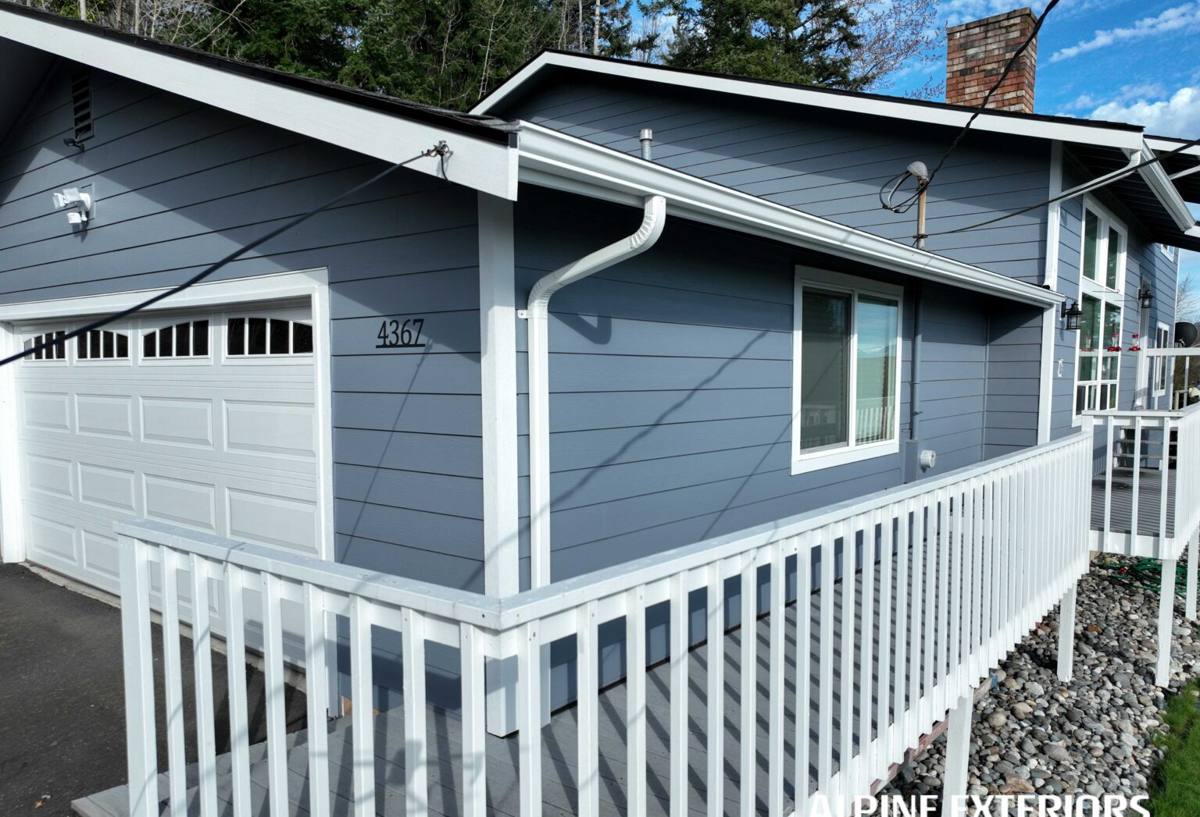
What the Climate Actually Does to a Roof Here
Salt Air and Metal Fatigue
Proximity to Puget Sound means airborne salt settles on roofing materials, gutters, and any exposed metal flashing or fasteners. Over years, this accelerates corrosion on lower-grade metal components. It's not dramatic — nobody's roof rusts through in a season — but it's a steady process that shortens the working life of cheap flashing and fasteners well below their rated lifespan. We spec corrosion-resistant metal on Puget jobs for this reason, not because it's required by code, but because we've seen what standard-grade metal looks like after a decade this close to the water.
Driving Rain and Wind-Blown Water
Bellingham gets a lot of straight-down rain, but Puget's exposure means wind-driven rain is a bigger factor than in more sheltered neighborhoods. Water pushed sideways by wind finds its way under shingles, around vents, and behind poorly lapped siding in ways that vertical rain doesn't. This is why flashing detail at valleys, chimneys, skylights, and wall-roof intersections matters more here than the shingle brand on the field of the roof. Most roof leaks we diagnose in this area trace back to a flashing detail, not a failed shingle.
Moss, Algae, and Moisture Retention
The long wet season and tree cover common in Bellingham neighborhoods create ideal conditions for moss and algae growth on north-facing and shaded roof slopes. Moss isn't just cosmetic — it holds moisture against the roof surface, works its way under shingle edges, and can lift shingles enough to let water in. Untreated moss growth is one of the more common reasons we see roofs fail years before they should.
Roofing Materials: What Holds Up and What Doesn't
We install a range of roofing systems, and the right choice depends on the home, the budget, and how much maintenance the homeowner wants to take on. Here's how the common options compare for a Puget-area home specifically.
| Material | Moss & Moisture Resistance | Typical Lifespan Here | Maintenance |
|---|---|---|---|
| Asphalt composition shingle (standard) | Moderate — needs periodic moss treatment | 18-25 years | Annual debris/moss check recommended |
| Asphalt composition shingle (algae-resistant) | Good — copper/zinc granules slow algae growth | 20-28 years | Lower, still benefits from gutter cleaning |
| Metal (standing seam) | Excellent — sheds moisture, resists moss | 40-60+ years | Low; watch fastener condition near the water |
| Cedar shake | Poor without diligent upkeep — retains moisture | Highly variable; short if neglected | High — requires regular treatment |
We don't push cedar shake on Puget homes as a first recommendation. It can look great, but in a climate this wet, keeping it performing well requires a maintenance commitment most homeowners underestimate going in — that's a fair trade-off to weigh, not a knock on the material itself. For most homes in this area, an algae-resistant architectural shingle or a metal roof gives the best balance of appearance, cost, and long-term performance against local conditions.
Siding: The Roof's Partner Against Wind-Driven Rain
Roofing and siding aren't separate problems here — a roof can be perfectly sound and a house can still take on water if the siding, trim, and flashing where they meet aren't detailed correctly. Wind-driven rain off the Sound pushes moisture into any gap at window trim, corner boards, and the wall-roof transition. When we're on a roof for a repair or replacement, we're also looking at how the siding terminates against the roofline, because that junction is where a lot of hidden moisture problems start.
Fiber cement and quality engineered wood siding tend to perform well in this climate because they resist moisture absorption better than solid wood without the upkeep cedar demands. Whatever the siding material, proper flashing and a rainscreen gap behind the cladding make a bigger difference in a wet, wind-exposed spot like Puget than the siding product itself.
Windows: Sealing Out the Same Wind and Rain
Older or poorly installed windows are a common source of water intrusion in wind-exposed parts of Bellingham. It's rarely the glass — it's the flashing and sealant detail around the window opening. When we replace windows, we pay close attention to how the window integrates with the surrounding wall's water management, especially on walls that face prevailing wind and rain. A tight, well-flashed window install also helps with the drafts and energy loss that older single-pane or poorly sealed windows let through, which matters through a long Whatcom County winter.
Decks: Built to Handle Standing Moisture
Decks in this climate deal with the same enemy as roofs: prolonged moisture exposure. Horizontal deck surfaces hold rainwater and collect the same moss and algae that grow on shaded roof slopes, and ledger board connections to the house need the same careful flashing attention as any roof-wall intersection. We build and repair decks with attention to drainage, proper flashing at the house connection, and materials that hold up to repeated wet-dry cycles rather than just looking good on install day.
Signs a Puget Homeowner Shouldn't Ignore
- Moss or dark streaking building up on north-facing roof slopes
- Granules collecting in gutters or at downspout outlets
- Water stains on interior ceilings, especially near chimneys, skylights, or valleys
- Soft or spongy spots when walking a low-slope roof section
- Gaps, cracking, or discoloration in caulking around windows or siding trim
- Gutters pulling away from fascia or overflowing during heavy rain
- Rust staining on metal flashing or fasteners
Any one of these on its own might not mean an emergency, but catching them early is almost always cheaper than waiting for a leak to show up inside the house.
Why a Local Crew Matters for This Kind of Work
A roofing crew that mostly works drier, inland climates doesn't always think about salt exposure or wind-driven rain the way a Bellingham-based crew does by habit. We work in Whatcom County conditions every week, which shapes decisions that don't show up on a quote line item: which flashing metal we spec, how we detail a valley, where we recommend algae-resistant shingles versus standard, and how aggressively we recommend moss treatment on a given slope. Those are judgment calls built from repetition in this specific climate, not generic best practices pulled from a manufacturer's install guide.
Local also means being reachable after the job is done. If something needs a look two years down the road, you're calling a crew that's still working in your neighborhood, not chasing down a company that did one job in the area and moved on.
What to Ask Before Hiring Anyone
Whether you call us or someone else, a few questions separate a contractor who understands this climate from one who doesn't:
- Do they carry current Washington contractor licensing and insurance, and will they provide proof without you having to ask twice?
- Can they explain their flashing approach at valleys, chimneys, and wall-roof intersections specifically, not just the shingle brand they install?
- Do they offer a written warranty that covers workmanship, not just manufacturer material defects?
- Will they inspect and discuss ventilation, since poor attic ventilation accelerates moss growth and shortens shingle life?
- Do they have references or completed work in your general area of Bellingham?
How We Approach a Puget Roofing Project
Every job starts with an inspection, not a sales pitch. We look at the roof, but also the gutters, siding-roof transitions, attic ventilation, and any visible signs of past water intrusion, because a roof problem in this climate rarely exists in isolation. From there we give a straightforward assessment: what needs attention now, what can be monitored, and what your realistic material and cost options are. We're upfront about trade-offs — if a lower-cost option means more maintenance down the road, we'll say so plainly so you can decide what fits your budget and how much upkeep you want to take on.
If you're noticing moss buildup, a slow leak, aging siding, drafty windows, or a deck that's starting to show its age, we're happy to come take a look. Reach out for a free, no-pressure estimate using the form below.