 Bellingham Roofing
 Roofing Built for Barkley's Mix of Homes
Barkley is one of Bellingham's more varied neighborhoods — a planned mix of single-family homes, townhomes, and multi-family buildings alongside the retail and office space along the I-5 corridor. That variety means the roofing work we do here is varied too. A steep-pitched cedar-look composition roof on a newer single-family home has different needs than a low-slope membrane roof over a Barkley office building or apartment complex. We work on both, and we size up each job based on the actual roof in front of us, not a one-size-fits-all script.
What ties every Barkley roof together is the climate they all have to survive. Whatcom County sits right on Bellingham Bay, and that proximity to salt water, combined with the Pacific Northwest's long wet season, puts a specific kind of wear on roofing materials that homeowners moving here from drier regions often aren't expecting.
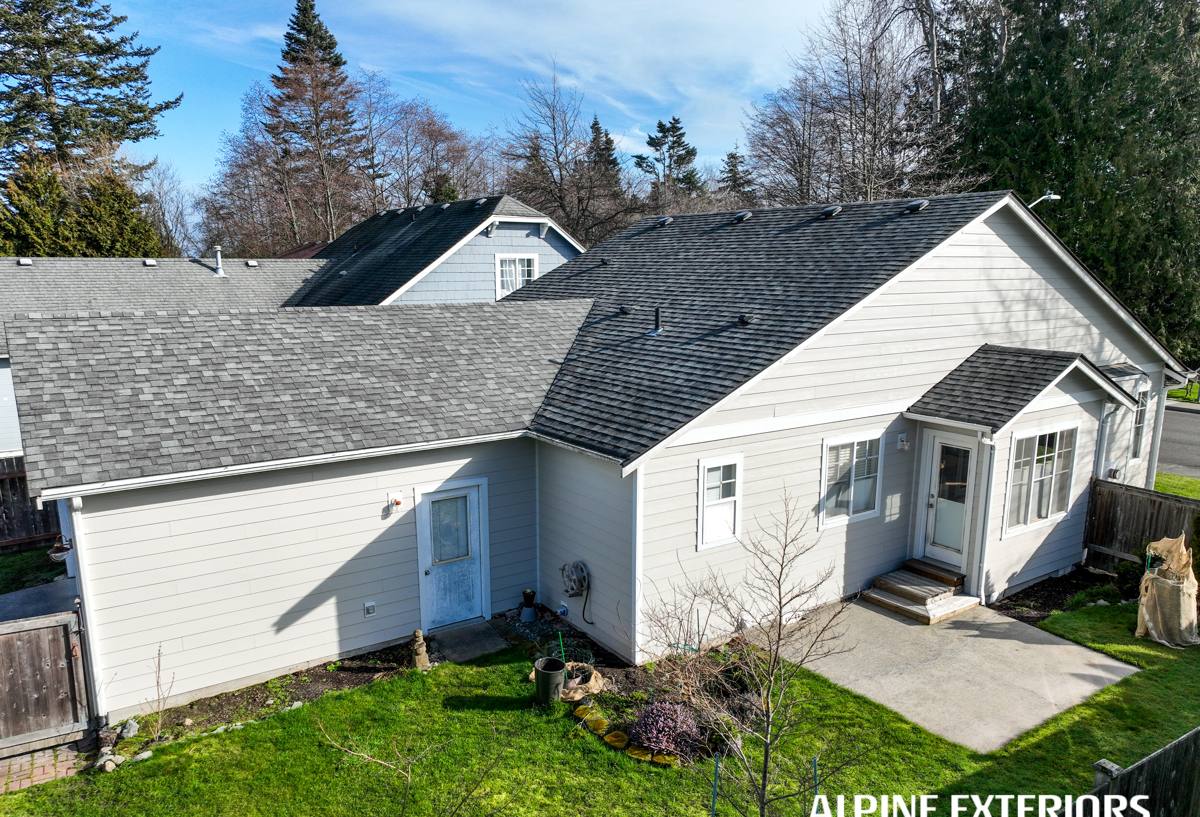
What Bellingham's Climate Does to a Roof
Salt Air
Homes closer to the bay deal with airborne salt that settles on exposed metal — flashing, fasteners, gutter hardware, vent caps, and any exposed roofing screws. Over years, that salt exposure accelerates corrosion on lower-grade or improperly coated metal components. It's rarely dramatic; it's a slow drip of wear that shows up first as rust streaking below flashing points or fastener heads, then eventually as leaks once corrosion compromises a seal.
Driving Rain
Bellingham doesn't just get a lot of rain — it gets wind-driven rain off the Sound and the bay that hits roofs at an angle rather than falling straight down. That matters for how a roof is detailed at the edges, valleys, and any place two roof planes or a roof and a wall meet. Underlayment, flashing laps, and valley construction that would be fine in a calmer climate can let water in here if they're not built for wind-driven exposure.
A Long Moss Season
Between the rainfall, the marine humidity, and the tree cover common in and around Barkley's residential streets, moss has a long growing window — often close to nine or ten months out of the year in shaded areas. Moss isn't just cosmetic. It holds moisture against roofing material, works its way under shingle tabs and shakes, and over time lifts material enough to create paths for water intrusion.
Roofing Materials We Work With
There's no single "best" roof for Barkley — the right choice depends on your home's style, your budget, how much maintenance you want to take on, and how long you plan to stay in the house. Here's how the common options compare for this climate specifically.
| Material | Typical Lifespan | How It Handles Our Climate | Maintenance Load |
|---|---|---|---|
| Asphalt composition (3-tab) | 15-20 years | Adequate; more prone to moss grip and edge lifting in wind-driven rain over time | Moderate — periodic moss treatment recommended |
| Asphalt composition (architectural/laminate) | 25-30 years | Heavier profile sheds wind-driven rain better; more algae-resistant granule options available | Moderate — same moss/algae upkeep as 3-tab |
| Metal (standing seam or panel) | 40-50+ years | Sheds moisture fast, resists moss buildup well; requires marine-grade fasteners and coatings near the bay | Low — occasional fastener and coating check |
| Cedar shake | 20-30 years with upkeep | Natural look many Barkley homes were built with, but absorbs moisture and needs consistent moss/rot management | High — regular treatment and inspection |
| Low-slope membrane (TPO/modified bitumen) | 15-25 years | Common on multi-family and commercial buildings in Barkley; seams and penetrations are the critical detail | Moderate — seam and drain checks each year |
We'll walk you through the honest trade-offs for your specific roof rather than pushing whatever's easiest to install. If cedar shake is what your home has and you love the look, we can maintain it properly — we just want you to go in knowing the maintenance commitment up front.
Signs a Barkley Roof Needs a Closer Look
Most roof failures we see didn't happen overnight — they were small, visible issues that went unaddressed through a few wet seasons. Worth checking for, or having us check for you:
- Moss or dark algae streaking on north-facing or shaded roof slopes
- Granules collecting in gutters or at downspout outlets (a sign asphalt shingles are wearing thin)
- Curling, cupping, or lifted shingle edges, especially on slopes exposed to prevailing wind
- Rust staining below metal flashing, vents, or exposed fasteners
- Soft or spongy spots when walking a low-slope roof
- Daylight visible through the attic roof deck, or damp insulation below it
- Water stains on interior ceilings, especially near chimneys, skylights, or wall intersections
- Sagging in the roofline between rafters
How We Approach a Roofing Job
We start with an inspection, not a sales pitch. That means getting on the roof (or using a drone pass on steep or unsafe pitches) to look at the actual condition of the covering, the flashing, the venting, and the roof deck underneath — not just quoting from a photo or a satellite measurement. From there we give you a straight assessment: repair, partial replacement, or full replacement, along with why.
For a full replacement, our process generally includes:
- Tear-off of old roofing material and disposal, with care taken to protect landscaping and siding
- Roof deck inspection and repair of any soft, rotted, or delaminated sheathing
- Installation of underlayment rated for wind-driven rain exposure
- Ice-and-water shield at eaves, valleys, and penetrations — critical detailing given our rain patterns
- New flashing at all walls, chimneys, skylights, and valleys
- Installation of the chosen roofing material to manufacturer specification, which matters for keeping warranty coverage intact
- Ridge and attic ventilation check, since poor ventilation traps moisture and shortens roof life from the inside out
- Site cleanup, including a magnetic sweep for stray fasteners
Repairs follow the same logic on a smaller scale: we fix the actual cause of a leak, not just the spot where water is showing up inside, since those two locations aren't always the same.
Moss and Debris: An Ongoing Job, Not a One-Time Fix
Given how long moss stays active here, a one-time cleaning isn't a permanent solution — it's part of a maintenance rhythm. We recommend a moss treatment and gutter/valley debris clearing on a seasonal basis for most Barkley properties, more often for homes under heavy tree cover. We use treatment approaches suited to the roofing material in question, since what's safe on asphalt shingles isn't always right for cedar or metal, and we never pressure-wash roofing material in a way that strips granules or forces water under laps.
Keeping gutters and valleys clear matters just as much as the roof surface itself — a clogged valley during a heavy driving-rain event is one of the more common ways water ends up somewhere it shouldn't.
Roofing Is Rarely the Whole Story
Because we also handle siding, windows, and decks, we see the whole exterior picture on most jobs, not just the roof in isolation. A leak that shows up as a stain on an interior wall sometimes traces back to a roof-to-wall flashing detail rather than the roofing material itself, and fixing it right means looking at where the roof and siding meet, not just the shingles. Likewise, a deck or entryway that sits under a roof edge with poor gutter control will show rot and moss issues that have nothing to do with the deck boards themselves. Handling roofing, siding, windows, and decks under one roof (so to speak) means fewer finger-pointing situations between separate contractors and a more accurate diagnosis when something's going wrong.
What Affects the Cost of a Barkley Roofing Project
| Factor | Why It Matters |
|---|---|
| Roof size and pitch | Steeper roofs take longer, need more safety setup, and use more material per square foot of coverage |
| Material choice | Asphalt, metal, cedar, and membrane systems have very different material and labor costs |
| Number of existing layers | Tear-off of multiple old layers adds labor and disposal cost versus a single-layer removal |
| Deck condition | Rotted or soft sheathing found during tear-off requires repair before new roofing goes on |
| Roof complexity | Valleys, dormers, skylights, and chimneys all add flashing detail and labor time |
| Access | Tight lots, tall multi-story sections, or limited staging area can affect equipment and labor needs |
We give written estimates that spell out these factors so you know what's driving the number, rather than a flat quote with no explanation behind it.
Why a Local Crew Makes a Difference
A roofing crew that works Whatcom County day in and day out knows what a Barkley winter actually does to a roof, because we're up on these roofs through it every year. That's different from a crew passing through the region or one based somewhere with a drier or milder climate. We know which flashing details tend to fail under wind-driven rain off the bay, which materials hold up against long moss seasons, and which shortcuts show up as leaks two winters later. Being local also means we're reachable if something needs a follow-up look — we're not a phone number that stops answering once the invoice is paid.
Get a Straight Answer on Your Roof
If you're in Barkley and dealing with a leak, an aging roof, visible moss, or you just want an honest read on how many years you've got left before replacement makes more sense than repair, we're happy to take a look. Estimates are free and there's no pressure attached — just a clear assessment and straightforward next steps. Use the form below to get started.