 Bellingham Roofing
 Fiber Cement Siding for Sehome Homes
Sehome sits close enough to Bellingham Bay and the surrounding hills that its homes take a steady beating from moisture in almost every form — salt-laden air drifting up from the water, driving rain that comes in sideways off winter storms, and a moss season that seems to run most of the year in Whatcom County. Siding here isn't just a cosmetic choice. It's the layer standing between your framing and a climate that never really dries out. We install James Hardie fiber cement siding on Sehome homes because it's the one product system we trust to hold up to all three of those stressors at once, year after year, without the maintenance spiral that traps a lot of other siding materials.
This page is specifically about fiber cement siding work in Sehome — not a general overview of siding everywhere in Bellingham. The neighborhood's mix of older homes and infill construction, its exposure to bay-driven weather, and the practical realities of working on these lots all shape how we approach a job here.
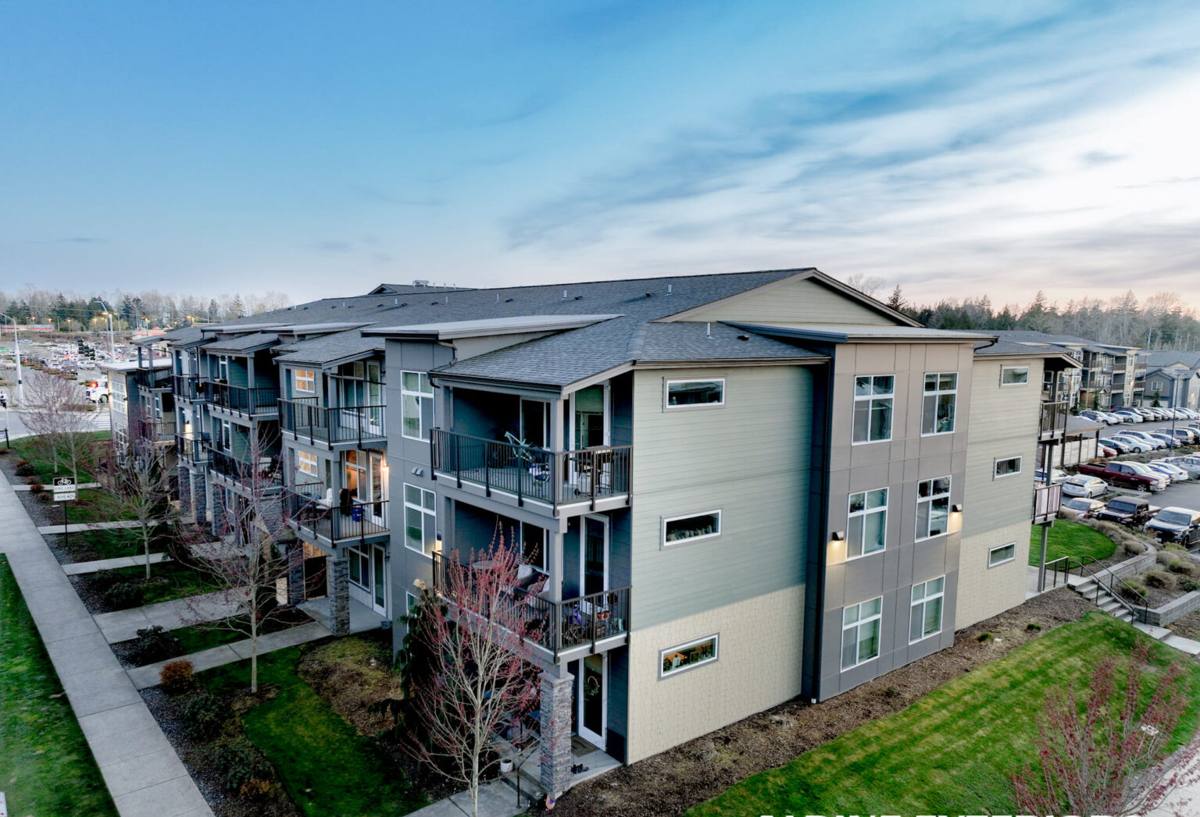
What Sehome's Climate Actually Does to Siding
Salt Air
Proximity to Bellingham Bay means airborne salt is a constant, low-grade presence on exterior surfaces in Sehome, even blocks away from the water. Salt accelerates corrosion on fasteners and trim hardware, and it works against paint and coatings over time, causing them to break down faster than they would further inland. Siding material that isn't engineered to handle that exposure — or that relies on field-applied paint rather than a factory finish — tends to show fading, chalking, and edge deterioration years before it should.
Driving Rain
Bellingham's rain rarely falls straight down. Storms moving through the region typically bring wind-driven rain that hits siding at an angle, which means water gets forced into laps, seams, and butt joints that would stay dry in a calmer climate. Any siding installation in Sehome has to assume water will find every gap — the material and the installation both need to manage that reality rather than just resist it.
Moss and Sustained Moisture
Whatcom County's long, damp stretch from fall through spring keeps north-facing and shaded wall sections wet for extended periods. That's exactly the environment moss and mildew need to take hold. Siding that absorbs moisture or swells when wet gives moss something to grip and feeds ongoing organic growth. Siding that stays dimensionally stable and doesn't wick water resists that cycle far better.
Why We Install Only James Hardie Fiber Cement
We don't install vinyl, LP SmartSide, primed spruce or cedar, or fiber cement alternatives like Cemplank or Allura. That's a deliberate standard, not a lack of options. Fiber cement as a category — cement, sand, and cellulose fiber — is inherently non-combustible and dimensionally stable in a way wood-based and vinyl products aren't. Within that category, James Hardie is the manufacturer we've standardized on because of how the product performs specifically in wet, coastal Pacific Northwest conditions:
- ColorPlus factory finish — baked on in a controlled environment rather than field-painted, which matters directly for Sehome's salt exposure and UV cycling
- HZ5 engineered formulation — Hardie's climate-specific product line built for regions with sustained moisture exposure like ours, rather than a one-size-fits-all national product
- Dimensional stability — the material doesn't swell, cup, or absorb water the way engineered wood products can, which reduces the moss and rot risk that comes with sustained damp conditions
- Long transferable warranty backing — meaningful because it's tied to a product Hardie stands behind specifically for climates like Whatcom County's
We've explained our reasoning on other pages for why we don't install LP SmartSide, vinyl, or cedar — the short version is that each of those products asks a homeowner to accept a trade-off (moisture sensitivity, appearance limitations, or a heavier maintenance schedule) that we don't think makes sense to build into a Sehome home when a better-suited option exists.
What a Correct Fiber Cement Job Actually Involves
Fiber cement siding performs the way it's supposed to only when the installation matches the manufacturer's specifications — and in a wet climate, the details that get skipped on a rushed job are exactly the details that cause problems three or five years later.
Water Management Comes First
Before a single piece of siding goes up, the wall needs a proper weather-resistant barrier, correctly lapped and sealed at every penetration. Flashing at windows, doors, and any horizontal trim has to be installed so water sheds outward, not behind the siding. Given how much wind-driven rain Sehome sees, this layer is arguably more important to long-term performance than the siding itself.
Fastening and Clearances
James Hardie specifies exact nailing patterns, fastener types, and minimum clearances from grade, roof lines, and other surfaces. Skipping the specified ground clearance, for example, is a common shortcut that leads to moisture wicking into the bottom course of siding — a problem that shows up as staining and eventual deterioration, often years after the crew that cut the corner is long gone.
Joint and Seam Treatment
Butt joints and seams are where driving rain finds its way in if they're not treated correctly. Proper installation uses factory-primed or finished edges, correct caulking or H-molding per Hardie's specification, and attention to which way seams face relative to prevailing wind and rain direction on that particular elevation.
Trim and Transitions
Every point where siding meets a window, door, roofline, or another material is a potential water entry point. Correct trim work and integration with the roofing and flashing system is part of what separates a siding job that lasts from one that starts causing problems within a few winters.
Our Process for a Sehome Siding Project
- On-site assessment — we walk the home, check current siding and water damage, and evaluate the specific exposure of each elevation (which walls face prevailing wind and rain, which stay shaded and damp longest)
- Scope and product selection — HZ5 profile, plank width, and ColorPlus color selected for the home; we'll flag any areas needing extra attention to water management
- Prep and tear-off — removal of existing siding, inspection of sheathing for hidden moisture damage before it gets covered back up
- Weather barrier and flashing — installed to spec, with extra care at every penetration and transition
- Siding installation — fastening, clearances, and seams done to Hardie's specification, not shortcuts
- Trim, caulking, and final detail — the finishing work that determines how the job performs over the next 10-20 years, not just how it looks at handoff
- Walkthrough — we go over the completed work with the homeowner before calling the job done
Signs Sehome Homeowners Should Watch For
If your current siding is showing any of the following, it's worth having it looked at before the damage spreads to sheathing or framing:
- Persistent moss or algae growth on shaded or north-facing walls that keeps returning after cleaning
- Soft spots, bubbling paint, or visible warping, especially near the bottom courses close to grade
- Staining or discoloration streaking down from seams or trim joints
- Gaps opening up at butt joints or around window and door trim
- Fading or chalking finish that's noticeably worse on the side of the house facing the bay
Cost Factors for a Sehome Fiber Cement Project
Every home and every job is different, so we don't publish blanket pricing — but these are the factors that most affect cost on a fiber cement siding project in this area:
| Factor | Why It Matters Here |
|---|---|
| Home size and wall complexity | More corners, gables, and trim details mean more labor and material cutting |
| Condition of existing sheathing | Moisture-damaged sheathing found during tear-off needs repair before new siding goes on |
| Access and lot conditions | Tight lots, slopes, or landscaping close to the home can affect staging and labor time |
| Plank profile and ColorPlus selection | Different HZ5 profiles and finish options carry different material costs |
| Trim and flashing scope | Homes with more windows, dormers, or roof transitions need more detail work |
| Removal and disposal of old siding | Type and amount of existing material affects tear-off time and disposal cost |
Why a Crew That Already Works Sehome Matters
Siding installation isn't a generic task you can do identically anywhere. A crew that already works in Sehome and the surrounding Bellingham neighborhoods knows how the bay's exposure changes from block to block, understands how local permitting and inspection works, and has already seen how a given lot's shade pattern or wind exposure plays out over a full wet season. That local pattern recognition shows up in small decisions — where to add extra flashing attention, which elevation needs the most careful seam work — that a crew unfamiliar with the area might miss on a first pass.
It also matters for accountability. A local crew is still around next year and the year after if you have a question about how something was installed. That's part of why we stand behind our work with a real warranty backed by a company that isn't going anywhere.
Get a Free Estimate for Your Sehome Home
If your siding is showing wear, or you're planning ahead for a replacement before winter storms roll back in, we're happy to take a look and give you a straightforward, no-pressure estimate. Use the form below to get started.