 Bellingham Roofing
 Sehome sits close enough to the water and to Bellingham's tree cover that its roofs take a specific kind of beating: salt-laden air drifting in off Bellingham Bay, driving rain that comes in sideways during winter storms, and a moss season that seems to stretch longer every year under the neighborhood's mature tree canopy. If you're planning a new roof for a Sehome home, the installation needs to account for all three of those things from day one — not as an afterthought, but as part of the material choices and detail work baked into the job.
Why Sehome Roofs Wear Differently Than Roofs Inland
Whatcom County's marine climate doesn't hit every roof the same way. A roof in a drier, inland part of Washington deals mostly with UV and temperature swings. A Sehome roof deals with near-constant moisture exposure for a good chunk of the year, plus the corrosive effect of salt-tinged air on exposed metal, plus shade from mature trees that keeps shingles damp longer after every rain. That combination shortens the life of a roof that isn't built for it, and it's the reason a "generic" installation — the kind that would hold up fine somewhere dry and sunny — often underperforms here.
Three things drive most of the early wear we see on Sehome roofs:
- Salt air corrosion — exposed fasteners, cheap flashing, and unprotected metal components degrade faster this close to the bay
- Sustained moisture — driving rain finds gaps in flashing and underlayment that would never leak in a drier climate
- Moss and organic growth — tree cover and long damp stretches let moss and lichen take hold on shaded slopes, holding moisture against the roof surface for weeks at a time
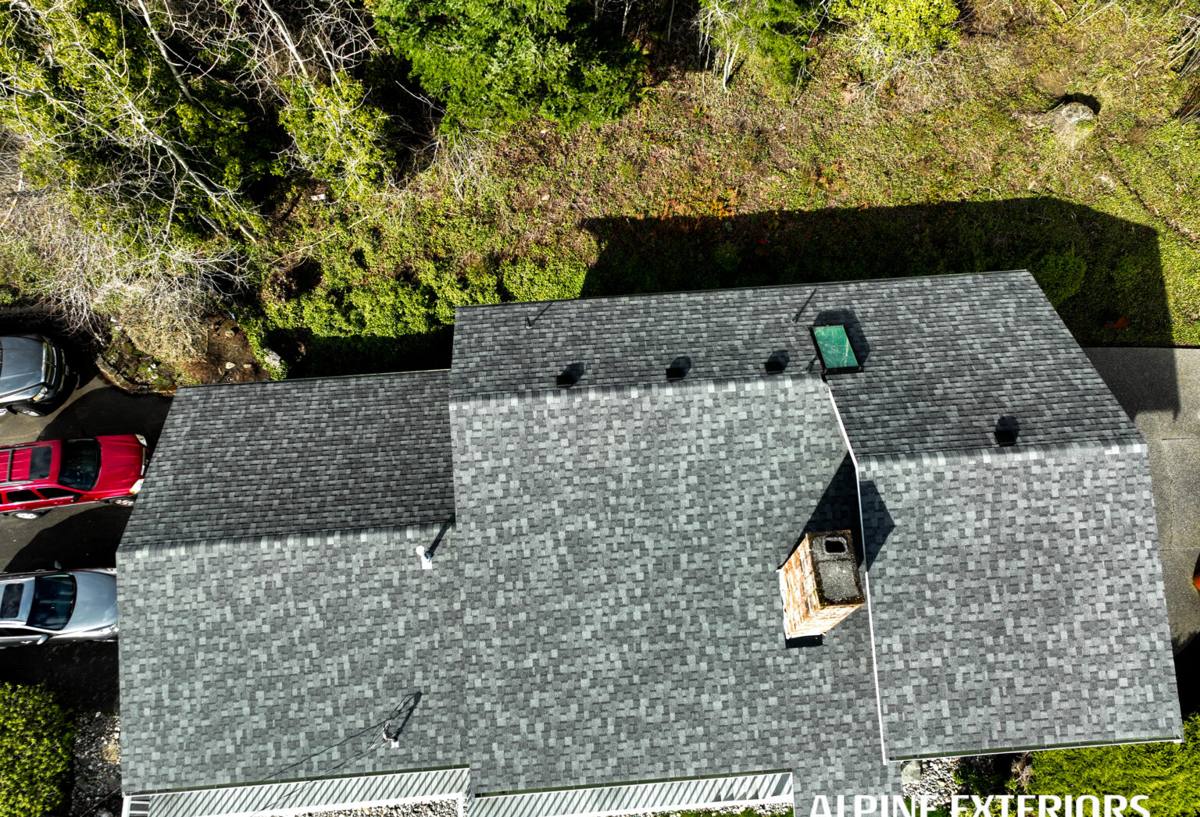
What a Correct New Roof Installation Looks Like Here
Underlayment and Water Management
Given how much of the year Sehome spends under cloud cover and rain, underlayment isn't a place to cut corners. A synthetic underlayment with good water resistance, properly lapped and sealed at every seam, is the baseline. Ice and water shield belongs at vulnerable points — eaves, valleys, and any low-slope transitions — even though Bellingham doesn't see the ice dams that colder inland climates deal with. The concern here is wind-driven rain finding its way under shingles, not ice backing up.
Flashing and Fastener Choices
This is where salt air exposure matters most. Flashing around chimneys, skylights, vent pipes, and roof-to-wall transitions should be corrosion-resistant material, properly integrated with the underlayment rather than just caulked on top. Fasteners matter too — the wrong grade of nail or screw in a coastal-adjacent environment corrodes faster, and a corroded fastener eventually means a leak point that has nothing to do with the shingles themselves.
Ventilation
A roof deck that can't breathe traps moisture underneath the roofing material, which accelerates rot in the sheathing and shortens the life of the shingles from below. Balanced intake and exhaust ventilation is especially important on homes with tree-shaded roof planes, where the surface itself stays cooler and damper longer than a sun-exposed roof would.
Material Selection for Shade and Moss Exposure
If your Sehome property has mature trees overhanging part of the roof, that's worth discussing before materials are chosen. Some shingle products include algae-resistant granules that help slow moss and lichen growth on shaded slopes — a genuinely useful feature here, not a marketing gimmick. No roofing material is moss-proof if it sits in shade and moisture long enough, but starting with the right product reduces how often you'll need moss treatment down the road.
Our Installation Process, Start to Finish
- On-site inspection and assessment — we look at the existing roof, decking condition, ventilation setup, and anything specific to your property (tree cover, slope, chimney and vent penetrations) before recommending anything
- Written estimate and material selection — you get a clear scope of work and a chance to compare material and warranty options rather than a one-size-fits-all quote
- Tear-off and deck inspection — old roofing comes off and we check the decking underneath for rot or soft spots, which is common on older Sehome roofs that have dealt with years of moisture
- Deck repair as needed — any compromised sheathing gets replaced before anything new goes down; installing over bad decking just guarantees future problems
- Underlayment and flashing installation — done to the standard described above, with extra attention at valleys, penetrations, and edges
- Roofing material installation — installed to manufacturer specification, which is what keeps the warranty valid
- Ventilation check and correction — intake and exhaust balanced for the home's actual attic and roof geometry
- Final walkthrough and cleanup — job site cleared of debris and nails, and we walk the finished roof with you before calling it done
Comparing Roofing Material Options for Sehome Conditions
| Material | Moisture & Salt Air Behavior | Moss Resistance | Typical Lifespan |
|---|---|---|---|
| Standard asphalt shingles | Adequate with proper underlayment and flashing | Low unless algae-resistant granules are specified | 15-25 years |
| Algae-resistant asphalt shingles | Adequate with proper underlayment and flashing | Better on shaded slopes | 20-30 years |
| Metal roofing (standing seam) | Excellent when fasteners and coatings are marine-grade | Good — sheds moisture quickly | 40-60 years |
| Composite/synthetic shingles | Good, resists moisture absorption well | Moderate to good depending on product | 30-50 years |
This is a starting point for conversation, not a recommendation to install any one of these sight unseen. The right choice depends on your home's roof pitch, how much shade it gets, your budget, and how long you plan to stay in the home. We'll walk through the real trade-offs during your estimate rather than pushing a single product.
Cost Factors Specific to a New Roof in Sehome
Every roof is priced on its own specifics, but a few things consistently move the number for homes in this neighborhood:
| Factor | Why It Affects Cost |
|---|---|
| Roof size and pitch | More square footage and steeper slopes both increase labor and material |
| Decking condition | Moisture-damaged sheathing found during tear-off requires repair before install |
| Number of penetrations | Chimneys, skylights, and multiple vent stacks each need individual flashing work |
| Material choice | Metal and premium composite products cost more upfront than standard asphalt |
| Access and layout | Tree cover, tight lot lines, or multi-story sections can add setup time |
| Existing moss or organic buildup | Heavy buildup may need removal and deck inspection before a fair estimate can be given |
Signs Your Sehome Roof May Need Replacing Rather Than Repairing
- Shingles that are cupping, curling, or losing granules across large sections rather than just one spot
- Soft or spongy decking felt from inside the attic, especially near valleys or penetrations
- Recurring leaks in the same area even after repairs
- Heavy, persistent moss or moss regrowth shortly after cleaning
- Visible daylight through the roof deck from inside the attic
- A roof approaching or past the upper end of its material's expected lifespan
A repair can make sense for isolated damage. But once a roof is failing broadly — moisture getting into the decking, granule loss across multiple slopes, flashing that's corroded rather than just aged — patching individual spots usually costs more over time than one correctly done installation.
Why Local Experience in Sehome Matters
A crew that already works in this part of Bellingham knows which slopes on a typical Sehome lot hold shade and moss the longest, how much wind-driven rain a given roof orientation actually takes, and which flashing details tend to fail first in this climate versus a drier part of the state. That's not something you can fully substitute with a generic installation checklist — it comes from having done the work here, seen what holds up, and adjusted the details accordingly. It also means we're not learning the neighborhood's quirks on your roof.
What We Ask Before Every Estimate
A few questions we'll walk through with you, because they change the recommendation:
- How old is the current roof, and do you know what it's currently covered with?
- Have you noticed any active leaks, water stains on ceilings, or attic moisture?
- How much shade does the roof get from trees on or near the property?
- Do you plan to stay in the home long-term, or is this tied to a sale or refinance?
- Are there any specific problem areas — a valley, a chimney, a low-slope section — you've already had issues with?
If you're weighing a new roof for your Sehome home, we're happy to take a look and give you a straightforward, no-pressure estimate — no scare tactics, just an honest read on what your roof needs and what it will take to do it right. Use the form below to get started.