 Bellingham Roofing
 Deck Repair Built for Sehome's Hillside Homes
Sehome sits on one of Bellingham's wooded hillsides, close enough to Bellingham Bay to catch marine air off the water and shaded enough by mature tree canopy that decks here rarely get a full day of sun to dry out. That combination is hard on outdoor structures. A deck in a drier, more exposed part of Whatcom County might go years without a problem. A deck in Sehome, tucked under trees or facing a slope, tends to hold moisture longer, collect more debris, and grow moss faster than most homeowners expect. We've repaired enough decks in this neighborhood to know the pattern, and it's almost always the same: water finds a way in, and once it does, the damage spreads quietly until something finally gives.
This page is about deck repair specifically, not full deck construction. If your deck is structurally sound but showing its age, or if something suddenly feels soft, loose, or unsafe, this is the service that gets it back to solid without tearing the whole thing out and starting over.
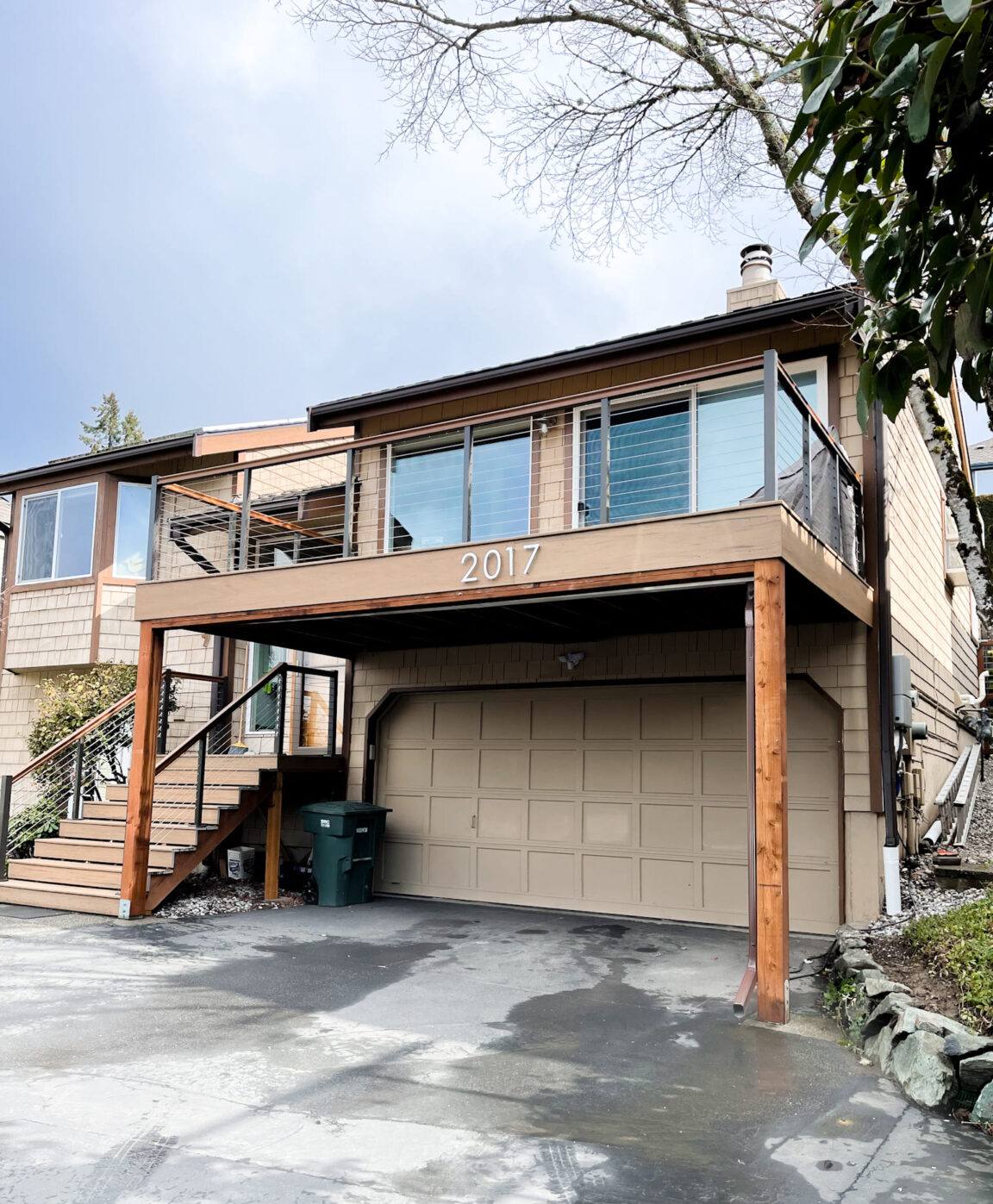
Why Bellingham's Climate Is Hard on Decks
Whatcom County's marine climate means long stretches of steady rain rather than short heavy storms, and that matters for decks. Wood and even some composite materials don't fail because of one big rain event — they fail because water sits against a surface for days or weeks at a time, over and over, for months. A few specific patterns show up constantly in this area:
- Driving rain pushed sideways by wind gets under railings, into end-grain cuts, and behind fascia boards where it's never meant to reach.
- Moss and algae take hold on any surface that stays damp and shaded, and they hold moisture against the wood or decking surface even longer than the rain itself.
- Salt-laden air off Bellingham Bay accelerates corrosion on fasteners, joist hangers, and any exposed metal hardware, which is often the first thing to fail even when the wood looks fine.
- Freeze-thaw cycles, while milder here than inland, still open up small cracks in wood and concrete footings over repeated winters.
None of this means decks in Sehome are doomed — it just means they need to be built and repaired with these specific conditions in mind, not treated like a deck in a dry climate would be.
Common Deck Problems We Find in This Neighborhood
Surface-Level Issues
Graying, splintering, or cupping boards are usually the most visible sign of trouble, but they're often the least serious. Surface wear can typically be sanded, treated, or have individual boards replaced without touching the structure underneath.
Moss and Slip Hazards
Shaded, moisture-heavy decks in wooded settings grow moss faster than open, sunny lots. Beyond looking bad, moss holds water against the deck surface and turns stairs and walkways slippery and genuinely dangerous, especially on sloped Sehome lots where stairs are common.
Structural Concerns
This is where repair stops being cosmetic. Soft spots underfoot, railings that flex or wiggle, stairs that feel spongy, or a ledger board pulling away from the house are all signs that water has gotten past the surface and into framing, fasteners, or connections. These issues don't fix themselves and shouldn't wait.
Hardware and Fastener Failure
Rusted or corroded screws, nails, and joist hangers are one of the most common repair calls we get. Salt air speeds this up, and once fasteners weaken, the boards or framing they're holding can shift even if the wood itself is still in decent shape.
Repair vs. Replacement: How We Make the Call
Not every deck problem means a full rebuild, and we don't push for one when a targeted repair will hold up. The decision usually comes down to how much of the structure is affected versus how much is cosmetic or isolated.
| Situation | Usually Repair | Usually Replace |
|---|---|---|
| A few gray or splintering boards | Yes — spot replacement | No |
| Moss on the surface, wood still sound underneath | Yes — clean and treat | No |
| Soft spot in one section of decking | Yes — replace affected boards/joists | Rarely |
| Ledger board separating from the house | Depends on extent | Often, if framing is compromised |
| Widespread rot through multiple framing members | No | Yes |
| Footings cracked or shifting | No | Yes |
The honest answer is that we won't know for certain until we're underneath the deck looking at the framing directly, not just the surface. That's why our estimates start with a real inspection rather than a guess from the visible boards alone.
What a Correct Deck Repair Actually Involves
A repair that only addresses what's visible from the top tends to come back as a repeat problem within a season or two. A repair done right works from the structure outward:
- Check the ledger board connection where the deck attaches to the house — this is the single most common source of hidden water damage and structural risk.
- Inspect joists and beams underneath for soft wood, discoloration, or fastener corrosion, not just the boards you can see from above.
- Evaluate footings and posts for movement, cracking, or ground contact that's inviting rot from below.
- Address drainage and flashing so water sheds away from the structure instead of pooling against it, which matters more in a wet climate than almost anything else.
- Replace fasteners and hardware with corrosion-resistant options suited to a marine-influenced environment, not whatever was used originally if it's failing.
- Finish with appropriate sealing or treatment so the repair holds up under the same conditions that caused the original damage.
Skipping any of these steps is how a repair turns into "we fixed it last year and it's already loose again."
Materials: What Holds Up Best in This Climate
Every deck material has trade-offs, and part of our job is being straightforward about them rather than pushing whatever is easiest to install.
| Material | Moisture Behavior Here | Maintenance Burden |
|---|---|---|
| Pressure-treated wood | Resists rot well when properly sealed and maintained; end cuts and fasteners are the weak points | Needs periodic cleaning, sealing, and moss treatment |
| Cedar | Naturally moisture-resistant but still needs sealing in a climate this wet | Moderate — refinishing every few years |
| Composite decking | Handles surface moisture well but can trap water if substructure drainage is poor | Low surface maintenance, but substructure still needs inspection |
| Untreated or older wood | Most vulnerable to rot, especially in shaded, damp locations | High — frequent repair likely |
When we recommend a repair material, it's based on matching the fix to how wet and shaded the specific spot on your deck actually is, not a one-size-fits-all default.
Our Deck Repair Process
1. On-Site Inspection
We look at the deck from above and below, checking the surface, the framing, the ledger connection, and the footings. We'll point out what we find in plain terms, including anything that's fine and doesn't need work.
2. A Clear, Honest Estimate
You get a written scope of what needs repair, what we recommend versus what's optional, and a price range — no pressure to upsell into a full replacement if a repair will genuinely hold.
3. The Repair Work
We address the structure first, then the surface — framing and fasteners before boards and finish — so the repair is sound underneath, not just cosmetically fixed.
4. Cleanup and Final Check
We clear debris, check that everything is secure, and walk you through basic upkeep for the specific repair done so it lasts as long as possible in Bellingham's conditions.
Deck Maintenance Checklist for Sehome Homeowners
Between repairs, a little seasonal attention goes a long way in this climate:
- Sweep leaves and debris off the deck surface regularly, especially in fall under tree cover
- Clean moss and algae off boards and stairs before it builds up into a slip hazard
- Check railings and stair treads periodically for flex or looseness
- Look underneath once a year for soft spots, rust on hardware, or signs of water pooling
- Keep gutters and downspouts clear so runoff isn't draining directly onto or under the deck
- Reseal or refinish wood decking on the manufacturer's recommended schedule, not just when it looks bad
Why Local Experience in Sehome Matters
Decks in this neighborhood face a specific mix of shade, slope, and marine air that's different from a deck out in open sun elsewhere in Whatcom County. A crew that's worked on homes here already knows to check the ledger board first, expects moss and drainage issues before they're mentioned, and understands how hillside lots affect footing and runoff. That familiarity means a faster, more accurate diagnosis and a repair that's built for the conditions your deck actually faces, not generic advice pulled from a drier climate.
If your deck in Sehome has a soft spot, a wobbly railing, moss you can't get ahead of, or you just want a second opinion before spending money on the wrong fix, we're happy to take a look. Estimates are free, there's no pressure, and you'll get a straight answer about whether it's a repair or something bigger — just fill out the form below to get started.