 Bellingham Roofing
 Siding Installation in Sehome: A Different Kind of Weather Fight
Sehome sits on the rise above downtown Bellingham, close enough to Bellingham Bay that salt-laden air is a constant, and elevated enough that wind-driven rain hits exterior walls at an angle most siding products were never designed to shed. Add in Whatcom County's long, wet moss season — stretching from fall through spring most years — and you have a neighborhood where siding does real work every day, not just on the worst storm of the year.
Homes in and around the Sehome Hill area also deal with mature tree cover, which means shade, dampness, and organic debris settling against walls and trim long after a storm has passed. That combination — salt exposure, driving rain, shade, and moss — is exactly the kind of environment that exposes weak siding installation fast. A product or installation that would hold up fine in a drier climate can fail here in a fraction of the time.
Salt Air and Corrosion
Proximity to the water means airborne salt settles on siding, trim, and fasteners year-round. Over time it accelerates corrosion in exposed metal fasteners and flashing, and it can degrade lower-quality paint finishes faster than manufacturers' published timelines suggest. Siding material and fastener choice both matter more here than they would fifty miles inland.
Moss Season and Moisture
Bellingham's wet season isn't just about rainfall totals — it's about how long surfaces stay damp between dry spells. Moss and algae need sustained moisture to establish, and once they take hold on siding, trim, or the ground line, they hold water against the wall assembly far longer than bare siding would. That prolonged dampness is what actually causes rot, delamination, and paint failure — the moss itself is a symptom of a wall that isn't drying out.
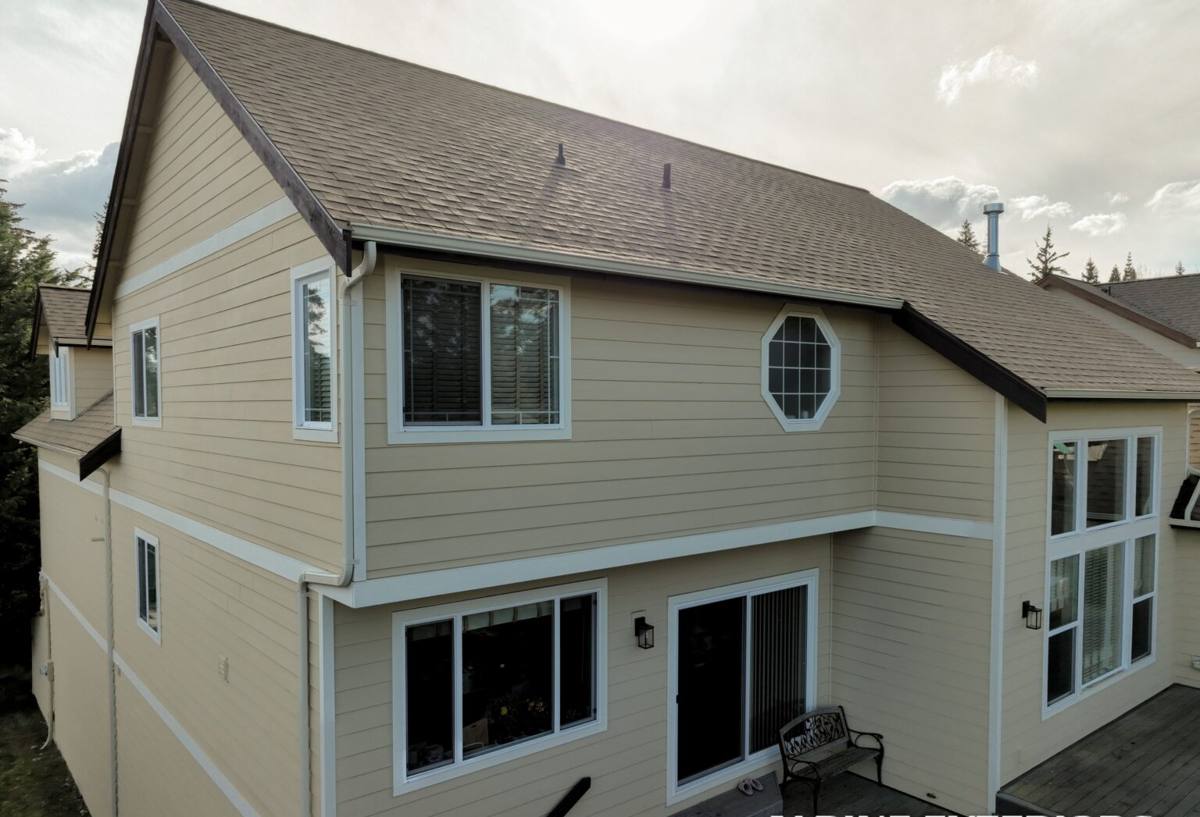
What a Correct Siding Installation Actually Involves
Siding looks simple from the curb, but the parts nobody sees are what determine whether it lasts fifteen years or fifty. In a climate like Sehome's, skipping or shortcutting any of the following is where problems start.
Weather-Resistive Barrier and Flashing
Every wall needs a continuous weather-resistive barrier underneath the siding, with flashing integrated correctly at every window, door, and penetration so water is directed out and down rather than trapped behind the cladding. In a high-rain area, flashing details at horizontal trim and butt joints matter as much as the barrier itself — most siding failures we see trace back to a flashing detail that was missed rather than a bad piece of material.
The Rainscreen Gap
A small drainage gap between the siding and the weather-resistive barrier lets bulk water drain and lets the wall assembly dry out between storms. Skipping this gap — installing siding tight against the sheathing — is one of the most common shortcuts in the industry, and it's one of the most damaging in a climate where walls rarely get a long stretch to dry.
Fastening and Joints
Fastener type, spacing, and depth all affect how siding performs over decades, not just in the first few years. Butt joints, corners, and terminations need to be detailed so water sheds away from the seam instead of wicking into it. This is where installer experience shows — the material can be correct and the installation still fail if these details are rushed.
Why We Install Only James Hardie Fiber Cement
We don't install vinyl, LP SmartSide, primed wood, or other fiber cement brands. That's a deliberate standard, not a sales preference. James Hardie's fiber cement is non-combustible, holds paint and factory finish far longer than wood-based products in sustained moisture, and doesn't have the expansion-contraction or edge-swelling issues that plague engineered wood siding in wet climates. Hardie's HZ5 product line is specifically engineered for regions with significant moisture exposure — relevant for a neighborhood dealing with salt air and a long wet season.
The ColorPlus factory finish also matters here: it's baked on under controlled conditions rather than field-applied, which gives it better resistance to fading and moisture intrusion at the finish layer than a job-site paint job. Combined with a strong transferable warranty, it's the product we're comfortable standing behind on Sehome homes long after the crew has left.
Signs Your Sehome Home's Siding Needs Attention
Because moisture damage in this climate is gradual, most homeowners don't notice a problem until it's visible from the street. Watch for:
- Persistent moss or algae growth that returns within weeks of cleaning
- Soft or spongy spots when you press on siding, especially near the ground line and under windows
- Paint that's peeling, bubbling, or chalking well ahead of its expected repaint interval
- Visible gaps, warping, or buckling at seams and corners
- Rising utility bills that suggest the wall assembly is no longer insulating or sealing as it should
- Wood siding that's delaminating at the edges or swelling at butt joints
Any one of these on its own may be minor. Several together usually mean the siding — or the assembly behind it — has reached the point where repair is a stopgap and replacement is the honest recommendation.
Our Sehome Installation Process
- On-site assessment — we look at existing siding condition, wall assembly, flashing at windows and doors, and any moisture or rot already present before quoting anything.
- Tear-off and inspection — removing old siding lets us check sheathing and framing underneath; any rot or damage gets addressed before new material goes on, not covered over.
- Weather barrier and rainscreen — a continuous weather-resistive barrier and drainage gap go in first, with flashing detailed at every opening.
- James Hardie installation — panels or lap siding installed to manufacturer fastening and clearance specifications, which is also what keeps the warranty intact.
- Trim, caulking, and finish details — joints, corners, and terminations sealed correctly so water sheds rather than collects.
- Final walkthrough — we go over the finished work with you and flag anything worth knowing for maintenance going forward.
Cost Factors to Understand
Siding quotes vary based on home size, existing wall condition, and how much repair work is needed underneath the old siding before the new material goes on. The table below is meant to explain the trade-offs between common siding materials — not to declare a winner on price alone, since the cheapest material up front isn't always the cheapest over the life of the home.
| Factor | James Hardie Fiber Cement | Vinyl | Engineered Wood (e.g. LP SmartSide) |
|---|---|---|---|
| Upfront material cost | Mid-to-higher | Lower | Lower-to-mid |
| Moisture / rot resistance | High — cement-based, doesn't rot | High resistance to rot, but can trap moisture behind it if installed poorly | Moderate — wood-based core is vulnerable at cut edges and joints if not sealed and maintained |
| Fire resistance | Non-combustible | Combustible | Combustible |
| Finish longevity | Factory ColorPlus finish, long repaint intervals | Color molded in, but can fade and become brittle over time | Field-applied or factory paint, generally shorter repaint cycle than Hardie |
| Performance in salt air / high rain | Engineered for it (HZ5 line) | Holds up but joints and fasteners can corrode | More sensitive to sustained moisture exposure |
| Typical lifespan when correctly installed | Multiple decades | Two to four decades | Shorter, especially in wet climates |
Why Local Sehome Experience Matters
A crew that already works this neighborhood knows how Sehome's mix of older and newer homes tends to be built, where moisture problems typically show up first on a hillside lot, and how much of a head start moss and algae get in the shaded, damp pockets common here. That's the difference between a generic installation and one detailed specifically for what a Bellingham winter is going to do to it. It also means we're a short trip away if a question comes up after the job is done — not a crew that installed once and moved on.
Siding Installation Checklist for Sehome Homeowners
- Confirm the contractor inspects sheathing and framing before quoting a final price, not just the visible siding
- Ask specifically whether a rainscreen gap and continuous weather-resistive barrier are included
- Get the fastening and flashing details in writing, not just the material brand
- Ask how butt joints and corners will be detailed and sealed
- Confirm what warranty applies to both material and labor, and what voids it
- Ask how tear-off debris and any discovered rot will be handled and priced
Caring for Your New Siding
Correctly installed James Hardie siding is low-maintenance, but "low" isn't "none." A yearly rinse to knock off moss spores and organic debris before they establish, keeping gutters clear so water doesn't run down the wall face, and trimming back vegetation that shades and dampens siding will all extend the life of the finish. Catching a small caulking gap or a loose piece of trim early is far cheaper than letting water find its way behind the siding over a winter.
If you're weighing a siding project for a Sehome home, we're happy to walk the property with you and give you a straightforward, no-pressure estimate — no obligation, just an honest look at what your home actually needs. Use the form below to get started.