 Bellingham Roofing
 Sehome's Roofs Face a Tough Combination of Weather
Sehome sits close enough to Bellingham Bay that salt-laden marine air is a constant, not an occasional visitor. Add the driving rain that comes off the water through fall and winter, plus a tree canopy around Sehome Hill Arboretum and the surrounding residential streets that keeps roofs shaded and damp for much of the year, and you get a climate that is genuinely hard on a roof. This isn't a place where a roof just sits in the sun and slowly fades. It's a place where moss gets a foothold in shaded valleys, where wind-driven rain finds every weak seam, and where a roof that would last two extra decades somewhere drier starts showing real problems on a much shorter timeline.
A roof replacement done right for Sehome has to account for all of that from the start — not just match the shingle color of the house next door. That means paying attention to ventilation, flashing, underlayment, and material choice with this specific combination of moisture and shade in mind.
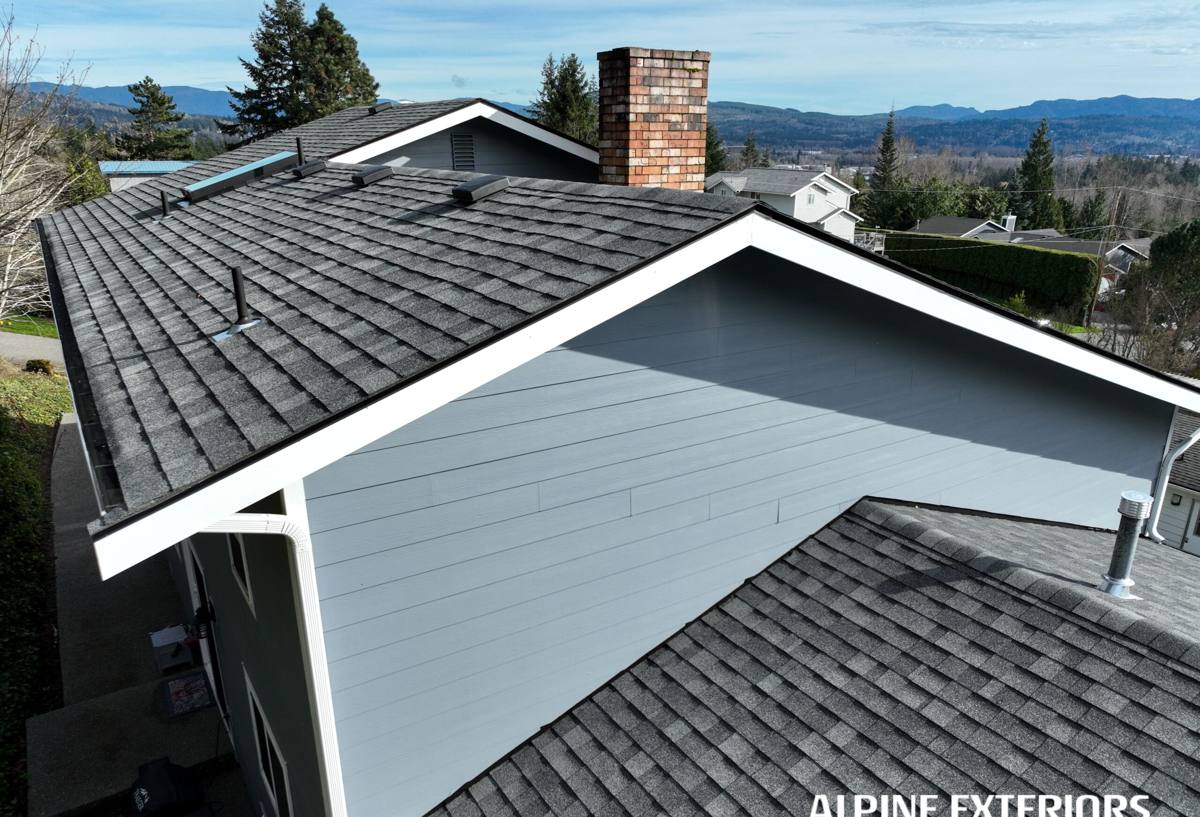
Signs a Sehome Roof Has Reached the End of Its Useful Life
Roofs rarely fail all at once. They give warning signs for months or years before a leak actually shows up inside the house. In Bellingham's climate, moss and constant dampness tend to accelerate every one of these signs, so it's worth checking more often than you might in a drier part of the state.
- Granules collecting in gutters or downspouts, or shingles that look patchy and thin
- Shingle edges curling, cupping, or lifting, especially on north-facing or shaded slopes
- Moss or dark algae streaking that keeps coming back within a season or two of cleaning
- Soft or spongy spots when walking the roof, which usually means the decking underneath is compromised
- Daylight visible through the roof boards from inside the attic
- Rusted, cracked, or lifting flashing around chimneys, skylights, and roof-to-wall transitions
- A roof that's already at or past the expected lifespan of its material, even without an active leak
If more than one or two of these apply, it's usually more cost-effective to plan a full replacement than to keep patching the same trouble spots every winter.
What an Honest, Complete Roof Replacement Actually Involves
Tear-off and a real look at the decking
We remove the old roofing down to the deck rather than layering over it. That's the only way to actually see what's underneath — and in a house that's spent years absorbing Bellingham's rain and shade, finding soft or rotted decking during tear-off is common enough that we always plan for the possibility rather than treating it as a surprise upcharge.
Underlayment and ice-and-water protection
Every square foot gets a synthetic underlayment layer, with self-adhering ice-and-water membrane at the eaves, valleys, and anywhere water tends to pool or back up. Given how much wind-driven rain this area sees, this layer is doing real work, not just meeting code minimums.
Flashing done properly, not reused
Flashing around chimneys, skylights, walls, and vents is one of the most common places a roof actually fails, usually because old flashing got reused to save time. We install new flashing as part of the replacement, formed and sealed for the specific transition it's covering.
Ventilation matched to the attic
Intake and exhaust venting get evaluated as part of the job, not assumed to already be adequate. More on why that matters below.
Choosing a Roofing Material for Sehome's Climate
There isn't one "best" roofing material for every house — it depends on the roof's slope, how much shade it gets, the look of the home, and the budget. Here's how the common options generally compare in a marine, moss-prone climate like this one.
| Material | Typical Lifespan | Moss & Moisture Behavior | Where It Fits |
|---|---|---|---|
| Architectural asphalt shingle | 25–30 years | Good with proper ventilation and periodic moss removal | Most homes; best value and widest style range |
| Standing seam metal | 40–50+ years | Sheds moisture fast, sheds moss with little to grip | Homes wanting long-term, low-maintenance performance |
| Cedar shake | 20–30 years with upkeep | Attractive but needs regular treatment; holds moisture in shaded, damp spots | Homeowners committed to ongoing maintenance for a specific look |
| Synthetic/composite shingle | 30–50 years | Resists moisture absorption better than wood; consistent performance | Homeowners wanting a wood or slate look with less upkeep |
We're upfront that we install cedar shake selectively. It's a beautiful, traditional material, but in a shaded, damp environment like much of Sehome, it demands a maintenance schedule most homeowners underestimate — treatment, moss removal, and closer inspection than a shingle or metal roof needs. That's a real trade-off worth discussing before you commit to it, not a reason to avoid the material outright if you're prepared for the upkeep.
Ventilation and Moisture: The Step That Gets Skipped
A new roof installed over poor attic ventilation will develop the same moisture problems as the old one, just on a new timeline. Warm, moist air from the house needs a clear path out through the ridge, and cool outside air needs a clear path in through the soffits. When that balance is off, moisture condenses on the underside of the decking, which rots wood from the inside and can void a manufacturer's shingle warranty entirely.
This matters more on shaded roofs — including many in Sehome's tree-covered blocks — because those roof decks dry out more slowly to begin with. We check baffles, soffit vents, and ridge venting as a standard part of every replacement, not as an optional add-on.
Moss and Algae Management After Your New Roof Is Installed
No roofing material is completely immune to moss in a climate this wet and shaded, but a new roof gives you a clean start and some real options for slowing regrowth.
- Zinc or copper strips installed near the ridge let rainwater carry trace metal down the roof, which discourages new moss growth over time
- Keep gutters and valleys clear of needles and leaf debris, which hold moisture and give moss somewhere to start
- Have moss physically removed by hand or soft-washed rather than pressure washed — pressure washing strips granules and shortens shingle life
- Trim back overhanging branches where practical to reduce shade and debris on the roof
- Schedule a roof check every year or two, since catching moss early is far cheaper than a callback for a leak
Our Process, From Estimate to Cleanup
- On-site inspection of the current roof, attic ventilation, and any visible problem areas
- A written proposal covering material options, scope of work, and a straightforward price — no vague allowances
- Scheduling built around the weather window, since roofing in the Pacific Northwest means working with the rain, not against it
- Protection of landscaping, siding, and gutters before tear-off begins
- Tear-off, decking repair as needed, new underlayment, flashing, and material installation
- A final walk-through inspection before we consider the job finished
- Full site cleanup, including a magnetic sweep for stray nails and staples
Permits and What to Expect During the Job
Roof replacements in Bellingham typically require a permit through the city, and we handle that as part of the job rather than leaving it to the homeowner. Timelines depend on roof size, complexity, and — honestly — the weather, since Whatcom County's rainy stretches can push a start date back a day or two in the interest of doing the job right rather than rushing a dry-in during active rain. We'll walk you through a realistic timeline before work begins, and keep you updated if weather shifts it.
Why a Crew That Already Works in Sehome Matters
Sehome's housing stock ranges from older homes near the university area to newer builds further out, often on lots with mature trees and tighter access than you'd find in a newer subdivision. Knowing that going in changes how we plan staging, material delivery, and tear-off — it's not the same job as a wide-open lot with no tree cover. We've also seen firsthand how quickly moss returns on the shadier lots in this neighborhood, which shapes what we recommend for ventilation and maintenance rather than just quoting a generic package. Local experience means fewer surprises mid-project and recommendations that actually fit the house in front of us, not a one-size-fits-all script.
If your roof is showing its age or you just want an honest read on where it stands, we're glad to take a look. Estimates are free, there's no pressure, and you'll get a straight answer about whether replacement makes sense now or repairs can reasonably buy you more time — just fill out the form below to get started.