 Bellingham Roofing
 Why Sehome Decks Take a Different Kind of Beating
Sehome sits on wooded, hilly ground close to Western Washington University, with a lot of homes tucked under mature tree cover and shaded from direct afternoon sun for much of the year. That shade is nice in July, but it's hard on a deck. Combine tree canopy with Bellingham's marine climate — steady driving rain much of the year, salt-tinged air drifting up from Bellingham Bay, and a moss season that can run from fall through spring — and you get decks that hold moisture longer than they would in a drier, more open part of Whatcom County.
Most deck failures we see in this neighborhood aren't dramatic. They're slow: a ledger board that's been quietly absorbing water behind the flashing, joists that stay damp under decking that never fully dries between rains, or fasteners that have corroded from years of damp, salt-carrying air. By the time the surface boards look bad, the structure underneath has usually been dealing with moisture for years.
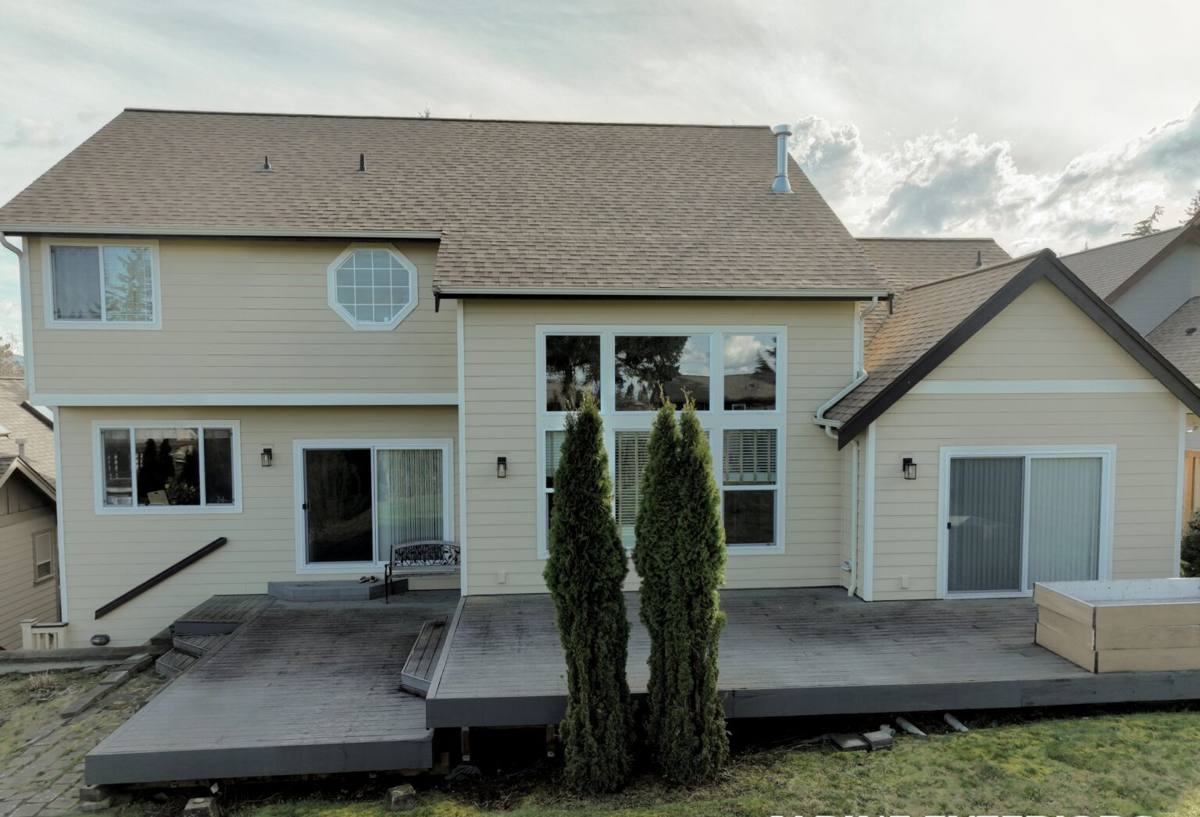
Signs a Sehome Deck Needs Replacement, Not Another Patch
Board replacement or a fresh coat of stain makes sense when the problem is cosmetic. Full replacement makes sense once the framing itself is compromised, or once repairs would cost more over time than starting clean. Here's what tells us which category a deck is in:
- Soft, spongy, or springy spots when you walk across the deck
- Visible gaps or rust streaks around joist hangers and structural fasteners
- A ledger board that's separating from the house or shows staining on the siding above it
- Persistent moss or algae growth that comes back within weeks of cleaning
- Posts or footings that feel loose, or visible movement when the railing is pushed
- Wood that's gone gray and fibrous, or that a screwdriver sinks into easily
- A deck built more than 20-25 years ago, before current fastener and flashing standards
If you're only seeing one or two of these, a targeted repair may still be reasonable. Once several show up together, it's usually a sign the whole structure has been absorbing water for a long time and replacement is the more honest answer, cost-wise and safety-wise.
What a Correct Deck Replacement Actually Involves
It starts underneath, not with the boards
The decking surface is the last thing installed and the first thing people notice, but it's not where deck failures start. A proper replacement means pulling the old structure down to the ledger and posts, inspecting (and usually replacing) the framing, and rebuilding with today's fastener and flashing standards — not just laying new boards over old joists.
The ledger connection is the most important detail on the job
Most structural deck failures trace back to the ledger board — the piece that ties the deck to the house. In a climate like ours, that connection needs proper flashing that sheds water away from the house framing, correctly spaced structural screws or bolts (not just nails), and in many cases a positive connection system that keeps the deck from pulling away from the house even if fasteners loosen over time. This is the part of the job that's invisible once the deck is finished, and it's the part that matters most.
Footings and posts need to reach stable, frost-safe soil
Whatcom County's building code sets minimum footing depth and post-to-footing connection requirements for a reason — shifting, damp soil around a shallow or undersized footing is a slow path to a leaning deck. On sloped Sehome lots, footing placement also needs to account for drainage and grade, not just depth.
Choosing Decking Material for a Wet, Shaded Lot
There's no single "best" decking material — there's a best fit for how much sun and moss exposure a particular deck deals with, and how much upkeep the homeowner wants to sign up for. Here's how the common options stack up for a shaded, damp Sehome lot specifically:
| Material | How it handles our climate | Maintenance | Typical lifespan |
|---|---|---|---|
| Pressure-treated pine | Handles moisture fine when properly sealed; needs re-sealing often in shade | Annual cleaning and re-sealing | 10-15 years |
| Cedar | Naturally rot-resistant, but shaded/damp spots still need attention | Regular cleaning, periodic staining | 15-20 years |
| Composite decking | Doesn't absorb water like wood; still needs cleaning where moss can take hold | Occasional washing, no staining/sealing | 25-30+ years |
| PVC/capped polymer | Fully sealed surface, best resistance to moisture and moss staining | Occasional washing | 25-30+ years |
On heavily shaded lots, we lean toward steering clients away from uncapped wood as a primary surface material — not because wood is a bad product, but because a shaded, damp Sehome yard is close to the worst-case maintenance scenario for it. That's a maintenance-burden conversation, not a knock on any manufacturer.
Our Deck Replacement Process
- On-site evaluation. We look at the existing structure, ledger condition, footings, drainage, and sun exposure before recommending anything.
- Honest scope and estimate. You get a clear breakdown of what's being replaced and why, in plain language, with material options at different price points.
- Permit handling. We pull the required permit and schedule inspections so the work is documented and code-compliant.
- Demolition and disposal. Old decking and framing come out, and we haul it away — no debris left for you to deal with.
- Structural rebuild. New ledger flashing, joists, hangers, and footings go in to current code, sized for the deck's actual use and loads.
- Decking and railing installation. Surface material and railing go in per your material choice, with attention to drainage and airflow underneath.
- Final walkthrough and inspection sign-off. We review the finished deck with you and make sure the county inspection is closed out.
Permits and Whatcom County Code
Deck replacement in Bellingham typically requires a building permit once you're rebuilding structure — not just swapping surface boards on an otherwise sound frame. Permits exist to catch the things that matter most later: footing depth, ledger attachment, guard rail height, and stair geometry. Skipping the permit doesn't just risk a fine; it means nobody with code expertise ever checked the parts of the deck you can't see once it's finished. We handle the permit application and inspection scheduling as part of the job so you don't have to navigate the county process yourself.
What Affects Deck Replacement Cost
Every deck is different, but the same handful of factors drive most of the cost variation we see on Sehome jobs:
| Factor | Why it matters |
|---|---|
| Deck size and height off grade | Larger and taller decks need more framing, more footings, and often stairs |
| Decking material chosen | Composite and PVC cost more upfront than wood, less over the deck's life |
| Structural condition underneath | Rotten framing or undersized footings add rebuild work beyond the surface |
| Site access and slope | Sloped Sehome lots can complicate footing work and material staging |
| Railing and stair complexity | Custom railing, multiple stair runs, or landings add labor and material |
We'd rather walk a specific deck and give you real numbers than quote a range that doesn't reflect your situation — but as a general rule, the structural rebuild (not the surface boards) is usually the larger share of the cost, which is exactly why it's not the part to shortcut.
Maintaining a New Deck Through Moss Season
A new deck, built right, still needs some seasonal attention in this climate. A little care each fall keeps it looking and performing the way it should:
- Clear leaves and debris off the deck surface before the wet season sets in — trapped organic material is what moss and algae feed on
- Keep gutters and downspouts near the deck clear so water isn't dumping directly onto or under it
- Sweep or rinse the surface periodically through the winter, especially in shaded corners
- Check that drainage under the deck hasn't become blocked by leaves or debris
- For wood decking, plan on re-sealing on the manufacturer's recommended schedule, not just when it looks worn
None of this is heavy maintenance, but skipping it is exactly how a deck ends up back in the "needs replacement" category ahead of schedule.
Why a Bellingham Crew That Already Works Sehome Matters
A deck replacement done by a crew that doesn't normally work in this climate tends to make the same mistakes: underestimating how much moisture a shaded lot deals with, using fastener and flashing details that are fine in a drier region but marginal here, or missing how Whatcom County's permit and inspection process actually works. A crew based in Bellingham and familiar with Sehome's terrain — the shade, the slope, the drainage patterns specific to this part of town — builds decks with those conditions in mind from the first framing decision, not as an afterthought.
That local familiarity also means faster response if something needs a look after the job is done, and a crew that's still around in five or ten years if a warranty question comes up — not a name from an out-of-town crew that moved on to the next region.
If your Sehome deck is showing its age, we're happy to take a look and give you a straightforward assessment — no pressure, no upsell. Use the form below to request a free estimate, and we'll walk the deck with you and lay out exactly what it needs.