 Bellingham Roofing
 Roofing in Sehome: What the Neighborhood Is Up Against
Sehome sits close to Bellingham Bay and shares the tree cover that comes with being near Sehome Hill, which means roofs here deal with a specific combination of stresses that a lot of generic roofing advice doesn't account for. Salt-tinged marine air moves in off the water and slowly works on exposed metal — fasteners, flashing, vent caps, gutter hangers — long before most homeowners notice anything wrong from the ground. Add in Whatcom County's driving, sideways rain during fall and winter storms, and you have moisture finding its way into every gap a roof system has, not just the obvious ones.
Then there's shade and tree cover. Homes tucked under mature trees or on shaded lots hold moisture longer after a storm than a roof out in the open, and that extended damp period is exactly what moss and lichen need to get established. Once moss takes hold on a roof, it doesn't just sit there — it lifts shingle edges, holds water against the roof deck, and turns small leaks into bigger ones over a season or two. A roof repair in Sehome isn't just patching a hole; it's addressing the combination of salt exposure, wind-driven rain, and moss growth that caused the problem in the first place.
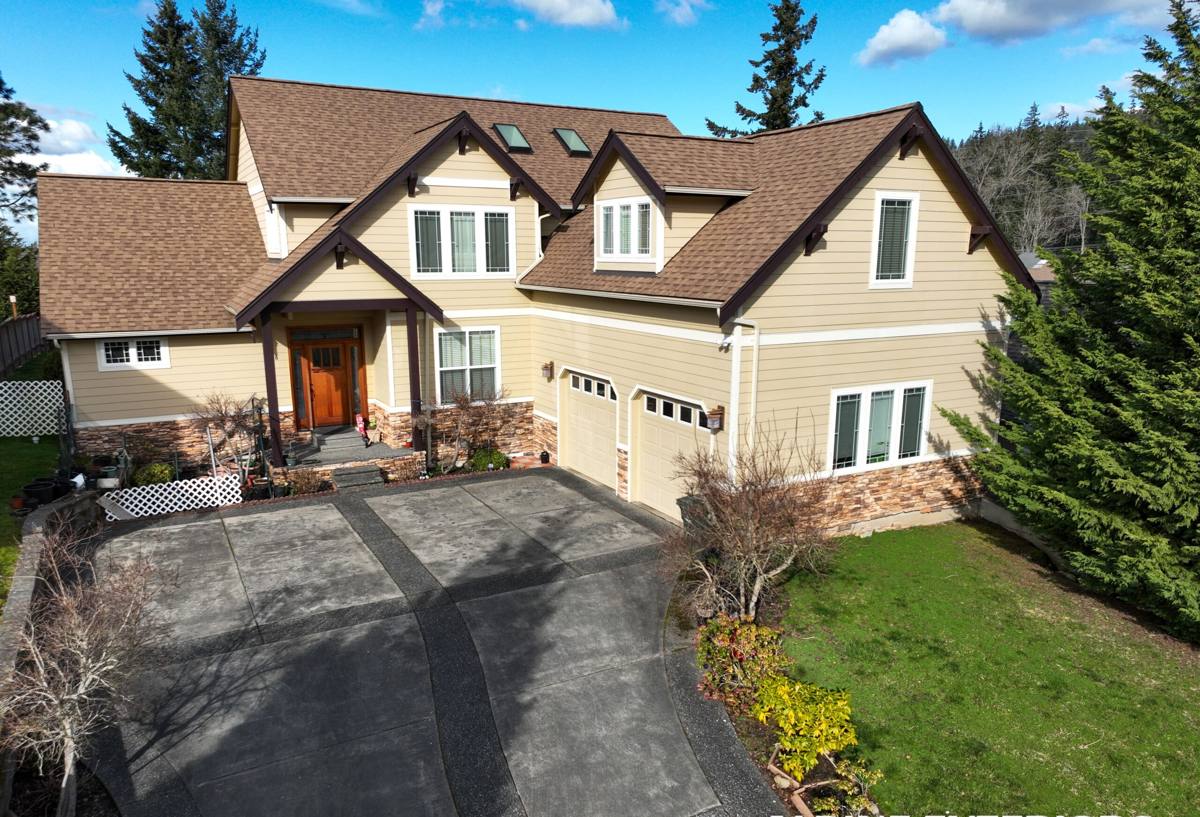
Common Roof Repair Issues We See in Sehome
Most repair calls in this part of Bellingham fall into a handful of categories. None of these are unusual for the Pacific Northwest, but the mix and severity tend to be a bit higher here because of the shade and proximity to the bay.
- Moss and lichen damage — lifted shingle tabs, granule loss, and soft or spongy decking underneath heavy moss mats.
- Valley leaks — where two roof planes meet is where the most water volume travels, and it's the first place a marginal repair or aging flashing gives out.
- Flashing failures — around chimneys, skylights, and roof-to-wall transitions, especially on older homes where flashing was never properly step-flashed to begin with.
- Wind and nail-pop damage — driving storms lift shingle edges and back nails out over time, creating small gaps that don't leak right away but will.
- Gutter and edge backup — clogged gutters from tree debris push water up under the first course of shingles instead of off the roof.
- Skylight and vent boot leaks — rubber boots and old sealant break down faster under UV and salt air than most homeowners expect.
What a Correct Repair Actually Involves
Start With a Real Inspection, Not a Guess
A repair that lasts starts with finding the actual source of the leak, not just the spot where water showed up inside the house. Water can travel several feet along a rafter or along the underlayment before it drips somewhere visible, so we walk the roof, check the attic side when accessible, and trace the path back to where moisture is actually entering — not just where it's landing.
Match the Repair to the Cause
A leak caused by wind-lifted shingles gets fixed differently than one caused by failed flashing or moss holding water against the deck. If the decking underneath has softened from prolonged moisture, that section needs to be cut out and replaced before any new shingles or flashing go back on — covering rot with new material just hides the problem for another season.
Match the Materials
Whenever possible, we repair with materials that match what's already on the roof — same shingle style, similar color and weight — so the repair blends in rather than becoming a visible patch. When an exact match isn't available because the original product is discontinued, we'll tell you that up front and talk through the closest reasonable option rather than surprising you with a mismatched patch.
Leave a Roof That's Actually Sealed
Every repair gets properly flashed, fastened, and sealed to current best practice — not just caulked over. Caulk and roofing cement have a place in roofing, but they're not a substitute for correct flashing and shingle work, and we don't use them as a shortcut to close out a job faster.
Our Sehome Repair Process, Step by Step
- Initial contact and scheduling — you describe the issue (a stain on the ceiling, a missing shingle you noticed, an active drip), and we schedule a time to get eyes on the roof.
- On-site inspection — we examine the roof surface, flashing points, valleys, and any accessible attic space to trace the leak to its actual source.
- Written explanation and estimate — you get a plain-English rundown of what's wrong, why it's happening, and what it will take to fix it correctly, along with a price before any work starts.
- Repair work — deck repair if needed, matched shingle or material replacement, correct flashing, and proper sealing at every penetration point involved.
- Cleanup and debris removal — old materials, nails, and moss debris are cleared from the roof and gutters, not left for the next rain to wash down.
- Final walk-through — we show you what was done and flag anything else worth keeping an eye on, even if it's not something we're recommending action on yet.
Repair vs. Replacement: How We Help You Decide
Not every roof problem in Sehome needs a full replacement, and not every leak can be permanently solved with a patch. The honest answer depends on the roof's age, how much of it is affected, and what's happening underneath the surface layer. Here's the general framework we use when we're on your roof:
| Factor | Leans Toward Repair | Leans Toward Replacement |
|---|---|---|
| Roof age | Under roughly 15 years, or well within expected material lifespan | Nearing or past the manufacturer's expected service life |
| Extent of damage | Isolated to one section, valley, or penetration point | Moss, wear, or granule loss spread across most of the roof |
| Decking condition | Solid, dry decking under the affected area | Widespread soft spots or rot found in multiple areas |
| Repair history | First or second repair call for this roof | Recurring leaks in different spots year after year |
| Underlayment condition | Still intact and doing its job where checked | Brittle, torn, or failing underlayment found during inspection |
We'll never push a full replacement when a proper repair will genuinely hold up, and we'll tell you plainly if a repair is only buying you a year or two so you can plan accordingly instead of getting surprised later.
Roofing Materials Common on Sehome Homes
Sehome has a mix of older bungalow and craftsman-era homes alongside newer construction, which means we work on a range of roofing materials, each with its own repair considerations.
| Material | Repair Considerations |
|---|---|
| Composition (asphalt) shingle | Most common and generally the most straightforward to repair; matching color and granule wear on older roofs is the main challenge |
| Cedar shake or shingle | Needs individual shake replacement rather than patching over; moss and moisture retention are a bigger factor here than on comp shingle |
| Metal roofing | Repairs focus on fastener backout, seam sealant, and panel-to-flashing transitions; salt air accelerates fastener corrosion |
| Low-slope or flat sections (additions, porches) | Common on older homes with add-on rooms; membrane and flashing detail work matters more than shingle matching |
Our professional standard is to repair with materials appropriate to what's already installed rather than mixing product types on one roof plane, since different materials expand, contract, and shed water differently — mixing them at a repair boundary is a common source of future leaks.
Timing: When Repairs Make the Most Sense in Whatcom County
Roof repair isn't strictly seasonal — an active leak needs attention whenever it shows up — but timing does affect how smoothly a repair goes. Late spring through early fall tends to bring the driest, most stable working conditions in this area, which is ideal for anything involving deck replacement or larger flashing work. That said, waiting until summer to address a known problem discovered during winter storms is a mistake; a temporary, weather-tight repair now followed by a more thorough fix later is often the right call rather than leaving an active leak through an entire wet season.
Moss treatment and removal is worth scheduling proactively rather than reactively. Catching moss growth early in the season, before it's had months to establish and lift shingle edges, is far less invasive and less expensive than dealing with the water damage it causes if left through a full wet Bellingham winter.
Maintenance Checklist Between Repairs
A repair only holds up as long as the rest of the roof is reasonably maintained around it. These are the basics we recommend to Sehome homeowners to get the most life out of both the repair and the roof as a whole:
- Clear gutters and downspouts at least twice a year, more often on tree-covered lots.
- Trim back branches that overhang the roofline to reduce shade, debris buildup, and moss-friendly conditions.
- Look for visible moss or dark streaking from the ground after each wet season and address it before it spreads.
- Check attic spaces (if accessible) for damp insulation, staining, or daylight coming through the decking.
- Have the roof looked at after any major windstorm, even if nothing looks obviously wrong from the ground.
- Keep an eye on interior ceilings and upper walls for new staining, especially near valleys and chimneys.
Why a Crew That Already Works in Sehome Matters
A contractor who regularly works this part of Bellingham already understands how the shade patterns, bay-driven weather, and older housing stock in Sehome tend to interact — that's not something you can fully substitute with a generic checklist. It shows up in small but meaningful ways: knowing which repair approaches actually hold up against Whatcom County's wind-driven rain, recognizing early moss patterns before they become structural issues, and being realistic with you about what a repair can and can't fix long-term.
It also matters for response time and follow-through. A local crew can get to an active leak faster, is easier to reach if a question comes up after the work is done, and has a reputation in the neighborhood worth standing behind. We'd rather explain honestly why a smaller repair makes sense than upsell a replacement you don't need yet, and we'd rather tell you a repair is a stopgap than let you assume it's a permanent fix when it isn't.
If you've got a leak, a soft spot, or moss creeping across your roofline in Sehome, we're happy to take a look and give you a straight answer along with a free, no-pressure estimate — just fill out the form below.