 Bellingham Roofing
 Sehome Roofs Face a Different Kind of Wear
Sehome sits close enough to Bellingham Bay that salt-laden air is a constant, low-grade stress on every exposed metal fastener, flashing seam, and shingle granule on a roof. Add in the driving rain that comes off the water during fall and winter storms, and a wet season that can stretch from October well into April, and you have a roofing environment that punishes shortcuts. Roofs here don't fail because asphalt shingles are a bad material choice — they fail because they were installed without accounting for how much moisture this part of Whatcom County actually sees.
Many Sehome lots also carry mature tree cover, which is part of the neighborhood's character but keeps roof surfaces shaded and slow to dry between storms. That combination — salt air, near-constant rain exposure, and shade — is exactly the recipe for moss, algae streaking, and premature granule loss if a roof isn't built and maintained with this climate in mind.
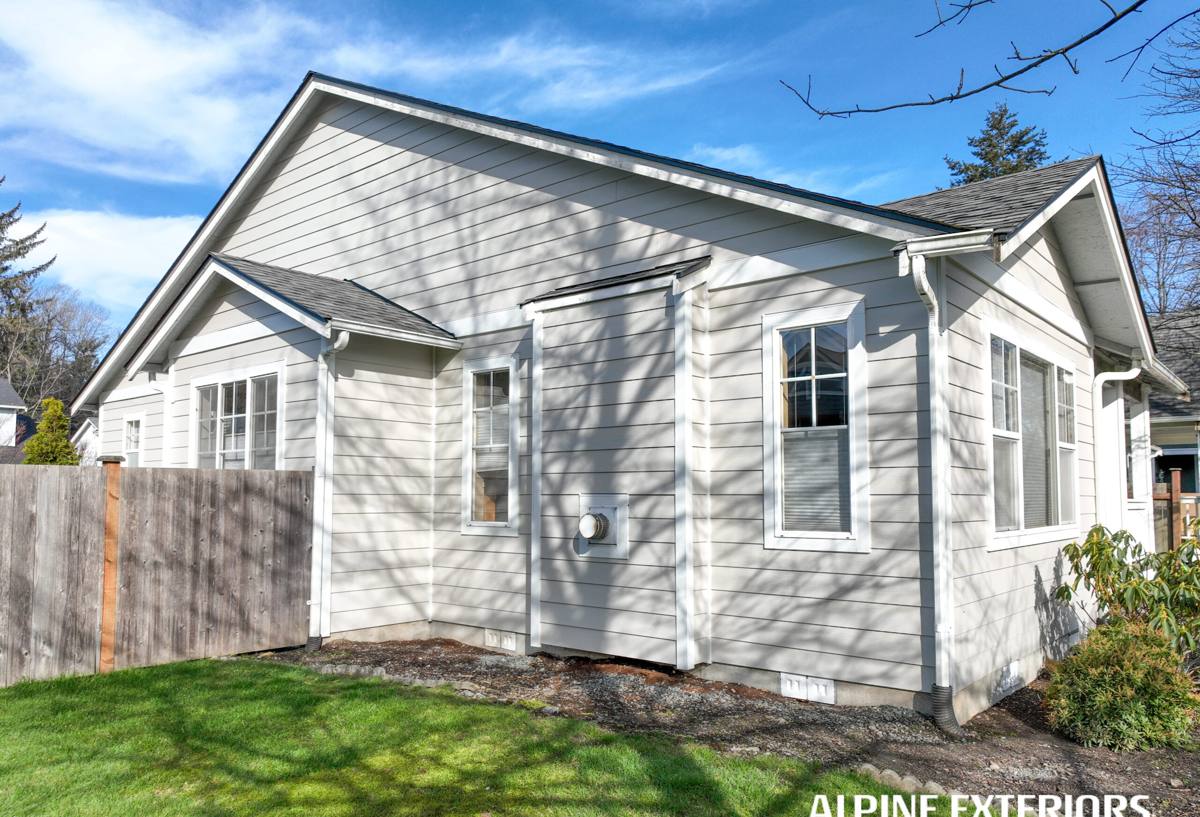
What a Correctly Installed Shingle Roof Needs Here
An asphalt shingle roof that's going to hold up in this climate needs more than shingles nailed to a deck. The details underneath and around the shingles are what actually determine whether a roof lasts fifteen years or thirty.
Ventilation Comes First
A roof deck that can't breathe traps moisture from the inside, which shows up as premature shingle curling, plywood delamination, and mold in the attic long before the shingles themselves wear out. Balanced intake and exhaust ventilation matters more in a marine climate like Bellingham's than almost anywhere else, because the outside air is already damp — there's no margin for a poorly vented attic to dry itself out.
Underlayment and Water Barrier at Vulnerable Areas
A quality synthetic underlayment across the whole deck is the baseline, but the areas that actually cause callbacks are valleys, eaves, and anywhere a roof plane meets a wall or chimney. Self-adhered ice-and-water barrier at those spots gives the roof a second line of defense when wind-driven rain gets up under the shingle edge — which happens regularly during a strong Pacific storm.
Flashing Is Where Most Leaks Actually Start
Step flashing at walls, counterflashing at chimneys, and properly formed valley metal do more to prevent leaks than the shingle brand ever will. Reusing old flashing to save time, or caulking a gap instead of flashing it correctly, is the single most common reason a "new roof" leaks within a few years. We flash every transition as if the shingles above it will eventually fail — because eventually, they will, and the flashing underneath is what keeps water out of the house.
Choosing the Right Shingle for This Exposure
Not every asphalt shingle is built the same way, and in a climate with this much sustained moisture and algae pressure, the difference matters more than it would somewhere drier.
| Shingle Type | Typical Lifespan | Wind Rating | Algae/Moss Resistance |
|---|---|---|---|
| 3-Tab | 15–20 years | Lower | Standard granules only |
| Standard Architectural | 25–30 years | Higher | Standard to moderate |
| Algae-Resistant Architectural | 25–30+ years | Higher | Copper-infused granules resist streaking |
For most Sehome homes we recommend an architectural shingle with algae-resistant (AR) granules as the baseline, not an upgrade. Given the tree cover and moisture in this neighborhood, standard granules will streak with algae within a few years regardless of how well the roof is maintained — AR granules meaningfully slow that down. Where a house has a simple, well-exposed roofline with less shade, a standard architectural shingle without the AR upgrade can be a reasonable way to control cost.
Moss, Algae, and Bellingham's Long Wet Season
Moss doesn't just sit on top of a shingle roof — it lifts the shingle tabs as it grows, holding moisture against the granules and shortening the roof's life. In a neighborhood with as much shade and rainfall as Sehome, some moss pressure is normal even on a well-built roof. What matters is keeping it from taking hold.
Zinc or copper control strips installed near the ridge use rainwater runoff to inhibit moss growth across the whole roof plane, and they're inexpensive to add during installation. Beyond that, the maintenance routine matters: gentle, low-pressure moss removal on a reasonable schedule, never pressure washing. High-pressure washing strips the protective granules right off the shingle and shortens the roof's life faster than the moss it was meant to remove — it's a shortcut we won't take, even when a homeowner asks for it, because it trades a short-term clean look for years of shingle life.
Our Process for an Asphalt Shingle Roof
The steps themselves aren't a secret — most contractors describe a similar sequence. What separates a roof that lasts from one that doesn't is how carefully each step is actually executed.
- Inspection and honest assessment of the current roof, including deck condition, ventilation, and flashing — not just a quote based on square footage.
- Full tear-off down to the deck, so we can see and fix what's actually underneath instead of layering over hidden problems.
- Deck repair where needed — soft or delaminated plywood gets replaced, not covered up.
- Synthetic underlayment across the field, with ice-and-water barrier at eaves, valleys, and wall transitions.
- New flashing at every wall, chimney, and valley — we don't reuse old flashing.
- Shingle installation to manufacturer spec, including proper nailing pattern and exposure for the wind conditions this area sees.
- Ridge and intake ventilation installed or corrected as part of the job, not left as-is by default.
- Full site cleanup, including a magnetic sweep for nails, and a walkthrough so you understand what was done and why.
Signs a Sehome Roof Needs Attention
Because so many roofing problems in this climate start slowly — a small leak, a patch of moss, a curling shingle edge — it's worth knowing what to watch for before it turns into interior damage.
- Granules collecting in gutters or at downspout outlets
- Shingle edges that look curled, cupped, or lifted rather than lying flat
- Moss visible along the shade line of the roof, especially near the ridge or under trees
- Dark streaking that doesn't wash off with a light rinse
- Soft or spongy-feeling roof deck when walked, or sagging between rafters
- Water stains on interior ceilings, especially after a heavy storm
- Daylight visible through the attic roof deck
- Flashing that looks rusted, caulked-over, or pulled away from a wall or chimney
Why Local Experience in Sehome Matters
A roofing crew that regularly works in Sehome already understands things a crew from outside the area has to learn on your dime: how much shade a given lot typically holds through the winter, how tree debris and needle buildup affect valleys and gutters differently than on a more open roof, and what kind of moisture exposure to plan for on homes close to the bay versus further inland. That local knowledge shows up in small decisions — how much AR shingle coverage to recommend, where control strips actually make a difference, how to schedule a tear-off around this area's rain patterns — that add up to a roof that performs the way it should for its full lifespan.
It also matters for response time. Storm damage doesn't wait for a convenient week, and a crew already working in and around Bellingham can get eyes on a damaged roof and a tarp up faster than one dispatching from farther away.
What Affects the Cost of a Shingle Roof Here
Every roof is priced individually, but a few factors consistently move the number up or down on jobs in this neighborhood:
- Roof size and pitch — steeper roofs take longer and require more safety equipment.
- Number of layers to remove — tearing off two layers of old roofing costs more than one.
- Deck condition — plywood replacement is priced as it's found, not guessed at upfront.
- Shingle tier — standard architectural versus algae-resistant or premium lines.
- Complexity — the number of valleys, walls, skylights, and chimneys to flash.
- Ventilation upgrades — adding proper intake or exhaust venting where none exists.
We walk every roof in person and price it based on what we actually find, not a rough per-square estimate — that's the only way to give you a number you can trust once the tear-off starts.
If you're weighing a repair against a full replacement, or just want an honest read on how much life is left in your current shingle roof, we're happy to take a look. Use the form below to request a free, no-pressure estimate for your Sehome home.