 Bellingham Roofing
 Building Decks for Sehome's Wooded, Sloped, Bay-Facing Lots
Sehome sits close enough to Bellingham Bay to catch salt-tinged air off the water, while its hillside terrain around Sehome Hill keeps many lots shaded by mature trees for a large part of the day. That combination — moisture-laden air, tree canopy, and sloped ground — makes deck building here different from a wide-open, full-sun lot elsewhere in Whatcom County. A deck that would hold up fine in a dry, exposed yard can struggle in Sehome if it's built without accounting for shade, drainage, and the salt content in the air.
We've built and repaired decks throughout Bellingham long enough to know that most deck failures aren't dramatic. They're slow: a ledger board that stays damp because flashing was skipped, fasteners that corrode faster than expected, or a deck surface that never quite dries out because it sits under tree cover most of the year. Building correctly for Sehome means designing around those realities from the start, not patching them later.
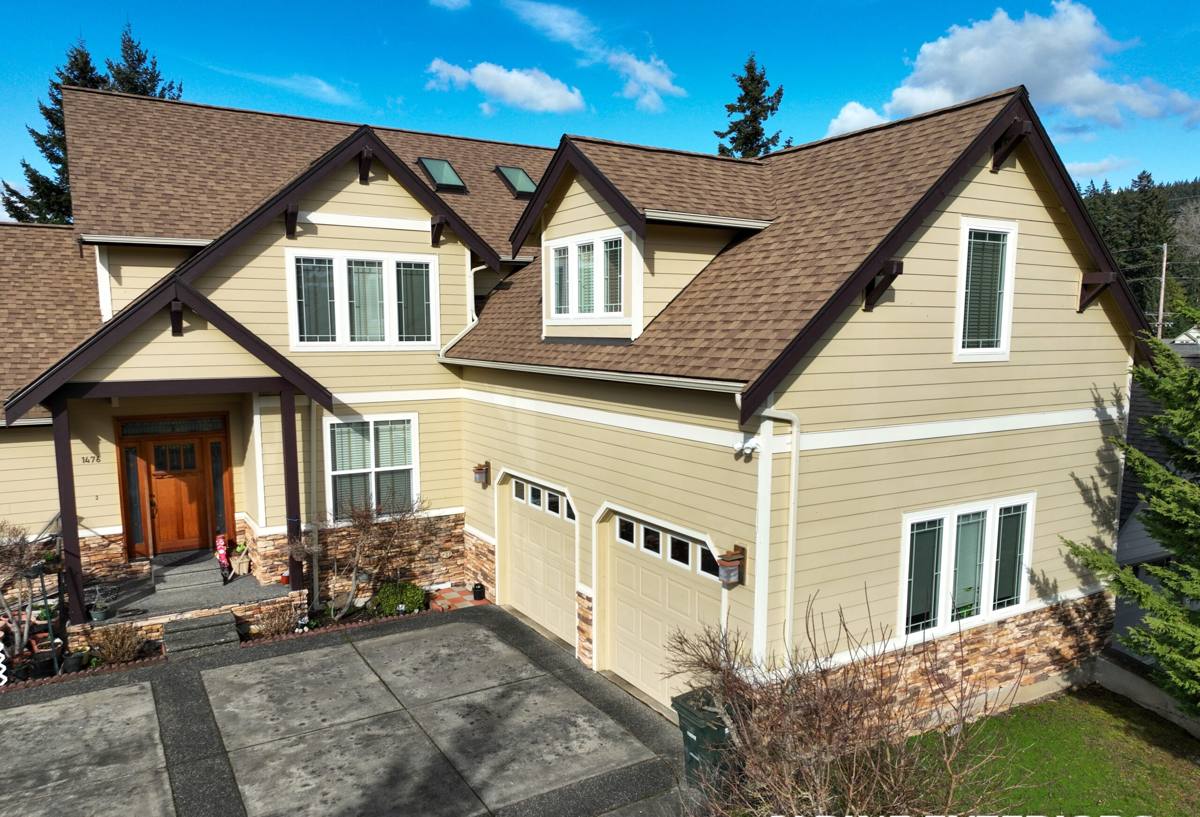
What Salt Air, Driving Rain, and a Long Moss Season Actually Do to a Deck
Salt Air and Metal Components
Even a few miles inland from the bay, airborne salt accelerates corrosion on anything metal — fasteners, joist hangers, railing hardware, and structural screws. Standard coated hardware can start showing rust well before a deck's wood components show any wear, and once fasteners corrode, they weaken the connections holding the whole structure together.
Driving Rain and Water Intrusion
Bellingham's wind-driven rain doesn't just fall straight down — it gets pushed sideways against house walls and under poorly flashed ledger boards. On a deck, that means water finds its way into any gap that wasn't properly sealed or sloped, and it tends to find those gaps at the point where the deck meets the house.
The Long Moss Season
Shaded, damp conditions for much of the year give moss and algae a long runway to establish themselves on deck boards, especially in the gaps between boards and in any low spots where water lingers. Beyond looking neglected, a mossy deck surface gets slick and holds moisture against the wood far longer than a clean, well-draining surface would.
Choosing a Decking Material That Holds Up in Sehome's Conditions
There's no single "best" decking material for every home — it depends on how much sun the lot gets, how the homeowner wants to spend their maintenance time, and budget. Here's how the common options actually perform under Sehome's shade-and-moisture conditions.
| Material | Moisture & Moss Behavior | Maintenance | Typical Lifespan | Cost Tier |
|---|---|---|---|---|
| Pressure-treated fir/hem-fir | Absorbs water readily in shade; needs a real drying period between rains to resist moss buildup | Annual cleaning, periodic sealing | 10-15 years | Lowest |
| Western Red Cedar | Naturally moisture- and insect-resistant, but still needs airflow to shed moss in shaded spots | Cleaning plus stain/seal every 1-2 years | 15-20 years | Mid |
| Composite decking | Doesn't absorb water into the board itself, but surface algae/moss can still grow on top and needs washing off | Periodic washing, no staining or sealing | 25-30+ years | Mid-High |
| Tropical hardwood (garapa, ipe, etc.) | Very dense, sheds water well, but installation is unforgiving of shortcuts | Oiling every 1-2 years to maintain color, or left to weather gray | 25+ years | Highest |
For heavily shaded Sehome lots, we're often steering homeowners toward composite or cedar over standard pressure-treated lumber, simply because the shade means less natural drying time between storms. That's not a knock on pressure-treated wood — it's a solid, economical choice on a sunnier lot — it just needs more upkeep in a low-light spot.
Framing and Footings for Sloped, Wooded Lots
A fair number of Sehome properties sit on grade changes rather than flat ground, which affects how a deck gets framed from the footings up. Sloped lots often call for taller support posts on the downhill side, additional bracing, and sometimes stepped footings to keep the structure level without an enormous amount of fill or excavation.
Tree roots are the other factor we plan around. Mature trees near a building site mean footing locations sometimes need to shift to avoid major roots, and excavation has to be done carefully to protect a tree's root zone rather than just digging wherever is convenient. We also size framing to the actual load — a deck with a hot tub, built-in seating, or a roof structure needs larger joists and closer spacing than a basic open deck, and that engineering has to be right before a single board goes down.
Stairs and Guardrails on Grade Changes
Sloped yards often mean stairs are part of the design, not an afterthought. Stair stringers need to be sized for the actual rise and run of the slope, and any deck more than a modest height above grade requires a code-compliant guardrail — something we account for in the design stage so it doesn't become a surprise change order later.
Drainage, Flashing, and Ledger Attachment — Where Decks Actually Fail
If a deck is going to fail early, it almost always starts at one of two places: the ledger board connection to the house, or standing water somewhere on the surface. Both are avoidable with the right approach.
- Ledger flashing: Metal flashing installed correctly behind the siding and over the ledger board keeps water from tracking behind the house's weather barrier at the deck attachment point.
- Board gaps and slope: Decking needs consistent spacing and a slight slope away from the house so water sheds off the surface instead of pooling.
- Joist protection: A protective tape or membrane over the top of joists keeps water from soaking directly into end grain, which is where rot typically starts first.
- Debris pathways: Needles, leaves, and moss spores from overhead trees need somewhere to go rather than collecting in board gaps or against the house.
None of this is complicated work, but it's the kind of detail that's easy to skip under time pressure — and the kind that doesn't show its consequences until a few wet seasons later.
Hardware That Survives Coastal Air
Given the salt content in the air this close to the bay, we treat fastener and hardware selection as a real decision, not an afterthought. Stainless steel or heavy hot-dip galvanized fasteners cost more up front than standard coated screws, but they hold up substantially longer against corrosion in a coastal-influenced environment. The same goes for joist hangers, post bases, and any structural connectors — using a lower-grade coated product to save a small amount on materials is a poor trade against the cost of a compromised structural connection years down the road.
Hidden fastener systems, which clip decking boards from underneath rather than screwing through the top face, are worth considering here too — fewer exposed screw heads means fewer points where corrosion or a loosened fastener can show on the surface.
Our Process for Sehome Deck Projects
- Site visit: We walk the actual lot, noting slope, shade patterns, tree root locations, and how the deck will tie into the house.
- Design and material selection: We talk through material trade-offs honestly based on how much sun and shade the specific spot gets.
- Permitting: We handle the permit application and inspections required for the project, so the homeowner isn't chasing paperwork.
- Framing and footings: Footings, posts, and joists get built to the engineered spec for the site's slope and load requirements.
- Decking, railing, and finish work: Boards, railings, and any stairs go in with proper spacing, fastening, and flashing details throughout.
- Final walkthrough: We go over the finished deck together and cover basic care specific to the materials used.
Maintenance Checklist for Sehome Deck Owners
A well-built deck still needs some seasonal attention in this climate. This is the baseline we recommend to homeowners after a project wraps up:
- Sweep debris and clear board gaps before the wet season sets in each fall
- Rinse or lightly scrub moss and algae off the surface before it builds up a foothold
- Check ledger flashing and caulking annually for gaps or cracking
- Reseal or re-stain wood decking on the manufacturer or species-recommended schedule
- Inspect fasteners and hardware periodically for early signs of corrosion
- Make sure gutters and downspouts direct roof water away from deck footings
- Trim back overhanging branches where practical to improve sun and airflow on the deck surface
Why Hire a Crew That Already Works in Sehome
A deck built to a generic spec sheet can still fail in a spot like Sehome if the crew building it hasn't accounted for the shade, slope, and salt-air exposure specific to the neighborhood. Working regularly in Bellingham and Whatcom County means we're familiar with local permitting requirements, we've seen how different materials actually age under this area's tree cover and marine climate, and we don't have to guess at footing depths or drainage details — we've already worked through them on homes nearby.
If you're planning a new deck or replacing one that's showing its age, we're happy to come take a look and give you a straightforward, no-pressure estimate using the form below.