 Bellingham Roofing
 Metal Roofing Built for Sehome's Climate
Sehome sits in central Bellingham on the rise toward Sehome Hill, a mix of older homes, mid-century houses, and newer infill under a fair amount of tree cover. That combination puts real, sustained stress on a roof. Salt-tinged air moving in off the Salish Sea works on exposed metal and fasteners over the years. Rain in this part of Whatcom County rarely just falls straight down and runs off; it gets pushed sideways by wind and forced up under roofing edges and laps. And shaded, sloped lots around Sehome Hill hold onto moisture long after a storm passes, which is exactly the kind of condition that keeps moss established through most of the year rather than just a few wet months.
Metal roofing holds up well against all three of those pressures when it's specified and installed correctly, and it's a poor investment when it isn't. This page covers what a correct metal roof looks like for a Sehome home specifically, where the real risk points are in this climate, and how we run the job from first inspection to final walkthrough.
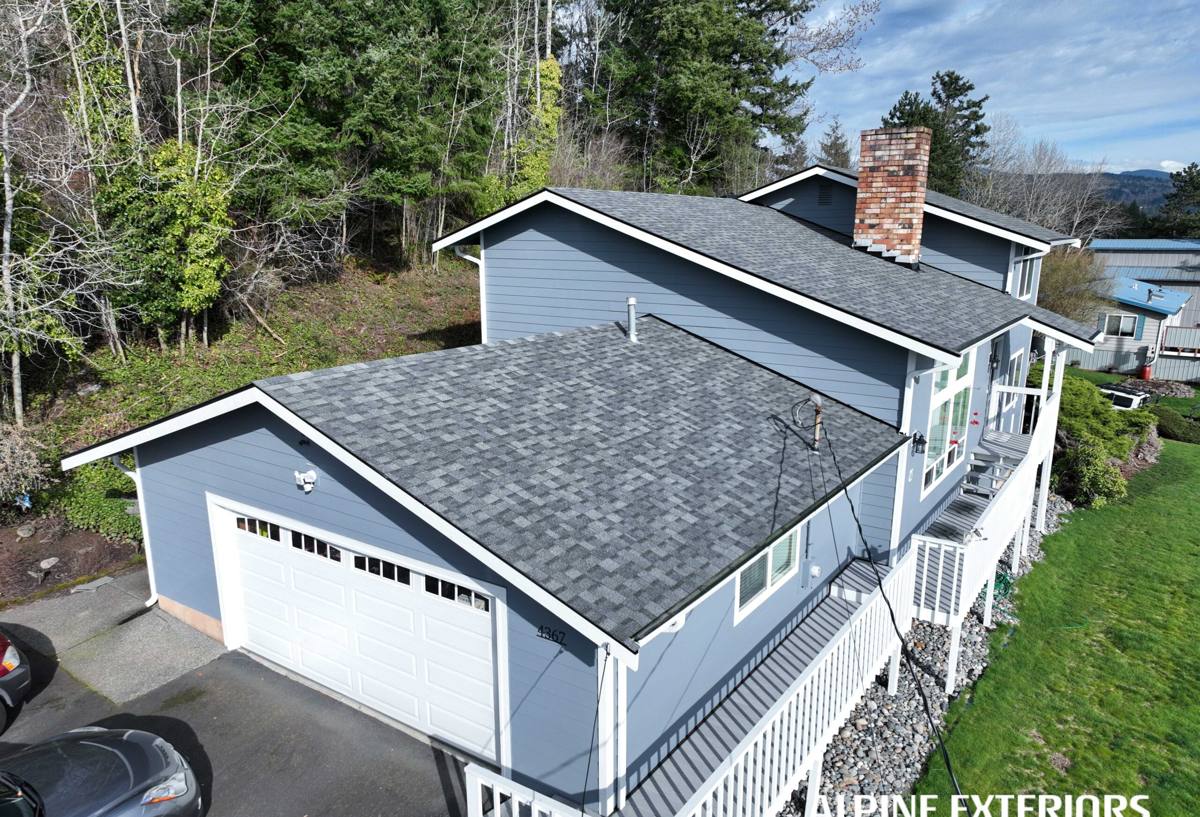
Why Metal Makes Sense for a Lot of Sehome Homes
Metal roofing isn't the right fit for every home or every budget, but it earns its higher upfront cost on properties like a lot of what you'll find in Sehome. A correctly installed metal roof sheds wind-driven rain more reliably than shingles because it relies on continuous panel runs and formed seams rather than thousands of individual overlapping pieces, each one a potential entry point. It also gives moss and algae a much harder surface to establish on, which matters directly on the shaded, north-facing roof planes that are common on sloped and tree-covered Sehome lots. And because it's a long-lifespan product, it's worth serious consideration for homeowners planning to stay put rather than sell in the next several years.
None of that means metal roofing is maintenance-free or automatically outperforms a well-built shingle roof in every situation. It means that in a climate defined by salt air, driving rain, and a long moss season, the material's strengths line up well with what actually wears a roof down here, provided the install accounts for the same climate stresses.
What Sehome's Climate Demands from a Metal Roof
Salt Air and Corrosion
Sehome isn't waterfront, but it's still well within reach of the salt-laden marine air that moves through Bellingham off the Sound. That matters more on a metal roof than on almost any other exterior system, because the entire roof surface is metal. Panel material, coating quality, and especially fastener and flashing hardware all need to be rated for coastal exposure. Mixing incompatible metals, for example an aluminum panel with steel fasteners, sets up galvanic corrosion that can pit and weaken metal at the contact point years before the roof itself would otherwise show wear. Getting this detail right the first time isn't optional in this climate; it's the difference between a roof that reaches its expected lifespan and one that develops surprise corrosion at every fastener.
Driving Rain and Seam Integrity
When rain is being pushed sideways and upward by wind rather than falling straight down, the roof's weakest points are its seams, laps, and penetrations, not the open field of the panel. This is where panel profile and fastening method matter most, and it's a big part of why we lean toward concealed-fastener systems on most Sehome roofs rather than exposed-fastener panels, which we'll cover below.
Moss, Shade, and Sloped Lots
Metal sheds moss better than asphalt or wood because it doesn't give organic growth the porous, textured surface it needs to take hold. That said, a metal roof on a heavily shaded, low-slope section can still collect debris in valleys and at flashing transitions, and trapped debris holds moisture against the panel even on a material that resists growth on its own. On Sehome's sloped, tree-covered lots, roof design and valley detailing matter as much as the panel itself.
Standing Seam vs. Exposed-Fastener Metal Panels
Not all metal roofing is built the same way, and the difference matters more in this climate than in a drier one. The two main categories homeowners run into are standing seam panels, which use raised, interlocking seams with fasteners hidden underneath, and exposed-fastener (corrugated or ribbed) panels, which are screwed directly through the panel face.
| Feature | Standing Seam | Exposed-Fastener Panels |
|---|---|---|
| Fasteners | Concealed under the seam, protected from direct weather | Exposed screws with rubber washers through the panel face |
| Wind-driven rain performance | Strong; seams interlock and shed water without relying on gaskets | Adequate when installed well, but every screw is a potential leak point over time |
| Long-term maintenance | Minimal; no gaskets to inspect or replace | Washers and gaskets degrade with age and UV exposure and eventually need attention |
| Typical lifespan | 40-70 years with correct installation | 25-40 years, often shorter if washers aren't monitored |
| Upfront cost | Higher material and labor cost | Lower upfront cost |
For most Sehome homes, especially anything on a shaded or sloped lot where a roof isn't easy to get back up on every few years, we recommend standing seam. The concealed fastener system removes the single biggest long-term maintenance liability of a metal roof in a wet, salty climate: aging gaskets under exposed screws. Exposed-fastener panels still have a place, particularly on outbuildings, garages, or budget-driven projects, but we're straightforward with clients about the maintenance trade-off before they commit.
What a Correct Metal Roof Install Involves
Deck Inspection and Prep
Metal roofing can go over an existing deck in some cases, but any soft spots, rot, or moisture damage need to be found and repaired first, the same as with any other roofing material. Skipping this step just traps existing damage under a new roof. On older Sehome homes, we often find deck-level issues that weren't visible from inside the attic until the old roofing came off.
Underlayment and Ice-and-Water Protection
A high-temperature-rated synthetic or self-adhered underlayment goes down across the full deck, with additional ice-and-water membrane at eaves, valleys, and other high-risk transitions. Metal panels can run hot in direct sun, so underlayment rated for that heat exposure matters, and the membrane underneath is the roof's real backup line of defense if wind-driven rain ever gets past the panel seams.
Panel Layout and Fastening
Panel runs, clip spacing, and expansion allowance all need to follow the manufacturer's specification for the panel profile being used. Metal expands and contracts more than shingles with temperature swings, and a clip system that doesn't allow for that movement can eventually cause oil-canning (a rippled, wavy look in the flat part of the panel) or stress fractures at fastening points over years of cycling.
Flashing at Valleys, Penetrations, and Wall Transitions
The same rule applies here as with any roofing material: most leaks start at flashing, not in the open field. Valleys, chimneys, skylights, and roof-to-wall transitions all need flashing that's integrated with the panel system and the underlayment beneath it, formed and lapped correctly rather than sealed over with caulk as an afterthought.
Fastener and Trim Compatibility
Every exposed fastener, trim piece, and flashing component needs to be metallurgically compatible with the panel material, and rated for coastal exposure. This is the detail that separates a metal roof that reaches its full lifespan from one that develops premature corrosion at dozens of small contact points.
Coatings and Finish
The coating on a metal panel does most of the work of resisting fading, chalking, and salt-air degradation over the life of the roof. Two coating families cover most of the market:
- PVDF (Kynar-type) coatings: Higher-end, factory-applied finishes with strong resistance to UV fading and chalking over decades, generally the better long-term choice in a coastal, high-UV-cycling climate like Whatcom County.
- SMP (polyester) coatings: A lower-cost coating option that holds up reasonably well but tends to fade and chalk noticeably sooner than PVDF, particularly on roof planes with heavy sun exposure.
The coating spec is usually a smaller line item than the panel profile decision, but it has an outsized effect on how the roof looks ten and twenty years down the road, especially on a home where the roof is visible from the street or from a neighboring hillside lot.
Cost Factors Worth Understanding
| Factor | What It Affects |
|---|---|
| Panel type (standing seam vs. exposed-fastener) | Upfront cost, long-term maintenance, and expected lifespan |
| Coating grade (PVDF vs. SMP) | How well the finish resists fading and chalking over decades |
| Roof pitch, valleys, and penetrations | Labor time and the amount of flashing detail required |
| Deck condition | Whether repair or a full tear-off is needed before panels go on |
| Underlayment grade | How well the roof resists wind-driven rain getting past the panels |
| Fastener and trim hardware | Long-term corrosion resistance in salt-air exposure |
Metal roofing typically costs more upfront than an asphalt shingle roof of the same size, sometimes substantially more, and the gap narrows considerably when you factor in the shingle roof's mid-life maintenance and earlier full replacement. Whether that trade makes sense depends on how long you plan to own the home and how much you value not thinking about the roof again for decades.
How Our Process Works
- In-person inspection: We walk the roof and attic ourselves and document deck condition, valley layout, and any existing flashing issues before quoting anything.
- Written estimate: A clear, itemized bid covering panel type, coating, underlayment, flashing scope, and cleanup, not a single lump-sum number.
- Panel and coating selection: We walk through standing seam versus exposed-fastener options and coating grades in plain terms, based on your roof's shade exposure and how long you plan to stay in the home.
- Scheduling around weather: We build reasonable flexibility into the timeline, since wet-season delays are a normal part of working in this region.
- Deck repair and underlayment: Any deck damage found gets repaired before underlayment and ice-and-water membrane go down.
- Panel installation and flashing: Panels, clips, and flashing go in to manufacturer specification, with particular attention at valleys, penetrations, and wall transitions.
- Final walkthrough: We review the finished roof with you in person and do a full site cleanup before calling the job done.
Why Hiring a Crew That Already Works in Sehome Matters
Metal roofing rewards experience in a way shingle roofing sometimes doesn't. Panel seams, clip spacing, and fastener compatibility all have to be right the first time, because a metal roof isn't a material you patch section by section the way you can with shingles. A crew that's already worked roofs on Sehome's sloped, tree-covered lots has a working sense of where valleys collect debris, which orientations hold moss longest, and how salt air behaves on real installed hardware over years, not just on a spec sheet. That experience shows up in the small decisions made on install day that a crew unfamiliar with this specific stretch of Bellingham might not think to make.
It also matters once the job is finished. A metal roof is meant to outlast most other exterior systems on the house, and a workmanship warranty only means something if the company behind it is still reachable in this area years and decades later.
A Practical Checklist Before You Choose a Metal Roofing Contractor
- Do they specify panel type (standing seam vs. exposed-fastener) and coating grade in writing, not just "metal roof"?
- Is fastener and trim material compatibility with the panel addressed explicitly, especially near salt air?
- Does the estimate call out underlayment type and flashing scope at valleys and penetrations?
- Do they carry current WA contractor licensing, liability insurance, and workers' compensation?
- Can they point to actual metal roofing work completed in or near Bellingham?
- Is the manufacturer's material warranty clearly separated from the contractor's own workmanship warranty?
Is Metal Roofing the Right Call for Your Sehome Home?
Metal roofing tends to make the most sense on steeper roof pitches where it sheds rain and moss especially well, on homes with heavy shade or tree cover where a low-maintenance surface is worth the premium, and for owners planning to stay in the home long enough to see the extended lifespan pay off. It makes less sense as a like-for-like swap on a tight budget where a well-built shingle roof would serve the same purpose for a lower upfront cost. We'll give you a straight answer about which direction fits your specific roof and situation, rather than steering every conversation toward the higher-cost option.
If you're weighing metal roofing for your Sehome home, we're glad to come take a look, walk the roof, and give you a straightforward written estimate you can actually compare against other bids. Use the form below to request a free, no-pressure estimate.