 Bellingham Roofing
 Asphalt Shingle Roofing Built for Fairhaven's Conditions
Fairhaven sits close to the water, tucked against Bellingham Bay with tree cover on the hillsides and a marine climate that doesn't let up for long. That combination is hard on a roof in ways that inland neighborhoods don't deal with in the same way. Salt-laden air moves in off the bay, rain comes in sideways more often than straight down, and the shade from mature trees keeps roof surfaces damp long after a storm has passed. An asphalt shingle roof installed here needs to be built with those specific conditions in mind, not just installed to a generic code minimum.
We work on roofs throughout Whatcom County, but Fairhaven's older housing stock, tree canopy, and proximity to the water make it its own case. This page covers what we look at, what we install, and why the details matter more here than they might in a drier, more exposed part of town.
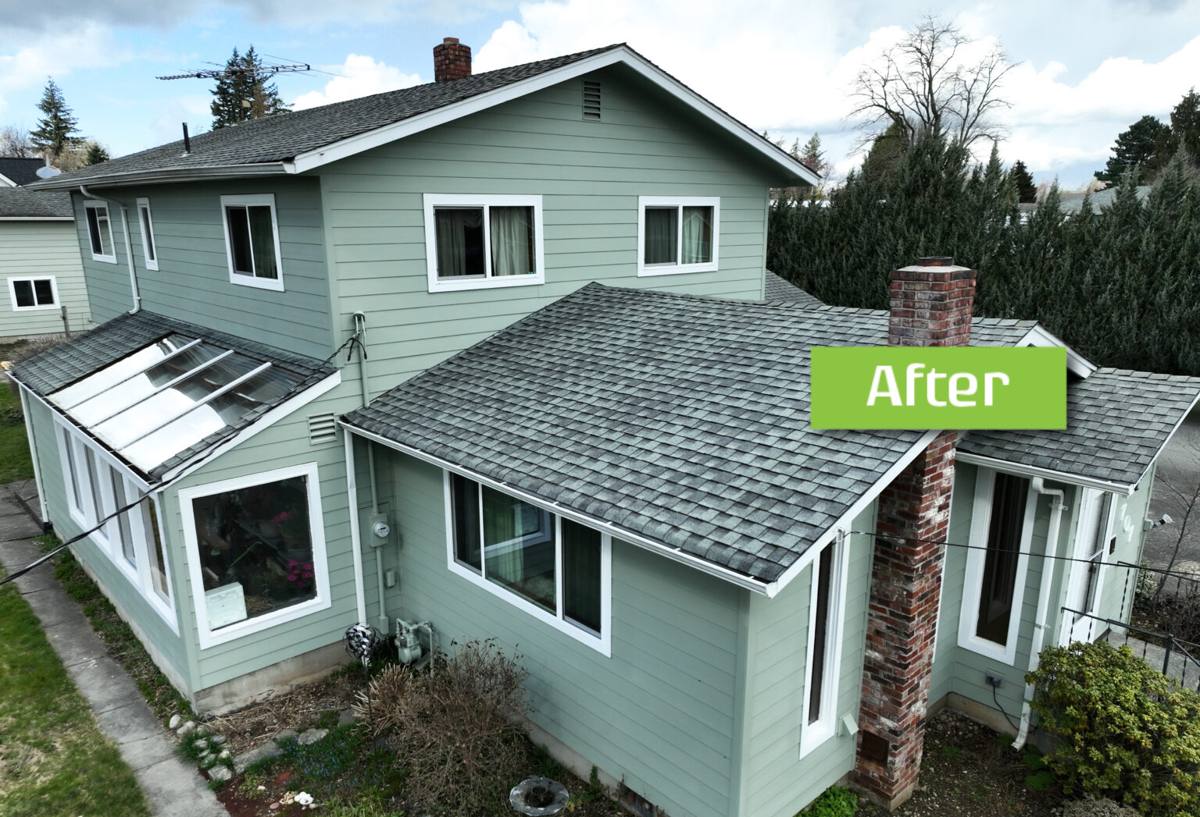
How Salt Air, Driving Rain, and Moss Season Wear Down a Roof
Salt Air and Metal Fasteners
Salt-carrying moisture accelerates corrosion on exposed metal — nail heads, flashing, and valley metal all take more of a beating near the water than they would further inland. Standard electro-galvanized fasteners can start showing rust streaks and weakening well before a roof's shingles are due for replacement. We favor corrosion-resistant fasteners and flashing on homes in this zone for that reason, not because it's required everywhere in Bellingham.
Wind-Driven Rain
Rain that comes in at an angle off the bay finds its way under shingle tabs, around chimneys, and into valleys that a straight-down rainstorm would never reach. This is less about total rainfall and more about direction and force. It means underlayment coverage, valley treatment, and sealing details around penetrations carry more weight on a Fairhaven roof than the shingle brand itself.
Moss, Shade, and a Long Wet Season
Bellingham's wet season runs long, and the tree cover common around Fairhaven keeps north-facing slopes and shaded valleys damp for extended stretches. That's exactly the environment moss and algae need to take hold. Once moss establishes itself, it holds moisture against the shingle surface, lifts tabs, and works its roots into the granule layer — which shortens the life of the roof underneath it, not just the surface appearance.
What a Correctly Built Asphalt Shingle Roof Includes
A shingle roof is a system, not a single product. The shingle itself gets most of the attention, but it's only as good as everything underneath and around it. For a Fairhaven home, we pay particular attention to:
- Underlayment: a synthetic underlayment with full coverage, properly lapped, gives the roof a real second line of defense against wind-driven rain that gets past the shingles.
- Ice and water shield at vulnerable points: valleys, eaves, and roof-to-wall transitions get self-adhering membrane, not just felt or synthetic underlayment alone.
- Drip edge at eaves and rakes: directs water off the roof edge instead of letting it wick back under the shingles or into the fascia.
- Proper nailing pattern: shingles fastened per the manufacturer's pattern and nail count, not a shortcut pattern, so wind uplift resistance is what it's rated to be.
- Flashing at every penetration and transition: chimneys, skylights, plumbing vents, and sidewalls all need step flashing or counterflashing that's actually integrated with the underlayment, not just caulked over.
- Balanced attic ventilation: intake at the eaves and exhaust at the ridge, sized to move air through the attic space and keep the underside of the roof deck dry.
Skip any one of these and the shingle warranty on paper won't match what actually happens on the roof over the next ten or fifteen years, especially in a damp, shaded neighborhood like this one.
Choosing a Shingle for Salt Air and Moss Exposure
Not every asphalt shingle performs the same way in this environment. The biggest practical difference for a Fairhaven home is whether the shingle has algae-resistant (AR) granules, which contain copper or other compounds that slow the growth of the blue-green algae responsible for the dark streaking and moss anchoring seen on older roofs. We treat AR granules as close to a requirement on shaded or bay-facing slopes here, not an upgrade.
| Shingle Type | Typical Lifespan | How It Handles This Climate |
|---|---|---|
| 3-tab (standard) | 15–20 years | Lower wind rating and thinner profile; moss and algae take hold faster without AR granules |
| Architectural / dimensional | 25–30 years | Heavier mat, better wind resistance, and typically available with AR granules — our standard recommendation here |
| Premium / designer | 30+ years | Thickest profile and longest warranty; worth it on prominent street-facing roofs, less necessary on rear slopes |
We don't push the most expensive option on every job. On a rear or side slope that's hard to see and heavily shaded, a solid architectural shingle with AR granules and correct ventilation will outperform a premium shingle installed without attention to moss and moisture control.
A Note on Product Loyalty
We install several major manufacturers' shingle lines and choose based on what fits the home, the budget, and the exposure — not a single preferred brand. When we steer a homeowner away from a particular product line, it's because of how it handles moisture, algae growth, or installation sensitivity in this specific climate, not because the product is defective. Every major shingle line has trade-offs; our job is to match the right one to the roof in front of us.
Our Process, Start to Finish
- On-site inspection. We walk the roof (or use a drone/binocular inspection where the pitch or access doesn't allow safe walking), check the attic for ventilation and moisture signs, and look at flashing, valleys, and any moss or algae presence.
- Written estimate. A clear scope of work — tear-off vs. overlay, underlayment type, flashing replacement, ventilation changes — with pricing broken out so you know what you're paying for.
- Tear-off and deck inspection. Old roofing comes off down to the deck, and we check the sheathing for soft spots or rot before anything new goes down. Damaged decking gets replaced, not covered over.
- Underlayment and flashing installation. Ice and water shield at vulnerable areas, full underlayment coverage, and new flashing at penetrations and transitions.
- Shingle installation. Installed to the manufacturer's nailing and exposure specifications so the wind and weather rating is real, not nominal.
- Ventilation check and adjustment. Intake and exhaust balanced for the attic size, adding or correcting vents where the existing setup is undersized.
- Final walkthrough and cleanup. Site swept for debris and nails, and we go over the finished roof with you before calling the job done.
Moss and Algae: What Ongoing Care Actually Requires
Even a correctly installed roof in this neighborhood benefits from some routine attention. Moss and algae aren't a sign of a bad installation — they're a normal part of owning a roof under tree cover near the water — but ignoring them shortens the roof's life. Here's what we recommend homeowners actually stay on top of:
- Keep overhanging branches trimmed back where reasonable, since less shade and debris means the roof dries out faster after rain.
- Clear gutters and valleys of needles and leaf litter at least twice a year — clogged valleys hold water against the shingle edge.
- Watch for dark streaking or green-black patches, especially on north-facing slopes, and address it early rather than letting moss establish a root system.
- Never pressure-wash a shingle roof — it strips granules and shortens shingle life faster than the moss it's meant to remove.
- If moss is present, low-pressure treatment with a roof-safe cleaner and gentle removal is the right approach, ideally done by someone who won't lift or crack shingles in the process.
- Have the attic checked periodically for musty odors, condensation, or daylight through the roof deck — early signs of a ventilation or moisture problem.
Ventilation and Moisture: The Part Homeowners Don't See
A shingle roof's biggest enemy in a climate like this often isn't the weather hitting the top of the roof — it's moisture building up underneath it. Without enough intake at the eaves and exhaust at the ridge, warm moist air from the living space gets trapped in the attic, condenses on the underside of the cold roof deck, and creates the conditions for rot and mold that no shingle warranty covers. In a neighborhood with as much shade and ambient moisture as Fairhaven, we treat ventilation as part of the roofing job, not a separate concern. When we quote a replacement, we look at the existing intake and exhaust balance and tell you honestly if it needs correcting, whether that means additional soffit vents, a ridge vent upgrade, or clearing insulation that's blocking airflow at the eaves.
Repair or Replace? How We Evaluate an Existing Roof
Not every roof with moss or a few damaged shingles needs to be torn off. We look at the age of the roof, the extent of granule loss, how much of the deck (if any) has been compromised, and whether the damage is isolated or spread across multiple slopes. A roof that's ten years into a thirty-year architectural shingle with isolated flashing failure is usually a repair. A roof nearing the end of its rated life with widespread granule loss, curling tabs, and moss established across shaded slopes is usually past the point where repair makes financial sense. We'll tell you which situation you're in and why, rather than defaulting to a full replacement recommendation on every visit.
Why a Crew That Already Works in Fairhaven Makes a Difference
A roofing crew that regularly works this part of Bellingham already understands the practical realities of the neighborhood: narrow streets and limited staging space on some blocks, older homes with roof framing and venting that doesn't match modern code minimums, mature trees that require extra care during tear-off and debris removal, and the specific moss and algae pressure that comes with proximity to the water and tree cover. That local familiarity shows up in small but real ways — knowing to check attic ventilation more carefully on an older Fairhaven home, knowing which slopes are going to need AR shingles even if the homeowner didn't ask, and being realistic about how weather windows work on this side of Whatcom County when scheduling a tear-off.
We're a Bellingham-based crew, and Fairhaven is part of our regular service area, not a stretch job we take occasionally. That matters when it comes to warranty follow-up, scheduling a maintenance check, or getting someone back out quickly if a storm causes damage.
What Affects Cost on a Fairhaven Shingle Roof
Every roof is priced based on its own specifics, but a few factors consistently move the number on jobs in this area:
| Factor | Why It Matters Here |
|---|---|
| Roof pitch and access | Steeper roofs and limited staging space on narrower lots slow the work and affect safety equipment needs |
| Tear-off vs. overlay | A full tear-off costs more up front but is usually the right call once moss or moisture has affected the deck |
| Deck repair | Rot found under old shingles, more common on shaded, damp slopes, adds material and labor to replace sheathing |
| Shingle grade | 3-tab, architectural, and premium lines carry different material costs and warranty lengths |
| Ventilation upgrades | Correcting undersized intake or exhaust adds a modest cost but protects the investment long-term |
| Flashing and valley scope | Homes with multiple valleys, dormers, or chimneys require more custom flashing work |
We provide itemized estimates so you can see where the cost is coming from and make informed decisions about where to invest versus where to keep things simple.
Let's Look at Your Roof
If you're dealing with moss, granule loss, a leak, or you're just past due for a roof inspection, we're happy to come take a look. There's no obligation and no pressure — just a straightforward assessment of what your roof needs and what it would cost to do it right. Use the form below to request a free estimate for your Fairhaven home.