 Bellingham Roofing
 Fairhaven Takes Weather From Two Directions
Fairhaven sits close enough to Bellingham Bay that roofs here deal with two separate problems most inland neighborhoods don't face together. There's the marine air rolling off the water, carrying salt that slowly works on metal fasteners, flashing, and exposed nail heads. And there's the wind-driven rain that comes through in winter storms, which doesn't just fall straight down — it gets pushed sideways under shingle tabs, around chimney flashing, and into any gap that a calmer rain would never find. Add a moss season that runs long in this part of Whatcom County, and you've got a roof that's under more or less constant low-grade pressure even when nothing dramatic is happening.
Storm damage repair in a neighborhood like this isn't just about patching whatever broke during the last windstorm. It's about understanding that the same roof took months of salt exposure and moss growth leading up to that storm, and both of those things affect how the roof failed and what it needs to hold up going forward.
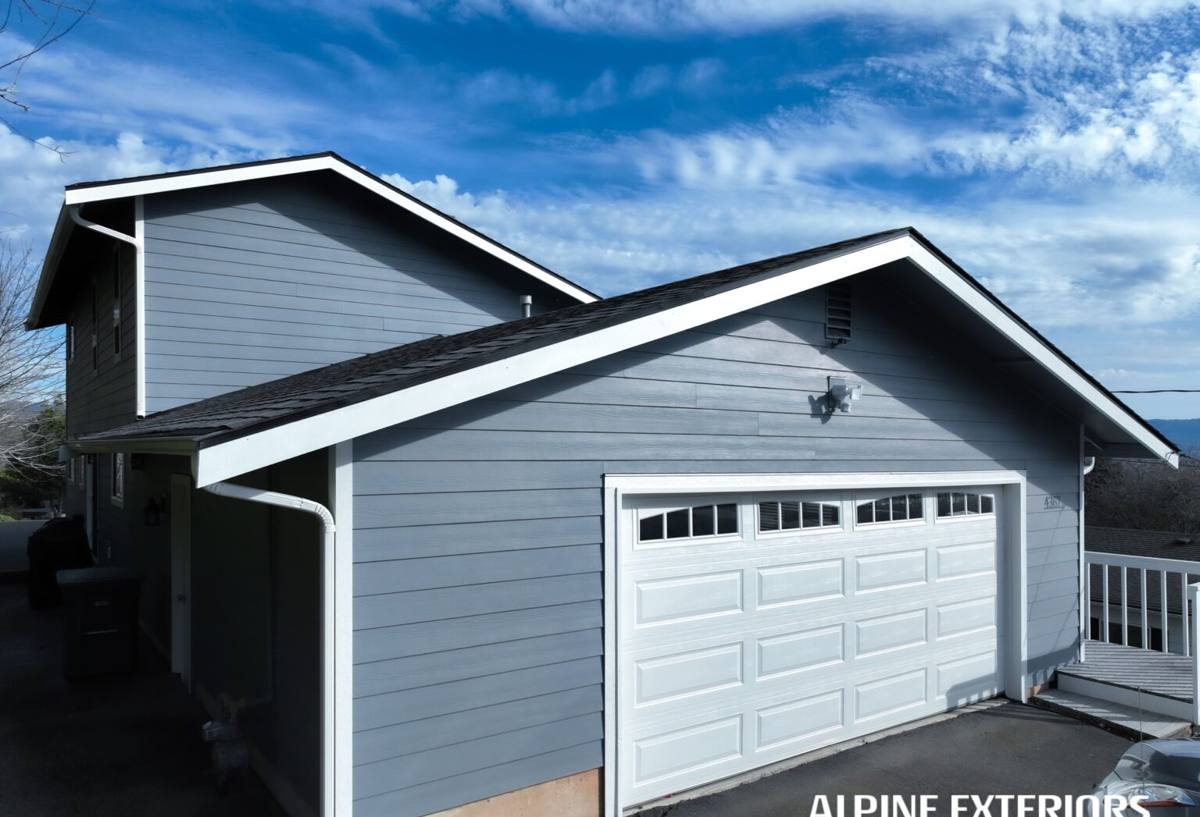
What Storm Damage Actually Looks Like
Homeowners often picture storm damage as a dramatic hole or a tree branch through the roof. Most of what we actually find after a Bellingham-area windstorm is quieter than that, and it's often worse precisely because it's easy to miss.
Wind Damage
Sustained wind and gusts lift shingle edges and tabs, break the seal strip underneath, and sometimes tear shingles off outright. Even when nothing is visibly missing, a shingle that's been lifted and re-seated by the wind may no longer be sealed. It'll sit there looking fine until the next driving rain pushes water underneath it.
Wind-Driven Rain
This is the one that catches people off guard. Water doesn't need a hole to get into a house — it needs a path. Rain pushed sideways by wind can work its way under flashing, around vent boots, and through any seam that isn't fully sealed. The first sign is often a stain on an interior ceiling weeks after the storm that caused it.
Impact Damage
Branches, debris, and occasionally hail can crack or puncture shingles, dent metal flashing, or knock granules loose. Granule loss doesn't look dramatic, but it's the roof's UV and weather protection layer, and once it's gone from a section of shingle, that section ages faster than the rest of the roof.
Moss-Related Damage That Storms Expose
This one's specific to our climate. Moss holds moisture against the roof surface year-round, and over time it lifts shingle edges and traps water against the deck. A storm often doesn't cause this damage — it just reveals it, when a section of roof that was already compromised by moss finally gives way under wind and rain that a healthy roof would have shrugged off.
Our Storm Damage Repair Process
We keep this process straightforward because storm damage is stressful enough without a confusing process on top of it.
1. Fast Response and Temporary Protection
If a roof is actively leaking or has exposed decking, the first priority is keeping water out — tarping, temporary flashing, whatever stops the bleeding until a permanent repair can happen. This step isn't the fix; it's damage control.
2. Full Roof Inspection, Not Just the Obvious Spot
We check the whole roof, not just the area you're worried about. Wind and rain damage rarely stays in one tidy spot, and a thorough inspection catches lifted shingles, compromised flashing, and moss-related soft spots that would otherwise turn into next winter's emergency call.
3. A Written, Plain-Language Assessment
You get a clear explanation of what's damaged, what's original wear and tear, and what we recommend — with photos and specifics, not vague line items. If a repair is enough, we say so. If the damage points to something bigger, we explain why.
4. The Repair Itself
Matching shingles as closely as possible, replacing damaged flashing rather than just re-sealing it, and re-securing anything the wind lifted. We don't consider a repair finished until the surrounding area is checked too — a patch job next to an unaddressed weak spot just means a return visit.
5. Follow-Up
We check our own work after the next significant rain where possible, especially on repairs made in a hurry to stop an active leak.
Repair or Replace? How We Actually Decide
This is the question every homeowner wants answered honestly, and the honest answer is that it depends on more than just what the storm did. It depends on what the roof was like before the storm.
| Factor | Points Toward Repair | Points Toward Replacement |
|---|---|---|
| Roof age | Under 12-15 years, in otherwise good condition | Nearing or past expected lifespan for its material |
| Extent of damage | Localized to one section or a handful of shingles | Spread across multiple slopes or roof faces |
| Moss and moisture history | Minimal moss, deck sound where checked | Long-standing moss coverage, soft or damp decking found |
| Underlying materials | Underlayment and decking intact | Underlayment failing or decking damaged from prior leaks |
| Number of prior repairs | First real storm issue on this roof | Pattern of recurring leaks or patches over the years |
Our default position is to repair when a repair will genuinely hold up. Replacement is a bigger cost and a bigger disruption, and we don't push it as the answer to every storm call. But we'll also tell you plainly when a repair is just delaying an inevitable, more expensive failure — that's a disservice to you if we don't.
Materials That Make Sense for a Marine-Exposed Roof
What we use for a Fairhaven storm repair isn't identical to what we'd use somewhere drier and further from the water. A few things we weigh specifically because of the local conditions:
- Fastener and flashing metal: salt air accelerates corrosion on standard fasteners and flashing over time, so we favor corrosion-resistant options in exposed, wind-loaded areas.
- Underlayment quality: given how often wind-driven rain pushes water past the shingle layer here, a synthetic or self-adhering underlayment at vulnerable areas (valleys, eaves, around penetrations) is worth the upgrade over the minimum.
- Shingle sealing: we pay close attention to proper seal-strip adhesion during repairs, since a poorly sealed shingle is exactly what the next windstorm will find first.
- Ventilation: a roof that traps moisture underneath is more vulnerable to both moss and deck rot, so storm repairs are also a chance to check that ventilation is actually doing its job.
None of this is exotic material — it's standard, proven roofing product, chosen and installed with this specific climate in mind rather than a one-size-fits-all approach.
Working With Insurance on Storm Claims
Most storm damage repairs in this area involve a homeowner's insurance claim, and the process goes more smoothly when the documentation is solid from the start.
We photograph and document damage thoroughly during the inspection, before any repair work begins, so you have a clear record for your adjuster. We're happy to walk an adjuster through what we found on-site and explain our assessment directly. What we won't do is inflate a scope of work to chase a bigger payout, or downplay damage to make a claim easier to close — our assessment reflects what the roof actually needs, whether that helps or complicates the claim.
Reducing Storm Damage Before the Next One Hits
A roof that's already stressed by moss and trapped moisture takes storm damage worse than a well-maintained one. A few things worth doing on a regular basis, especially heading into fall storm season:
- Keep gutters and downspouts clear so wind-driven rain has somewhere to go instead of backing up under the roof edge
- Have moss growth addressed before it spreads and lifts shingle edges — waiting until it's thick makes the eventual cleanup harder on the roofing material
- Trim back branches that overhang the roof, since they're both an impact risk and a source of debris that traps moisture
- Check attic ventilation periodically — poor airflow contributes to the kind of moisture buildup that weakens a roof from underneath
- Have flashing around chimneys, skylights, and vent penetrations checked every couple of years, since these are the first places wind-driven rain finds a way in
- After any significant windstorm, do a visual check from the ground for missing, lifted, or displaced shingles rather than waiting for a leak to show up inside
None of this prevents storms from happening, but it narrows the gap between "storm caused minor, repairable damage" and "storm exposed a problem that had been building for years."
Why It Matters That We Already Work in Fairhaven
A crew that repairs roofs across Whatcom County generally, but works Fairhaven specifically and regularly, has a practical advantage: we know what the salt exposure and moss patterns in this part of Bellingham actually do to a roof over time, rather than treating every job as a blank slate. That shows up in small ways — which areas of a roof tend to take the brunt of wind-driven rain given the local exposure, which materials hold up and which need extra attention near the water, and how to spot moss-related weakness before it becomes a storm-triggered failure.
It also means we're not guessing at logistics. We can get a tarp on a Fairhaven roof quickly when a leak is active, and we're not learning the neighborhood's access and parking realities on the day of your emergency call.
Get a Straightforward Look at Your Roof
If a recent storm has you wondering whether your roof needs attention — or you'd rather get ahead of the next one — we're glad to take a look. The estimate is free, there's no pressure attached to it, and you'll get a plain-language explanation of what we find, whether that means a simple repair, a bigger fix, or just a clean bill of health. Fill out the form below to get started.