 Bellingham Roofing
 Metal Roofing Built for Fairhaven's Bay-Side Climate
Fairhaven sits close to Bellingham Bay, and homes in this part of Whatcom County take a specific combination of weather that inland roofs never have to deal with. Salt-laden air off the water, long stretches of wind-driven rain, and heavy tree cover that keeps roofs shaded and damp for months at a time all add up to conditions that punish the wrong roofing choice and reward the right one. Metal roofing, installed correctly, holds up well against this combination. The catch is that "installed correctly" covers a lot of ground — panel choice, fastener selection, flashing detail, and coating all matter more here than they would on a dry-climate roof. This page walks through what a metal roof needs to do in Fairhaven specifically, and how we handle each part of that job.
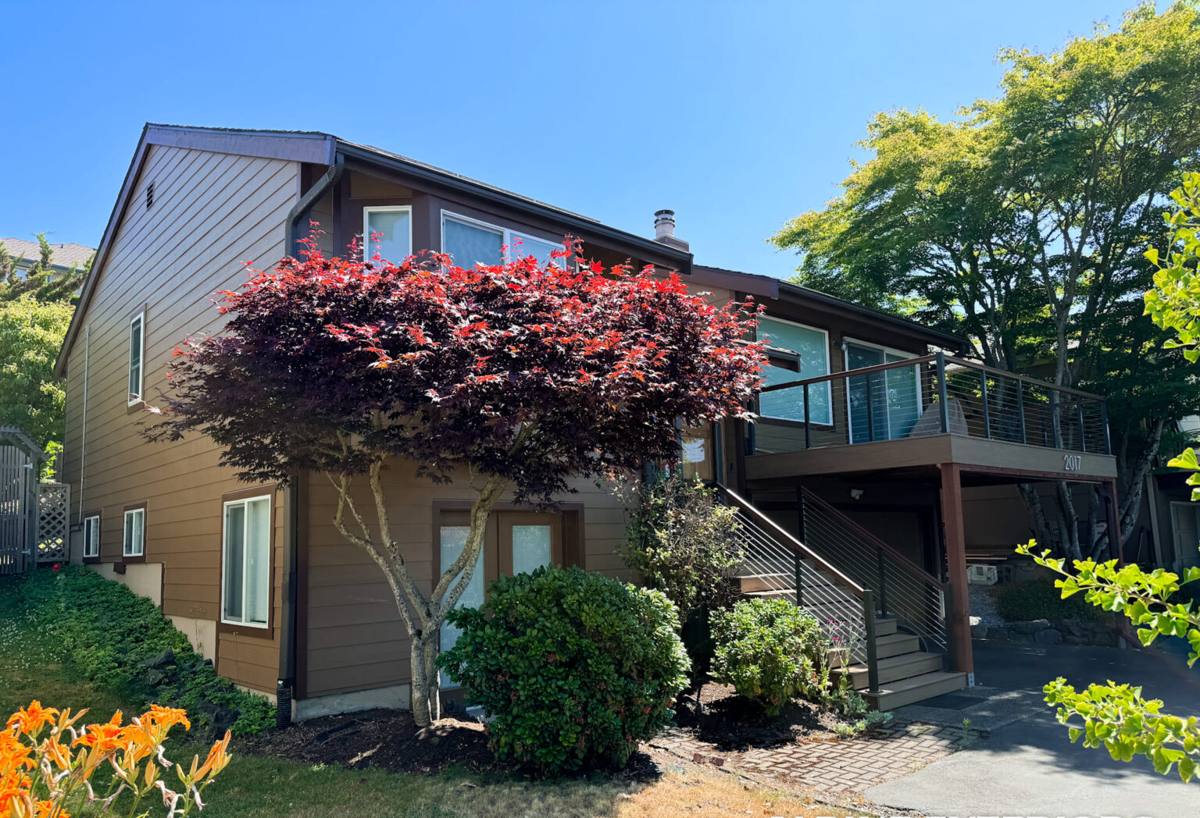
What Fairhaven's Climate Actually Does to a Roof
Salt Air and Corrosion
Proximity to Bellingham Bay means airborne salt is a real factor here in a way it isn't a few miles inland. Salt air accelerates corrosion on bare or poorly coated metal, attacks exposed fasteners first, and works fastest at cut edges, scratches, and anywhere the protective coating has been compromised during installation. This doesn't mean metal roofing is a bad fit near the water — it's one of the most corrosion-resistant materials available when the coating system and fasteners are matched to the exposure. It does mean that cutting corners on hardware or finish is a mistake that shows up years earlier here than it would elsewhere.
Driving Rain and Wind
Storms coming off the water tend to push rain sideways, not straight down. That matters because a roof that would shed water fine in a calm, vertical downpour can still take on water at seams, laps, and penetrations when the wind is driving rain uphill under a panel edge or through an undersized gap. Fairhaven's exposure to bay winds makes seam design, panel overlap, and edge detailing more important than they'd be on a sheltered inland lot.
Moss Season
Whatcom County's wet season runs long, and Fairhaven's mature tree canopy keeps a lot of roofs shaded and slow to dry out. That combination is ideal for moss, and moss holds moisture directly against roofing material for extended periods. On asphalt shingles that moisture retention breaks down granules and shortens roof life. On a metal roof, moss is more of a maintenance nuisance than a structural threat, since the material itself doesn't absorb water — but moss buildup in valleys and at panel laps can still trap debris and interfere with drainage if it's never cleared.
Metal Panel Options for Fairhaven Homes
Not all metal roofing is the same product wearing different colors. The panel style and how it's fastened make a real difference in how the roof performs against salt air and driving rain specifically.
| Panel Type | How It's Fastened | Best Fit For |
|---|---|---|
| Standing seam | Concealed clips, no exposed fasteners on the field of the roof | Bay-exposed homes, longer-term low-maintenance goals |
| Exposed fastener panel | Screws driven through the panel face into decking or purlins | Budget-conscious projects, outbuildings, lower-exposure roof planes |
| Metal shingle/shake profile | Interlocking panels designed to mimic shingle or shake appearance | Homes where a traditional look is preferred over a visible metal panel |
Standing seam is our default recommendation for homes with direct bay exposure or a lot of roof facing prevailing weather. Because the fasteners are hidden under the seam rather than punched through the panel face, there are far fewer points where salt air and driving rain can find a way in over time. Exposed fastener panels cost less up front and perform fine on many roofs, but every screw is a potential maintenance point — the rubber washer under each fastener head degrades faster in salt air and UV exposure than the panel itself, and a missed or loosening fastener is exactly the kind of small problem that turns into a leak during a windy winter storm.
Coatings and Finish
For homes closer to the water, we push harder on coating quality than we would inland. A quality paint or coating system (Kynar-type PVDF finishes are the industry standard for coastal durability) resists chalking, fading, and coating breakdown far longer than a basic polyester finish. We also pay attention to the base metal — galvalume and properly coated steel both perform well, but the coating is what's actually standing between the metal and the salt air, so it's not the place to economize on a bay-adjacent roof.
What a Correct Installation Involves
The panel is the visible part of a metal roof, but most of what determines whether it stays watertight in Fairhaven's weather happens underneath and at the edges.
- A synthetic or self-adhered underlayment rated for the panel type, run continuously with proper laps — not a patchwork of remnants
- Ice-and-water or self-adhered membrane at valleys, eaves, and any low-slope transitions where wind-driven rain is most likely to back up under panels
- Fasteners and clips matched to the coating and base metal, so dissimilar metals aren't corroding each other at every contact point
- Closed or vented ridge and eave closures sized correctly for the panel profile, so wind can't drive rain up under the panel edge
- Flashing at every penetration — chimneys, vents, skylights — formed and sealed rather than caulked over as an afterthought
- Adequate attic or roof-deck ventilation, since a metal roof over a poorly ventilated attic can trap moisture underneath just as easily as any other roofing type
Any one of these done wrong won't necessarily show up on day one. It shows up two or three wet seasons in, as a slow leak at a valley or a corroded fastener that finally lets go in a windstorm. That's the gap between a metal roof that looks right from the street and one that's actually built to hold up here.
Metal Roofing and Fairhaven's Older Homes
A lot of homes in and around Fairhaven have real age and character to them — craftsman bungalows, older cottages, and houses with rooflines and trim that predate most modern roofing products. Homeowners in this position often assume metal roofing means a shiny, obviously industrial-looking panel that clashes with an older house. That's not the case anymore. Standing seam comes in a wide range of low-gloss, muted colors that read as traditional rather than modern from the street, and metal shingle profiles are specifically designed to echo the look of shake or slate roofing without actually being either.
If your home is in a part of Fairhaven with any kind of neighborhood design expectations, it's worth raising that early in the estimate conversation, before panel color and profile are locked in. We'd rather have that conversation up front than have a homeowner fall in love with a finish that doesn't fit the house or the block.
Our Process, Start to Finish
The process for a Fairhaven metal roof isn't fundamentally different from any other roof we install, but a few steps get extra attention because of the site conditions here.
- On-site inspection and estimate. We look at the existing roof, decking condition, roof pitch and complexity, and how exposed the roof planes are to bay wind and salt air.
- Panel and finish selection. We walk through standing seam versus exposed fastener versus shingle-profile options based on your budget, the home's style, and how exposed the site is.
- Tear-off or overlay decision. Metal can sometimes go over an existing roof in the right conditions, but on older Fairhaven homes we often recommend a full tear-off so we can check the decking underneath — moss and moisture retention over the years can hide deck damage that needs to be addressed before new roofing goes on.
- Installation. Underlayment, flashing, panels, and closures installed in that order, with attention to every seam and penetration detailed above.
- Cleanup and walkthrough. We clear the site of debris and fasteners and walk the finished roof with you before calling the job done.
Maintenance in a Salt-Air, Moss-Prone Environment
A properly installed metal roof is low-maintenance, not no-maintenance — especially this close to the water and under tree cover. A little attention once or twice a year goes a long way toward getting the full lifespan out of the roof.
- Rinse accumulated salt spray and airborne grime off the roof periodically, especially on panels facing the water directly
- Clear moss, needles, and leaf debris out of valleys and off panel laps before they hold moisture against the surface
- Trim back tree limbs that overhang the roof, both to reduce moss growth and to prevent limb damage to panels during storms
- Check exposed fasteners (on exposed-fastener panel roofs) for loosening or washer degradation once a year
- Inspect flashing around chimneys, vents, and skylights annually, since these are the most common points where a leak actually starts
Cost Factors for Metal Roofing in Fairhaven
Every roof is different, and we don't quote pricing without seeing the actual roof, but these are the factors that move the number most on Fairhaven jobs specifically.
| Factor | Why It Matters Here |
|---|---|
| Panel type | Standing seam costs more up front than exposed fastener but needs less long-term maintenance in salt air |
| Roof pitch and complexity | Steeper or more cut-up rooflines take longer to flash correctly and use more material |
| Tear-off vs. overlay | Older homes with hidden decking damage from years of moss and moisture often need a full tear-off |
| Coating/finish grade | A higher-grade coating costs more but resists salt-air fading and corrosion far longer near the bay |
| Site access | Tree cover and tighter older-neighborhood lots can affect staging and labor time |
Why Hire a Crew That Already Works in Fairhaven
A lot of roofing advice and manufacturer literature is written for a generic climate that doesn't really exist anywhere. What matters on your roof is how a given panel, fastener, and coating combination actually holds up under Bellingham Bay's specific mix of salt air, sideways rain, and long wet moss season — and that's something you learn by working on roofs in this exact environment, not by reading a spec sheet. A crew that already works in Fairhaven knows which details matter most here, has a feel for the older framing and decking common in the neighborhood's homes, and isn't guessing at how a product will perform three winters from now. That local track record is worth asking about directly when you're comparing contractors.
If you're weighing metal roofing for a home in Fairhaven, we're glad to come take a look and walk through your options in plain terms — no pressure, no hard sell. Use the form below to request a free estimate.