 Bellingham Roofing
 Building Decks for Fairhaven's Climate
Fairhaven sits close to Bellingham Bay, tucked under heavy tree cover on hillside and waterfront-adjacent lots that don't behave like decks built inland. A deck here deals with three things at once: salt-laden air rolling off the water, long stretches of driving rain through the fall and winter, and shade from mature evergreens that keeps surfaces damp and feeds moss growth almost year-round. None of that makes a deck impossible to build well. It just means the design and material choices matter more here than they would on a dry, open lot in a different climate.
We build and repair decks throughout Bellingham and Whatcom County, and Fairhaven's older housing stock, tree canopy, and proximity to the water make it its own case. This page covers what we look for on a Fairhaven property, what a correctly built deck involves in this environment, and how we run the job from first visit to final walkthrough.
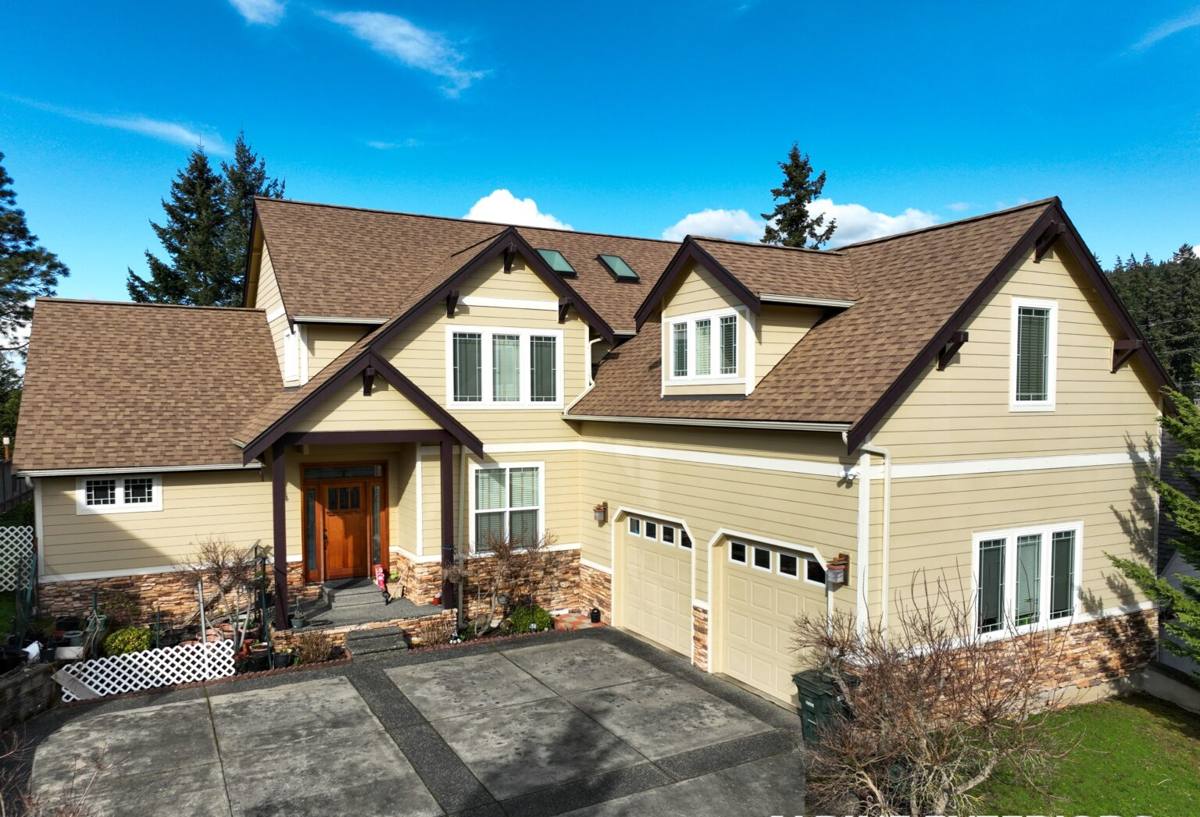
What Fairhaven Properties Typically Need From a Deck
A lot of Fairhaven homes were built decades ago, often on sloped lots with mature landscaping already established around the foundation. That combination shapes almost every decision on a deck project in this neighborhood.
Ledger Attachment on Older Homes
Where a deck attaches to the house is the single most important structural connection on the whole project, and it's also the spot most likely to fail quietly over years. On older siding and older framing, we check what's actually behind the wall before we lag-bolt anything to it — not just what the exterior looks like. Flashing that directs water away from the ledger, rather than trapping it against the house, is non-negotiable in a climate that sees this much sustained rain.
Drainage and Slope
Hillside lots are common in and around Fairhaven, and they change how a deck needs to be framed and supported. Footings need to sit on stable, properly prepared ground, and the deck surface itself needs a slight pitch away from the house so water sheets off instead of pooling. Standing water is what turns a deck's slow moss problem into a fast rot problem.
Shade and Airflow
Tree cover that makes a Fairhaven yard pleasant in July is the same tree cover that keeps a deck wet and shaded in November. Board spacing, joist spacing, and gaps around the perimeter all affect how quickly a deck surface dries out after rain. A deck designed without airflow in mind will grow moss and algae faster than the same deck built a few miles away in full sun.
Choosing Decking Material for Salt Air and Moss
There's no single "best" decking material — there's a best material for this lot, this budget, and this level of upkeep the homeowner actually wants to do. We lay out the honest trade-offs rather than pushing one product.
| Material | Performance in Salt Air / Shade | Maintenance | General Cost Position |
|---|---|---|---|
| Pressure-treated wood | Holds up fine if sealed and maintained; more prone to surface graying and moss without upkeep | Annual cleaning and periodic re-sealing | Lowest upfront cost |
| Cedar | Naturally rot- and insect-resistant; still needs protection from prolonged damp shade | Regular cleaning, oil or sealant every 1-2 years | Mid-range |
| Composite decking | Doesn't absorb moisture like wood, but can still grow surface algae/moss in deep shade and needs periodic washing | Low — occasional washing, no sealing or staining | Higher upfront, lower long-term labor |
| PVC decking | Fully resists moisture absorption; best option for the shadiest, dampest sections of a lot | Lowest — soap and water cleaning only | Highest upfront cost |
For a shaded Fairhaven lot close to the water, we often recommend composite or PVC decking for the parts of a deck that stay wet longest, and reserve real wood for sections that get more sun and airflow — or for homeowners who specifically want the look and feel of natural wood and are willing to keep up with it. Either way, it's your call once you understand what each option actually asks of you over time.
Framing and Fasteners: The Part You Don't See
A deck's surface material gets all the attention, but salt air is hardest on the parts underneath — the joists, hardware, and fasteners. This is where a lot of decks fail early, and it's rarely visible until something gives way.
- Stainless steel or heavy hot-dip galvanized fasteners, rated for coastal/salt exposure — not standard exterior-grade hardware
- Joist tape or flashing on top of every joist to keep fasteners from sitting in trapped moisture
- Corrosion-resistant joist hangers and structural connectors matched to the fastener type, to avoid galvanic reaction between dissimilar metals
- Pressure-treated or naturally rot-resistant framing lumber rated for ground contact where posts meet footings
- Proper footing depth and bearing for Whatcom County soil and frost conditions
None of this is visible once the decking boards go down, which is exactly why it matters that it's done right the first time. Cutting corners here doesn't show up as a problem for a few years — and by then it's a much bigger repair than it would have been to do correctly from the start.
Railings, Stairs, and Code Requirements
Most decks attached to a home, and any deck above a certain height, need a permit through the City of Bellingham or Whatcom County depending on the property's location. Guardrail height, baluster spacing, and stair rise-and-run all have to meet current code — this isn't optional detailing, it's what keeps the deck safe and keeps it from becoming a problem when you go to sell the house. We handle the permitting and inspection process as part of the build rather than leaving it for the homeowner to sort out.
On sloped Fairhaven lots, stairs and landings also need to account for grade change and footing placement on uneven ground — another reason a generic deck plan doesn't always translate directly to a specific lot here.
Our Process for a Fairhaven Deck Project
1. On-Site Visit
We walk the actual lot — slope, shade pattern, existing structure, and what the ledger attachment point looks like — before we talk materials or design in detail. A deck plan that ignores site conditions is a plan for problems later.
2. Design and Material Selection
We go through decking, railing, and structural options together, with honest pros and cons for your specific spot on the lot, your budget, and how much maintenance you actually want to do.
3. Permitting
We prepare and submit what's needed for local permitting and schedule required inspections, so the finished deck is fully compliant — not something that surfaces as an issue at resale.
4. Construction
Footings, framing, flashing, decking, and railings — built in that order, with the structural work inspected before it's covered up by the finished surface.
5. Final Walkthrough
We go over the finished deck together, including what maintenance it needs and roughly when, so there are no surprises in year two or three.
Maintenance in a Salt Air, Moss-Prone Climate
Every deck material needs some upkeep in this climate — the honest question is how much and how often. A basic seasonal routine goes a long way toward protecting the investment:
- Sweep debris and standing needles/leaves off the surface regularly, especially under tree cover
- Wash the deck surface at least once or twice a year to remove algae and moss before it takes hold
- Check and clear gaps between boards so water and debris don't build up and trap moisture
- Inspect the ledger flashing and house connection point annually for gaps or wear
- Re-seal or re-stain wood decking on the schedule the product actually calls for, not just when it looks faded
- Check railing posts and stair connections for movement or soft spots, particularly after winter storms
A deck that gets this kind of basic attention will outlast one that doesn't, regardless of which material it's built from.
Why a Local Bellingham Crew Matters Here
Fairhaven's combination of shade, slope, and salt air isn't the same set of conditions you'd design for on a dry inland lot, and it's not something you learn from a general contractor manual. It's something you learn by building decks in this specific part of Whatcom County, seeing how they hold up over a few Bellingham winters, and adjusting. We already know which fastener grades actually hold up near the bay, which framing details keep moss from taking over a shaded deck, and what the local permitting process expects — because we've done the work here, not somewhere with a different climate entirely.
If you're planning a new deck or replacing one that's showing its age, we're happy to come take a look and talk through honest options for your property — no pressure, no obligation. Use the form below to request a free estimate.