 Bellingham Roofing
 Decking Built for Fairhaven's Marine Climate
Fairhaven sits close enough to the water that salt air, wind-driven rain, and shade from mature trees all show up in how a deck ages here. A deck built the same way you'd build one in a dry inland neighborhood will not hold up the same way in Fairhaven. Board selection, fastening, and especially drainage all need to account for moisture that lingers longer and surfaces that stay damp and shaded for weeks at a stretch during our wet months.
We install composite decking as a dedicated service for Fairhaven homeowners who want a deck that resists moss, doesn't warp or rot, and still looks good after five or ten Whatcom County winters. This page covers what local conditions demand, what a correct installation actually involves, and how we handle the job from estimate to finished deck.
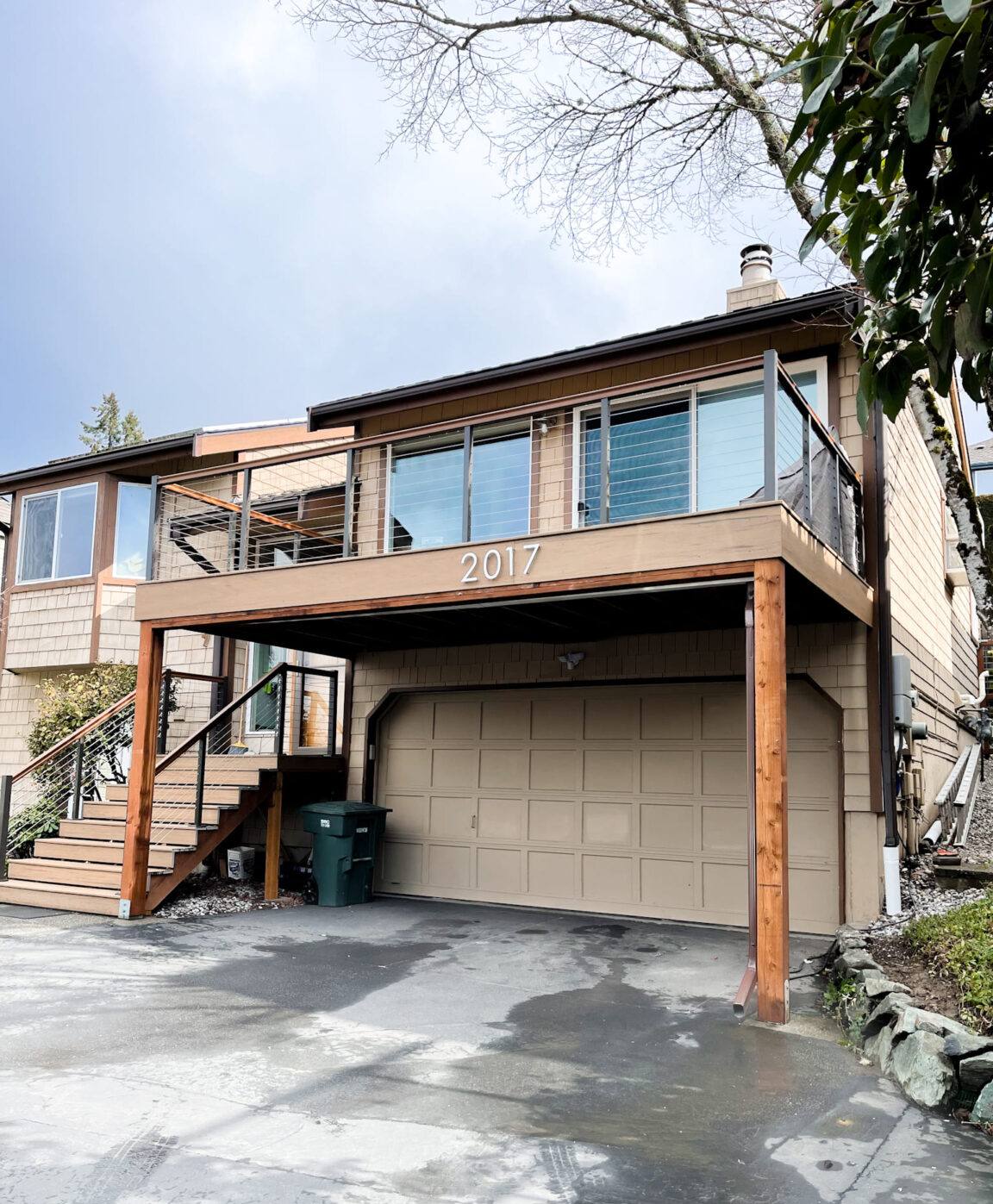
What Salt Air, Rain, and Moss Do to a Deck Over Time
Bellingham's climate is generally mild, but Fairhaven's proximity to Bellingham Bay adds a layer of exposure that inland decks don't deal with as much. Understanding the specific stresses helps explain why we build the way we do.
Moisture That Doesn't Fully Dry
Long stretches of driving rain, combined with shorter daylight hours and lower sun angles for much of the year, mean deck surfaces and the framing underneath can stay damp far longer than they would in a drier climate. Wood decking absorbs that moisture directly. Even composite boards, which don't rot, can trap moisture against a substructure that isn't properly ventilated or drained.
Moss and Algae Growth
Shaded, moisture-retentive surfaces are exactly what moss and algae need to establish. Once moss takes hold on a deck surface, it holds even more water against the boards and becomes a slip hazard, especially on stairs and low-traffic areas that don't get foot traffic or sun to dry them out.
Salt Air and Metal Fasteners
Proximity to the bay means airborne salt reaches exterior metal components faster than it would further inland. Fasteners, joist hangers, and other hardware that aren't rated for coastal exposure can corrode prematurely, which weakens the structure long before the decking material itself shows any wear.
Composite Decking vs Other Materials for This Location
Every decking material has real trade-offs. For a Fairhaven property, moisture behavior and maintenance burden usually matter more than they would in a drier climate, which is why we lean toward composite for most local projects.
| Material | Moisture & Moss Resistance | Maintenance | Typical Lifespan |
|---|---|---|---|
| Pressure-treated wood | Absorbs moisture, prone to moss and mildew in shade | Annual cleaning, periodic staining/sealing | 10-15 years with upkeep |
| Cedar | Naturally rot-resistant but still absorbs moisture over time | Regular sealing to maintain resistance | 15-20 years with upkeep |
| Uncapped composite | Better than wood, but surface can still take on moisture and stain | Periodic cleaning, some care around spills | 20-25 years |
| Capped composite | Best resistance to moisture, staining, and moss growth | Routine rinsing/sweeping only | 25-30+ years, most with strong warranties |
Capped composite is our default recommendation for Fairhaven decks that get shade, wind-driven rain, or sit close to the water. The capped outer layer sheds moisture instead of absorbing it, which directly addresses the moss and staining issues we see most often on local decks.
What a Correct Composite Installation Involves
Composite decking is a forgiving material on the surface, but a lot of what determines how long it lasts happens underneath, where you won't see it once the job is done.
Substructure and Framing
We build or evaluate the substructure to current code and manufacturer spacing requirements, using framing and hardware rated for the moisture and salt exposure Fairhaven properties see. Undersized or improperly spaced joists are a common cause of bounce and premature board sagging, regardless of how good the decking material is.
Drainage and Airflow Underneath
This is the step that gets skipped most often, and it's the one that matters most in our climate. The area beneath the deck needs a clear path for water to leave and air to circulate, so moisture doesn't sit trapped against joists and fasteners. Decks built tight to grade or without adequate ventilation are the ones we see with hidden rot and corrosion issues years down the line, even though the composite boards on top still look fine.
Fasteners and Hardware
We use fasteners and connectors rated for coastal/marine exposure rather than standard-grade hardware. The cost difference is small relative to the job; the difference in corrosion resistance over ten-plus years is significant.
Board Layout and Gapping
Composite boards need correct expansion gapping and layout relative to drainage direction, so water sheds off the deck surface rather than pooling between boards. Pooled water is what accelerates moss growth even on capped composite, so layout isn't just cosmetic.
Our Process, Start to Finish
We keep the process straightforward and communicate clearly at each stage so there are no surprises once work begins.
- Site visit and assessment: We look at existing structure (if any), grade, drainage, shade exposure, and access before quoting anything.
- Material selection: We walk through board options and color lines based on your home, sun/shade exposure, and budget.
- Written estimate: A clear scope and price before any work starts, with no vague allowances.
- Demo and substructure work: Removal of old decking if applicable, and framing or reinforcement to current code.
- Composite installation: Proper fastening, gapping, and board layout for drainage.
- Final walkthrough: We review the finished deck with you and cover basic care before we consider the job done.
Choosing the Right Composite Board for a Fairhaven Home
Capped vs. Uncapped Composite
We generally steer Fairhaven homeowners toward capped composite because the protective outer shell resists moisture absorption and staining better than uncapped composite, which matters more here than in a drier inland location. Uncapped composite is a lower-cost option and can still be a reasonable choice for a covered or low-exposure deck, but we'll be upfront about that trade-off rather than upsell you on something your specific site doesn't need.
Color and Heat Considerations
Darker composite boards absorb more heat on sunny days and can also show water spotting differently than lighter boards. In a shaded, moisture-heavy setting like much of Fairhaven, lighter and mid-tone colors often hide water marks and pollen better between cleanings, though this comes down to personal preference as much as performance.
Warranty Structure
Composite manufacturers typically offer stain, fade, and structural warranties, but coverage terms vary by product line and installation compliance. We install according to manufacturer specifications specifically so that warranty coverage stays intact if you ever need to use it.
Maintaining a Composite Deck in This Climate
Composite decking cuts maintenance significantly compared to wood, but "low-maintenance" isn't "no-maintenance," especially with Fairhaven's moss season. A little regular care keeps the deck looking new and prevents moss from ever getting a foothold.
- Sweep debris and leaves off the deck regularly, especially in fall when they trap moisture against the surface.
- Rinse the deck a few times a year with plain water and a soft brush to keep pollen, dirt, and early moss growth from building up.
- Keep gutters and downspouts near the deck clear so runoff isn't dumping extra water onto the surface.
- Trim back overhanging branches where possible to reduce shade and speed up drying time after rain.
- Check underneath the deck periodically for standing water or blocked drainage paths.
- Avoid pressure washing composite at close range or high pressure, which can damage the cap layer on some products.
Cost Factors on a Fairhaven Composite Deck
Every project is different, but a few factors consistently move the price up or down on composite decking jobs in this area:
- Deck size and shape: Larger square footage and complex angles or multi-level designs increase both material and labor.
- Substructure condition: Replacing or reinforcing existing framing adds cost but is often necessary for a deck to last.
- Board tier: Capped composite costs more upfront than uncapped composite or basic wood, but typically costs less over the deck's lifespan due to lower maintenance and longer warranty coverage.
- Railing and stair requirements: Code-required railings, stairs, and guard spacing add material and labor beyond the deck surface itself.
- Site access: Difficult access or grade changes on a lot can affect labor time, which is common on some Fairhaven properties given the terrain in this part of Bellingham.
We give straightforward, itemized estimates so you can see exactly what's driving the cost on your specific project rather than a single lump number.
Why Hire a Crew That Already Works in Fairhaven
A contractor who regularly works in this neighborhood already understands the drainage, shade, and salt-air issues that come up here, instead of learning them on your project. That local familiarity affects real decisions: how we frame for ventilation, which hardware we spec, and how we plan for moss and moisture before they become a problem instead of after.
We also carry that same climate-focused approach across roofing and other exterior work in Bellingham and Whatcom County, so if your deck project turns up related issues, like water management near the house or gutter drainage feeding onto the deck area, we can flag it honestly rather than ignore it because it's outside a narrow scope.
If you're planning a new composite deck or replacing an aging one in Fairhaven, we're happy to take a look and put together a straightforward, no-pressure estimate. Use the form below to get started.