 Bellingham Roofing
 Fairhaven's Siding Problem Isn't Like the Rest of Bellingham's
Fairhaven sits close to the water, and that changes what siding has to survive here compared to homes further inland in Whatcom County. Salt-laden air moves off the bay and settles on exterior walls, wind-driven rain gets pushed sideways into laps and trim during winter storms, and the tree cover that makes Fairhaven's older streets so shaded also keeps north- and west-facing walls damp for days after a storm passes. That combination — salt exposure, driving rain, and a moss season that can run from October through April — is harder on siding than almost any other neighborhood profile in the Bellingham area.
A siding repair that would hold up fine in a drier, more open part of the county can fail fast in Fairhaven if it doesn't account for these specific conditions. That's the lens we bring to every repair call here: not "patch the hole," but "why did this fail in this exact spot, and what needs to happen so it doesn't fail again."
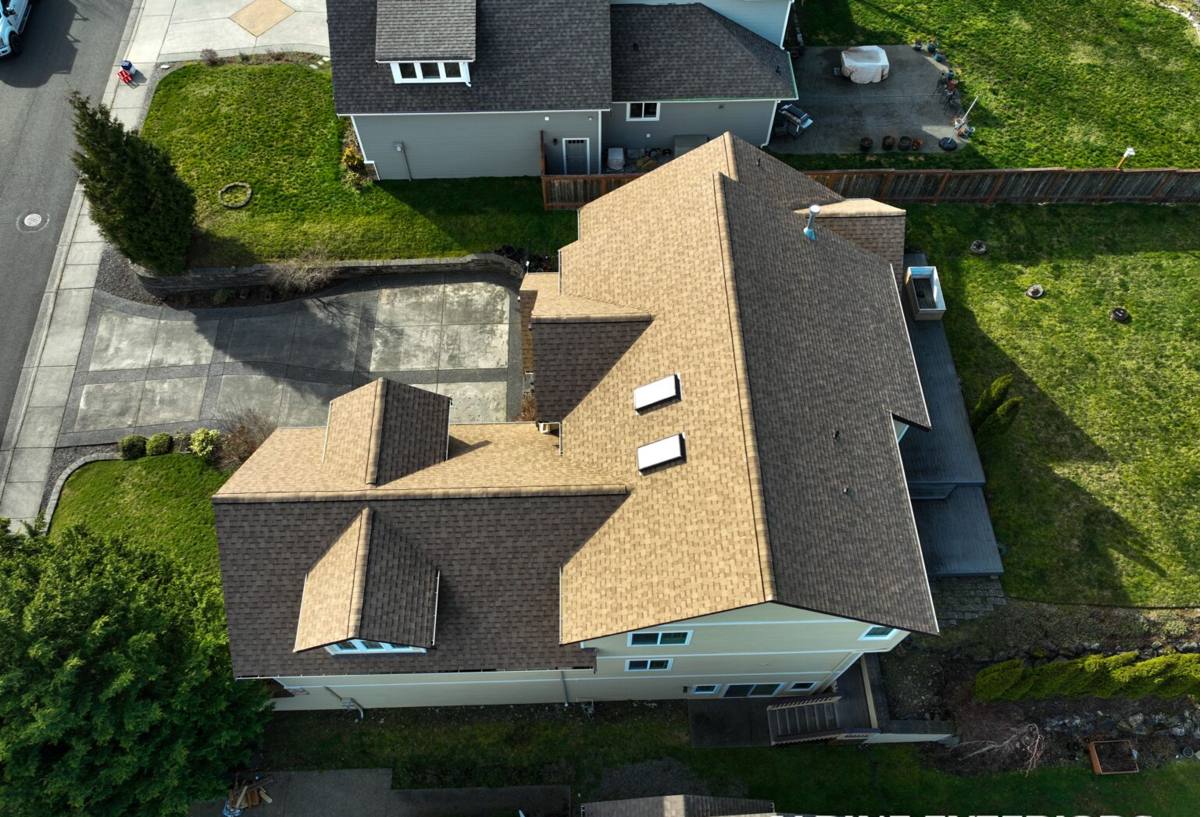
What Salt Air, Rain, and Moss Actually Do to Siding
Salt Air
Airborne salt is corrosive to metal fasteners, flashing, and trim hardware, and it accelerates the breakdown of paint films and caulk. On older siding, you'll often see chalking, fastener bleed-through, or premature caulk failure on the walls facing the water before you see it anywhere else on the house.
Driving Rain
Bellingham's winter storms don't just fall straight down — wind pushes rain horizontally into siding laps, butt joints, and anywhere trim meets a wall. If those details weren't installed with the right overlaps and flashing, water finds its way behind the cladding instead of running off the face of it. That's when you start dealing with hidden rot rather than a simple cosmetic problem.
Moss Season
Long, wet, shaded seasons let moss and algae take hold on siding faces and especially in corners and under eaves where airflow is limited. Beyond the appearance issue, moss holds moisture against the surface far longer than an exposed, dry wall would — which is exactly the condition that lets rot start underneath paint or coating that still looks fine from a distance.
Signs Your Fairhaven Home Needs Siding Repair
Some damage is obvious. Some isn't visible until you know what to look for. Here's what we check for on every Fairhaven repair estimate:
- Soft or spongy spots when you press on the siding, especially near the bottom courses and around windows
- Visible gaps, cracking, or separation at butt joints and corners
- Paint that's bubbling, peeling, or chalking unevenly compared to the rest of the house
- Dark staining or streaking below seams, trim, or fastener heads
- Moss or algae buildup that's thick enough to hold water against the surface
- Rust bleed from fasteners or flashing
- Any area where a past repair — caulk, patch, or touch-up paint — is already failing again
- Soft trim or window casing where siding meets an opening
If you're seeing more than one or two of these, especially on a wall that faces prevailing weather, it's worth having someone look at what's happening behind the surface, not just at the surface itself.
What a Correct Repair Actually Involves
A lot of siding "repairs" are really just cosmetic fixes — caulk over a gap, a dab of matching paint, a screw driven into a loose panel. Those can look fine for a season and then fail again, often worse than before, because they don't address why the damage happened in the first place.
A repair done right starts with figuring out the actual cause: bad flashing detail, a failed sealant joint, a missing kick-out flashing, siding that was face-nailed instead of properly fastened, or moisture that's been trapped behind the cladding for a while. Once we know the cause, the repair addresses that — not just the visible symptom.
Steps we don't skip
- Removing damaged material back to solid, dry substrate — not just covering it
- Checking the water-resistive barrier and flashing underneath before closing the wall back up
- Confirming fastener type and placement meets manufacturer spec, not just "close enough"
- Matching replacement material and finish so the repair doesn't stand out as a patch
- Re-sealing joints and transitions with products rated for our climate, not general-purpose caulk
Repair or Replace? How We Help You Decide
Not every damaged section needs full replacement, and not every repair is worth doing if the underlying siding is near the end of its life. We walk Fairhaven homeowners through this honestly rather than defaulting to the bigger job.
| Factor | Leans Toward Repair | Leans Toward Replacement |
|---|---|---|
| Extent of damage | Isolated to one wall or a few boards | Spread across multiple elevations |
| Cause of failure | One-off flashing or sealant issue, now fixable | Systemic installation problem repeating everywhere |
| Age of existing siding | Still well within its expected service life | Already near or past it |
| Material match | Replacement material and finish available to match | Discontinued product, no realistic match |
| Underlying structure | Sheathing and framing are sound and dry | Rot has spread into structural framing |
Where the damage is contained and the rest of the siding is sound, a targeted repair is the honest recommendation — we're not going to talk you into a full re-side you don't need. Where the damage points to a bigger problem, we'll say so and explain why.
Older Siding, Mixed Materials, and Matching Challenges
Fairhaven has a mix of home ages and siding types, and repairing older cladding often means dealing with materials that are no longer made in the same profile, texture, or color. Wood lap siding, older fiber cement, and discontinued vinyl profiles all present the same basic problem: an exact match may not exist anymore.
When that's the case, we lay out the real options — a close-enough match on a less visible elevation, a slightly larger repair area to blend the transition, or a conversation about whether it's time to move that section (or the whole house) to a more durable, better-matched material going forward. We won't pretend a mismatched patch will be invisible if it won't be.
Why We Repair and Rebuild With James Hardie Fiber Cement
When a repair area needs new material rather than a salvage-and-match approach, we use James Hardie fiber cement. It's the one product we stand behind for full confidence in a wet, salt-exposed climate like Fairhaven's: it's non-combustible, doesn't swell or rot the way wood-based products can when they take on repeated moisture, and its factory-applied ColorPlus finish holds up to sun and salt air far longer than field-applied paint on repaired wood or vinyl trim.
We don't install LP SmartSide, vinyl, Cemplank, Allura, or primed wood siding — not because those products have no merits, but because after years of repair calls we've seen which materials hold up to this specific climate with the least recurring maintenance, and fiber cement from Hardie has been the most consistent performer. Hardie's HZ5 line is engineered specifically for wetter, colder climates like ours, which matters more in Fairhaven than in drier parts of the state.
Our Process for a Fairhaven Repair Call
- Inspection: We look at the damaged area and the surrounding wall, not just the spot you called about — hidden moisture rarely stays where it started.
- Diagnosis: We identify the actual cause of failure — flashing, fastening, sealant, or trapped moisture — before recommending a fix.
- Honest scope: We tell you plainly whether this is a repair, a larger repair, or a replacement conversation, and why.
- Correct repair: Damaged material comes out, the barrier and flashing underneath get checked and corrected if needed, and new material goes in to spec — not just nailed over the problem.
- Finish and match: We match material, texture, and color as closely as possible so the repair blends rather than standing out.
- Walkthrough: We show you what we found and what we did, so you know exactly what's under your siding now.
Why a Crew That Already Works Fairhaven Matters
Fairhaven's exposure, tree cover, and older housing stock aren't the same as a repair job in a newer, more open subdivision elsewhere in Bellingham. A crew that regularly works this neighborhood already knows which walls take the worst weather, what moisture patterns to expect behind older siding, and how local permitting and any neighborhood-specific considerations tend to play out. That local pattern recognition is the difference between a repair that gets fixed once and one that gets revisited every couple of years.
Keeping a Repaired Wall From Failing Again
Once a repair is done right, a little seasonal attention goes a long way in this climate:
- Rinse moss and algae off siding faces before it builds up thick enough to hold moisture
- Keep gutters and downspouts clear so water isn't overflowing onto siding below
- Trim back vegetation and tree limbs that keep walls shaded and damp longer than necessary
- Walk the exterior once a year, especially after winter storms, and check the same trouble spots
- Address small caulk or paint failures early, before they become entry points for water
If you're dealing with damaged, aging, or failing siding on a Fairhaven home, we're glad to take a look and give you a straight answer about what it needs — whether that's a targeted repair or something bigger. Reach out for a free, no-pressure estimate using the form below.