 Bellingham Roofing
 Siding Installation in Fairhaven: What Bellingham Bay Weather Demands
Fairhaven sits close to the water where Bellingham Bay meets the city, and that setting puts real demands on how a siding installation is done, not just what material goes up. Salt-laden air drifts through the neighborhood most of the year, storms drive rain sideways into wall assemblies rather than letting it fall straight down, and shaded, tree-covered lots keep moss and mildew active across most of the calendar. None of that is unique to Fairhaven within Whatcom County, but the combination is more pronounced here than in drier inland pockets of the region. A siding installation that would hold up fine forty miles from the coast can fail early in Fairhaven if the crew doing the work doesn't treat water management as the central job.
This page is specifically about installation, the actual physical work of removing old siding, preparing the wall, and putting new James Hardie fiber cement siding on correctly. Material choice matters, but a poor installation can undermine even the best product, and a careful installation can get more life out of a good one than most homeowners expect.
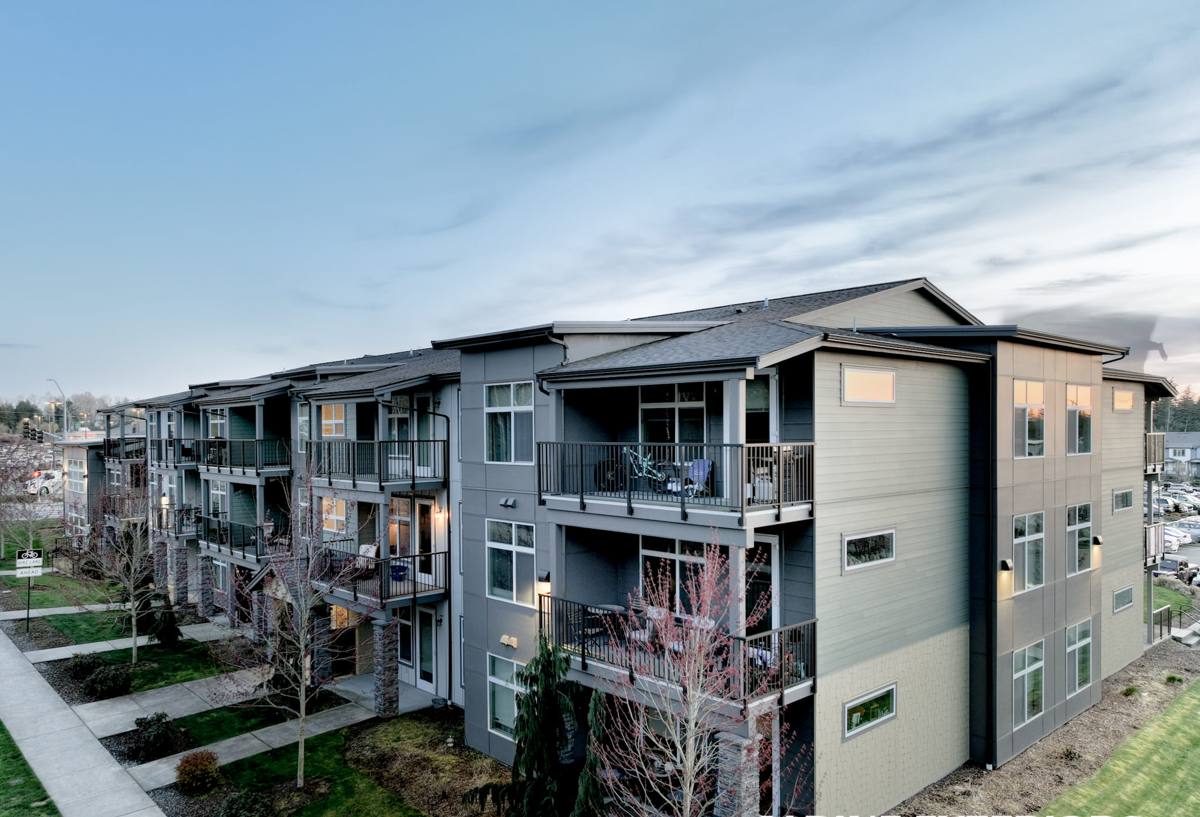
Why the Installation Matters As Much As the Siding Itself
Substrate Condition and Moisture Content
Fiber cement siding goes over sheathing that has to be sound and reasonably dry before installation starts. In a climate this wet, sheathing that's been sitting exposed, or that's been covering a slow leak for years, often isn't in the condition it looks like from the outside. Installing new siding over compromised sheathing just hides the problem for a while longer. Part of a correct installation is checking what's underneath before assuming the wall is ready.
Water-Resistive Barrier and Flashing Sequence
The house wrap, flashing, and siding aren't three separate products stacked on top of each other, they're one water-management system, and the order they go on in matters. Flashing has to be integrated with the house wrap so water sheds down and out at every window, door, and penetration rather than getting trapped behind the cladding. Get the sequence wrong and the siding can look perfect while water is still finding its way in behind it.
Fastening Pattern and Clearance
James Hardie publishes specific fastening patterns, nail spacing, and clearance requirements from grade, roofline, and other trim for a reason, they're what the product's warranty and performance are engineered around. Fastening too far from the recommended spacing, using the wrong fastener type, or leaving insufficient clearance at the bottom of the wall are common shortcuts that don't show up as a problem on install day but shorten the siding's service life.
Joint and Trim Detailing
Every seam, corner, and trim joint is a potential entry point for wind-driven rain. Correct lapping, sealant selection, and gapping at butt joints are what keep those points from becoming leaks. This is detail work that's easy to rush and hard for a homeowner to evaluate just by looking at the finished wall.
Our Siding Installation Process, Step by Step
Site Walk and Assessment
We start by walking the property in person rather than quoting off square footage. That includes checking existing siding condition, looking for signs of moisture behind walls, noting roofline and window details, and accounting for site-specific factors like slope, shade, and proximity to the water, all of which are common on Fairhaven lots.
Removal and Substrate Repair
Old siding comes off in a way that lets us actually see the sheathing underneath before anything new goes up. If we find rot, soft spots, or evidence of a past leak, we address it before installation continues. This is often where a Fairhaven job reveals more than expected, given how long moisture can work quietly behind older siding near the bay.
House Wrap, Flashing, and Weather Barrier
We install or repair the water-resistive barrier and integrate flashing at every window, door, and penetration before the first piece of siding goes on. This step gets more attention in a marine climate than in drier regions, because the barrier is doing more work here.
Installing and Fastening the Siding
Siding goes up following James Hardie's fastening specifications for the specific product line and local exposure conditions, with attention to clearance from grade, roofline, and decks. We don't deviate from spec to save time, since that's exactly where problems tend to start.
Trim, Caulking, and Final Walkthrough
Trim and caulking finish out the water-management details at joints and penetrations, and we walk the finished job to check fastening, gaps, and finish quality before calling it done.
James Hardie Products We Install in Fairhaven
We install James Hardie fiber cement siding exclusively. We don't offer LP SmartSide, vinyl, Cemplank, Allura, primed spruce, or cedar as installation options, because standing behind one system we understand completely, in a climate this consistently wet and salt-exposed, serves homeowners better than offering cheaper alternatives with trade-offs we'd have to explain away later. Within the Hardie lineup, the right product line depends on the home's style and exposure.
| Product Line | Best For | Key Trait |
|---|---|---|
| HardiePlank lap siding | Most Fairhaven homes, traditional and modern styles | Horizontal lap profile, the most common Hardie installation |
| HardiePanel vertical siding | Modern designs or accent sections | Fewer horizontal seams, different water-shedding detailing |
| HardieShingle siding | Homes matching a shingle-style or historic look common in older Fairhaven blocks | Staggered or straight-edge shingle profile in fiber cement |
| HZ5 formulation | Any of the above, specified for this region | Engineered for sustained moisture and freeze-thaw cycling |
Whichever profile fits the home, we specify the HZ5 formulation for this climate zone rather than a generic national spec, and every board carries the factory-applied ColorPlus finish, which holds color and resists chalking far better than field-applied paint against salt air and UV exposure.
Timing an Installation Around Bellingham's Weather
Fiber cement can technically be installed in a range of conditions, but installing it well in this climate means paying attention to timing. Sheathing and framing need to be reasonably dry before new siding closes the wall back up, so a stretch of active rain isn't the moment to start a tear-off if it can be avoided. Caulking and sealants need adequate cure time and the right temperature range to bond properly, which is worth planning around rather than rushing through. We also try to avoid leaving a wall open and exposed longer than necessary once removal starts, since an interrupted job in the middle of a wet stretch is exactly how new moisture problems get created before the new siding is even up. None of this means installation only happens in summer, it means scheduling and sequencing the work with Bellingham's rain patterns in mind rather than treating every week of the year as identical.
Installation Mistakes That Lead to Early Failures
Most siding problems we get called out to repair in Fairhaven trace back to an installation shortcut, not a defective product. These are the ones we see most often on other contractors' work.
| Mistake | What Happens | How We Prevent It |
|---|---|---|
| Face-nailing at the wrong spacing | Boards can crack or work loose over time, especially with wind exposure near the bay | Fastening follows Hardie's published spacing and pattern for this exposure zone |
| Missing or poorly lapped flashing at windows | Water tracks behind the siding and damages sheathing before it's visible | Flashing is integrated with house wrap before any siding goes on, not added after |
| Insufficient clearance from grade or roofline | Splashback and standing moisture wick into the bottom of the siding | Clearance is checked and maintained per manufacturer spec at every elevation |
| Skipping substrate inspection during tear-off | Existing rot or moisture damage gets covered instead of repaired | Sheathing is inspected and repaired before new siding is installed |
| Rushed caulking in poor conditions | Sealant fails to bond, leaving joints vulnerable to wind-driven rain | Sealant work is scheduled for suitable temperature and dryness, not just to finish on schedule |
What Siding Installation Costs Depend On in Fairhaven
| Factor | What It Affects | Why It Matters Here |
|---|---|---|
| Tear-off vs. installing over existing siding | Labor scope and substrate access | Tear-off is usually the right call this close to the bay, where hidden moisture damage is common |
| Substrate repair needs | Added labor and material before new siding goes on | Older Fairhaven homes near the water more often have hidden sheathing damage |
| Wall complexity and trim detail | Total installation time | Older housing stock often has more rooflines and trim intersections to flash correctly |
| Site access and slope | Staging, scaffolding, and setup time | Hillside lots common in the neighborhood can add setup requirements |
| Product line and profile selection | Material cost | Lap, panel, and shingle profiles carry different material costs and install time |
These are the variables that move a price up or down, not a substitute for an actual number. We walk each property and give a written scope before quoting, since two homes of the same size can require very different amounts of work once the existing wall is opened up.
What to Check Before Hiring a Siding Installer
- Confirm an active Washington state contractor license and current liability insurance
- Ask whether they do a full tear-off or will install over existing siding, and why
- Ask how they handle hidden sheathing damage discovered mid-project, and how that affects cost
- Get the fastening and flashing details in writing, not just "new siding installed"
- Ask which James Hardie product line and formulation they're specifying for the home
- Ask how they schedule around weather, and what happens if a wall is opened and rain moves in
Why a Fairhaven-Experienced Installation Crew Matters
Installation quality is where most of the real difference between contractors shows up, since most crews can hang a board reasonably straight. What separates a good installation from one that fails early is judgment on the details that don't show: how much time to spend on flashing at a tricky roofline, when to call a stretch of weather unsuitable for sealant work, and knowing from experience which wall orientations on a Fairhaven lot stay damp longest and need extra attention. A crew that installs siding across Whatcom County regularly, in this specific mix of salt air, wind-driven rain, and shaded, moss-prone lots, brings that judgment to the job instead of applying a generic approach built for a drier region.
If you're planning a siding installation in Fairhaven, we're glad to walk the property, look at what's actually there, and give you a straight answer on scope and options. Reach out using the form below to schedule a free, no-pressure estimate.