 Bellingham Roofing
 Fairhaven's Waterfront Location Puts Extra Wear on Windows
Fairhaven sits right against Bellingham Bay, and that location shapes what a window has to survive here. Homes a few blocks inland in other parts of Bellingham deal with a milder version of the same weather. Homes in Fairhaven get it straight off the water: salt-laden air, wind-driven rain that hits window walls at an angle instead of falling straight down, and the long, low-light moss season that defines a Whatcom County winter. Windows that would hold up fine in a drier climate wear out faster here, and the failure points are predictable once you know what to look for.
This page is about window replacement specifically for Fairhaven homes — what the local conditions do to windows over time, what a correct replacement job involves, and why it matters to work with a crew that already understands this stretch of coastline.
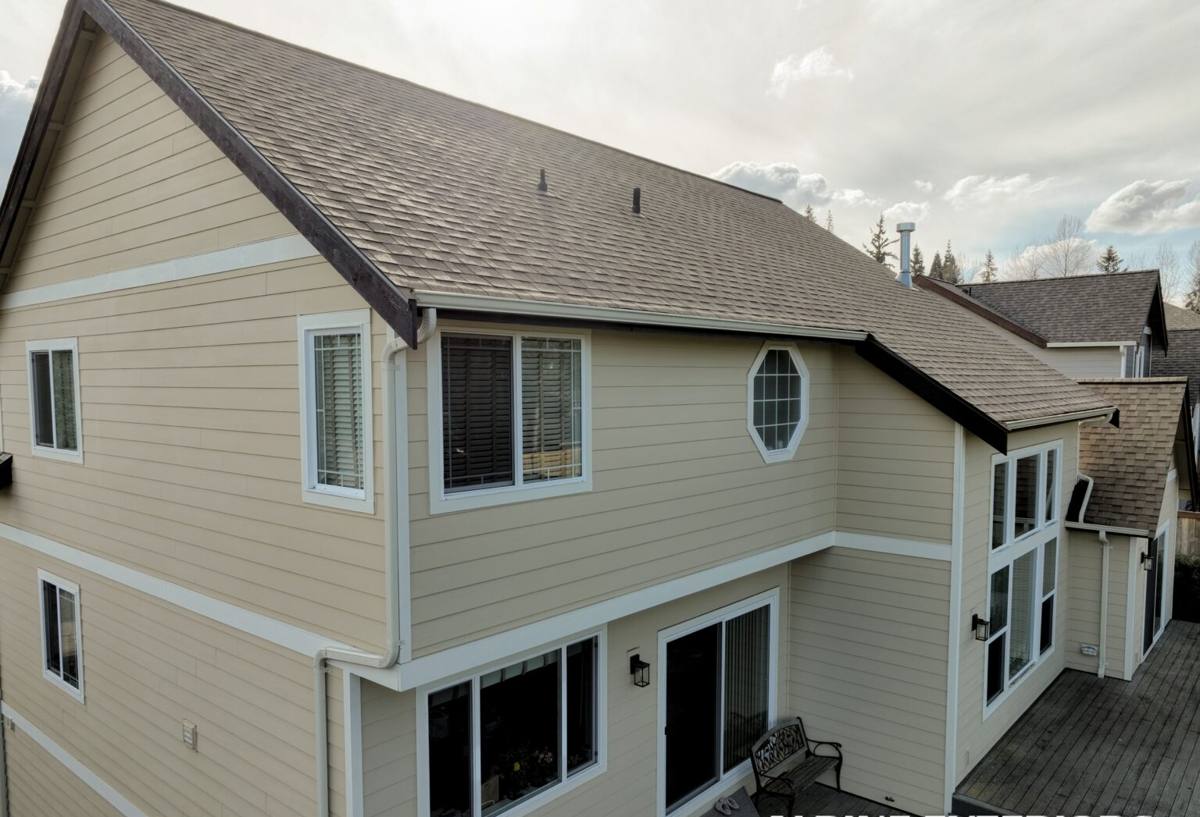
What Salt Air, Rain, and Moss Actually Do to a Window
Salt Air and Metal Fatigue
Airborne salt is corrosive to metal, and it doesn't need to be a stormy day for it to do damage — a steady bay breeze carries fine salt particles onto window frames, hardware, and fasteners year-round. On older aluminum-frame windows, this shows up as pitting, chalky corrosion, and hardware that gets stiff or seizes. Screws and hinges rust from the inside out long before the frame itself looks obviously bad.
Driving Rain and Wood Rot
Wind off the bay pushes rain sideways into window walls instead of letting it run straight down and off. That matters because older sealant joints and wood sills are usually built to shed water falling downward, not water being forced sideways or upward under wind pressure. Once water finds a gap — a hairline crack in old caulk, a warped sill, a nail hole — it works its way behind the trim, and wood rot follows. By the time rot is visible from the outside, it has often been active inside the wall for a while.
Moss, Shade, and Trapped Moisture
Whatcom County's moss season is long, and Fairhaven's tree cover and close-set lots mean a lot of windows sit in partial shade for much of the year. Shaded, damp surfaces don't dry out between rain events the way a sun-exposed wall does. Moisture sits on sills and trim longer, moss and algae take hold, and any wood underneath stays wet longer than it should — which accelerates rot and breaks down caulk and glazing seals faster than in a drier or sunnier spot.
Signs It's Time for Replacement, Not Just Repair
Not every window problem means a full replacement. But in a salt-air, high-rain environment, small problems tend to turn into bigger ones faster, so it's worth catching them early. Here's what we look for during an assessment, and what homeowners can check themselves:
- Fogging or a permanent haze between panes of double-pane glass — the seal has failed and the insulating gas is gone
- Wood that feels soft or spongy when pressed near the sill or lower corners of the frame
- Visible corrosion, pitting, or chalky white buildup on aluminum frames or hardware
- Sashes that are painted shut, stuck, or require force to open and close
- Cold drafts near the frame even when the window is fully latched
- Condensation forming on the inside of the glass or frame regularly through the winter months
- A noticeable jump in heating costs without another clear explanation
- Visible gaps where daylight shows around the frame when the window is closed
Choosing a Frame Material for a Coastal PNW Home
Frame material matters more here than it would in a drier inland climate, because whatever you choose is going to face salt air and sustained moisture exposure for the life of the window. There's no single "best" choice for every home — it depends on your budget, your home's style, and how much upkeep you're willing to do. Here's how the common options compare for a Fairhaven property:
| Frame Material | Salt/Moisture Resistance | Maintenance | Typical Fit |
|---|---|---|---|
| Vinyl | Good — won't corrode or rot | Low; occasional cleaning | Budget-conscious replacements, most home styles |
| Fiberglass | Very good — stable in wet, salty conditions | Low | Homes wanting durability with a more refined look |
| Wood, fully clad | Good on the exterior face if cladding is intact | Moderate; interior wood still needs care | Historic or period-style homes where wood interior trim matters |
| Bare or painted wood | Poor in this environment without diligent upkeep | High — regular repainting and sealing required | Generally not our recommendation for direct bay exposure |
| Uncoated aluminum | Poor — prone to pitting and corrosion near salt air | Moderate to high | Not recommended for replacement in this location |
We're not going to tell you a certain product is "bad" — plenty of these materials perform well in the right setting. Our recommendations are based on how each one holds up specifically to salt air, driving rain, and shaded moisture over years of exposure, not on brand loyalty.
Full-Frame Replacement vs. Insert Replacement
There are two basic approaches to replacing a window, and which one applies depends on the condition of what's already there:
Insert (Pocket) Replacement
If the existing frame and surrounding structure are still sound — dry, square, and free of rot — a new window unit can often be installed inside the old frame. It's faster and less invasive, and it's a reasonable option when the only real problem is the glass, seals, or hardware.
Full-Frame Replacement
If there's rot, water damage, or the frame has shifted out of square, an insert just seals a problem behind a new window instead of fixing it. Full-frame replacement removes the old unit down to the rough opening, so any hidden moisture damage gets addressed and new flashing can be installed correctly. Given how often driving rain finds its way behind trim in this location, we see the need for full-frame replacement more often on Fairhaven's older homes than we would inland.
What a Correct Installation Actually Involves
The window itself only does half the job — the installation determines whether Bellingham Bay's weather stays outside or finds its way in. A rushed or careless install will fail here faster than almost anywhere else in the county, because the wind-driven rain exposure leaves no margin for shortcuts. A correct job includes:
- Removing old caulk and trim fully to inspect the rough opening and sheathing for hidden rot before anything new goes in
- Installing sill pan flashing so any water that does get past the window is directed back out, not trapped inside the wall
- Integrating new flashing with the home's existing weather-resistant barrier in the correct shingle-lap order, so water always sheds downward and outward
- Shimming the unit square and plumb, then insulating the gap around the frame without over-packing it, which can bow the frame
- Using sealants and flashing tape rated for the specific siding and trim material, not a one-size-fits-all caulk
- Finishing exterior trim and paint or stain lines so water has no exposed edge to enter at
None of this is visible once the job is done, which is exactly why it matters who does it. A window that looks fine from the curb can still be failing behind the trim if the flashing details were skipped.
Cost Factors for Window Replacement in Fairhaven
Costs vary a lot from house to house, so we won't quote a single number here — but the main factors that move the price up or down are consistent:
| Factor | Effect on Cost |
|---|---|
| Insert vs. full-frame replacement | Full-frame costs more upfront but addresses hidden damage insert replacement can't |
| Frame material chosen | Vinyl is typically the most affordable; fiberglass and clad-wood cost more |
| Window size and configuration | Larger units, bays, and custom shapes cost more than standard-size single or double windows |
| Number of windows in the project | Per-window cost usually drops when replacing several at once |
| Extent of hidden rot found | Additional framing or sheathing repair adds cost but prevents repeat problems |
| Trim matching on older or historic homes | Custom trim work to match existing profiles takes more time and material |
As a rough guide, homeowners in this area are typically looking at a broad range depending on those factors — from a few hundred dollars per window on the low end for straightforward inserts, up into the low thousands per window for larger, full-frame, or historic-trim jobs. A walk-through and written estimate is the only reliable way to know what your project will actually cost.
Our Process for Window Replacement Projects in Fairhaven
- On-site assessment — we inspect existing windows, sills, and surrounding trim for rot, corrosion, and moisture damage, and check whether insert or full-frame replacement is the right call
- Measurement and product selection — we help you choose a frame material and glass package suited to the home's exposure and your budget, without pushing a single house brand
- Permitting review — if your home is within a designated historic area or has other exterior review requirements, we account for that before ordering material
- Removal — old units and trim come out carefully, with the opening inspected for hidden damage before anything new goes in
- Installation — new flashing, sill pans, and weather barrier integration are done to the standard this climate requires, not the minimum
- Sealing and trim finish — exterior sealant, trim, and paint or stain lines are completed so the job is weathertight and looks finished
- Final walkthrough — we go over the completed work with you before calling the job done
Why Hiring a Crew That Already Works in Fairhaven Matters
Fairhaven isn't a generic Bellingham address — it's a specific set of conditions: direct bay exposure, a mix of older and newer housing stock, narrow streets and tighter lot access in parts of the neighborhood, and in some cases exterior review requirements tied to the area's historic character. A crew that regularly works this neighborhood already knows what to check for before pulling the first piece of trim, how to plan around site access, and how salt air and driving rain behave differently here than they do a few miles inland.
That local familiarity shows up in fewer surprises mid-project and a finished install that's built for the exposure your home actually faces, not a generic textbook installation.
If you're noticing drafts, fogged glass, soft wood at the sills, or windows that just don't perform the way they used to, we're happy to take a look. We offer free, no-pressure estimates for Fairhaven homeowners — use the form below to get started.