 Bellingham Roofing
 Fairhaven's Siding Has to Work Harder Than Most
Fairhaven sits close to Bellingham Bay, which means homes here take on a combination of weather stresses that inland Whatcom County neighborhoods don't deal with in the same way. Salt-laden air off the water accelerates corrosion on fasteners and metal trim. Driving rain off Puget Sound pushes moisture sideways into seams and laps that would stay dry in a calmer climate. And the long, wet moss season that defines a Pacific Northwest fall through spring gives organic growth months to establish itself on any siding surface that holds moisture or stays shaded.
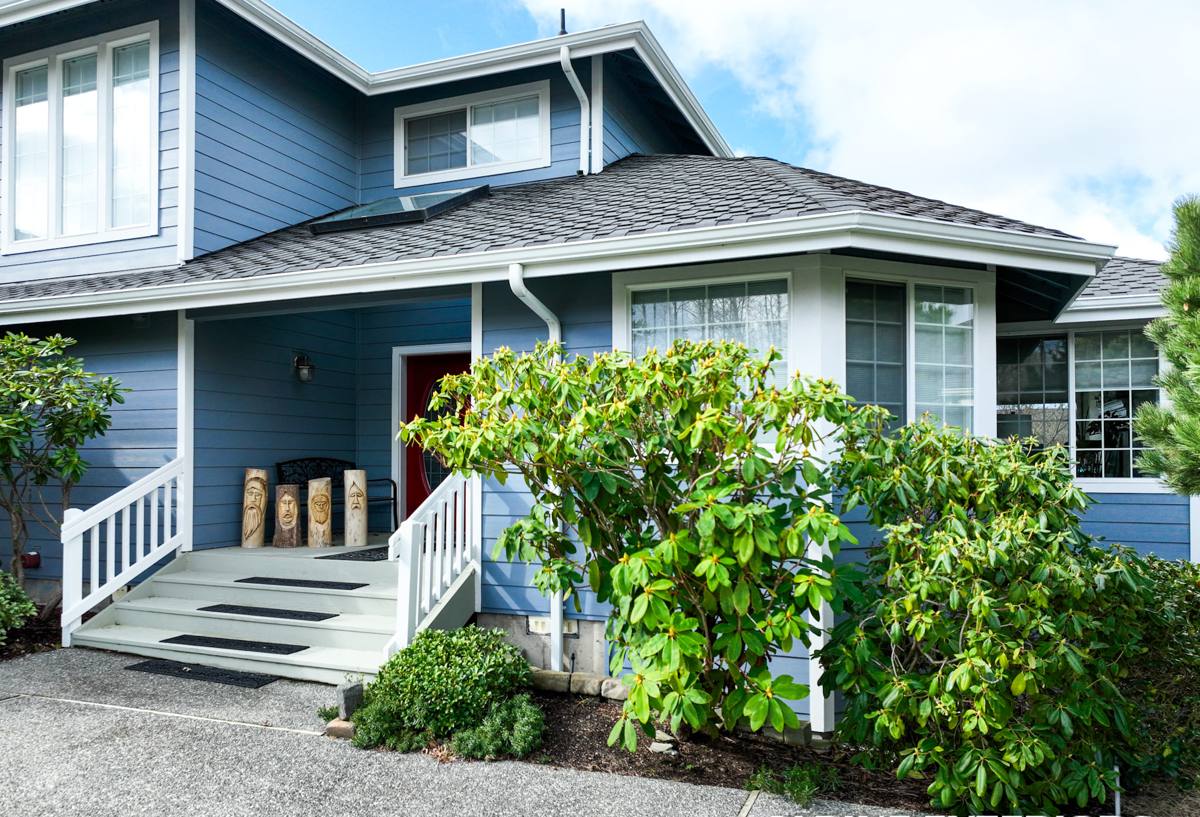
Board and batten siding is a popular choice in Fairhaven because it fits the neighborhood's mix of historic character and craftsman-style homes — the vertical lines read as classic Pacific Northwest architecture. But the same vertical board-and-strip design that looks great can also be one of the more failure-prone siding profiles if it's built from the wrong material or installed without attention to water management. The battens create extra seams, and every seam is a place water can find its way behind the cladding if it's not detailed correctly.
What Board and Batten Siding Actually Is
Board and batten is a vertical siding system made of wide flat boards (or panels) installed side by side, with narrower strips — the battens — covering the seams between them. It's one of the oldest siding profiles in American building, and it remains popular because it gives a home strong vertical lines, deep shadow lines, and a look that reads as both traditional and modern depending on the trim and color choices around it.
The system works well when the boards and battens are dimensionally stable, properly fastened, and backed by a correctly installed water-resistive barrier. It works poorly when the material behind the paint swells, shrinks, cups, or absorbs water at the seams — which is exactly the failure pattern we see most often on wood and engineered-wood board and batten in wetter parts of Whatcom County.
Why the Profile Matters More Here Than Elsewhere
Every vertical seam in a board and batten wall is a joint. In a drier climate, a joint that's slightly imperfect might never cause a problem. In Fairhaven, with rain driven sideways by wind off the bay for a good part of the year, a joint that isn't flashed and fastened correctly becomes the point where moisture gets behind the siding and starts working on the sheathing underneath. That's the core reason material choice and installation technique matter more on this profile than on a standard horizontal lap.
Why We Install This Only in James Hardie Fiber Cement
We don't install board and batten in cedar, primed spruce, LP SmartSide, vinyl, or other fiber cement brands like Allura or Cemplank. That's a deliberate standard, not a sales pitch, and it's worth explaining honestly.
Wood board and batten — cedar or primed spruce — can look excellent when new, but it's a maintenance commitment that most homeowners underestimate. Wood moves with moisture. In a climate with Fairhaven's rain load and humidity, that movement shows up as cupping boards, cracked paint at the seams, and eventually rot at the bottom edges where water sits longest. Repainting on a cycle of a few years is the price of keeping it looking good, and skipping a cycle lets moisture get a foothold.
Engineered wood products like LP SmartSide use treated strand board as their base. It resists moisture better than raw wood, but it's still a wood-based product — cut edges and any breach in the factory coating are vulnerable points, and vulnerable points matter more in a salt-air, high-rainfall environment than in a dry one.
Vinyl board and batten is affordable and low-maintenance in the sense that it doesn't rot, but it's a thin plastic product that becomes brittle in cold snaps, can warp under direct afternoon sun exposure, and simply doesn't hold up to wind-driven debris the way a rigid material does. It also doesn't accept the crisp shadow lines that make board and batten attractive in the first place — the material flexes rather than holding a hard edge.
Other fiber cement brands make a reasonable product on paper. Our standard isn't about disqualifying the entire category — it's about consistency. We've built our crews, our installation details, our warranty conversations, and our long-term callback experience around one manufacturer's engineered specifications. James Hardie's HZ5 product line is specifically engineered for Pacific Northwest conditions — freeze-thaw cycling, sustained moisture exposure, and coastal air — and their ColorPlus factory finish is baked on and warrantied against fading and chipping in a way field-applied paint can't match. Fiber cement itself is non-combustible, dimensionally stable, and doesn't feed pests or rot the way wood-based products can. That combination is why it's the only board and batten material that leaves our trucks.
What a Correct Board and Batten Install Involves
The visual result of board and batten is simple — vertical lines and clean shadow gaps. The installation behind that result is where the job is won or lost, especially in a wet coastal neighborhood like Fairhaven.
- Water-resistive barrier first. A correctly lapped and taped weather barrier goes over the sheathing before any siding touches the wall — this is the home's real first line of defense, not the siding itself.
- Rainscreen gap. We install board and batten over a furring strip or drainage wrap system that creates a small air gap behind the siding, so any moisture that does get past the surface can drain and dry instead of sitting against the sheathing.
- Correct fastener pattern and depth. Hardie panels and battens require specific nail or screw placement and embedment depth — overdriven or underdriven fasteners are one of the most common causes of early siding failure and warranty denial.
- Batten spacing over panel seams, not board edges alone. Battens need to land squarely over the joint and be fastened into framing, not just into the panel below.
- Flashing at every horizontal transition. Window heads, belly bands, and the base of the wall all need metal or engineered flashing detailed to shed water outward, not into the wall assembly.
- Factory-primed and finished cut edges. Every field cut on Hardie board and batten gets sealed per manufacturer spec so the exposed edge doesn't become a moisture entry point.
None of these steps are visible once the job is finished. That's exactly why they matter — a sloppy install and a correct one can look identical for the first year or two, and the difference only shows up later, in the form of moisture damage that's expensive to trace and repair.
Material Comparison for Fairhaven's Climate
| Material | Moisture Behavior in Coastal Rain | Maintenance Cycle | Typical Lifespan Here |
|---|---|---|---|
| James Hardie Fiber Cement | Dimensionally stable, engineered for moisture and freeze-thaw cycling | Occasional wash; factory finish holds color | 30+ years with correct install |
| Cedar / Primed Spruce | Absorbs and releases moisture, prone to cupping and seam cracking | Repaint or restain every 3-7 years | 15-25 years, shorter without upkeep |
| Engineered Wood (LP SmartSide) | Better than raw wood but vulnerable at cut edges and coating breaches | Inspect and touch up coating regularly | 20-30 years, install-dependent |
| Vinyl | Doesn't rot, but flexes and can warp; poor at holding crisp batten lines | Low, but limited repair options once damaged | 20-30 years, brittle in cold |
Our Process Working in This Neighborhood
We start every Fairhaven estimate with a walk of the exterior looking specifically for the conditions that matter on this profile: existing moisture staining, siding areas that stay shaded and damp longest, roofline transitions that concentrate runoff onto walls, and any existing moss or algae growth that signals a drainage or drying problem rather than just a cosmetic one.
From there we scope the tear-off, sheathing inspection, and water-resistive barrier work honestly — if we find soft sheathing or old moisture damage once the existing siding comes off, we tell you before we cover it back up, not after. Board and batten install follows manufacturer fastening and flashing specs on every wall, and we walk the finished job with you before we call it done.
Because we work this neighborhood regularly, we already know which Fairhaven wall orientations tend to take the worst of the wind-driven rain off the bay and which areas hold onto moss longest through the wet months. That's not a marketing point — it changes where we pay extra attention on flashing and drainage detailing before the first board goes up.
What to Check on Existing Board and Batten Siding
- Soft or spongy spots when you press on boards near the bottom edge or around window trim
- Paint that's cracking specifically along the batten seams rather than across the whole board
- Moss or dark streaking concentrated on north- or west-facing walls that stay shaded
- Gaps or separation where battens meet horizontal trim, belly bands, or the foundation line
- Fastener heads visibly popping through the batten or board face
Any one of these on its own isn't necessarily an emergency, but they're worth having looked at before the next wet season adds to the problem.
Why the Local Crew Part Actually Matters
Board and batten is a profile where installation quality is the whole story — the material choice sets the ceiling, but the crew's attention to flashing, fastening, and rainscreen detailing determines whether that ceiling gets reached. A crew that's installed this profile repeatedly in Bellingham's specific mix of coastal wind, driving rain, and moss pressure has already made and corrected the small mistakes that show up on a first attempt elsewhere. That experience is what you're actually paying for on a job like this — not just the siding material itself.
If you're weighing a board and batten refresh or replacement on a Fairhaven home, we're glad to come take a look, walk you through what we'd do differently on your specific walls, and give you a straightforward, no-pressure estimate using the form below.