 Bellingham Roofing
 Why Sudden Valley Homes Are Hard on Siding
Sudden Valley sits in a wooded, lake-adjacent pocket of Whatcom County, and that setting is exactly what makes siding decisions here different from a typical in-town Bellingham lot. Tree cover keeps many homes shaded and slow to dry after a storm. Proximity to Lake Whatcom adds humidity to the air on top of the marine moisture already blowing in off the Salish Sea. The result is siding that spends more days per year damp than siding on an open, sun-exposed lot just a few miles away.
That combination of shade, humidity, and driving rain is also what drives Whatcom County's long moss season. Moss doesn't just grow on roofs — it colonizes siding, gutters, trim, and anything else that stays wet and shaded long enough. Once moss and algae take hold on a siding surface, they hold moisture against it, and a siding product that can't shed water and resist organic growth starts breaking down faster than its warranty assumes.
None of this means Sudden Valley is a bad place to build or re-side a home — it just means the siding, the water-management details behind it, and the installation crew all need to be matched to the actual conditions on the ground, not to a generic Pacific Northwest average.
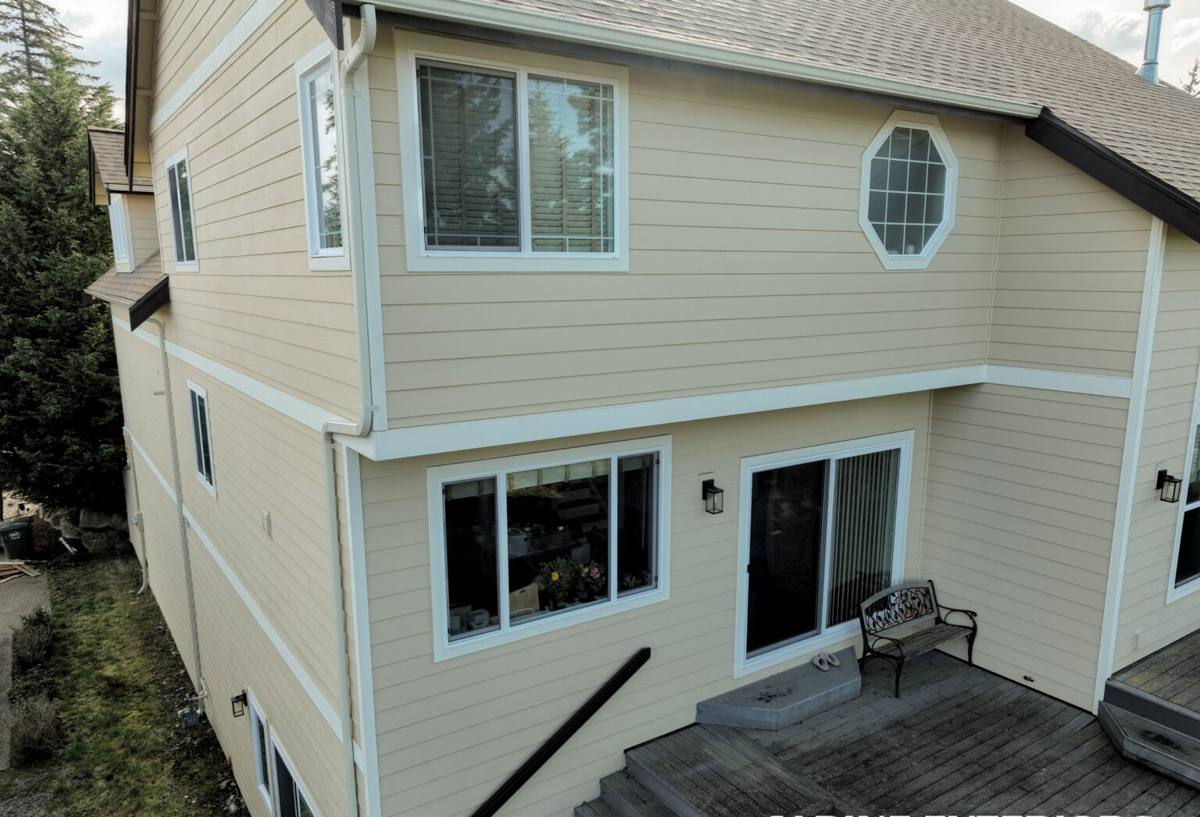
What Correct Siding Installation Actually Involves
Siding failures in this area are rarely about the siding material sitting out in the open and simply wearing out. Far more often, the problem starts behind the siding — at a flashing detail, a fastener, or a gap that let water in and never let it back out. A correct installation is built around keeping bulk water out and giving any moisture that does get in a way to escape.
Flashing and Water Management
Every window, door, deck ledger, and roof-to-wall intersection is a place where water wants to find a path behind the siding. Correct installation means a continuous water-resistive barrier underneath, properly lapped flashing at every penetration and transition, and careful detailing where trim meets siding so water sheds outward instead of pooling. On a shaded, tree-covered lot like many in Sudden Valley, these details matter more than usual, because whatever gets behind the siding here has less sun and wind to help dry it back out.
Fastening, Clearances, and Rainscreen Gaps
Fiber cement siding has specific fastening requirements — nail placement, spacing, and depth all affect how the boards perform over decades, not just how they look on installation day. Ground clearance and gaps at grade, decks, and patios keep splashback and standing moisture away from the bottom course, which is often the first place damage shows up. Many correct installations also include a rainscreen gap — a small air space behind the siding — that lets any trapped moisture drain and dry instead of sitting against the wall assembly. In a humid, shaded microclimate, that drying capacity is not optional detail work; it's what keeps a wall system healthy for the long run.
Why We Install Only James Hardie Fiber Cement Siding
We made a decision to standardize on James Hardie fiber cement siding and stopped installing vinyl, LP SmartSide, and other engineered wood or composite products. That wasn't a marketing choice — it came from seeing how different siding materials actually hold up in Whatcom County's wet, shaded, moss-prone conditions over years, not just in the first season.
Fiber cement is non-combustible, which matters in a region where wildfire smoke and defensible-space awareness have become a normal part of homeownership. It doesn't absorb water the way wood-based composite products can, so it isn't as vulnerable to the swelling, delamination, and edge damage that shows up on engineered wood siding after repeated wet-dry cycles. James Hardie's HZ5 product line is engineered specifically for climates like ours — freeze-thaw cycling, high humidity, and sustained moisture exposure — rather than a one-size-fits-all national product.
The factory-applied ColorPlus finish is also part of the decision. It's baked on under controlled conditions rather than field-applied, which gives more consistent coverage and better resistance to fading and moss-friendly surface breakdown than a job-site paint job on wood or composite siding. Paired with a strong, transferable manufacturer warranty, it gives homeowners a siding system built for exactly the kind of weather Sudden Valley sees most of the year — not just the dry stretches.
Comparing Siding Options for a Sudden Valley Home
| Factor | James Hardie Fiber Cement | Engineered Wood (e.g. LP SmartSide) | Vinyl |
|---|---|---|---|
| Moisture behavior in shaded, humid conditions | Resists water absorption; not wood-based | Wood-based; vulnerable to swelling and edge damage if moisture gets in | Won't absorb water, but can trap moisture behind it if installed wrong |
| Combustibility | Non-combustible | Combustible (wood-based product) | Can soften, warp, or melt under heat exposure |
| Finish durability / moss resistance | Factory ColorPlus finish, consistent coverage | Factory or field finish, more prone to surface wear over time | Color molded through material, but can chalk and fade |
| Typical lifespan when correctly installed | Multiple decades | Shorter, especially with recurring moisture exposure | Long-lived but can crack, warp, or come loose in wind and cold |
| Warranty structure | Strong, transferable manufacturer warranty | Varies by manufacturer and installation compliance | Varies; often prorated over time |
This isn't a claim that other products are worthless — vinyl and engineered wood both have a place, and plenty of homes around the country use them successfully. It's simply why, for the conditions we see in Sudden Valley and the rest of Whatcom County, we standardized on one product system we trust to perform.
Our Installation Process
The process starts with a walk-around of the home to look at existing siding condition, trim details, water-management history, and any shaded or moisture-prone areas that need extra attention. From there:
- We remove existing siding and inspect the sheathing underneath for hidden rot or moisture damage before anything new goes up.
- We install (or repair) a continuous water-resistive barrier and address flashing at every window, door, and penetration.
- Where the wall assembly calls for it, we build in a rainscreen gap to give the wall a way to drain and dry.
- We install James Hardie panels or lap siding to manufacturer fastening specifications, with correct clearances at grade, decks, and roof lines.
- We finish trim, caulking, and touch-up detailing, then walk the job with the homeowner before calling it complete.
Every step is aimed at the same goal: a wall system that sheds water outward and dries out fast when it does get damp — which, on a Sudden Valley lot, is a matter of when, not if.
Why a Crew That Already Works Sudden Valley Matters
Sudden Valley isn't a typical in-town lot. Many homes sit on wooded, sloped ground with limited sun exposure, private road access, and design expectations set by the community. A crew that has already worked in the area knows to expect longer drying windows between rain events, to plan installation sequencing around tree cover and shade, and to account for the kind of moss and algae growth patterns that are common on north-facing or heavily shaded walls here. That local familiarity shows up in scheduling decisions, in how carefully water-management details get handled, and in not treating every job like it's on an open, sun-exposed lot in a different part of Whatcom County.
Maintaining Your Siding After Installation
James Hardie siding is low-maintenance compared to wood-based products, but "low-maintenance" doesn't mean "no maintenance" — especially in a moss-prone environment like Sudden Valley. A little routine attention goes a long way toward protecting the investment:
- Rinse siding periodically with a garden hose to clear pollen, dust, and early moss or algae growth before it takes hold.
- Keep gutters clear so overflow doesn't run down the siding face repeatedly.
- Trim back tree branches and vegetation that keep sections of the wall shaded and damp longer than necessary.
- Inspect caulking at trim and penetrations every year or two and have any cracked or missing sections addressed.
- Watch for moss or algae buildup on north-facing or heavily shaded walls, and clean it off before it spreads.
- Avoid pressure washing directly at siding joints and edges, which can force water behind the panels.
Timing Your Project Around the Local Weather Calendar
Bellingham and Whatcom County have a real dry-season window, and siding installation goes smoother and cures better when it's planned around it. Late spring through early fall generally offers the most consistent stretch of dry weather for tear-off and installation. That said, driving rain and moss growth are a year-round reality here, which is exactly why the water-management details behind the siding matter as much as the calendar — a correctly detailed installation has to perform in January's driving rain, not just July's dry stretch.
If you're weighing a siding replacement or new installation for a Sudden Valley home, we're happy to walk the property, look at what's actually happening with your current siding, and talk through what a James Hardie installation would involve for your specific lot. Reach out for a free, no-pressure estimate using the form below.