 Bellingham Roofing
 Why Sudden Valley Siding Takes More Than a Standard Install
Sudden Valley sits back in the trees along Lake Whatcom, and that setting cuts both ways. The tree canopy that makes the neighborhood feel private and wooded also means less direct sun on most walls, longer drying times after every storm, and a moss season that can stretch for much of the year on north-facing siding. Add in the driving rain that comes through Whatcom County in the wetter months, plus the salt-laden air that blows in off Bellingham Bay and the greater Puget Sound region on windy days, and you have a combination that wears down the wrong siding material faster than most homeowners expect.
None of that is unusual for this part of Washington. But it does mean the siding on a Sudden Valley home is doing real work every day — shedding water, resisting rot at the seams, and holding up under shade and moisture that never fully dries out between storms. Whatever material goes on the walls needs to be chosen and installed with that reality in mind, not just picked for upfront cost.
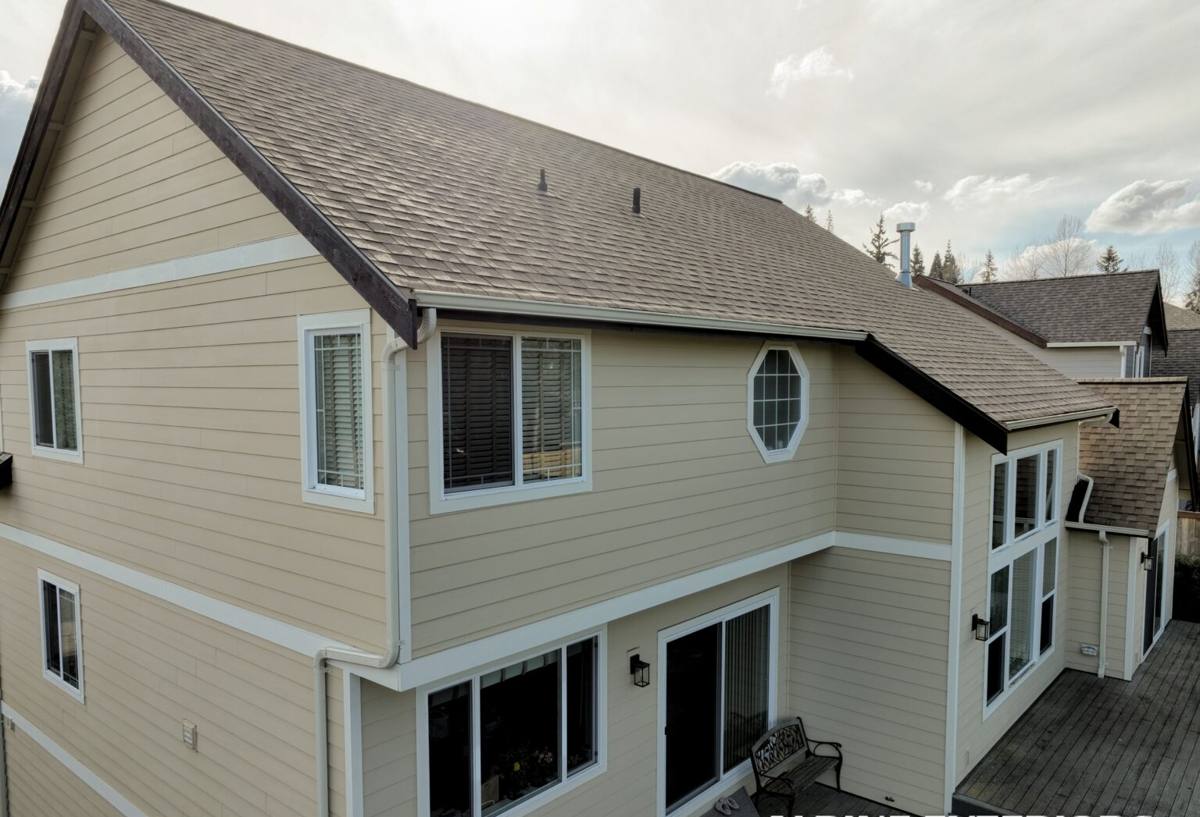
What James Hardie Fiber Cement Brings to This Climate
We install James Hardie fiber cement siding exclusively, and in a lake-and-tree setting like Sudden Valley, the reasons are practical rather than theoretical.
Engineered for the Pacific Northwest
James Hardie makes climate-specific product lines, and the HZ5 line is engineered for the wetter, cooler weather patterns found throughout the Pacific Northwest. Fiber cement itself doesn't absorb water the way wood-based products can, and it won't warp, delaminate, or feed the kind of fungal growth that thrives in shaded, damp conditions.
A Factory Finish, Not a Field Paint Job
Hardie's ColorPlus finish is baked on at the factory under controlled conditions, not brushed or sprayed on-site. That matters in a neighborhood where morning dew and shade linger — a factory finish resists fading, chipping, and the kind of early peeling that field-applied paint often shows within a few seasons under similar exposure.
Non-Combustible Construction
Fiber cement is non-combustible, which is a meaningful consideration for homes set among trees, as much of Sudden Valley is. It won't contribute fuel to an exterior fire the way wood siding or many foam-backed products can.
Signs Your Current Siding Is Losing the Fight
Homeowners often call us after noticing one or two symptoms, not realizing they're connected to a bigger moisture problem underneath. Watch for:
- Dark streaking or moss buildup that keeps returning within weeks of cleaning, especially on shaded or north-facing walls
- Soft or spongy spots when you press on a board, particularly near the bottom courses or window trim
- Paint that's peeling, bubbling, or chalking well ahead of when it was last painted
- Gaps opening up at seams, corners, or where siding meets trim
- Warping, cupping, or boards that no longer sit flat against the wall
- A noticeable rise in heating costs, which can point to moisture-compromised insulation behind the siding
Any one of these on its own isn't necessarily an emergency, but in a climate like Bellingham's, they tend to compound quickly once water finds a way in behind the cladding.
What a Correct James Hardie Installation Actually Involves
Fiber cement siding performs the way it's supposed to only when it's installed to James Hardie's written specifications — and in a wet climate, the details that get skipped are usually the ones that cause problems years later, not immediately.
A correct install includes a properly lapped weather-resistive barrier behind the siding, correct flashing at every window, door, and roof intersection, and the manufacturer-specified gaps and clearances at trim, decks, and grade so water has somewhere to go instead of wicking into the board ends. Fasteners need to land in the right pattern and depth — overdriven nails crack the board's factory finish and create an entry point for moisture. Caulking gets used at specific joints, not as a substitute for correct flashing.
None of this is unique to Sudden Valley, but it matters more here because of how long walls stay damp under tree cover. A shortcut that might go unnoticed on a sunny, exposed lot can turn into a moisture problem much faster on a shaded lakeside property.
Choosing the Right Hardie Products for a Wooded, Lakeside Setting
James Hardie's product lines give homeowners real options, and the right choice usually comes down to the home's style and how much shade and moss exposure a given wall sees.
HardiePlank Lap Siding
The traditional horizontal board look, available in several exposure widths and textures. It's the most common choice for the mix of craftsman and traditional homes found throughout the area.
HardiePanel and Vertical Siding
Large-format vertical panels work well as an accent on gables, entries, or modern-leaning homes, and pair naturally with the wooded backdrop many Sudden Valley lots have.
Trim and Soffit
Matching Hardie trim boards finish out corners, window and door surrounds, and fascia so the whole exterior system — not just the field siding — is built from the same moisture-resistant material.
Color Selection
Darker ColorPlus finishes can show pollen and moss film more readily on shaded walls, while lighter, cooler tones tend to hide seasonal buildup better between cleanings. It's worth talking through wall-by-wall sun exposure before settling on a color, rather than picking one shade for the whole house.
Our Process for Sudden Valley Siding Projects
- On-site assessment — we walk the exterior, check for soft spots and moisture behind the existing siding where accessible, and note which walls get the least sun so we can flag higher-risk areas.
- Scope and product selection — we go over Hardie product lines, trim details, and colors, and put together a written plan that spells out flashing and clearance details, not just square footage.
- Tear-off and prep — old siding comes off, sheathing is inspected and repaired as needed, and a new weather-resistive barrier goes on before anything else.
- Installation to spec — siding, trim, and flashing go in following James Hardie's written installation requirements for this climate zone.
- Final walkthrough — we review the finished work with you, including how the siding was flashed and detailed at penetrations, so you know what's behind the finish.
Why It Matters to Hire a Crew That Already Works Sudden Valley
Sudden Valley isn't a typical flat, open-lot subdivision. Many properties sit on sloped, wooded lots with narrower access roads, which changes how material staging, tear-off debris, and equipment access need to be planned. A crew unfamiliar with the neighborhood often burns extra time — and sometimes cuts corners — figuring that out on the fly.
Many homes in the community are also part of an HOA with architectural review requirements for exterior changes. A crew that's done work here before knows to build that step into the timeline up front rather than treating it as a surprise mid-project. And because so many lots have heavy tree cover, we plan installs with realistic drying and staging windows in mind rather than assuming the same schedule that would work on an open, sun-exposed site.
What Influences the Cost of a Sudden Valley Siding Project
| Cost Factor | Why It Matters |
|---|---|
| Home size and wall area | More square footage means more material, labor, and flashing detail work |
| Tear-off vs. new construction | Removing and disposing of old siding, and repairing any sheathing damage found underneath, adds time beyond a bare-wall install |
| Trim and architectural detail | Multiple gables, dormers, or trim-heavy elevations take more precise cutting and flashing than a simple rectangular wall |
| Moisture or rot repair | Water-damaged sheathing or framing found during tear-off needs to be repaired before new siding goes on |
| Site access and slope | Wooded, sloped, or narrow-access lots common in Sudden Valley can affect staging, scaffolding, and material handling |
| Product line and color | Panel styles, textures, and premium ColorPlus finishes vary in material cost |
We walk every factor through with you before work starts, so the estimate reflects your specific home rather than a generic per-square-foot number.
Living with Hardie Siding in a Moss-Prone Marine Climate
Fiber cement is low-maintenance compared to wood or vinyl, but "low-maintenance" doesn't mean "no maintenance" in a climate like this one. A periodic gentle rinse on shaded, moss-prone walls keeps organic buildup from taking hold. Keeping gutters and downspouts clear prevents water from sheeting down onto siding it wasn't designed to handle. Trimming back vegetation and tree limbs that hold moisture against a wall goes a long way, and an occasional look at caulking around windows and trim catches small gaps before they become bigger problems.
Done right the first time, a James Hardie system installed to spec is built to handle this environment with far less upkeep than the materials it typically replaces.
If you're weighing a siding replacement for a Sudden Valley home, we're happy to take a look and walk you through what we see — no pressure, no obligation. Use the form below to request a free estimate.