 Bellingham Roofing
 Window Installation Built for Sudden Valley's Lake and Forest Setting
Sudden Valley sits in a wooded, lakeside pocket of Whatcom County, and that setting changes what a window installation actually needs to hold up against. Homes here deal with heavy tree cover that keeps siding and window trim damp longer after a storm, humidity off Lake Whatcom that settles into shaded exteriors, and the same driving, wind-blown rain that hits the rest of the Bellingham area all winter. Add in a long moss season and salt-tinged air moving in off Bellingham Bay, and you have a combination that is hard on window frames, sealants, and flashing details that were never built for it.
A window installation that works in a drier inland climate can fail early here — not because the window itself is bad, but because the install didn't account for how much longer this area stays wet. We've installed and replaced windows throughout Sudden Valley and the surrounding lake communities, and the approach we use reflects that: correct flashing sequencing, sill pans that actually drain, and sealant choices that stay flexible through wide temperature and moisture swings instead of cracking after a couple of winters.
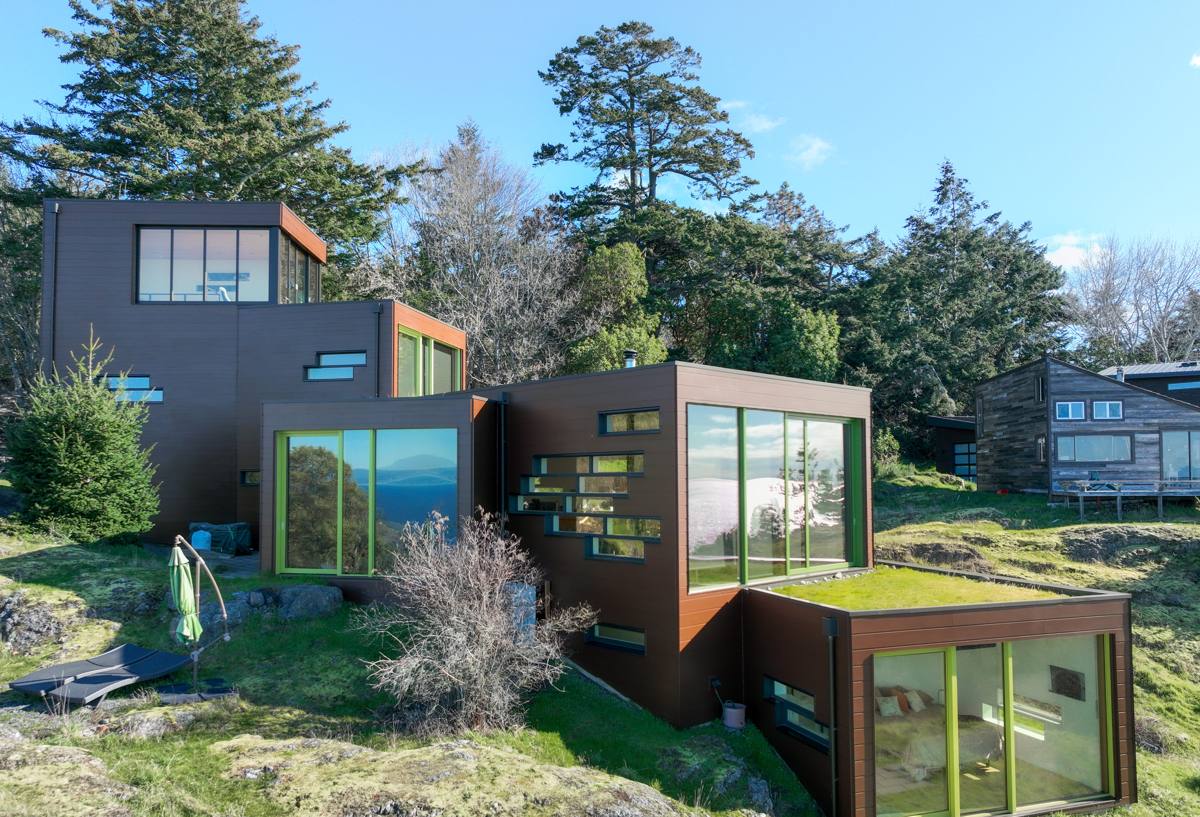
What This Climate Does to Windows Over Time
Most window failures we see in this area aren't dramatic — they're slow. Understanding the pattern helps explain why installation quality matters more here than in a lot of other places.
Moisture that doesn't dry out
Tree cover and lakeside humidity mean surfaces around windows can stay damp for days after a rain event, especially on north- and east-facing walls that don't get direct sun. That prolonged moisture is what breaks down poorly sealed frames, swells wood trim, and feeds the moss and mildew growth that's common on shaded Whatcom County homes.
Driving rain and wind-driven water
Storms coming off the water don't just fall straight down — wind pushes rain sideways into wall assemblies. If flashing and sealant details aren't done correctly at the time of installation, this is exactly the kind of weather that finds the gap and drives water behind the siding, not just onto the window face.
Moss and organic growth
A long moss season means organic growth isn't limited to roofs. It creeps onto sills, tracks, and trim, holding moisture against the frame and, over years, working into any seam that isn't tightly sealed. Frames with a lot of horizontal ledges or ornate profiles collect more of this than simple, clean-lined designs.
Salt-influenced air
Sudden Valley isn't right on the water, but the broader Bellingham airshed carries enough salt influence to accelerate corrosion on lower-grade hardware — hinges, locks, and fasteners in particular. It's a slower effect than pure moisture damage, but it shows up as stiff or corroded hardware years before the glass or frame itself is a problem.
Signs a Sudden Valley Home Is Ready for Window Replacement
Homeowners usually notice a change in comfort or a maintenance headache before they notice the window itself failing. Watch for:
- Visible fogging or moisture between glass panes — a sign the seal has failed
- Soft or discolored wood trim around the window frame, especially on shaded walls
- Persistent moss, algae, or black staining on the sill or lower frame that returns after cleaning
- Windows that are hard to open, close, or lock — often from swelling, warping, or corroded hardware
- Noticeable drafts or cold spots near the window even when it's fully closed
- Condensation forming on the inside of the glass regularly during cooler months
- A rise in heating costs without any other clear explanation
- Visible gaps, cracked caulk, or daylight around the frame from outside
Any one of these on its own might just need a repair. Several together, especially on an older window, usually mean the frame or seal has reached the end of its useful life and full replacement is the more honest answer.
What a Correct Window Installation Actually Involves
The window unit itself is only part of the job. In a climate like this, the details around the window are what determine whether it performs for 20+ years or starts leaking within a few.
Proper flashing sequence
Flashing has to be layered correctly — from the bottom up — so that any water that does get behind the siding is directed back out, never trapped against the framing. This is the single most common shortcut we see in poor prior installations, and it's invisible until a wall starts showing damage.
Sill pan drainage
A sloped sill pan under the window gives any water that reaches the sill somewhere to go besides straight down into the wall cavity. This detail matters more here than in drier climates simply because there's more water to manage over the life of the window.
Sealant selection and placement
Not every exterior sealant is meant to flex through the temperature and moisture swings this region sees. We use sealants rated for exterior movement and apply them in the specific locations that need a weather seal — while intentionally leaving other joints open so trapped moisture has somewhere to escape rather than being sealed in.
Insulation around the frame
Gaps between the window frame and the rough opening need to be insulated, not just left as an air gap or overpacked with expanding foam that can bow the frame. Done correctly, this step is a big part of why a replacement window improves comfort and lowers energy use.
Choosing a Window Frame Material for This Climate
Frame material has a bigger impact on long-term performance here than most homeowners expect, mainly because of how each material handles sustained moisture and shaded, damp conditions.
| Frame Material | Moisture Behavior | Maintenance | Our Take for Sudden Valley |
|---|---|---|---|
| Vinyl | Doesn't rot or absorb moisture; won't feed mold growth | Low — occasional cleaning | Strong default choice for shaded, damp lots |
| Fiberglass | Very stable through moisture and temperature swings | Low | Good upgrade option, especially for larger openings |
| Wood (unclad) | Attractive but absorbs moisture if any finish or seal fails | High — regular refinishing needed | We're cautious recommending unclad wood on shaded, damp elevations here |
| Wood-clad (vinyl/aluminum exterior) | Exterior is protected; interior wood stays dry if the cladding seal holds | Moderate | Workable where a wood interior look is wanted, with realistic expectations about the cladding seal over time |
| Aluminum | Conducts cold and can condensate heavily; can corrode faster in salt-influenced air over time | Moderate | Not our first recommendation for lakeside, tree-covered lots |
This isn't a judgment on any of these materials in general — it's about which ones hold up with the least maintenance headache given this specific mix of shade, humidity, and lake-driven weather. We'll walk through the real trade-offs for your home's exposure rather than push one product line.
Our Window Installation Process
- On-site assessment — we look at the existing window, frame condition, wall assembly, and how that elevation is exposed to weather and shade
- Product selection — we go over frame material, glass package, and style options based on your home's exposure and budget, not a one-size-fits-all recommendation
- Preparation — removing the old unit carefully to check for hidden moisture damage in the framing before it's covered back up
- Flashing and sill pan installation — done correctly the first time, since this is the part that determines long-term performance
- Window setting and leveling — shimmed, squared, and secured so the unit operates smoothly for years, not just on day one
- Insulation and air sealing — the gap around the frame is properly insulated, not just foamed and forgotten
- Exterior and interior trim — finished cleanly and sealed at the specific joints that need it
- Final walkthrough — every window operates, locks, and seals the way it should before we call the job done
Why Local Experience in Sudden Valley Matters
Sudden Valley's wooded, hilly lots come with practical realities that a crew unfamiliar with the area doesn't always plan for — narrow or shared access roads, homes set back among trees, and job sites where staging materials and equipment takes a bit more thought than a flat, open lot. Knowing the neighborhood ahead of time means fewer surprises and a smoother job day for you.
More importantly, a crew that regularly works this specific stretch of Whatcom County already understands how the lake humidity, tree shade, and moss season interact with a window installation over time. That's the difference between an installer following a generic checklist and one making the small, correct calls — flashing detail, sealant choice, drainage path — that decide whether the job holds up through fifteen or twenty Bellingham winters.
Cost Factors for Window Installation in Sudden Valley
Every home and project is different, so we don't quote a number without seeing the job. But these are the main factors that move the price up or down:
| Factor | Effect on Cost |
|---|---|
| Full-frame replacement vs. retrofit/pocket install | Full-frame costs more but is often the better call when there's existing rot or water damage |
| Frame material (vinyl, fiberglass, wood-clad) | Fiberglass and wood-clad typically cost more than standard vinyl |
| Glass package (double-pane, triple-pane, Low-E coatings) | Upgraded glass adds cost but improves comfort and energy performance |
| Number and size of windows | Larger openings and whole-house jobs bring a better per-window rate than one-off replacements |
| Existing damage found during removal | Rotted sheathing or framing discovered mid-job adds cost but shouldn't be skipped or covered up |
| Access and site conditions | Tree cover, slopes, or limited access can add modest labor time |
Keeping Your New Windows Performing Long-Term
A correctly installed window still benefits from a little upkeep in this climate:
- Clean sills and tracks a couple of times a year to keep moss and debris from holding moisture against the frame
- Check exterior caulking annually where it meets siding or trim, and have any cracked sections addressed early
- Keep gutters and downspouts clear so runoff isn't dumping extra water near window heads
- Trim back branches or vegetation that keep a window shaded and damp longer than it needs to be
- Test locks and operation each season — stiffness can be an early sign of hardware corrosion or frame movement
None of this is a lot of work, but it's the difference between a window that reaches its full lifespan and one that starts causing problems a decade early.
If your Sudden Valley home has windows that are fogging, drafty, hard to operate, or just due for an upgrade, we're happy to take a look and give you a straightforward, no-pressure estimate. Use the form below to get started.