 Bellingham Roofing
 Why Sudden Valley Roofs Wear Differently Than a Typical Bellingham Lot
Sudden Valley sits in a forested, lake-adjacent setting east of Bellingham, and that setting changes what a roof deals with year after year. Heavy tree canopy means more shade, more falling debris, and roof surfaces that stay damp longer after a storm than they would on an open lot in town. Add in Whatcom County's long wet season and the marine-influenced weather that moves through the whole region, and you get roofs that rarely get a real chance to dry out between November and April.
That combination — shade, moisture, organic debris — is exactly what feeds moss and algae growth. On asphalt shingles, moss roots into the granule surface and lifts shingle edges over time. On an aging or poorly detailed metal roof, the bigger issue is usually trapped moisture at seams, fastener penetrations, and valleys where needles and leaf litter pile up. Driving rain off the lake basin finds any weak point in flashing or laps and pushes water sideways, not just straight down, which is a detail a lot of standard installations don't account for.
None of this means metal roofing is a bad fit for Sudden Valley — it's actually one of the better options for this exact environment. But it does mean the installation has to be done with this specific microclimate in mind, not treated like a generic panel job.
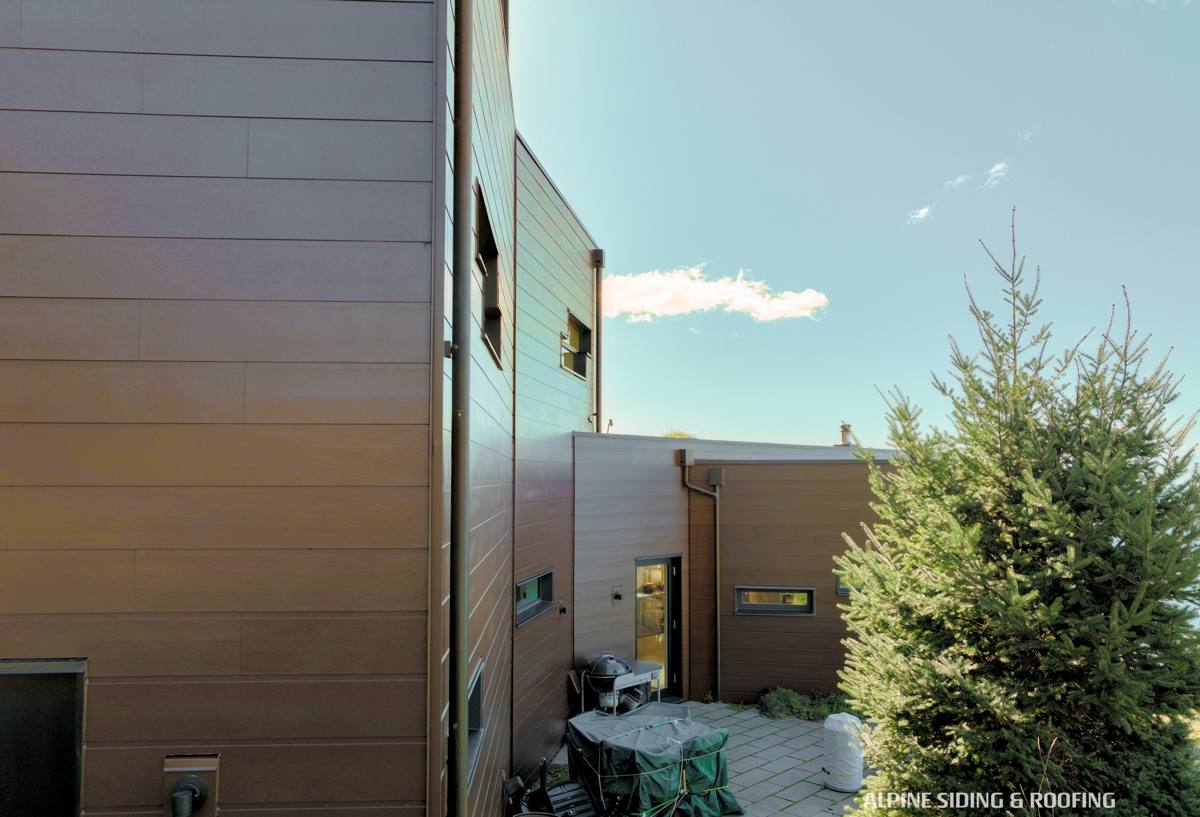
Why Metal Roofing Makes Sense for This Neighborhood
Metal sheds moss and standing debris far better than shingles because there's no porous surface for organic growth to grab onto, and a properly pitched panel roof drains fast instead of holding water against a rough surface for days at a time. Under heavy tree cover, that matters more than most homeowners realize — it's not just about rain, it's about how long the roof stays wet after the rain stops.
Metal also holds up well against the kind of wind-driven rain that comes off the lake basin during fall and winter storms, provided the panels, fasteners, and flashing details are matched to the exposure. And because Sudden Valley homes often have steep, wooded, harder-to-access rooflines, a roofing system that needs less frequent maintenance and inspection than shingles is a practical advantage, not just a cosmetic one.
We're not saying metal is the right call for every home in every case — roof pitch, budget, and the style of the house all factor in. But for the tree cover and moisture load this area sees, it's a system we recommend with confidence.
What Metal Roofing Doesn't Solve
Metal roofing reduces moss and slows moisture-related decay, but it doesn't eliminate the need for basic upkeep. Needles and leaves still collect in valleys and against dormers. Gutters still need clearing. A metal roof installed correctly and then left completely unmaintained under thick tree cover will still develop debris buildup — it just won't rot or grow moss into the surface the way an unmaintained shingle roof will.
What a Correct Metal Roof Installation Actually Involves
The panels themselves get most of the attention, but the parts you don't see are what determine whether a metal roof performs for decades or causes problems in five years.
Underlayment and Deck Prep
Metal roofing should go over a synthetic or high-temp underlayment rated for the application, with self-adhered ice-and-water membrane at eaves, valleys, and any low-slope transitions — the areas most likely to see standing water or wind-driven rain intrusion. Any soft or delaminated decking gets replaced before a single panel goes down. Skipping deck repair to save time is one of the more common shortcuts we see undone later.
Fastening and Panel Attachment
Exposed-fastener panels use gasketed screws driven at the correct torque, spaced to the manufacturer's pattern — overdriven or underdriven screws are a leading cause of leaks on this style of roof. Standing seam systems use concealed clips that let the panel expand and contract with temperature swings without tearing loose, which matters through the region's seasonal temperature shifts.
Flashing and Penetrations
Valleys, chimneys, skylights, and vent penetrations need custom-fabricated flashing, not universal boots stretched to fit. Under heavy tree cover, valleys in particular need enough width and slope to move debris-laden water without damming.
Ventilation
Trapped attic moisture under a metal roof leads to condensation on the underside of the panels, which looks like a leak but isn't. Correct intake and exhaust ventilation, sized to the attic volume, prevents this — it's a step that's easy to underbuild and hard to diagnose after the fact.
Comparing Metal Roofing Options for a Wooded, Wet Lot
| Panel Type | Best Fit For | Trade-Offs to Know |
|---|---|---|
| Exposed-fastener panel (5V, corrugated, ribbed) | Budget-conscious projects, secondary structures, simpler rooflines | Fasteners need periodic inspection and re-torquing over the roof's life |
| Standing seam (concealed fastener) | Primary residences, steep or complex rooflines, long-term low maintenance | Higher upfront cost; installation is more labor- and skill-intensive |
| Stone-coated steel | Homeowners wanting a shingle or shake profile with metal's durability | More seams and fastener points than standing seam; installer experience matters more |
For most Sudden Valley homes under significant tree cover, we lean toward standing seam or a well-detailed exposed-fastener system, depending on roof pitch, budget, and how the roofline is shaped. We'll walk through the honest trade-offs for your specific roof rather than defaulting to one product.
What Drives the Cost of a Metal Roof Here
| Factor | Why It Matters Locally |
|---|---|
| Roof pitch and complexity | Steep, multi-plane roofs common in wooded lots take longer to detail correctly |
| Tree removal or trimming needed for safe access | Overhanging limbs affect both crew safety and long-term debris load on the new roof |
| Panel and fastener system chosen | Standing seam costs more upfront than exposed-fastener but needs less ongoing attention |
| Deck condition underneath the old roof | Moisture-related sheathing repair is common on older roofs that have sat under tree cover for years |
| Ventilation upgrades | Older homes often need intake or exhaust vents added or corrected as part of the job |
We give a specific number after we've actually looked at your roof — broad online estimates rarely hold up once pitch, access, and deck condition are factored in.
How Our Process Works
- Site visit and roof assessment. We inspect the deck, existing ventilation, flashing details, and how tree cover and drainage patterns affect your specific roof.
- Written estimate and system recommendation. You get an honest recommendation on panel type based on your roof's pitch, exposure, and budget — not a one-size-fits-all pitch.
- Tear-off and deck repair. Old roofing comes off, the deck gets inspected board by board, and any soft or damaged sheathing is replaced before underlayment goes down.
- Underlayment, flashing, and panel installation. Ice-and-water membrane at vulnerable areas, custom flashing at every penetration, and panels installed to manufacturer spec.
- Ventilation check and correction. We confirm intake and exhaust are balanced for the attic before calling the job finished.
- Final walkthrough. We go over the completed roof with you, including what routine maintenance (if any) it will need given your tree cover.
Common Problems We Find on Older Metal Roofs in This Area
When we're called out to look at an existing metal roof in a wooded Sudden Valley setting, a handful of issues show up repeatedly:
- Overdriven or backed-out fasteners on exposed-fastener panels, usually from a fast original install
- Valleys undersized or under-sloped for the volume of needle and leaf debris the property generates
- Universal rubber boots used at pipe penetrations instead of properly fabricated flashing, cracking after a few seasons of UV and temperature swings
- Attic condensation misdiagnosed as a roof leak due to inadequate ventilation
- Debris-clogged valleys and gutters causing water to back up under the panel edge during heavy rain
Most of these are installation or maintenance issues, not failures of metal roofing as a material — which is why who installs the roof matters as much as what roof you choose.
Maintenance Checklist for a Metal Roof Under Tree Cover
Metal roofing is low-maintenance compared to shingles, but "low" isn't "none," especially on a heavily wooded lot. A simple annual routine keeps small issues from becoming expensive ones:
- Clear needles, leaves, and small debris from valleys and roof-to-wall transitions, ideally each fall after leaf-drop
- Check and clean gutters so water has a clear path off the roof edge
- Look for any fasteners backing out or showing rust streaking on exposed-fastener panels
- Trim back branches that overhang or rub against the roof surface
- Have flashing at chimneys, skylights, and vents visually checked every couple of years
- Watch the attic for condensation signs during cold snaps, which point to a ventilation issue rather than a roof leak
Why Hiring a Crew That Already Works Sudden Valley Matters
A roofing crew that regularly works this neighborhood already understands the access challenges of wooded, sloped lots, knows how tree cover changes valley and drainage design, and isn't guessing at how much debris load a roof here will see over its lifetime. That local familiarity shows up in small decisions — how a valley is sized, where extra membrane goes, how ventilation is balanced — that a crew unfamiliar with the area might not think to adjust for.
It also means straightforward communication about what your roof actually needs versus what would be oversell. We'd rather tell you a repair or partial re-roof makes more sense than push a full system replacement that isn't necessary yet.
If you're weighing a metal roof for a Sudden Valley property, we're happy to take a look and give you a straight, no-pressure estimate — no obligation, just an honest read on your roof and your options. Fill out the form below to get started.