 Bellingham Roofing
 What "New Construction" Means for a Window Install
New-construction windows are a different job than replacing an old window in an existing wall. These units have a nailing flange (or "fin") around the frame that gets fastened directly to the wall sheathing before the weather-resistive barrier, house wrap, and siding go on. That flange, and how it's flashed into the wall assembly, is what actually keeps water out of the framing for the next several decades — not the window itself.
Because this work happens during the build sequence, timing matters. Windows go in after the sheathing and rough openings are set but before siding, trim, and finish work close everything up. Get the flashing wrong at this stage and it's buried behind siding, invisible until a homeowner is dealing with rot, mold, or a warranty claim years down the road. On a lot in Sudden Valley, where homes sit under heavy tree cover and get long, wet winters, there's very little margin for a sloppy install.
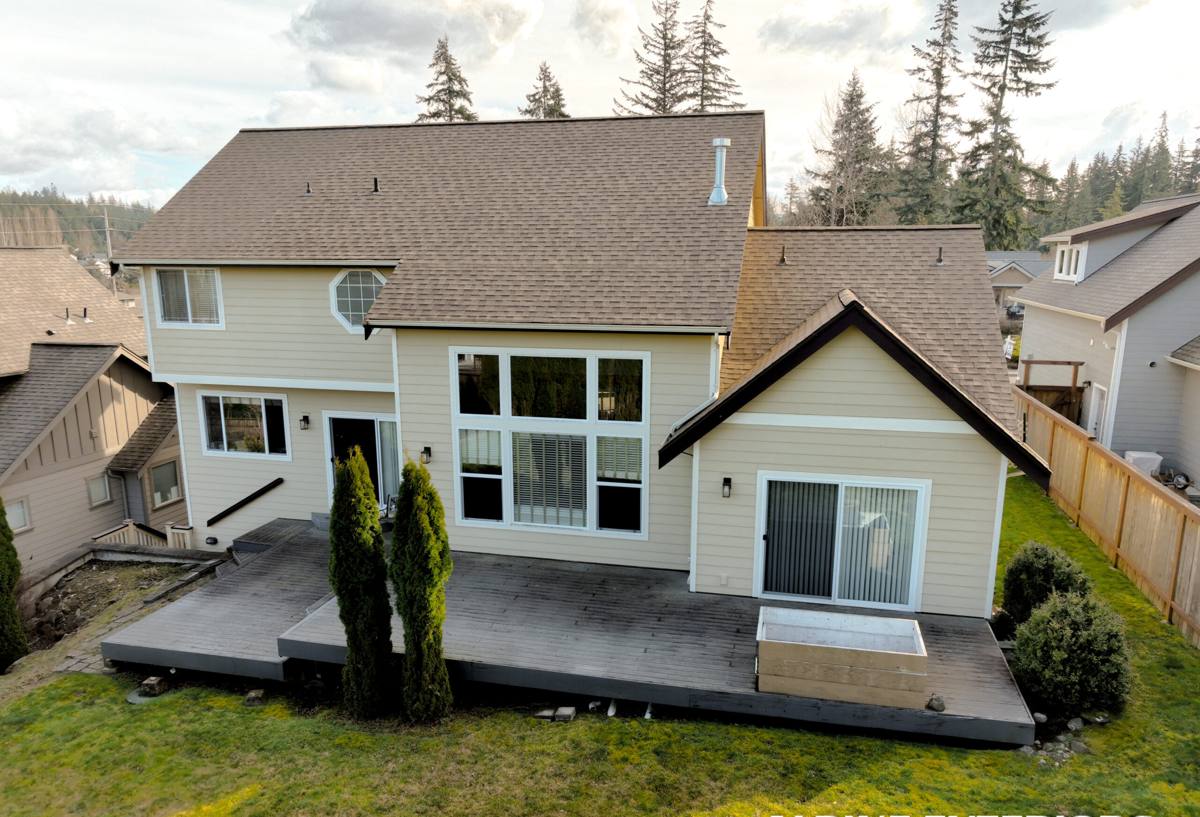
Why Sudden Valley's Climate Puts Extra Load on This Work
Sudden Valley sits inland on Lake Whatcom, but it's still very much part of Whatcom County's marine climate — long wet seasons, driving rain that comes in sideways during winter storms, and humidity that lingers under the tree canopy long after a storm passes. Add in Bellingham's proximity to Bellingham Bay and Puget Sound, and you get a mild but persistent salt tinge in the air across the region that slowly works on exposed fasteners, hinges, and metal flashing if they aren't rated for it.
The heavy shade around Lake Whatcom is its own factor. Homes tucked into the trees stay damp longer after rain, and that moisture, combined with limited direct sun, is exactly what feeds moss and algae growth on sills, trim, and anywhere water can sit instead of shed. A window installed with the right slope, the right flashing lap order, and a proper sill pan sheds that water and dries out between storms. One installed with shortcuts holds moisture against the wood and framing all winter.
None of this means Sudden Valley needs exotic materials — it means the ordinary steps of a correct install (flashing order, sealant placement, drainage path) can't be skipped, because the climate here doesn't forgive them the way a drier region might.
What a Correct Installation Actually Involves
A window opening is a system, not a single product. Every layer has to work with the ones next to it so water that gets past the siding or trim has somewhere to go besides your wall cavity.
Flashing sequence
Flashing has to be installed in the right order — bottom, sides, then top — so each piece laps over the one below it, the same way shingles overlap on a roof. If that order gets reversed anywhere, water runs behind the flashing instead of over it.
Sill pan and back dam
A sloped sill pan under the window with a back dam at the interior edge gives any water that does get in a way out, instead of letting it pool against the framing or run into the house. This is one of the most commonly skipped steps on production builds, and it's one of the most important.
Fastening, shimming, and insulation
The window has to be shimmed square and plumb, fastened per the manufacturer's schedule (not just "enough nails to hold it"), and the gap between the frame and rough opening insulated without overpacking it, which can bow the frame and cause the sash to bind.
- Rough opening checked for square, level, and correct size before the window ever goes in
- Sill pan installed with a back dam and end dams, sloped to drain outward
- Flashing tape or metal flashing lapped bottom-to-top over the WRB
- Window set, shimmed, and fastened per the manufacturer's spec
- Low-expansion foam or batt insulation around the frame, gaps not overpacked
- Interior and exterior sealant placed only where it belongs — as backup, not the primary water barrier
- Final check for smooth operation, square reveal, and weep holes clear
Choosing a Window Built for This Climate
Frame material matters for how a window holds up under years of Whatcom County rain and humidity, but no material substitutes for correct installation. Here's how the common options compare for new construction in this area.
| Frame Material | Moisture Tolerance | Maintenance | Typical Cost Tier |
|---|---|---|---|
| Vinyl | Good — won't rot or corrode | Low; occasional cleaning | Entry to mid |
| Fiberglass | Very good — stable in wet/dry cycles | Low | Mid to upper |
| Wood-clad | Depends heavily on cladding integrity and installation | Higher; cladding and seals need periodic inspection | Upper |
| Aluminum | Fair; prone to condensation without thermal break | Moderate; watch for corrosion near marine air | Mid |
For a shaded, damp lot like many in Sudden Valley, we generally steer new builds toward vinyl or fiberglass frames with a durable, factory-finished exterior. Wood-clad windows can look great, but the cladding is only as good as the seal protecting the wood underneath it — if that seal is compromised, the wood beneath doesn't have the drying capacity it would in a drier climate. That's a maintenance and moisture trade-off worth weighing honestly before you commit, not a knock on any specific brand.
How We Approach a New-Construction Window Install
- Plan and product review. We look at the window schedule and rough opening sizes against the actual framing before anything is ordered, so we're not fixing mismatches on install day.
- Coordinate with the builder's timeline. Windows have to go in at the right point in the sequence — after sheathing and WRB, before siding closes things up.
- Dry-in and flashing inspection. Every opening gets checked for square and proper WRB coverage before a window goes in.
- Install and flash. Sill pan, window set and shimmed, flashing lapped in the correct order, all tied back into the WRB.
- Tie-in check. We confirm the flashing integrates cleanly with whatever siding or trim detail comes next, so there's no gap in the drainage plane.
- Final walk-through. Operation, reveal, and sealant lines checked before we sign off.
Mistakes We Watch For on New Builds
Most window callbacks on new construction don't trace back to a bad window — they trace back to how it was installed. The ones we see most often, and correct as a matter of course:
- Flashing installed out of order, so water is directed behind it instead of over it
- No sill pan or back dam, leaving water with nowhere to go but into the framing
- Sealant used as the main line of defense instead of proper flashing and drainage
- Rough openings that were never squared, leading to binding sashes and stressed seals
- Insulation packed too tight around the frame, bowing it out of square
We treat these as our own professional baseline, not extras — on a site like Sudden Valley where the wall assembly stays damp longer between storms, there's just less room for any of them to slide.
What Affects Cost on a Sudden Valley Job
Every new build is different, so we always price from an actual walk of the plans or the site rather than a flat number. That said, the factors that move the price up or down are consistent.
| Factor | Why It Matters |
|---|---|
| Number and size of openings | More or larger windows mean more flashing detail and labor hours |
| Frame material | Vinyl, fiberglass, and wood-clad carry different material costs |
| Site access | Steep, wooded, or narrow-access lots around the lake can slow staging and material handling |
| Building height | Second-story or vaulted openings may need scaffolding or lift equipment |
| Custom shapes or sizes | Non-standard openings take more time to flash correctly and may cost more to source |
Why Hiring a Crew That Already Works Sudden Valley Matters
Sudden Valley isn't a typical subdivision. Many homes here fall under the Sudden Valley Community Association's architectural review, which means exterior changes — including window style, trim, and sometimes color — often need sign-off before work starts. A crew that's been through that process before can help you avoid delays that come from finding this out mid-project.
The lots themselves add their own wrinkles: steep grades down toward the lake, private roads, mature tree cover close to the house, and limited staging space in places. Knowing how to get materials and equipment onto a site like that without damaging landscaping or blocking a narrow road is something you only really learn by doing it in this specific neighborhood, not by installing windows in a flat subdivision across town.
There's also the matter of timing around the region's rain patterns. Flashing and sealant work needs a reasonably dry window to cure and perform correctly, and a crew that knows Whatcom County's weather rhythms — not just the forecast for the week — plans the sequence of work accordingly instead of rushing a flashing detail between downpours.
If you're building or planning a build in Sudden Valley and want new-construction windows installed the right way the first time, we're happy to walk the plans with you and give you a straightforward, no-pressure estimate — just fill out the form below.