 Bellingham Roofing
 Why Sudden Valley Siding Wears Differently Than Siding in Town
Sudden Valley sits in a different microclimate than a lot of Bellingham. The community is tucked into the trees along Lake Whatcom, and that tree canopy is a mixed blessing for the houses underneath it. It cuts down on wind, but it also cuts down on sun exposure and airflow across exterior walls. Siding on a shaded, tree-lined lot stays damp longer after every rain than siding on an open lot a few miles away, and Whatcom County gives it plenty of rain to work with. Add in the humidity that collects near the lake and the moss and algae that thrive in shade and moisture, and you've got a climate that's genuinely tougher on siding than the regional average — even though the regional average, with its salt-tinged marine air and long wet winters, is already demanding.
We work throughout Bellingham and Whatcom County, but Sudden Valley homes tend to show a specific pattern of wear: green or black staining low on the wall and under eaves, soft or swollen siding on the north and shaded sides of the house, and trim that fails years before the siding field does because it's catching runoff off the roof and off tree branches overhead. Any siding replacement here needs to be planned around that pattern, not just around "the siding is old."
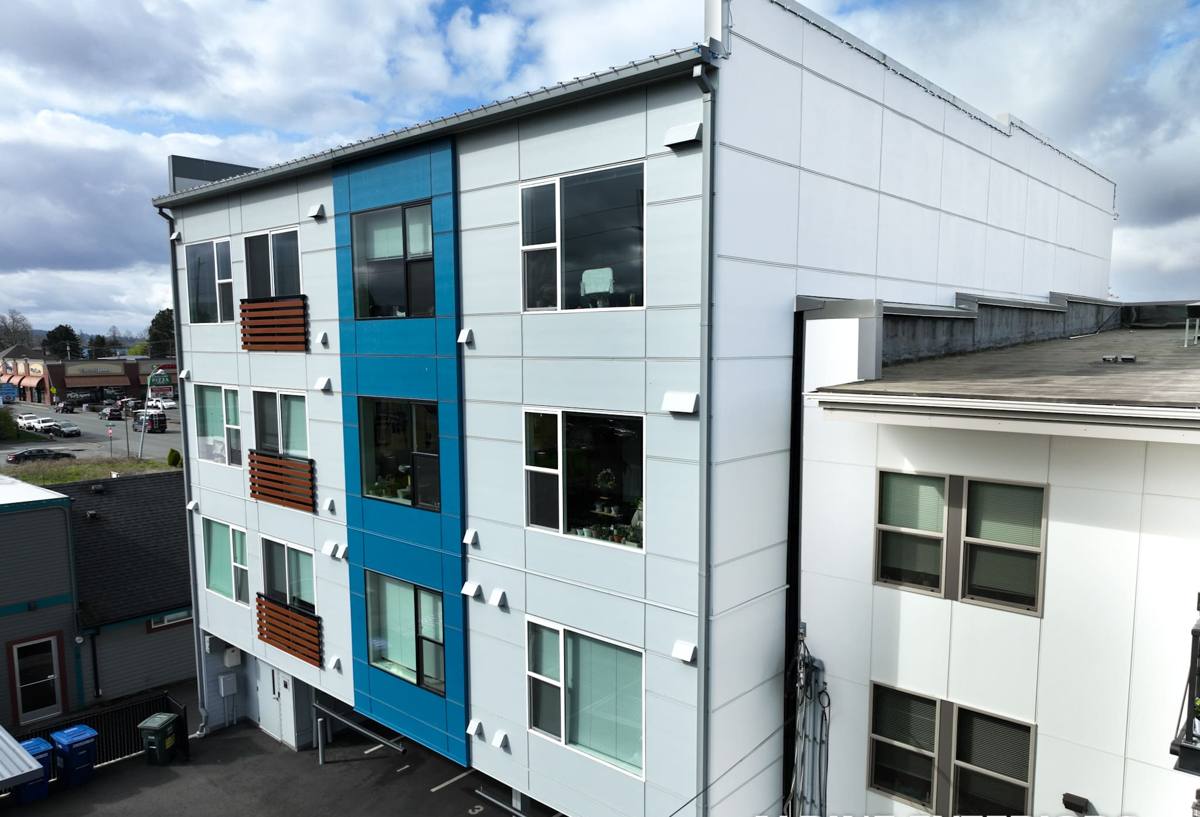
Signs It's Time to Replace, Not Patch
Homeowners often ask whether a section of bad siding can just be repaired. Sometimes it can. But once damage shows up in more than one or two spots, or once it's been sitting wet for a while, patching usually just delays a bigger tear-out later — and it can mask what's happening behind the siding. Here's what tells us a full or near-full replacement is the right call:
- Soft, spongy, or crumbling siding when you press on it, especially near the ground or under windows
- Persistent moss, algae, or dark staining that comes back within a season of cleaning
- Visible gaps, warping, or buckling panels, particularly on shaded north- and west-facing walls
- Peeling or bubbling paint that keeps recurring in the same spots year after year
- Musty smells or soft drywall on interior walls that back up to exterior siding
- Siding that's original to a home built more than 20-25 years ago, especially older wood-based products
If you're only seeing one of these, in one location, a repair may genuinely be enough. We'll tell you that honestly during an inspection rather than push a full replacement you don't need yet.
Why We Install James Hardie and Nothing Else
We standardized on James Hardie fiber cement siding for every home we side, including in Sudden Valley, and we don't install vinyl, LP SmartSide, or other fiber cement brands. That's a deliberate choice built around exactly the conditions this neighborhood deals with.
Fiber cement doesn't feed mold, algae, or moss the way wood-based products can, and it holds up to sustained dampness without swelling or rotting. James Hardie's HZ5 product line is engineered for wetter, harsher climates like ours, and the factory-applied ColorPlus finish is baked on under controlled conditions rather than sprayed on-site — which matters a lot on a shaded lot where a site-applied finish takes longer to cure and is more likely to trap moisture underneath. Hardie siding is also non-combustible, which is a real consideration for wooded properties near dry brush and tree debris, even in a generally wet climate. We're not against every alternative product on principle — vinyl and engineered wood both have legitimate uses — but for the moisture load and shade this area sees, we don't think they hold up as well over a 30-plus year ownership horizon, and we'd rather install one product very well than several products adequately.
What This Means for Your Home
In practice, choosing Hardie means fewer repaint cycles, less moss-driven maintenance, and a product warranty that's transferable if you sell the house — a real selling point in a community where a lot of buyers ask directly about siding age and material.
What a Correct Siding Replacement Actually Involves
The finished look of a siding job is the easy part to judge from the curb. The part that determines whether it lasts 10 years or 40 happens underneath, and it's worth understanding before you hire anyone.
Tear-Off and Sheathing Inspection
We remove the old siding down to the sheathing and inspect it before anything new goes up. On shaded, damp lots like a lot of Sudden Valley properties, this step matters more than usual — it's common to find soft sheathing or old water damage behind siding that looked fine from outside. Any compromised sheathing gets replaced, not covered over.
Water-Resistive Barrier and Flashing
A new weather-resistive barrier goes over the sheathing, and flashing gets installed correctly at every window, door, and roofline intersection. This is the layer that actually keeps bulk water out of your walls, and it's also the layer that's invisible once the job is done — which is exactly why it's the step corners get cut on by crews trying to move fast.
Installing to James Hardie's Specification
James Hardie publishes specific installation requirements — fastener spacing, clearances from the ground and roofline, gaps at butt joints, caulking practices — and the manufacturer's warranty depends on those specs being followed. We install to spec on every job, not just when it's convenient, because that's the difference between a warranty that actually holds up and one that gets denied on a claim.
Trim, Caulking, and Final Paint Detail
Trim boards and caulking are usually the first thing to fail on a poorly done job, and they're often the first thing to fail on shaded Sudden Valley walls specifically, since they catch runoff longest. We pay particular attention to trim detailing and touch-up paint at the end of a job for that reason.
Our Process, Start to Finish
- On-site estimate — we walk the exterior, check for soft spots and moisture damage, and give you a written scope and price.
- Material selection — you choose the HardiePlank or panel profile and ColorPlus color; we can talk through what tends to read well against the tree cover and lot lighting typical of this neighborhood.
- Scheduling and site prep — we coordinate delivery and staging around your driveway and lot access, and flag any community gate or access steps ahead of time.
- Tear-off and sheathing repair — old siding comes off, sheathing gets inspected and repaired as needed.
- Weather barrier, flashing, and installation — installed to manufacturer spec, inspected as we go.
- Final walkthrough — we walk the finished exterior with you before calling the job done.
What Affects the Cost
Every home is different, so we won't quote a number without seeing the house, but these are the main variables that move the price up or down:
| Factor | Why It Matters |
|---|---|
| Extent of sheathing damage | Hidden rot behind old siding adds repair work not visible at estimate time |
| Home size and wall complexity | More corners, dormers, and trim detail mean more labor per square foot |
| Siding profile chosen | Lap siding, shingle-style panels, and board-and-batten carry different material and labor costs |
| Access and site conditions | Steep, wooded, or tight lots take longer to stage and scaffold than open ones |
| Trim and detail work | Full trim replacement vs. reusing sound existing trim changes scope significantly |
Why Local Experience in Sudden Valley Matters
Sudden Valley isn't a typical subdivision — it's a private community with its own access points and, in many cases, its own design expectations for exterior work. A crew that's already worked there knows how to plan deliveries and staging without creating a headache for you or your neighbors, understands the tree cover and lot grading that's common throughout the community, and isn't learning the area's quirks on your dime. That local familiarity translates into a smoother project timeline and fewer surprises mid-job.
It also means we've already seen how Hardie siding performs on homes with the same shade and moisture exposure yours has, which shapes how we advise you on color, profile, and detailing choices — not generic advice, but advice based on what actually holds up on lots like this one.
Living With New Siding on a Wooded, Lakeside Lot
New siding cuts your maintenance burden significantly, but a shaded, tree-heavy lot near the lake will always need a little more upkeep than an open one. A few habits go a long way:
- Keep tree branches and shrubs trimmed back from exterior walls so siding can dry out between rains
- Clean gutters at least twice a year — clogged gutters overflow directly onto siding and trim below
- Rinse off moss or algae buildup with a garden hose and soft brush rather than a pressure washer, which can force water behind panels and damage caulking
- Repaint or touch up caulking on schedule rather than waiting until failure is visible
If you're seeing wear on your current siding, or you just want an honest read on whether repair or replacement makes sense for your home, we're happy to come take a look. Fill out the form below for a free, no-pressure estimate.